



A Connoisseur's Guide to 18th Century Furniture: The Golden Age of Design
A mahogany commode commissioned from Thomas Chippendale’s workshop in 1755 offers more enduring value than the most celebrated modern design collections of the 21st century. It's a sentiment shared by discerning collectors who recognize that 18th century furniture represents the absolute zenith of European decorative arts. You likely appreciate the profound gravity these objects bring to a room, yet the fear of inadvertently acquiring a late 19th-century reproduction remains a persistent concern for even the most dedicated enthusiast.
We'll provide the scholarly framework necessary to identify genuine period craftsmanship, from the subtle oxidation of ancient oak drawer linings to the masterful application of mercury-gilded ormolu. You'll gain the technical confidence to evaluate a piece’s soul, moving beyond mere aesthetics to understand the rigorous standards of 1760s joinery. This exploration details the historical significance of master makers like Jean-Henri Riesener and offers a curated perspective on integrating these venerable artifacts into the sophisticated architecture of today’s luxury homes.
Key Takeaways
- Trace the artistic transition from the sculptural weight of the Baroque to the light-filled, harmonious proportions that defined the Neoclassical pinnacle.
- Uncover the technical secrets of master cabinet-makers and the rare, exotic materials that elevated 18th century furniture into the realm of high art.
- Develop a connoisseur’s eye for distinguishing genuine period pieces from later reproductions by interpreting the silent language of construction and historical patina.
- Learn how to integrate these magnificent, tangible assets into contemporary spaces to create a sophisticated dialogue between heritage and modern luxury.
- Understand the rigorous standards of selection required to source pieces that offer not only investment value but also a significant cultural narrative.
The Golden Age of Design: Defining 18th Century Furniture Styles
The 18th century stands as an unparalleled epoch in the history of the decorative arts; it's the moment when the master cabinet-maker ascended to the status of a fine artist. This era witnessed a profound transformation in the domestic interior, as objects transitioned from mere utilitarian necessities into sophisticated vehicles for intellectual and aesthetic expression. Between 1700 and 1799, the heavy, sculptural density of the Baroque gave way to the refined, light-filled proportions of the Neoclassical era, creating a legacy of craftsmanship that remains the gold standard for connoisseurs today.
Much of this stylistic evolution was driven by the cultural phenomenon of the Grand Tour. As wealthy aristocrats returned from their travels across Italy and Greece, they brought with them a renewed obsession with classical antiquity. The archaeological discoveries at Herculaneum in 1738 and Pompeii in 1748 provided a fresh vocabulary of fluted columns, acanthus leaves, and symmetrical balance. These motifs replaced the darker, more somber aesthetics of the previous century, allowing 18th century furniture to achieve a sense of grace and architectural harmony that had never been seen before.
Collectors and interior decorators continue to prize this period above all others for its exceptional quality of materials and the "soul" inherent in every hand-carved joint. Whether it's the warm, honeyed glow of a well-preserved patina or the intricate precision of a marquetry panel, these pieces offer a tangible connection to a time when beauty and function were inextricably linked. The 1700s represents a peak of human ingenuity where the cabinet-maker's bench produced works of art that rivaled the finest paintings of the age.
English Elegance: From Queen Anne to George III
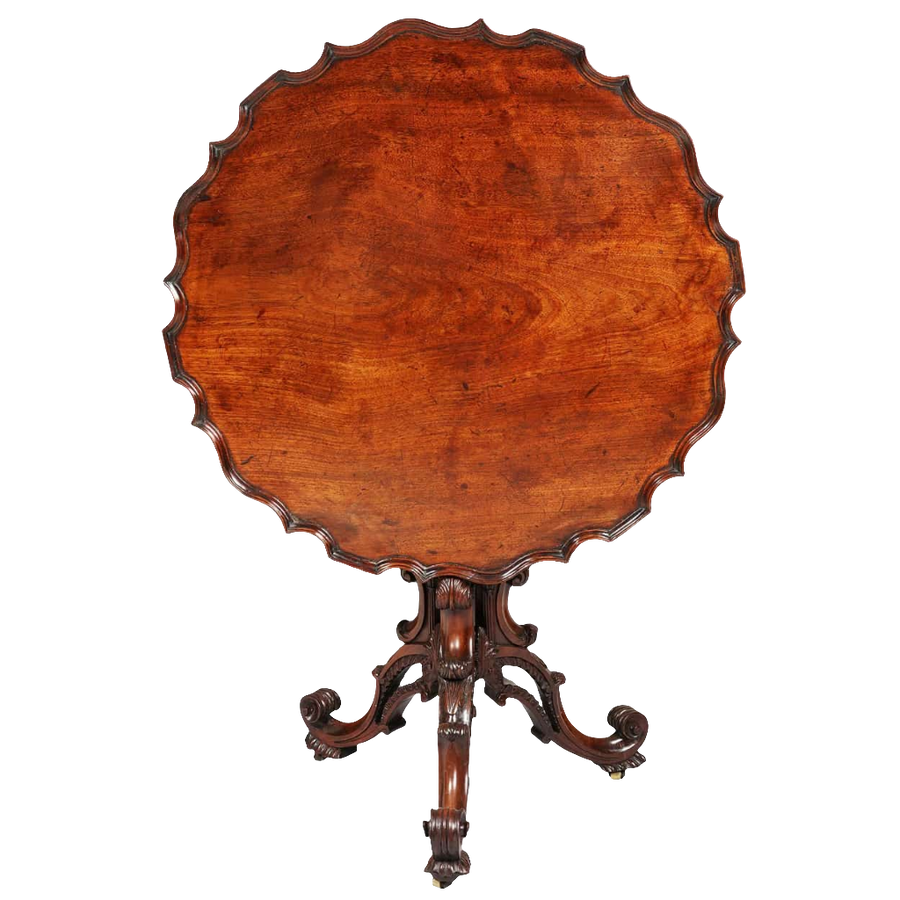
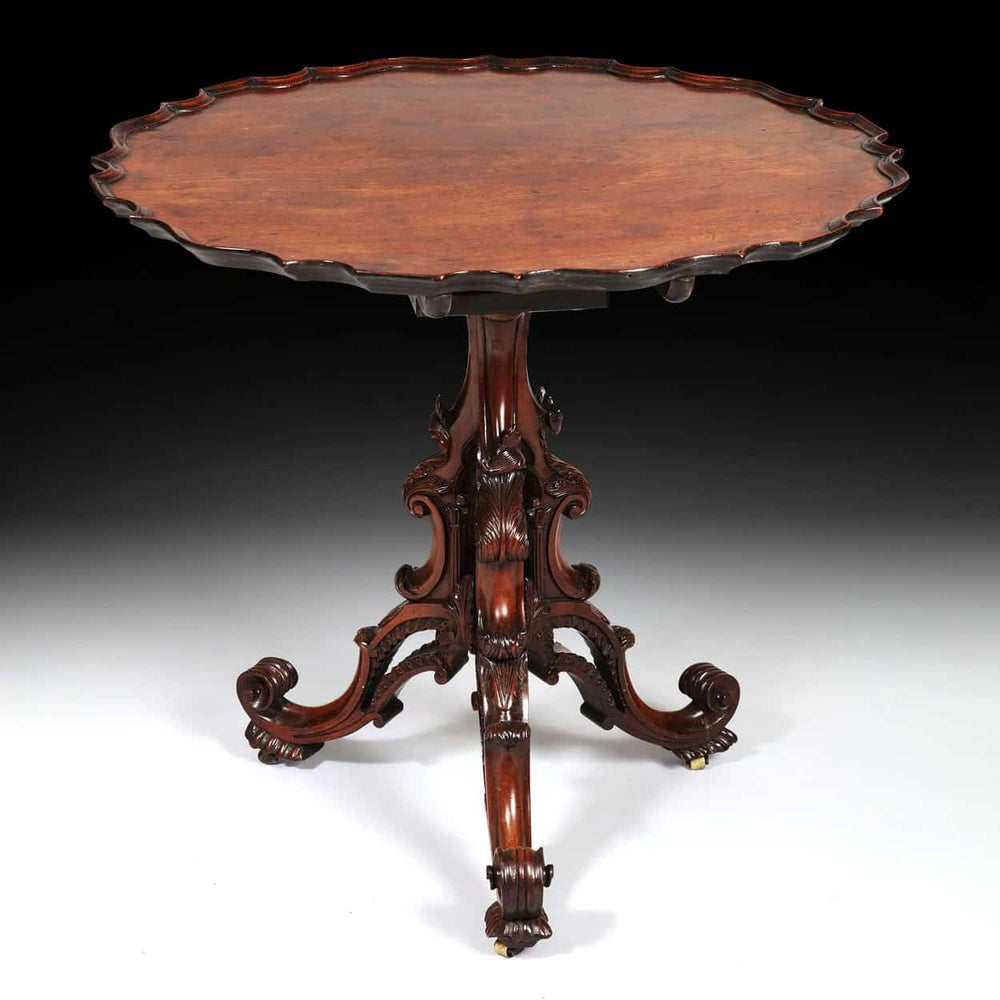
The British workshop underwent a revolution in 1733 when the lifting of high import duties on timber allowed mahogany to supplant walnut as the primary medium for high-end commissions. This dense, exotic wood permitted a level of intricate, crisp carving that was previously impossible. During the Georgian era, designers like Thomas Chippendale, who published his seminal "Director" in 1754, blended formal grandeur with a new emphasis on comfort. We see the rise of specialized pieces, including the tea table and the library bookcase, designed to fit the increasingly complex social rituals of the country house aesthetic.
Continental Sophistication: Louis XV and Louis XVI
Across the Channel, the French court dictated the heights of European fashion through two distinct movements. The reign of Louis XV (1715-1774) celebrated the whimsical curves and asymmetrical flourishes of the Rococo, while the subsequent era of Louis XVI (1774-1792) returned to rectilinear restraint and Greco-Roman purity. To understand the nuances of these shifts, one must study the 18th Century French Furniture Styles that dominated the Parisian market. The influential marchands-merciers coordinated the talents of ébénistes and bronziers to create extraordinary pieces finished with ormolu mounts and delicate floral marquetry, setting a standard of luxury that influenced royal houses from London to Saint Petersburg. This cross-pollination of tastes ensured that 18th century furniture remained a truly international language of prestige.
Master Craftsmen and Materiality: The Secrets of 18th Century Artistry
The 18th century witnessed a transformative shift in the decorative arts, moving away from the heavy, provincial styles of the past toward a refined aesthetic governed by the rigorous standards of European guilds. These organizations, particularly the French Corporation des Menuisiers-Ébénistes, enforced strict apprenticeships that ensured every piece of 18th century furniture met a level of structural integrity that remains unsurpassed. This era saw the rise of the celebrity cabinet-maker, a figure whose individual genius became a hallmark of value for the European aristocracy. It wasn't just about utility; it was about the signature of a master.
The technical sophistication of cabinet furniture reached its zenith during this period. Craftsmen moved beyond simple joinery to incorporate complex mechanical elements, such as the secrétaire à abattant with its hidden springs and falling fronts. By examining the Victoria and Albert Museum's collection, one can observe how these advancements allowed for lighter, more graceful forms without sacrificing the durability required for daily use. The guild system's insistence on quality meant that even the hidden elements, like the underside of a seat rail or the interior of a drawer, were finished with meticulous care.
The Titans of Cabinet-Making: Chippendale, Hepplewhite, and Sheraton
Thomas Chippendale's publication of The Gentleman and Cabinet-Maker's Director in 1754 served as the definitive pattern book for the age, blending Gothic, Chinese, and Rococo influences into a cohesive English style. His name became so synonymous with quality that it defined an entire genre of design. George Hepplewhite later introduced a sense of airy elegance, most famously through his 1788 publication which showcased shield-back chairs featuring carved wheat ears or prince's feathers. Thomas Sheraton concluded the century with his 1791 Drawing Book, favoring the delicate silhouettes and straight, tapered lines that defined the late Georgian period.
Exotic Materials: Ormolu, Marquetry, and Japanning
Materiality served as a silent ledger of wealth. The application of ormolu, a magnificent technique of mercury-gilding bronze, provided a protective edge to vulnerable corners while imbuing the wood with a golden radiance. Marquetry reached new heights of artistry as craftsmen used exotic veneers like kingwood and tulipwood to create floral paintings in timber. The period's obsession with the Far East led to the perfection of Japanning, a European imitation of Oriental lacquer that added a dark, lustrous depth to 18th century furniture. These rare stones and precious metals weren't merely decorative; they were essential components of a piece's soul.
For those seeking to acquire a piece of this storied history, our collection of superb English and Continental antiques offers a curated selection of these masterworks, each chosen for its exceptional rarity and distinguished provenance.
Distinguishing Authenticity: Provenance, Patina, and Construction
The primary hurdle for any serious collector remains the distinction between a genuine piece of 18th century furniture and the high-quality Centennial reproductions that flooded the market after the 1876 Philadelphia Exhibition. These 19th-century tributes were crafted with exceptional skill, often utilizing reclaimed timber, yet they lack the inherent soul of the original Georgian or Louis XV era. Discerning the difference requires a synthesis of sensory observation and historical data. Authentic patina represents a two-century chemical dialogue between wood, light, and oxygen. It's more than mere surface dirt; it's a deep, translucent glow that develops as the natural oils in the timber oxidize and harden. A piece of 18th century furniture that has spent 250 years in a drafty English manor will possess a surface depth that modern chemical stains cannot replicate. If the finish feels muddy or looks too uniform, it's likely a later intervention.
Provenance serves as the bridge between an object and its historical context. It isn't simply a list of names; it's a record of a piece's survival through social upheavals and changing tastes. When a commode can be traced back to a 1770 inventory of a specific French chateau, its historical significance increases exponentially. This documentation provides a level of certainty that physical examination alone cannot reach, anchoring the piece within the wider canon of decorative arts. The chemical record of history is also visible in the hardware. Original ormolu mounts from the mid-1700s were gilded using the hazardous mercury process, resulting in a rich, matte finish that modern electroplating can't mirror. Over 250 years, this gilding wears away on the high points of the casting, revealing the warm bronze beneath.
Detecting a 'marriage' requires a scholarly eye for consistency. These are pieces assembled from disparate antique parts, such as a 1740s bureau top joined to a 1780s base. While both components may be old, their union is a modern convenience designed to increase commercial value. Look for discrepancies in the wood grain, mismatched moldings, or hardware holes that have been plugged and moved. A genuine piece maintains a singular narrative of construction, where every mortise and tenon joint shares the same history of shrinkage and wear.
Construction Techniques: What Lies Beneath
Look closely at the drawer joinery. Hand-cut dovetails from the 1700s feature thin, tapering pins and occasional saw over-cuts that reflect the artisan's hand. Machine-cut versions appearing after 1860 show a mechanical, uniform perfection that betrays their later origin. Secondary woods provide the final proof. While a facade might be rare mahogany, the drawer linings of an authentic London-made piece utilize slow-grown English oak or Scots pine that has darkened and shrunk over 250 years.
The Role of the Expert Curator
Professional curators provide the ultimate safeguard against the sophisticated forgeries that entered the market during the antiques boom of the 1920s. A reputable dealer verifies exhibition history, such as a piece's inclusion in the 1954 Grosvenor House Fair or specific estate records. Provenance is the verifiable chain of ownership that transforms an object into a historical document. Purchasing from an established gallery ensures the piece has been vetted for structural integrity and historical accuracy.
Collecting as Investment: Curating for the Modern Interior
Acquiring 18th century furniture represents a sophisticated strategy for wealth preservation, offering a tangible alternative to the volatility of traditional financial markets. According to the 2023 Knight Frank Luxury Investment Index, fine furniture has maintained a steady appreciation, particularly for pieces with impeccable provenance. These objects are more than just functional items; they're historical documents that retain their intrinsic value through centuries of shifting tastes. Unlike modern mass-produced items that depreciate the moment they leave the showroom, a well-chosen Georgian chest or a Louis XV bureau remains a liquid asset of enduring prestige.
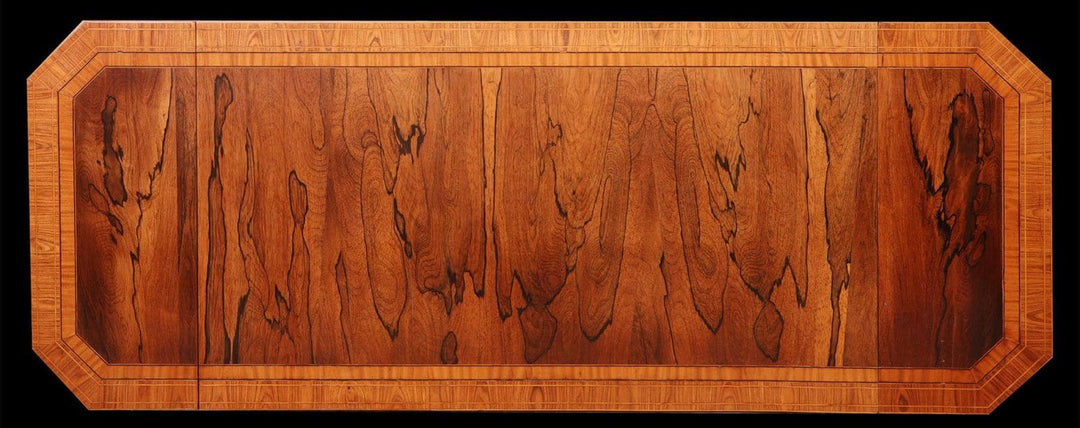
Designers often find that a single, commanding antique table provides the necessary visual weight to ground an otherwise ethereal, modern space. Placing a George III mahogany dining table within a glass-walled contemporary room creates a dialogue between the past and the present. It's the contrast that provides the energy. The deep, oxblood patina of 250-year-old timber offers a warmth that synthetic materials cannot replicate. This juxtaposition prevents a home from feeling like a sterile showroom, injecting it with a sense of soul and continuity.
Sustainability has become a primary driver for the modern collector. Research from the Antiques Are Green movement indicates that the carbon footprint of an antique is roughly 16 times lower than that of its modern equivalent. By choosing 18th century furniture, you're participating in the ultimate form of circular luxury. These pieces were built to last lifetimes, crafted by artisans who understood the nuances of timber and joinery before the era of planned obsolescence. It's a choice that respects both history and the planet.
Integrating Antiques into the Contemporary Home
Transforming a room requires the strategic placement of a hero piece. An 18th-century French commode, with its intricate marquetry and heavy ormolu mounts, functions as a piece of sculpture in a minimalist entryway. The interplay between the textured, hand-carved surfaces of the past and the smooth surfaces of modern stone or steel creates a rich sensory experience. Proper lighting is essential; using narrow-beam LED gallery spots can highlight the subtle undulations of the wood grain, making the object glow from within.
Investment Trends for 2026
As we look toward 2026, the market shows a distinct preference for signed pieces by master ébénistes. Exceptional English mahogany also remains a safe harbor for capital. Investors must prioritize liveability, as the most sought-after pieces are those that serve a purpose in a 21st-century lifestyle. Condition is paramount, yet over-restoration is a common pitfall. A piece that retains its original finish and minor signs of age often commands a 30 percent premium over one that has been stripped and repolished to look new.
Discover the perfect centerpiece for your collection by exploring our extraordinary selection of curated antiques today.
The Nicholas Wells Approach: Sourcing Extraordinary Antiques
The curation of 18th century furniture at Nicholas Wells Antiques is guided by an uncompromising standard of rarity and aesthetic integrity. We don't view these objects as mere commodities or decorative fillers. Instead, we approach each acquisition with the eye of a scholar, seeking out pieces that represent the zenith of their period's craftsmanship. Our collection is the result of over twenty years of rigorous searching across the globe, focusing on items that possess a distinct "soul." This intangible quality is found in the depth of a natural patina, the precision of a hand-cut dovetail, or the exquisite balance of a neoclassical silhouette. Every object we select must tell a significant narrative, connecting the modern collector to the artistic triumphs of the past.
We provide a bespoke service designed to meet the exacting requirements of interior decorators and private collectors across 45 different countries. Understanding that the acquisition of a major work is a significant commitment, we ensure the process is seamless and secure. We manage every detail of the journey. Our logistics team coordinates fully insured worldwide shipping, utilizing custom-built crates and specialized fine art couriers to guarantee that a delicate marquetry desk or a fragile giltwood mirror arrives in pristine condition. This global reach allows us to place extraordinary English and Continental masterworks into some of the world's most prestigious private residences and public institutions.
Our philosophy extends beyond the initial sale. We view ourselves as temporary custodians of history. This perspective fosters a relationship with our clients that is built on trust and shared passion. We don't just provide furniture; we offer a gateway into a world of historical connoisseurship where quality is the only metric that matters.
Complimentary Restoration and Preservation
Mastery in conservation is central to our identity. Our in-house workshop employs master restorers who possess decades of experience in traditional techniques. We adhere to a strict ethical code: every intervention must be reversible and sympathetic to the original maker's intent. We use period-correct materials, such as traditional hide glues and hand-applied shellac, to ensure the structural integrity of the piece without erasing its history. To help you maintain your acquisition, we provide bespoke care guides tailored to the specific woods and finishes of your item, ensuring it remains a legacy piece for generations.
Discover the Antique Furniture Collection
We invite you to experience these masterworks firsthand at our gallery in the heart of London. To ensure a focused and scholarly environment, we host viewings by appointment, allowing you the time and space to examine the fine details of our 18th century furniture under expert guidance. This personalized approach facilitates a deeper understanding of provenance and construction that digital images alone cannot convey. Each visit is an opportunity to engage with history in a tactile, intimate setting.
Elevating Your Interior with Timeless Artistry
Integrating 18th century furniture into a contemporary residence requires more than an appreciation for aesthetics; it demands a discerning eye for the structural integrity and verified provenance that define this golden age. Whether you're captivated by the intricate marquetry of a French commode or the architectural precision of English mahogany, these pieces represent a zenith of craftsmanship that modern production simply cannot replicate. Since 2012, our London based gallery has focused on sourcing items where the original patina remains undisturbed, ensuring each acquisition serves as both a significant cultural artifact and a robust financial investment.
We invite you to explore a collection where history meets the requirements of modern luxury. Every purchase includes complimentary restoration by master conservators to preserve the object's soul for future generations, while our fully insured worldwide shipping guarantees your selection arrives in pristine condition. View our curated 18th Century Furniture Collection today to find a piece that resonates with your personal narrative. Your journey into the world of extraordinary antiques begins with a single, magnificent discovery.
Frequently Asked Questions
How can I tell if a piece of 18th-century furniture is authentic?
Authenticity is verified through the presence of hand-cut dovetails and irregular saw marks on the secondary timbers. These early pieces exhibit specific construction techniques like the use of hand-planes that leave 2 millimeter variations on backboards. In a 1750s commode, the secondary woods like oak or pine should show 270 years of oxidation. Authentic examples lack the uniform precision of 19th-century circular saws.
What are the most valuable styles of 18th-century furniture?
Chippendale, Sheraton, and Louis XVI styles command auction prices exceeding 1 million dollars for premier examples. A rare Thomas Chippendale commode achieved a record price of 3.8 million pounds in 2010. Pieces featuring intricate marquetry or original ormolu mounts by masters like André-Charles Boulle remain the gold standard. Collectors prioritize 1760s English mahogany for its dense grain and superior carving potential.
Is 18th century furniture a good investment in 2026?
High-quality 18th century furniture remains a stable asset as 2026 approaches. Blue-chip antiques have historically appreciated by 4 to 6 percent annually over long-term cycles. With only a finite number of 1780s pieces surviving in original condition, scarcity drives value. Investors often find that a single 50,000 dollar desk retains its worth better than mass-produced contemporary luxury items.
What is the difference between Georgian and Louis XVI furniture?
Georgian furniture emphasizes mahogany and architectural symmetry while Louis XVI design favors gilded beechwood and neoclassical restraint. The British Georgian period, spanning 1714 to 1837, focused on functional elegance and solid timber. Conversely, the 1774 to 1792 French style introduced tapered fluted legs and delicate porcelain plaques. The 1750 style prioritizes the natural beauty of wood; the 1780 style celebrates ornate decorative arts.
How do I care for 18th-century mahogany or walnut furniture?
Apply a high-quality beeswax polish once every 12 months to maintain the wood's natural oils and deep patina. You should keep the humidity levels between 40 and 50 percent to prevent the 250 year old timber from shrinking or cracking. Avoid direct sunlight which fades 1740s walnut veneers within 3 months of exposure. A soft lint-free cloth is the only tool needed for routine dusting.
Can 18th century furniture be used in a modern home?
A single piece of 18th century furniture creates a sophisticated focal point in a 21st-century minimalist interior. Designers often pair a 1790s Sheraton sideboard with contemporary art to add historical depth to a room. This juxtaposition works because the clean lines of neoclassical furniture mirror modern aesthetic preferences. It's a proven method to ground a new space with 300 years of character.
What does 'provenance' mean in the context of antique furniture?
Provenance is the documented history of an object's ownership from its creation to the present day. A 1770 library table with a direct link to a specific stately home can increase in value by 40 percent compared to an anonymous piece. This paper trail confirms authenticity and adds a layer of cultural narrative. It transforms a physical object into a verified historical record.
Do you offer international shipping for large furniture items?
We coordinate white-glove international shipping for items over 2 meters in length to 50 countries including the United States. Every antique piece is secured in a custom-built heat-treated crate to meet ISPM 15 standards. We manage all CITES permits and customs documentation to ensure your acquisition arrives safely. Delivery to major hubs like New York or Dubai typically takes 14 to 21 days.


Leave a comment