



Antique Stools & Benches: A Buying Guide to 18th–19th Century Seating
The sculptural elegance of 18th and 19th-century stools and benches
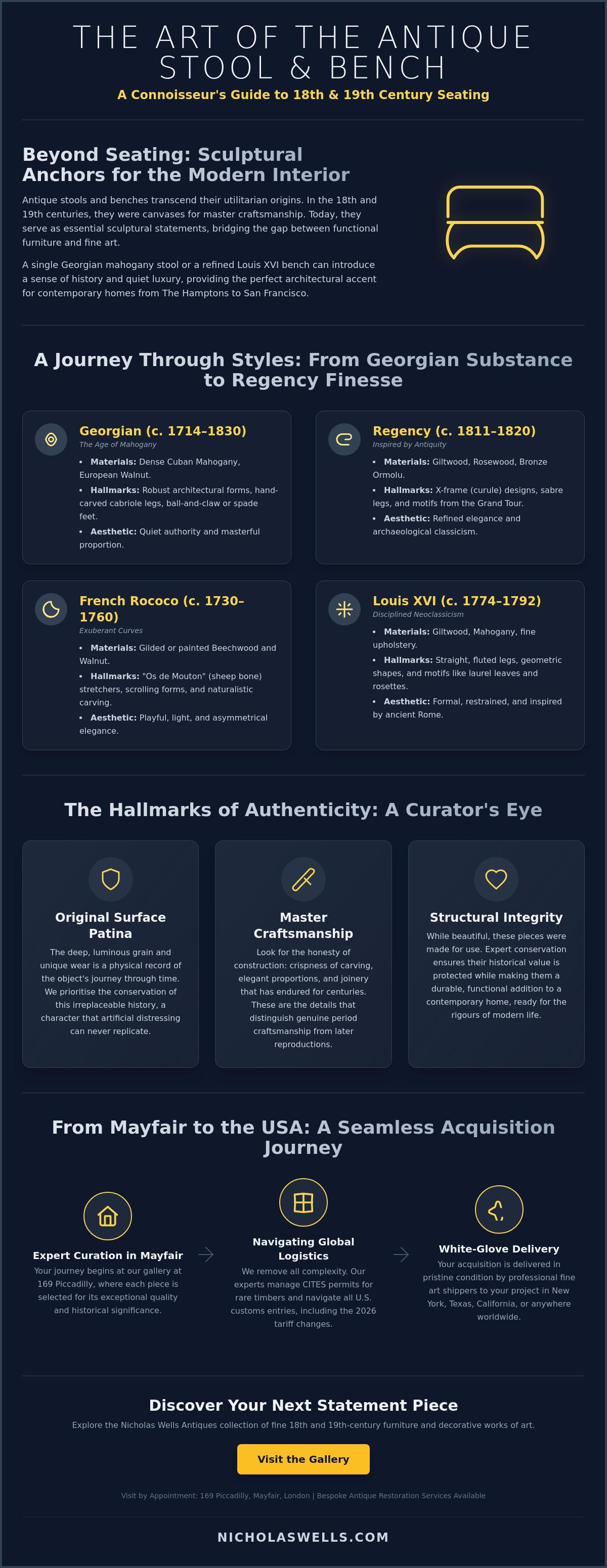
In the hierarchy of period furniture, antique stools and benches occupy a unique and often underestimated position. More than mere auxiliary seating, they are versatile, sculptural elements that bridge the gap between functional furniture and fine art. During the 18th century, a golden age for English cabinetmaking, craftsmen lavished extraordinary attention on these forms, using them as canvases to showcase intricate carving, elegant proportions, and the inherent beauty of rare timbers like dense Cuban mahogany and richly figured walnut. The result is an object of quiet luxury, where the deep, mellow colour and lustrous surface patina, developed over centuries, stands in stark contrast to the uninspired uniformity of modern reproductions. Within the sophisticated interiors of the English town and country house, these pieces served a dual role: providing practical seating in hallways, window bays, and at the foot of a bed, while also acting as powerful architectural accents that completed a room’s design.
Why antique seating transcends utility
Unlike the often sterile character of contemporary mass-produced furniture, a period stool or bench introduces a profound sense of history and a homely atmosphere into an interior. Each mark, scuff, and subtle variation in colour contributes to its 'surface patina'—a visual record of its journey through time. This accumulated history is the very soul of an antique, offering a tangible connection to the past that cannot be replicated. It is this character that allows a simple piece of seating to elevate a space from a decorated room to a curated home.
The versatility of the bench in the modern interior
The timeless design of 18th and 19th-century benches allows for remarkable versatility in contemporary settings. A long hall bench can create a commanding focal point in an entrance foyer, placed beneath a grand antique mirror to establish a tone of classical elegance. A pair of stools might flank a fireplace or sit at the end of a bed, providing both function and decorative balance. Similarly, a low-profile bench can offer a sophisticated seating solution alongside a Regency dining table, ensuring sightlines remain open while adding a layer of historical authenticity to the dining experience.
Defining 18th and 19th-century styles: From Georgian mahogany to French giltwood
The evolution of antique stools and benches across the 18th and 19th centuries reflects the shifting tastes and cultural influences of the era. Understanding these stylistic distinctions is essential for the discerning collector.
- Georgian Mahogany Stools: The Georgian period (1714–1830) witnessed a transition from the heavy, ornate forms of the early Baroque to the refined, architecturally-inspired designs of makers like Thomas Chippendale and George Hepplewhite. Stools from this era are often characterised by their use of solid mahogany, featuring cabriole legs, ball-and-claw feet, and exquisitely carved details.
- Regency Elegance: Influenced by the discoveries of the Grand Tour and the aesthetics of classical antiquity, the Regency period (1811–1820) favoured more delicate and archaeological forms. Giltwood, ebonised finishes, and decorative ormolu mounts became fashionable, with the X-frame or 'curule' stool emerging as a signature design of the era.
- French Louis Styles: Continental design offered a compelling contrast. The French Louis XV period favoured the curvilinear, with 'Os de Mouton' (sheep bone) benches displaying sinuous, carved lines. This Rococo exuberance later gave way to the neoclassical restraint of the Louis XVI style, which featured straighter lines, tapered legs, and Greco-Roman motifs.
- Victorian and 19th-century developments: The Victorian era embraced a wide range of revivalist styles, from Gothic to Rococo. Seating became more focused on comfort, with a shift toward sumptuous upholstery in deep-buttoned velvet and horsehair. These pieces were often larger in scale, reflecting the confident and eclectic tastes of the 19th century.
The hallmark of the English cabinetmaker
The enduring quality of an 18th-century 'joined stool' is a testament to the unparalleled skill of the period's cabinetmakers. Using traditional techniques such as mortise-and-tenon joinery, these craftsmen created pieces of immense structural integrity that have withstood centuries of use. This focus on construction is why a genuine Georgian stool remains not only beautiful but eminently functional today. For a broader understanding of the period's craftsmanship, one can explore the wider context of antique seating, where these principles of design and durability are evident across all forms.
Upholstery and finish: Needlepoint to velvet
The surface of a stool or bench tells its own story. Early examples might feature simple caned or wooden seats, which gradually gave way to more comfortable and decorative upholstered surfaces. Elaborate needlepoint and gros point embroidery were popular in the 18th century, often worked by the ladies of the house. At Nicholas Wells Antiques, any necessary restoration of these fabrics is undertaken with the utmost sympathy, using period-appropriate materials and techniques to preserve the piece's historical and aesthetic integrity, ensuring the new covering is a compliment to the original frame.
A connoisseur's criteria: Evaluating patina, provenance, and placement
Acquiring a fine antique stool or bench requires a discerning eye and an understanding of the key indicators of quality and authenticity. A connoisseur looks beyond the basic form to assess the subtle details that separate a good piece from an exceptional one.
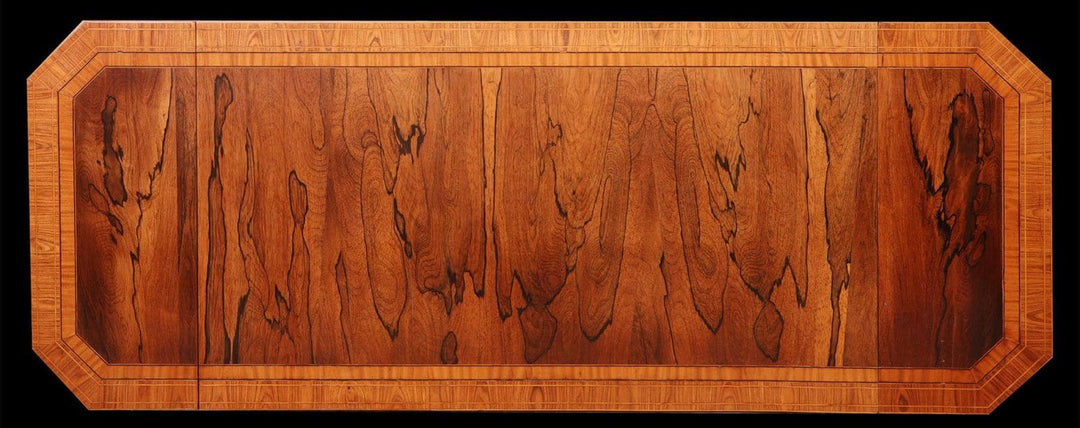
- The 'Original Surface' test: An authentic patina is built up slowly over centuries of waxing, polishing, and human contact. Learn to distinguish this deep, lustrous glow from the flat, often-exaggerated appearance of artificial distressing. An original surface has a depth and variation that cannot be faked.
- Timber and Grain: The mahogany used by 18th-century cabinetmakers was often old-growth timber from Cuba and Honduras, possessing a density, colour, and 'fire' in its grain that modern, commercially forested wood simply cannot replicate.
- Structural Integrity: A quality antique should feel solid and robust. When assessing a piece for daily use in a high-traffic area like a foyer or living room, check for secure joints and a stable frame. Proper conservation ensures these pieces are ready for modern life.
- Avoiding common mistakes: The greatest danger to an antique is over-restoration, which can strip away its history and value. A piece should show its age gracefully. The goal of conservation is to stabilise and preserve, not to erase the 'soul' of the piece by making it look new.
Integrating antiques into American luxury homes
The classical elegance of these pieces translates seamlessly into the most sophisticated American interiors. For a refined coastal aesthetic in the Hamptons, a pair of French 'Os de Mouton' benches in a painted finish can introduce a note of European grace. In the grander-scale homes of Texas and California, a substantial 18th-century mahogany stool can provide the perfect visual anchor beside a commanding Georgian mahogany sideboard, creating a cohesive and historically rich design narrative.
The importance of provenance
Provenance is the documented history of an object's ownership, providing a crucial record that helps to guarantee its authenticity and historical significance. A paper trail, a maker's mark (such as that of the celebrated firm Gillows of Lancaster and London), or a known history of inclusion in a significant collection can dramatically increase a piece's long-term value and desirability. It is the ultimate assurance of quality for a serious collector.
Acquiring rare seating: The Nicholas Wells collection and bespoke restoration
The Nicholas Wells Antiques collection is carefully curated to include only the finest and rarest examples of 18th and 19th-century seating. Each piece is selected for its exceptional design, superior craftsmanship, and coveted original condition. We believe that the value of an antique lies in its history, and our approach to conservation reflects this philosophy. The Nicholas Wells Guarantee ensures that every item includes complimentary professional restoration, a process meticulously managed to preserve the unique antique surface while ensuring the piece is structurally sound for contemporary use.
The bespoke restoration process
Our philosophy centres on the conservation of the 'surface patina'. Before any work is undertaken, each piece is carefully assessed. Our specialised restorers then employ traditional techniques to stabilise joints, repair veneers, and revive finishes without stripping away the essential character of the object. This service, included in the purchase price, is a distinct advantage for international collectors, providing peace of mind that their acquisition will arrive in optimal, ready-to-place condition.
Seamless international delivery
Nicholas Wells Antiques has extensive experience in managing the complexities of shipping fine art and furniture worldwide. We provide a seamless, white-glove delivery service to clients across the United States, from New York and Greenwich to San Francisco and Dallas. The process is simple and secure:
- Expert Packing: Your piece is professionally crated by fine art specialists who understand the unique requirements of antique furniture.
- Fully Insured Transit: Every shipment is fully insured from the moment it leaves us to its arrival at your door, managed by trusted international logistics partners.
- White-Glove Installation: Upon arrival, a dedicated team will unpack, inspect, and place your new acquisition exactly where you envision it in your home.
Frequently Asked Questions (FAQs)
How do I know if a stool or bench is a genuine 18th-century antique?
Authenticity is determined by a combination of factors. Examine the timber for the dense, rich grain of old-growth mahogany or walnut. Look for signs of hand-craftsmanship, such as subtle irregularities in the carving and traditional joinery like mortise-and-tenon joints. Most importantly, assess the patina—a genuine surface possesses a deep, mellow lustre and signs of natural wear that cannot be convincingly replicated.
Can antique benches and stools be reupholstered without losing their value?
Yes, provided it is done sympathetically. If the original upholstery is damaged beyond repair, reupholstering with a period-appropriate fabric (such as horsehair, damask, or high-quality leather) using traditional techniques can protect the frame and enhance the piece's usability. The key is to avoid modern materials and methods that would be incongruous with the object's history.
Are 19th-century stools strong enough for everyday use in a modern home?
Absolutely. Pieces from the 19th century were typically very well constructed from solid timbers. When properly vetted for structural integrity and, if necessary, sensitively restored, they are more than capable of withstanding regular use. Their durability is a testament to the quality of craftsmanship from the period, which often surpasses that of modern furniture.
How does Nicholas Wells Antiques handle shipping to the United States?
We offer a comprehensive, white-glove shipping service to all our clients in the United States. We work exclusively with professional fine art shippers who specialise in handling delicate and high-value objects. Every piece is expertly packed, crated, and fully insured for international transit, ensuring it arrives safely and is installed in your home by a professional team.
What is the difference between a Georgian stool and a Regency stool?
The primary difference lies in their design ethos. Georgian stools, particularly from the Chippendale era, are often made of dark mahogany and are characterised by robust, sculptural forms like the cabriole leg and ball-and-claw foot. Regency stools, influenced by neoclassicism, are typically more delicate and architectural, often featuring giltwood or ebonised finishes, X-frame legs, and motifs drawn from ancient Greece, Rome, and Egypt.
Does the gallery offer restoration services for pieces not purchased from them?
Our in-house conservation and restoration services are a complimentary part of the acquisition process and are reserved exclusively for pieces within the Nicholas Wells Antiques collection. This allows us to maintain a rigorous standard of quality and historical integrity, ensuring every item we sell meets our exacting criteria before it is delivered to a client.


Leave a comment