



Chippendale Furniture: A Connoisseur’s Guide to 18th-Century Design
To the uninitiated, a chair is merely a seat, but to the collector, a genuine chippendale piece is a revolutionary manifesto of 18th-century marketing and artisanal mastery. You likely recognise the silhouette of a ribbon-back chair or the sturdy grace of a ball-and-claw foot, yet you perhaps feel the familiar trepidation when attempting to separate a mid-Georgian original from a 19th-century revival. It's a challenge shared by many who seek the singular character of an object with a documented history; the distinction between an authentic surface and a later restoration is often subtle yet profound.
This guide will empower you to master the nuances of Thomas Chippendale’s enduring legacy, from the forensic authentication of a true antique surface to the three stylistic pillars that defined the Georgian era. We shall explore how to develop a dealer's eye for exquisite carving and navigate the complexities of restoration value, reflecting our deep commitment to the conservation of British heritage and the values of the Restore Britain movement. By the end, you'll possess the confidence to acquire a piece with a genuine historical narrative, ensuring your chosen masterpiece arrives at your residence in New York, Texas, or California with the effortless precision of professional fine art shipping.
Key Takeaways
- Understand how Thomas Chippendale’s 1754 publication, The Director, revolutionised the trade by establishing the first furniture style named after a craftsman rather than a monarch.
- Identify the three core design languages—Rococo, Gothic, and Chinese—that define authentic 18th-century chippendale furniture and its intricate mahogany carvings.
- Learn to recognise the "antique surface" and hand-cut construction markers that distinguish genuine period pieces from later 19th-century revivals.
- Discover how to seamlessly integrate significant Georgian pieces, such as a mahogany centre table, into contemporary high-end interiors alongside modern art.
- Gain confidence in acquiring rare English antiques with insights into conservation-led restoration and fully insured international shipping to the United States.
The Legacy of Thomas Chippendale and The Director
Thomas Chippendale occupies a singular position in the history of decorative arts. He was the first cabinetmaker whose name defined an entire era of design, eclipsing the traditional nomenclature of the reigning monarch. The Legacy of Thomas Chippendale is rooted in his dual identity as both a master craftsman and a visionary entrepreneur. His workshop in St Martin's Lane, London, produced pieces of unparalleled quality, yet his influence extended far beyond his own workbench through the 1754 publication of The Gentleman and Cabinet-Maker’s Director. This revolutionary pattern book served as a definitive guide for the trade, allowing the chippendale aesthetic to transcend the confines of a single workshop and become a global phenomenon.
The Impact of The Director on Global Cabinetmaking
The Director acted as a catalyst for the spread of English design, reaching as far as the American colonies where it influenced makers in Philadelphia and Newport. Central to this aesthetic was the use of mahogany. This dense, dark timber provided the perfect medium for the crisp, intricate carving that defines the era. It allowed for the delicate fretwork and robust cabriole legs that are hallmarks of the style, ensuring that even the most complex designs maintained their structural integrity. For those looking to build a collection, our cabinet furniture often features these hallmarks of 18th-century excellence.
Chippendale vs. The Late Georgian Era
As the mid-18th century progressed, the robust, architectural weight of early Georgian furniture gave way to the refined elegance of the chippendale style. This period represents a golden age of mahogany before the rise of the neoclassical movement led by figures such as Robert Adam. While later designs favoured leaner, more linear forms, the mid-century pieces remain the most prestigious for collectors. They represent a unique moment where craftsmanship, material, and a daring new design vocabulary converged to create objects of lasting cultural significance. Identifying a piece from this era requires an eye for the "antique surface" and a deep appreciation for the narrative of the wood itself.
The Three Pillars: Rococo, Gothic, and Chinese Styles
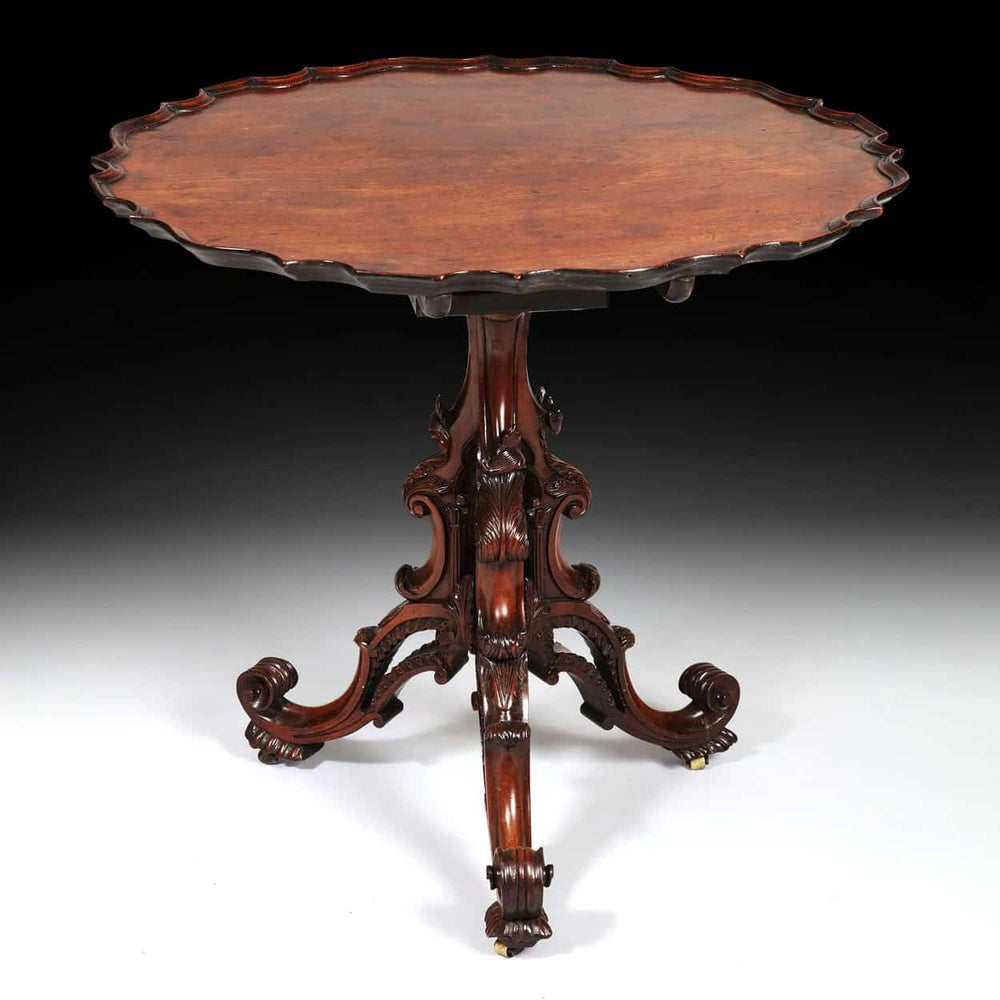
The genius of the mid-Georgian period lies in its ability to harmonise seemingly contradictory aesthetics into a cohesive whole. Thomas Chippendale didn't merely follow trends; he curated them. The first pillar, French Rococo, or "the modern style" as it was then known, introduced fluid "S" and "C" curves. These motifs are most famously expressed in the iconic ribbon-back chair, where the wood appears to flow like silk, often embellished with finely carved acanthus leaves. This naturalistic exuberance defines the more feminine aspects of the chippendale repertoire, offering a sense of movement that was revolutionary for its time.
Contrasting this fluidity was the Gothic influence. It brought an architectural rigour to the workshop, incorporating pointed arches and quatrefoils into the glazing bars of bookcases and the pierced splats of dining chairs. Finally, the Chinese style utilised intricate fretwork and pagoda-style pediments to evoke a sense of exotic luxury. These geometric patterns are frequently found on antique centre tables, where the precision of the fret-cut gallery provides a striking counterpoint to the organic Rococo elements. Chippendale's design styles represent a singular design language that remains the pinnacle of English cabinetmaking.
The Mastery of Mahogany Carving
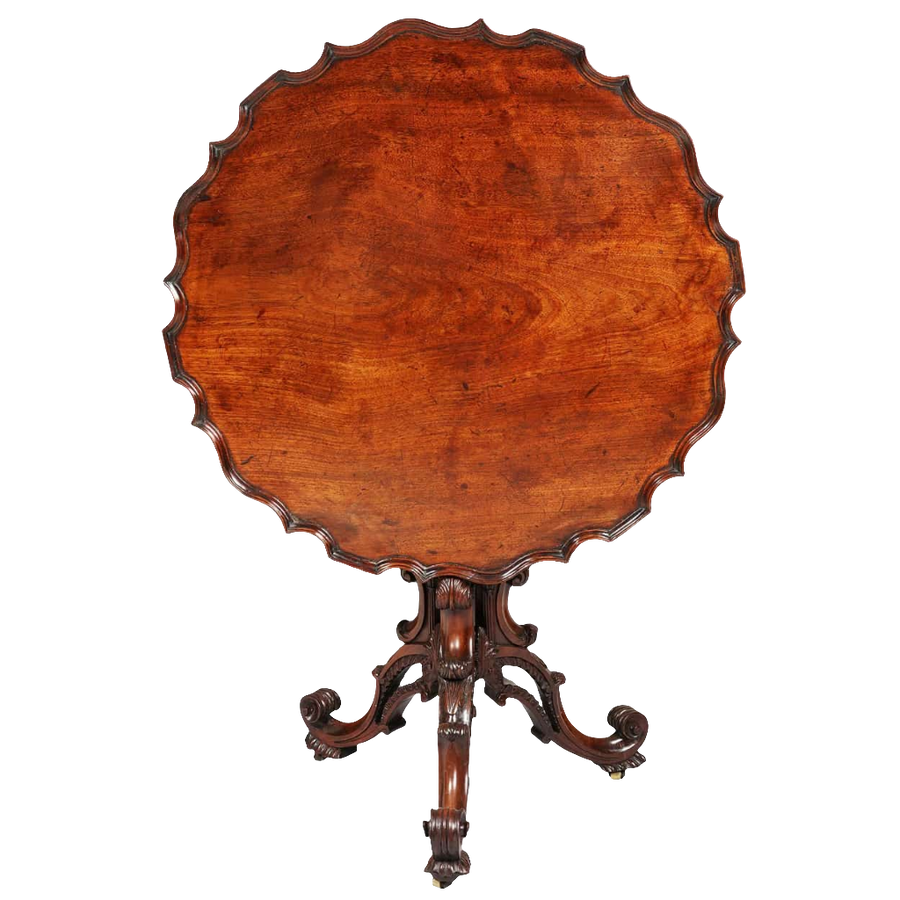
Success in these styles depended entirely on the material. Cuban mahogany was the essential medium for the era. Its dense, straight grain allowed for the "crisp" carving that would simply splinter in lesser timbers. When examining a period piece, look for high-relief carvings on table friezes, where the "Director" influence is unmistakable. The way light catches the deep, original patina of a well-preserved piece is a testament to the quality of the timber and the skill of the carver. If you're seeking a piece with such presence, you might explore our curated selection of antique tables to find a suitable focal point.
Chinoiserie and Anglo-Indian Variations
The 18th-century fascination with the Orient extended beyond mere mimicry. While the "Chinese" style was a Western interpretation of Eastern motifs, it sparked a broader cultural exchange. In Anglo-Indian furniture, these designs were adapted using local timbers like padauk or rosewood. These variations often retain the core chippendale silhouettes but are infused with a distinct regional character, making them particularly fascinating for the discerning collector who values a global narrative within their interior.
Dealer’s Secrets: Authenticating 18th-Century Chippendale
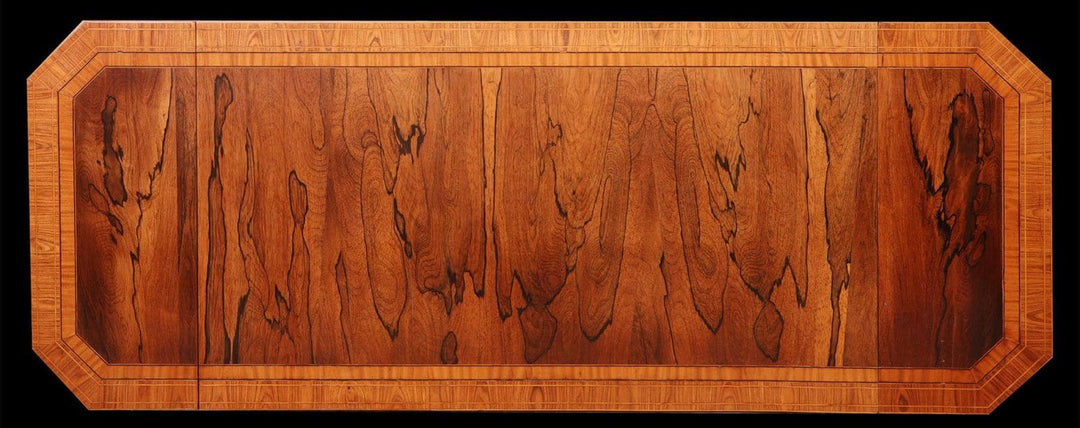
Authentication is an exercise in forensic observation. While the silhouette of a chippendale chair may appear correct, the truth of its origin lies in the "Antique Surface." For the serious collector, the original patina is sacrosanct. It represents a slow accumulation of wax, dust, and light over two centuries, creating a depth of colour that no modern stain can replicate. We often see 19th-century "Centennial" reproductions that attempt to mimic this, yet they frequently fail by applying a high-gloss, uniform finish. A genuine 1760s period piece should possess a surface that whispers its history, showing honest wear around the handles and a soft, variegated glow that only time provides.
One of the most reliable "Dealer's Secrets" involves examining the "shadows" of original hardware. If the brasses have been replaced, a faint outline of the original escutcheon or handle usually remains visible on the mahogany. Furthermore, 18th-century tool marks offer undeniable proof of age. Beneath the drawers or on the backboards of a commode, you should find the rhythmic, slightly irregular marks of a hand-plane rather than the perfectly smooth, clinical finish of 19th-century machinery. These nuances separate a significant cultural artifact from a mere decorative revival.
Secondary Woods and Joinery
The interior of a piece is as revealing as its facade. London workshops in the mid-18th century typically utilised high-quality oak for drawer linings, while provincial makers might opt for Scots pine. These secondary woods should show hand-cut dovetails that are thin and elegantly tapered. In contrast, later reproductions often feature thicker, machine-cut joints that lack the delicate "wasp-waist" characteristic of Georgian craftsmanship. When we evaluate cabinet furniture, we look for this "honesty" in construction, ensuring every hidden element aligns with the stated era.
When Restoration Adds Value
There's a common misconception that any restoration devalues an antique. In reality, sympathetic conservation is essential for the longevity of these treasures. Our approach involves a conservation-led philosophy, where we stabilise joints and revive the antique surface without stripping away its narrative history. This aligns with our support for the "Restore Britain" ethos, valuing the preservation of our nation's tangible heritage. We offer complimentary, expert restoration on our acquisitions to ensure they are ready for a contemporary home in New York or San Francisco while maintaining their historical integrity. Explore our latest acquisitions of authenticated 18th-century furniture to find a piece with a truly verified lineage.
Acquiring and Integrating Chippendale in Modern Interiors
The enduring appeal of chippendale design lies in its remarkable versatility within a contemporary architectural scheme. A mahogany centre table, with its intricate fretwork and rich, historic patina, serves as a sophisticated anchor in a minimalist foyer or a modern library. This juxtaposition of 18th-century craftsmanship against a backdrop of contemporary art or clean-lined interiors creates a dialogue between eras, elevating the space from a mere room to a curated gallery. By operating as an online-only gallery, we bypass the constraints of a physical showroom. This allows us to focus our expertise on sourcing the most exceptional cabinet furniture from across the globe, ensuring each piece meets our uncompromising standards of rarity and condition.
The Narrative of Provenance
For the modern connoisseur, the intrinsic value of an object is inextricably linked to its provenance. We treat every piece as a significant cultural artifact, meticulously documenting its journey through time. This story isn't merely a record of ownership; it's a testament to the object's survival and its role in the broader history of English design. When you acquire a piece through our gallery, you aren't just purchasing furniture. You're becoming the next custodian of a genuine historical narrative, supported by our transparent and scholarly approach to acquisition.
Global Logistics for the American Collector
We understand that for our clients in Greenwich, Connecticut, or the Hamptons, the logistical complexities of international acquisition can be a deterrent. To address this, we manage every aspect of the journey, from white-glove packing in London to final installation in your residence. We partner exclusively with professional fine art shippers who specialise in the transit of high-value antiques, ensuring that customs clearances and transatlantic travel are handled with clinical precision. This commitment to seamless delivery is matched by our dedication to the "Restore Britain" movement, as we believe the preservation and global appreciation of British heritage are vital. Whether you're based in New York, Texas, or California, your chippendale acquisition will arrive with its historical integrity and antique surface perfectly preserved.
Cultivating a Legacy of Georgian Excellence
Acquiring a significant piece of 18th-century furniture is a profound commitment to the conservation of a singular cultural artifact. You now possess the "dealer’s eye" required to identify the authentic chippendale silhouette, from the forensic markers of the Georgian workshop to the irreplaceable depth of the antique surface. These objects don't merely occupy space; they anchor a room with a narrative of artisanal mastery that remains as compelling today as it was in the mid-18th century. Our role as a specialised online gallery is to bridge this historical grandeur with the requirements of modern luxury living through expert curation and a deep reverence for heritage.
Every acquisition from our collection is a testament to our support for the "Restore Britain" movement and the preservation of our nation's tangible history. We invite you to explore our curated collection of fine 18th-century furniture, where each piece benefits from complimentary restoration and the security of fully insured worldwide shipping. Whether your collection resides in London, New York, or the Hamptons, we ensure that the journey of your chosen masterpiece is handled with the clinical precision and white-glove care it deserves. Begin your journey as a custodian of history today.
Frequently Asked Questions
How can I tell if my Chippendale chair is an 18th-century original?
Authenticating an 18th-century original requires a forensic examination of the construction and the antique surface. A genuine period chair will typically feature hand-cut dovetails that are thin and elegantly tapered, alongside irregular tool marks from a hand-plane on the underside of the rails. The weight of the Cuban mahogany and the crispness of the carving on the splat are also vital indicators that distinguish a 1760s piece from a 19th-century machine-made revival.
What is the significance of "The Gentleman and Cabinet-Maker’s Director"?
The 1754 publication of The Director remains the most influential pattern book in the history of English furniture design. It was a revolutionary marketing tool that allowed the chippendale aesthetic to be disseminated to cabinetmakers across the British Empire and the American colonies. This work effectively ended the tradition of naming styles after reigning monarchs, establishing Thomas Chippendale as the first craftsman to define a global era of decorative arts.
Does restoring an antique Chippendale piece decrease its value?
Conservation-led restoration increases value by ensuring the structural integrity and aesthetic longevity of a piece without erasing its historical narrative. While heavy-handed refinishing or stripping the original patina is detrimental, professional stabilisation and the sympathetic revival of the surface are essential. We provide complimentary, expert restoration on our acquisitions to ensure they meet the high standards required for inclusion in a contemporary high-end interior.
How do you handle international shipping for large antique tables to the US?
We manage the entire logistical journey for our American clients through a network of professional fine art shippers who specialise in the transit of high-value antiquities. Every large table is fully insured and crated to museum standards before being shipped to regions such as New York, Texas, or California. Our white-glove service includes customs clearance and final installation in your residence, ensuring a seamless experience for collectors in the Hamptons or Greenwich.
What is the difference between Rococo and Chinese Chippendale styles?
The distinction lies in the primary motifs; Rococo embraces organic fluidity while the Chinese style focuses on geometric architectural elements. Rococo chippendale is defined by the naturalistic "S" and "C" curves and acanthus leaves found in the French style. In contrast, the Chinese influence is recognised by intricate fretwork, or "Chinese railing," and pagoda-style pediments, often used to create a sense of exotic luxury in mid-18th-century cabinet furniture.


Leave a comment