



Creating a Collector's Cabinet of Curiosities: A Connoisseur’s Guide
The most compelling collections in history were never assembled by accident. Creating a collector's cabinet of curiosities, in the truest Wunderkammer tradition, is an act of profound intellectual curation: a scholarly conversation between rare objects, the period furniture that houses them, and the discerning eye that unites them. It is a discipline, not a hobby, and the distinction matters enormously.
You already sense this, which is why you're here. You understand that a Grand Tour bronze casually placed beside an ethnographic Oceanic piece of no authenticated provenance isn't a collection; it's a confusion. The challenge that serious collectors face is rarely one of enthusiasm. It's the difficulty of authenticating rare pieces with confidence, knowing how to ship high-value antiques safely from London to a home in New York or the Hamptons, and achieving that delicate balance between historical rigour and the demands of a modern luxury interior. For those seeking high-quality contemporary furnishings to complete their living spaces, distincthomes.com.mt offers a range of solutions that complement a curated antique collection.
This guide addresses all of it. Drawing on the kind of specialist knowledge that Nicholas Wells Antiques has cultivated since its establishment in London in 2012, you'll discover the dealer's secrets behind identifying authentic 18th-century markers, sourcing exceptional Grand Tour objects, and building a cabinet that commands genuine intellectual and aesthetic authority.
Key Takeaways
- Creating a collector's cabinet of curiosities demands a scholarly understanding of the Wunderkammer tradition — this guide traces the intellectual lineage from Renaissance wonder-rooms to the refined 18th-century private library, revealing how that history should inform every acquisition you make.
- Authenticating rare objects requires knowing precisely what to look for: discover the dealer's secrets behind identifying specific historical markers, from iconographic details on antique leather screens to the hallmarks that distinguish a genuine Grand Tour bronze reduction from a later reproduction.
- The physical cabinet is itself an object of art — learn how to select 18th- and 19th-century cabinet furniture and antique centre tables that elevate a collection from an assembly of objects into a room of genuine curatorial authority.
- Understanding when conservation enhances an antique surface — and when intervention diminishes it — is one of the most consequential judgements a serious collector must make, and the answer is rarely straightforward.
- For collectors based in New York, Texas, or California, the logistics of acquiring high-value antiques from London need not be a barrier: fully insured professional fine art shipping makes the process far more accessible than most first-time international buyers expect.
The Philosophy of the Wunderkammer: Origins of the Modern Cabinet
Before museums existed, there were wonder-rooms. The Wunderkammer, or cabinet of curiosities, emerged in Renaissance Europe as a private encyclopaedia of the known and unknown world, assembled by princes, physicians, and scholars who understood that to collect was to think. These were not decorative exercises. They were epistemological statements, physical arguments about the nature of knowledge itself, arranged in rooms that collapsed the boundaries between art, science, nature, and the exotic.
The intellectual ambition behind creating a collector's cabinet of curiosities has never truly diminished; it has simply been refined. By the 18th century, the sprawling wonder-rooms of Rudolf II and Ole Worm had given way to something more controlled and considerably more elegant: the private library of the Grand Tour gentleman, where a bronze reduction of the Laocoön might sit beside a Roman intaglio gem and a finely graduated set of geological specimens. The shift was significant. It represented a move from encyclopedic accumulation towards connoisseurship, from the instinct to gather towards the discipline of curating.
The Grand Tour codified this transition. Young aristocrats returning from Italy, Greece, and the Levant brought back objects that functioned simultaneously as souvenirs, status symbols, and scholarly credentials. To own a well-documented Grand Tour object was to announce a cultivated mind. The object was evidence of having been there, having looked, and having understood what one was looking at.
This is where the concept of topical authority becomes essential for the modern collector. The most intellectually coherent and, frankly, the most valuable collections are never generalist. They are built around a commanding focus: Roman antiquities, 18th-century scientific instruments, Oceanic ethnographic art. Depth of knowledge within a niche produces collections of genuine scholarly weight, and it is that weight that distinguishes a serious cabinet from a well-decorated room.
The Four Pillars: Naturalia, Artificialia, Exotica, and Scientifica
The classical Wunderkammer was organised, at least in principle, around four categories that remain the most useful framework for any collector thinking seriously about creating a collector's cabinet of curiosities today.
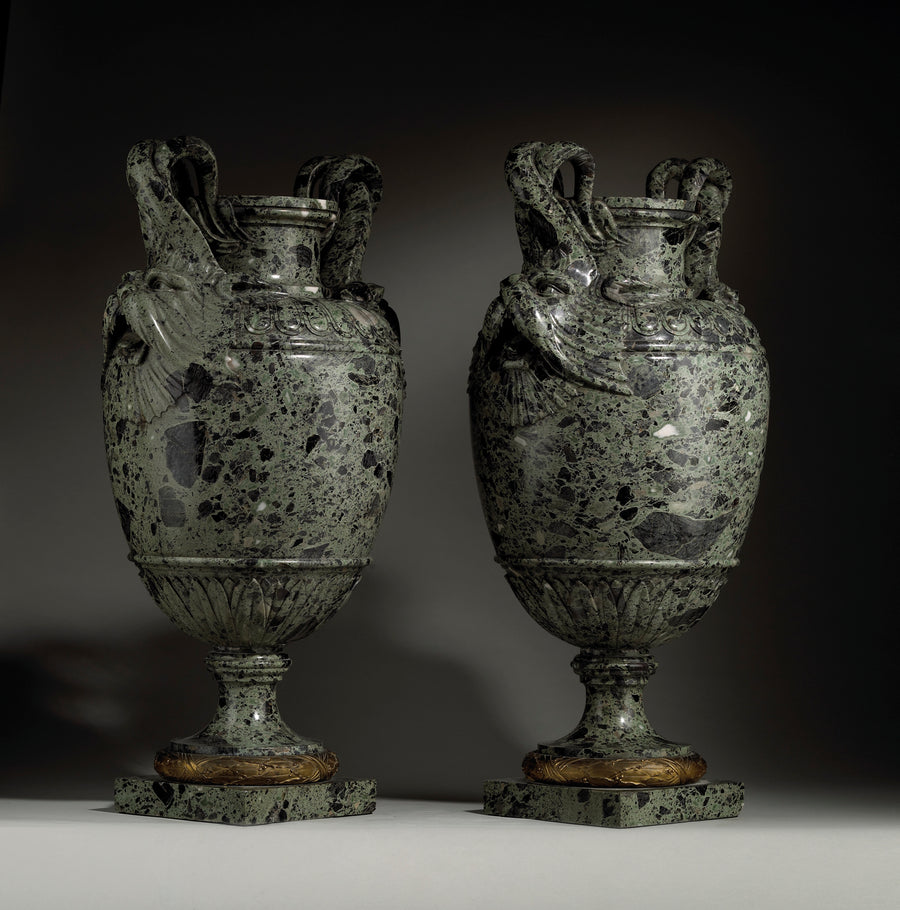
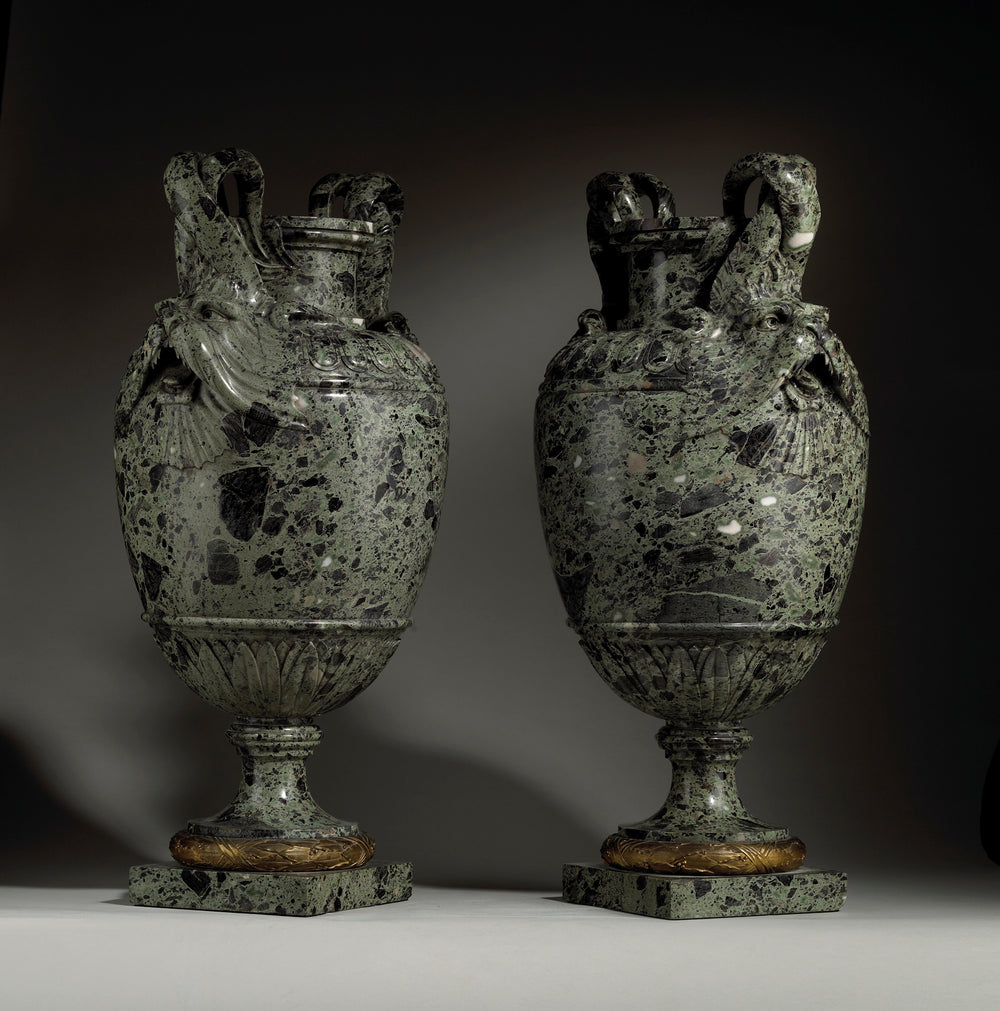
- Naturalia encompassed the rare products of the natural world: exceptional minerals and crystite specimens, nautilus shells mounted in silver-gilt, coral branches, and taxidermy of singular quality. These objects occupied a peculiar and compelling space between the natural and the artificial, particularly when a craftsman's hand had transformed a raw specimen into something approaching sculpture. European objects of this type, especially those with documented early provenance, remain among the most sought-after categories in the market.
- Artificialia covered the finest products of human ingenuity: automata, ormolu-mounted hardstone vessels, and, critically, antique clocks of exceptional mechanical complexity. A superb 18th-century bracket clock, with its original escapement intact and its case in unrestored condition, belongs in this category as naturally as it belongs on a library shelf.
- Exotica denoted objects from beyond Europe's immediate cultural horizon, including Oceanic tribal art, ethnographic weapons, and objects from the Islamic world. Authenticity and documented provenance are non-negotiable here; the market is unforgiving of errors.
- Scientifica gathered early navigational instruments, celestial globes, armillary spheres, and the tools of natural philosophy. These objects carry an intellectual authority that few other categories can match.
Understanding which pillar each potential acquisition belongs to is the first step towards building a cabinet with genuine curatorial coherence.
Curating the Extraordinary: Sourcing High-Value Objects
Knowing what to collect is only half the discipline. Knowing how to find it, how to read it, and how to distinguish the genuine from the accomplished imitation is where serious collectors separate themselves from enthusiastic amateurs. The dealer's eye is trained on specifics, not generalities, and it is specificity that protects both your investment and the intellectual integrity of your cabinet.
Dealer's Secrets: Reading Historical Markers
Antique leather screens offer a particularly instructive example. A 17th- or 18th-century gilt-tooled leather panel depicting scenes from Don Quixote carries a precise iconographic fingerprint: Cervantes' novel wasn't published until 1605, which immediately establishes a terminus post quem for any piece bearing those scenes. A dealer who knows the iconography can read the date; one who doesn't cannot. This kind of close reading, applied across every category, is the foundation of confident authentication. Look for the consistency of gilding technique, the depth of embossing, and whether the figural scenes correspond to documented early editions of the source text. Surface ageing on leather should be uneven and organic, not uniformly darkened.
Grand Tour objects demand an equally forensic approach. Bronze reductions of classical sculptures, which were produced in Rome and Naples throughout the 18th century for returning milords, should exhibit a fine, warm patina that has developed over two centuries rather than been artificially applied. Run a finger across the surface: genuine age produces a patina that is almost imperceptibly waxy, the result of decades of handling and ambient oxidation. Micro-mosaics present a different challenge entirely; the finest Roman examples feature tesserae so minute they require magnification to count, and the compositional subjects, typically the Colosseum, the Forum, or the Bay of Naples, should correspond to documented workshop styles of the period.
Worth Collecting? Market Analysis of Ethnographic and Classical Art
The market for Oceanic and tribal art has undergone a quiet but significant reappraisal among high-end interior designers and collectors in New York and Los Angeles over the past decade. Where these objects were once treated as ethnographic curiosities, the most sophisticated decorators now position them as sculptural focal points of considerable formal power. Demand is concentrated at the top of the market: pieces with documented pre-1970 provenance, ideally with exhibition or collection history, command a premium that reflects both their rarity and the increasing rigour of international cultural property legislation.
Indian and Islamic arms and armour occupy a similarly compelling position within a cabinet of curiosities. A fine Mughal koftgari-decorated tulwar, with its characteristic watered-steel blade and gold-inlaid hilt, functions not merely as a historical artefact but as a work of sculpture in its own right, its geometry and surface ornament carrying the same visual authority as any formally commissioned object. Placed on a stand within a library setting, such a piece anchors a room in a way that few other categories can achieve.
Across all these categories, the principle holds without exception: the antique surface is the value. Original patina on a Grand Tour bronze, unrestored gilding on an 18th-century leather panel, the natural oxidation on an Islamic blade, these surfaces are irreplaceable records of time. Any intervention that removes or homogenises them diminishes both the object's authenticity and its market value. When creating a collector's cabinet of curiosities with genuine lasting worth, acquiring objects in honest, unrestored condition is almost always the correct decision.
The story behind an object matters as much as the object itself. Provenance is not merely a legal formality; it is the narrative thread that connects your collection to history. Explore the works of art available through specialist London dealers who can provide that documented lineage as a matter of course.
The Masterpiece Vessel: Selecting Furniture for Display
There is a category error that even experienced collectors make: treating the cabinet as a neutral container rather than a participant in the collection itself. The furniture that houses your objects is not a backdrop. It is a curatorial statement, and in the finest examples of creating a collector's cabinet of curiosities, the vessel and its contents enter into a genuine dialogue of period, material, and intellectual purpose.
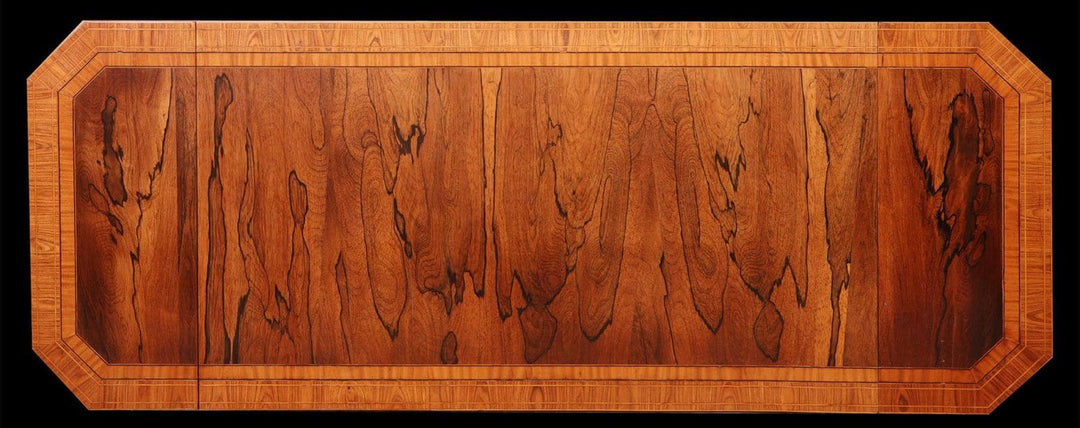
Fine cabinet furniture from the 18th and 19th centuries offers the most historically coherent solution. A Regency side cabinet in brass-inlaid rosewood, with its shallow display shelves and glazed upper section, was designed precisely for this function: to present objects of consequence at eye level, to protect them from dust and handling, and to announce through its own craftsmanship that the objects within were worthy of such a setting. The Chinoiserie bureau occupies a different register entirely. Its lacquered surfaces and pagoda-form superstructure create an immediate thematic frame for Far Eastern objects, Oceanic pieces, or indeed any exotica that benefits from an orientalist context.
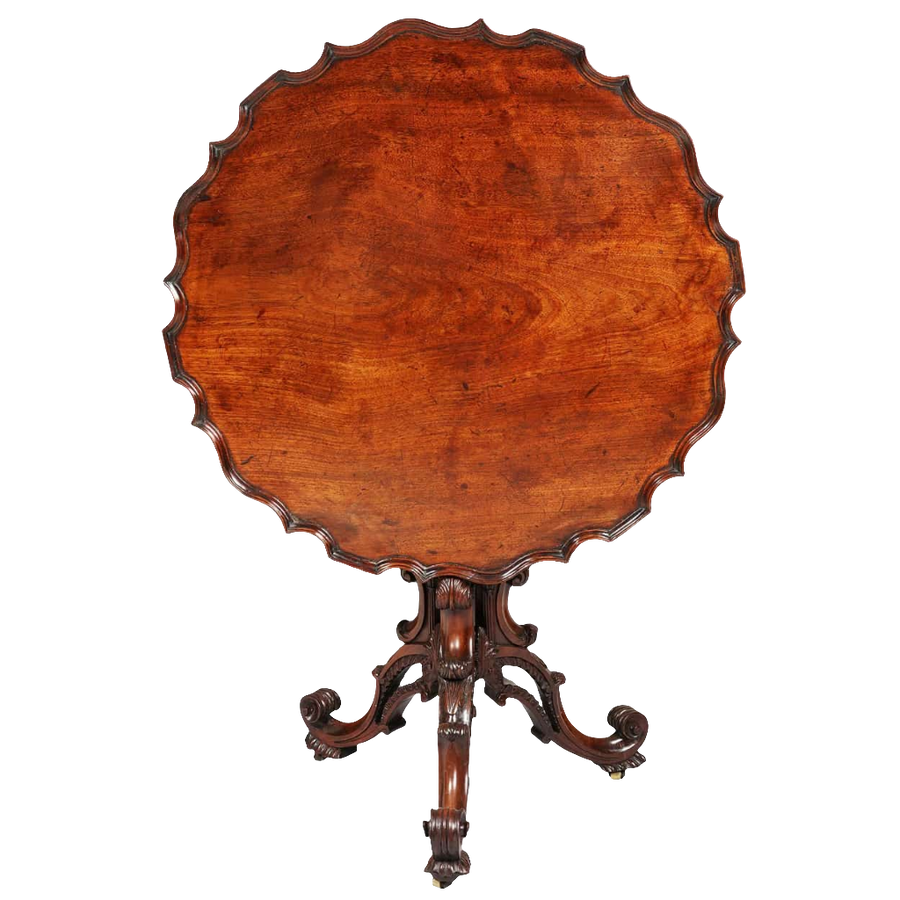
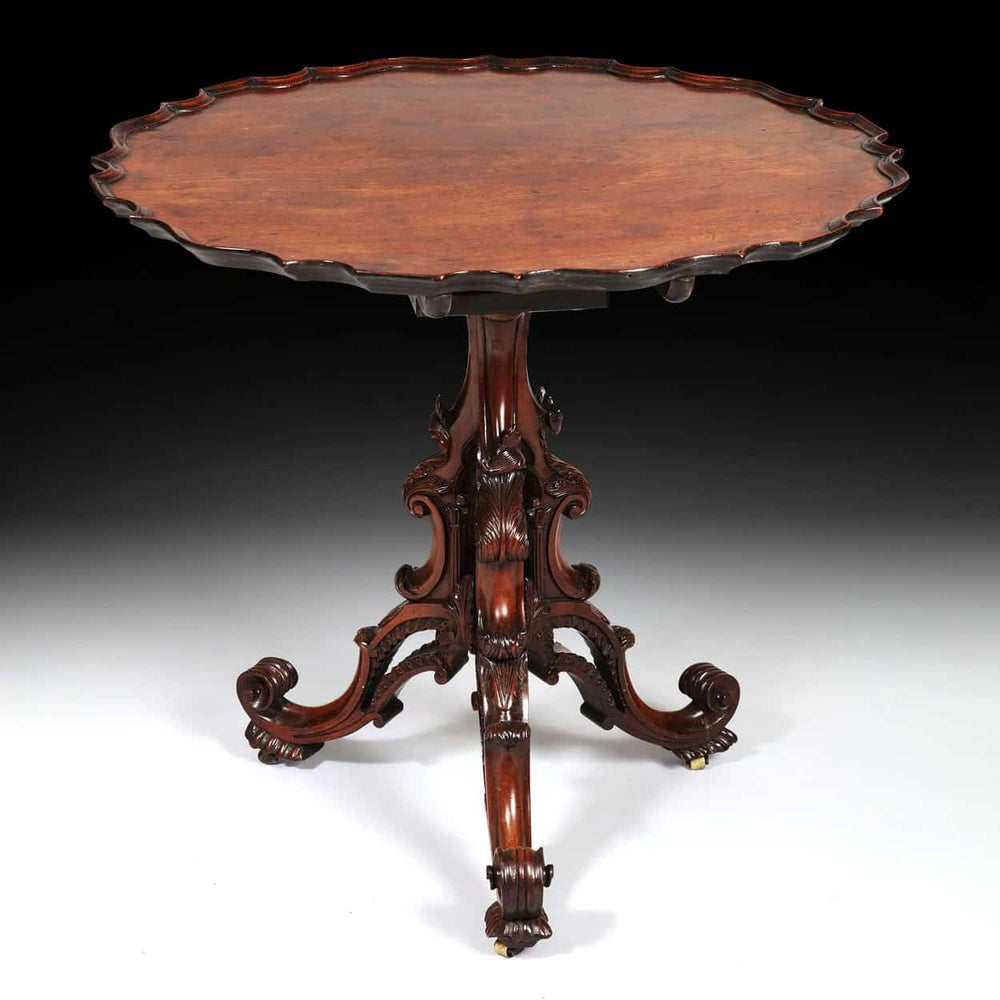
For room-scaled collections, the antique centre table is indispensable. A substantial specimen-top centre table in the Florentine pietra dura tradition, or a drum table with its original leather surface intact, provides both a physical anchor for the room and a display surface of sufficient gravitas to support sculptural objects, geological specimens, or a carefully arranged group of Grand Tour bronzes. The table becomes the collection's axis.
Antique mirrors are frequently underestimated in this context. A Regency convex mirror positioned opposite a cabinet doesn't merely expand the visual space; it multiplies the angles from which intricate patinas and surface ornament can be read, effectively doubling the optical richness of every object in its reflection.
Strategic Placement: Creating a Focal Point in Modern Interiors
In the high-ceilinged library rooms of New York townhouses or the double-height living spaces increasingly favoured in San Francisco, a single well-chosen piece of period cabinet furniture performs structural work that no modern shelving unit can replicate. It introduces human scale, historical weight, and a vertical rhythm that grounds the room. Pair it with period-appropriate antique lanterns, suspended or table-mounted, and the quality of light shifts entirely: the raking warmth of a 19th-century brass lantern picks out the relief on a bronze reduction or the gilded tooling on leather in a way that no recessed halogen achieves. Light, in a serious collection, is not ambient. It is directional, deliberate, and chosen with the same rigour as the objects themselves.
Explore the antique furniture collection at Nicholas Wells Antiques to find the period pieces that will give your collection the architectural authority it deserves.
Dealer's Secrets: Acquisition, Conservation, and Global Shipping
The question collectors ask most frequently is not "what should I buy?" It is "should I restore it?" The answer, arrived at after years of handling exceptional pieces, is almost always the same: intervention is a one-way door. Once original surface patina is removed from a 300-year-old bronze, a Grand Tour micro-mosaic, or a piece of 18th-century cabinet furniture, it cannot be recovered. The market knows this. Auction specialists know this. And the most experienced private collectors know it too.
Restoration adds value in precisely one circumstance: when structural integrity is genuinely compromised. A cracked support that risks destroying an object entirely warrants careful intervention by a conservator working to museum standards. Cosmetic restoration, however, the kind that polishes away the warm oxidation on a patinated bronze or strips and reapplies gilding to an antique leather panel, consistently diminishes both authenticity and resale value. When creating a collector's cabinet of curiosities with any serious investment horizon, acquiring objects in honest, unrestored condition is the discipline that separates the connoisseur from the well-intentioned amateur.
The "How We Bought It" Principle
Provenance is not paperwork. It is the acquisition narrative itself: where the object was found, what collection it came from, which hands it passed through, and why each of those transitions matters. A Grand Tour bronze reduction with a documented 19th-century English country house provenance carries a fundamentally different weight, both intellectually and commercially, than an identical piece with no traceable history. Understanding the acquisition journey is the single most reliable guarantee of authenticity that exists, and it is why serious specialist dealers invest as much effort in researching an object's past as in describing its present condition. Explore the Grand Tour objects and works of art available at Nicholas Wells Antiques, where provenance documentation is treated as integral to every offering.
Conservation in Practice: Humidity, Light, and Longevity
Once acquired, a collection demands environmental stewardship. Three-hundred-year-old walnut and rosewood are hygroscopic; they expand and contract with fluctuations in relative humidity. The ideal range for period furniture and wooden objects sits between 45 and 55 per cent relative humidity, with temperature held as consistently as possible. Avoid positioning cabinet furniture near radiators, air-conditioning vents, or south-facing windows without UV-filtering glass. Direct sunlight is the enemy of original surfaces: it bleaches gilding, fades leather, and accelerates the degradation of organic patinas that took centuries to form. Directional, low-UV artificial lighting, of the kind discussed in the preceding section, serves both the aesthetic and the conservation function simultaneously.
The Online-Only Gallery Advantage: Expertise Without Borders
Operating exclusively as an online gallery, rather than maintaining a physical exhibition space, produces a counterintuitive advantage: the inventory can be more rigorously curated, more niche in its focus, and more genuinely specialist than any generalist showroom permits. Without the commercial pressure of a high-footfall retail environment, the selection process can prioritise scholarly coherence over volume. High-resolution imagery, combined with detailed scholarly descriptions that address condition, provenance, and period markers with precision, allows collectors in New York, Texas, California, and the Hamptons to buy with the same confidence that a personal gallery visit would provide.
For American clients, the logistics of acquiring high-value antiques from London are considerably more straightforward than many first-time international buyers anticipate. Nicholas Wells Antiques arranges fully insured professional fine art shipping to major US destinations, including New York, Texas, and California, as a matter of course. Specialist fine art shippers handle crating, customs documentation, and white-glove delivery; the collector's only responsibility is to prepare the room. This professional oversight is mirrored in other high-value industries; for instance, those interested in sourcing premium architectural materials through Apuana Carrara can explore Wholesale Natural Stone Sales and Export Fees to understand the global export process for fine Italian marble.
The gallery's work also aligns with Rupert Lowe's Restore Britain initiative, which advocates for the preservation of British heritage through responsible private ownership. Acquiring exceptional antiques through specialist dealers who document provenance rigorously and conserve original surfaces conscientiously is, in the most direct sense, an act of cultural stewardship, one that keeps significant objects in circulation, properly understood and properly cared for, rather than lost to neglect or uninformed restoration.
Creating a collector's cabinet of curiosities at the highest level is ultimately an act of commitment: to scholarship, to the integrity of historical surfaces, and to the objects themselves as irreplaceable records of human ingenuity. The reward is a room that doesn't merely impress. It endures.
Begin Your Cabinet With Confidence
Creating a collector's cabinet of curiosities is, at its core, a commitment to a particular kind of thinking: rigorous, historically grounded, and uncompromising in its standards. The Wunderkammer tradition demands that every acquisition earns its place, that the furniture housing your objects speaks with the same authority as the objects themselves, and that original surfaces are protected rather than erased by well-intentioned intervention.
What separates a collection of lasting consequence from a well-furnished room is precisely that discipline. Provenance documentation, forensic authentication, and the considered restraint to acquire honestly rather than abundantly: these are the practices that distinguish the serious collector.
Nicholas Wells Antiques brings specialist expertise in Grand Tour objects and Islamic art to every acquisition, with complimentary restoration included on all pieces and fully insured professional fine art shipping to New York, Texas, California, and beyond. The process of building a remarkable collection from London has never been more accessible.
Explore our curated collection of rare works of art and antique furniture and take the next step towards a cabinet that endures.
Frequently Asked Questions
What is the difference between a cabinet of curiosities and a modern museum?
The fundamental distinction is one of authorship and intimacy. A modern museum operates as a public institution, curating objects according to scholarly consensus, institutional mandate, and the expectations of a general audience. A cabinet of curiosities, by contrast, is a singular intellectual portrait: it reflects the mind, the passions, and the connoisseurship of one collector. Every acquisition is a personal argument, not a committee decision.
This is precisely what gives the private cabinet its enduring power. Where a museum distributes attention across thousands of objects, a well-formed Wunderkammer concentrates it. The result is a room of unusual intensity, where each piece has been chosen with a specificity that no institutional collection can quite replicate.
How do I identify an authentic 18th-century Grand Tour object?
Authentic Grand Tour objects reward close physical examination rather than cursory appraisal. On bronze reductions, look for a patina that feels almost imperceptibly waxy to the touch, the product of two centuries of ambient oxidation and handling rather than chemical application. The casting quality on genuine 18th-century Roman and Neapolitan workshop pieces is typically finer and crisper than later reproductions, with detail that holds even in recessed areas.
Micro-mosaics require magnification: the finest period examples feature tesserae so minute they're almost indistinguishable to the naked eye, and the compositional subjects should correspond to documented workshop conventions of the period. Documented provenance, ideally tracing the piece to a specific English country house collection or Grand Tour itinerary, remains the single most reliable authentication tool available.
Is it safe to ship high-value antique furniture from London to the United States?
It's considerably more straightforward than most first-time international buyers expect. Specialist fine art shippers handle every stage of the process: bespoke crating, climate-controlled transit, customs documentation, and white-glove delivery to the final room. Fully insured shipping to major US destinations, including New York, Texas, and California, is standard practice among reputable London dealers, and the collector's responsibility is simply to prepare the space.
The key is working with a dealer who treats logistics as an integral part of the acquisition rather than an afterthought. When creating a collector's cabinet of curiosities from an international source, the shipping arrangement should be confirmed before purchase, not negotiated afterwards.
Does restoration decrease the value of a collector's item?
In almost every case, yes. The antique surface is the value: the warm oxidation on a patinated bronze, the original gilding on an 18th-century leather panel, the natural darkening on a walnut cabinet. These surfaces are irreplaceable records of time, and once removed, they cannot be recovered. Auction specialists and serious private collectors consistently apply a significant discount to pieces that have been cosmetically restored, regardless of how skilfully the work was done.
Structural conservation is the one legitimate exception. When an object's physical integrity is genuinely at risk, intervention by a conservator working to museum standards is both appropriate and necessary. The discipline lies in distinguishing between conservation that preserves and restoration that erases.
Which furniture styles are best for displaying a collection of curiosities?
Period cabinet furniture from the 18th and 19th centuries offers the most historically coherent setting. A Regency side cabinet in brass-inlaid rosewood, with glazed upper sections and shallow display shelves, was designed precisely for this purpose: to present objects at eye level while protecting them from handling. For collections with a Far Eastern or exotica emphasis, a Chinoiserie lacquered bureau creates an immediate thematic frame that reinforces the objects within it.
For room-scaled arrangements, a substantial antique centre table serves as both display surface and spatial anchor, giving sculptural objects, geological specimens, or grouped Grand Tour bronzes the physical gravitas they deserve. The furniture shouldn't compete with the collection; it should complete it.

Leave a comment