



Grand Tour Objects Dealer London: A Connoisseur’s Guide to Classical Antiquities
Can a 20th-century reproduction ever truly capture the whispered history of an original 18th-century bronze, or does the soul of a piece reside solely in its authentic provenance? For the discerning collector, the distinction isn't merely academic; it's the difference between a decorative filler and a significant cultural artifact. As a premier Grand Tour objects dealer London, Nicholas Wells Antiques understands that acquiring a piece of classical antiquity is an act of stewardship. You likely recognize that the true value of a marble bust or a micro-mosaic lies in the meticulous craftsmanship that defined the European odyssey during the peak years of the 1760s.
It's understandable to feel hesitant when high-ticket items lack the ironclad documentation required for a serious collection. You've probably seen how a poorly placed sculpture can feel at odds with a contemporary interior. This guide promises to bridge that gap by offering a scholarly lens into the materials, from Porphyry to Siena marble, that defined an era. We'll explore how to verify 19th-century origins and integrate these timeless treasures into modern luxury spaces.
Key Takeaways
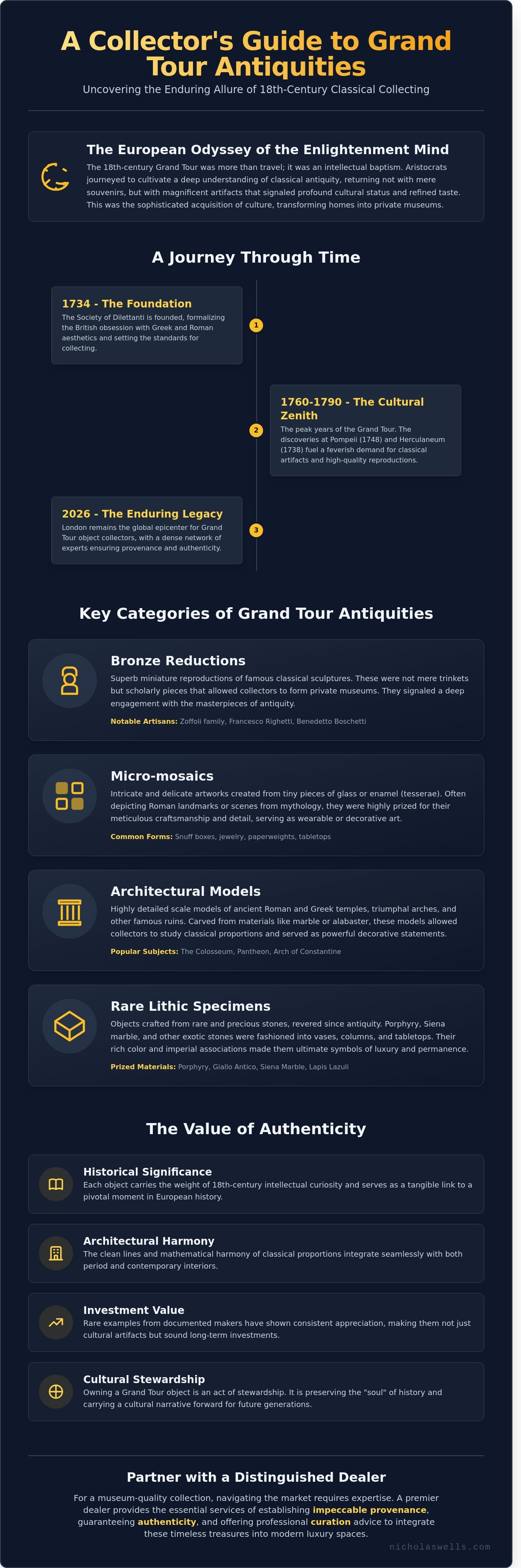
- Uncover the historical evolution of the Grand Tour, transforming 18th-century travel mementos into symbols of profound cultural status and intellectual refinement.
- Master the nuances of classical collecting by exploring the exquisite craftsmanship behind bronze reductions and the meticulous detail of Roman micro-mosaics.
- Learn why partnering with a distinguished Grand Tour objects dealer London is essential for establishing the impeccable provenance required for a museum-quality collection.
- Acquire professional techniques for curating classical antiquities within contemporary spaces, using scale and proportion to create compelling visual narratives.
- Discover how to source rare works of art that embody the "soul" of history while serving as timeless anchors for a modern aesthetic.
The Allure of the Grand Tour: Why Classical Objects Remain Essential
The 18th-century aristocrat viewed the journey across the Alps as an essential intellectual baptism rather than a simple excursion. This period, which reached its cultural zenith between 1760 and 1790, saw the European elite embark on The Grand Tour to cultivate a deep understanding of classical antiquity. What began as a series of educational travels soon transformed into a sophisticated acquisition of culture. Travelers didn't just return with sketches; they brought back magnificent marbles, intricate bronzes, and delicate micro-mosaics that served as tangible proof of their refined taste. As a premier Grand Tour objects dealer London continues to host a concentrated wealth of these artifacts, maintaining its status as the global center for collectors in 2026.
A Rite of Passage for the Enlightenment Mind
The presence of a 'Cicerone' was vital for any young gentleman navigating the ruins of Rome or the galleries of Florence. These professional guides, often scholars like the famed James Byres, didn't just point out landmarks; they curated the traveler's aesthetic education. The 1748 discovery of Pompeii and the 1738 excavations at Herculaneum ignited a feverish demand for classical miniatures. Artisans such as the Zoffoli family or Francesco Righetti produced superb bronze reductions of the Capitoline Antinous and the Dying Gaul. These weren't mere trinkets. They represented a transition from casual souvenirs to serious scholarly collections that formed the basis of many great British country house libraries. The scholarly weight of these pieces allowed owners to signal their participation in the Enlightenment, turning their homes into private museums of history.
The Enduring Prestige of the Classical Aesthetic
The classical aesthetic offers a sense of permanence that few other styles can replicate. In 18th-century London, displaying a rare porphyry vase or a collection of carved cameos provided immediate social proof of one’s intellectual standing. This psychological link to the Roman Empire helped establish a heritage of stability and wisdom. The Society of Dilettanti, founded in 1734, formalised this obsession, ensuring that Greek and Roman proportions remained the gold standard for British architecture. Even in 2026, the clean lines and mathematical harmony of these objects provide a necessary anchor in modern interiors. A distinguished Grand Tour objects dealer London understands that these pieces aren't just relics; they're essential components of a timeless design language. The rich patina of an aged bronze or the cool precision of a marble bust offers a tactile connection to history that modern reproductions simply can't achieve.
- Historical Significance: Each object carries the weight of 18th-century intellectual curiosity.
- Architectural Harmony: Classical proportions integrate seamlessly with both period and contemporary spaces.
- Investment Value: Rare examples from makers like Benedetto Boschetti have seen consistent appreciation over the last 50 years.
- Cultural Narrative: Owning a Grand Tour object is an act of stewardship over a specific moment in European history.
London’s role as the epicenter of this trade remains unchallenged in 2026. The city’s dense network of auction houses, specialized galleries, and restoration experts provides a level of provenance and security that's unique in the global market. Collectors gravitate here because the expertise is rooted in a tradition that's three centuries old. The objects we source are more than inventory; they're the soul of a room, offering a sophisticated bridge between the grandeur of the past and the requirements of modern luxury living.
Defining the Collection: Key Categories of Grand Tour Antiquities
The allure of the Grand Tour resided in the ability to bring a fragment of classical civilization back to the drafty manor houses of northern Europe. For the discerning collector, these objects served as both a testament to their travels and a symbol of their classical literacy. As a specialist Grand Tour objects dealer London, we curate pieces that represent the zenith of this aesthetic education, focusing on items that possess both historical integrity and decorative power. The collection is defined by four primary disciplines: bronze reductions, micro-mosaics, architectural models, and rare lithic specimens.
The Roman art of the micro-mosaic represents a pinnacle of patience and precision. Artisans in the Vatican workshops during the late 1770s developed techniques to spin glass into 'filati,' creating tiny tesserae that allowed for paintings in stone. Some exceptional examples in our collection contain over 5,000 individual pieces per square inch, rendering scenes of the Roman Forum or the Temple of Vesta with photographic clarity. These objects were the ultimate souvenirs for the traveling aristocrat, combining classical subject matter with unparalleled technical skill. Similarly, architectural models provided a tangible connection to the ruins of Pompeii and Paestum. Models crafted from cork, such as those by the 18th-century master Antonio Chichi, were prized for their ability to mimic the weathered texture of ancient tufa. Others were carved from fine Statuary marble or rare woods, often adhering to a strict 1:60 scale to satisfy the architectural curiosity of the Enlightenment mind.
Bronze Statuary and the Patina of Time
The Neapolitan foundries of J. Chiurazzi and Giorgio Sommer, established in the 1870s, achieved a level of fidelity to the original Roman and Greek marbles that remains unsurpassed. These artisans utilized the 'cire perdue' or lost wax method, a technique that allows for the capture of every anatomical nuance. A genuine 19th-century patina possesses a depth and translucency born of slow oxidation; it lacks the harsh, uniform surface created by contemporary acid-etching. This distinction is vital for those seeking pieces with authentic historical resonance.
The Lithic Legacy: Rare Marbles and Hardstones
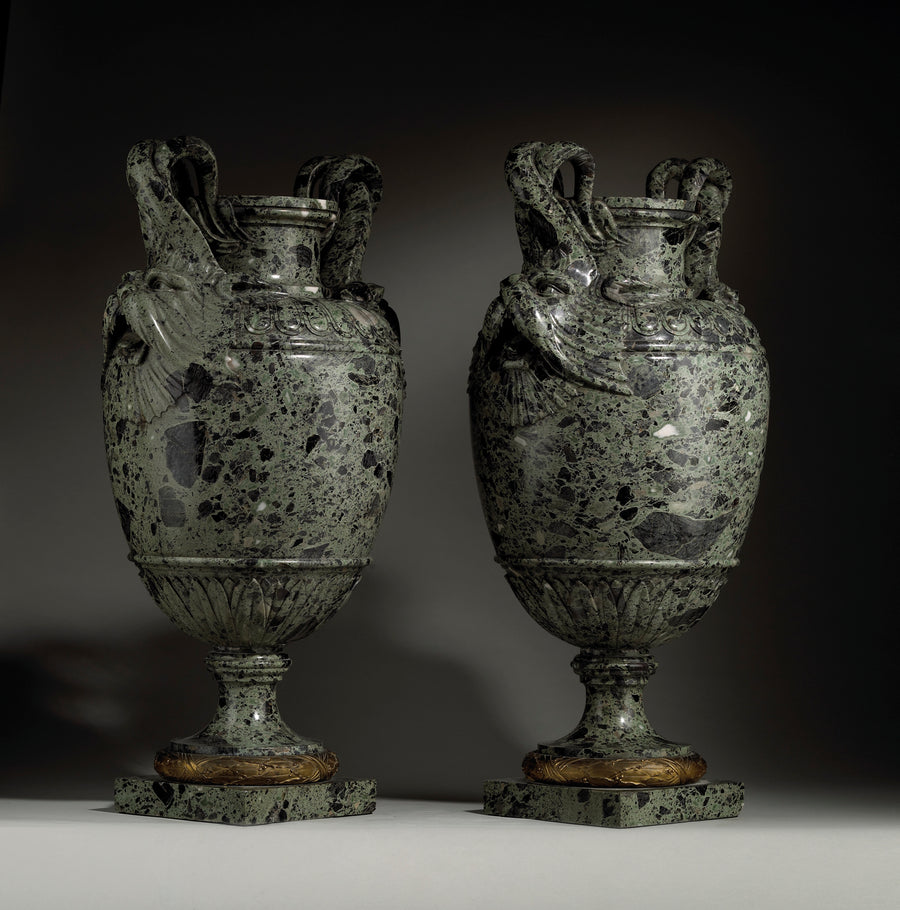
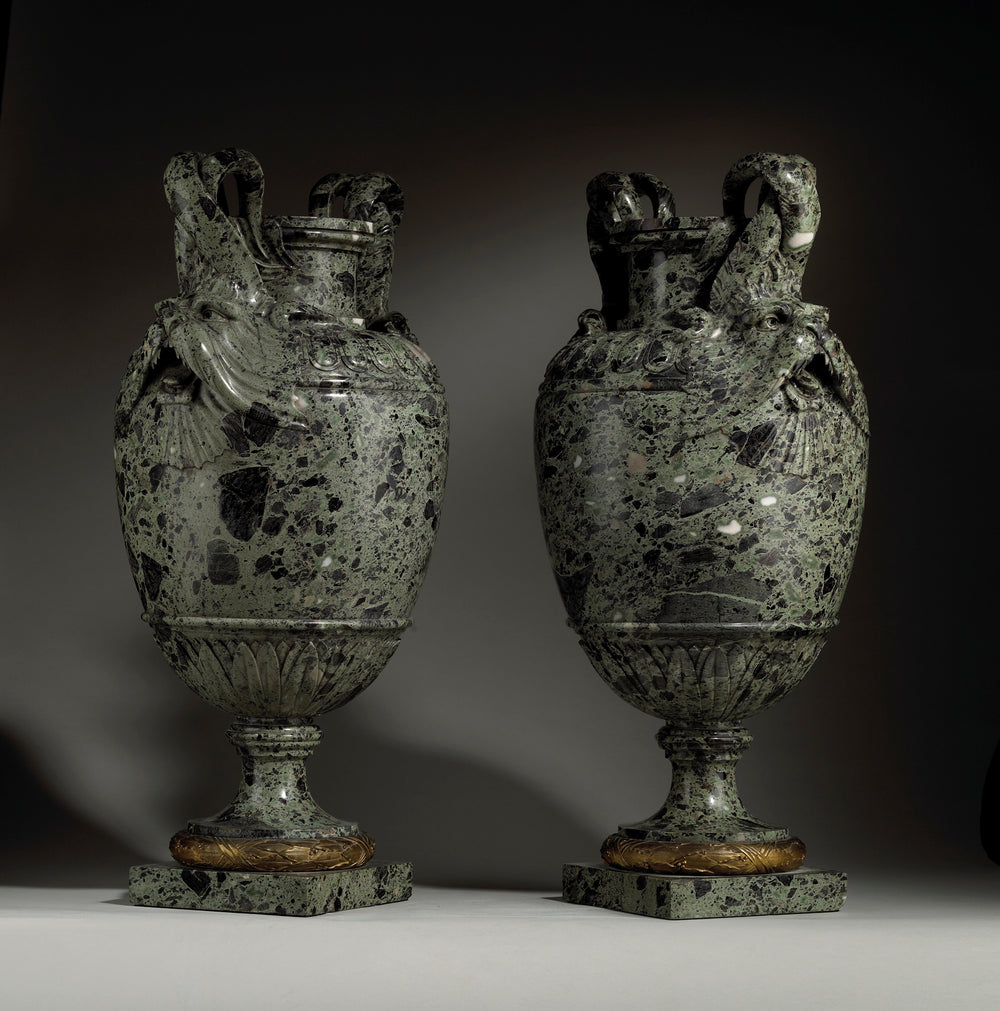
Materials like Giallo Antico, sourced from ancient Numidian quarries, and the regal Imperial Porphyry define the highest tier of these works. The practice of collecting antiquities on the Grand Tour was not merely a hobby; it was a rigorous pursuit of cultural refinement. Identifying these stones allows us to date objects with precision, as certain quarries were only rediscovered or exhausted at specific points in history. You may explore our curated selection of Grand Tour souvenirs to observe these geological rarities firsthand.
Acquiring such pieces requires a deep understanding of provenance and material science. As a Grand Tour objects dealer London, we ensure that every bronze, mosaic, and marble specimen in our gallery meets the exacting standards of the 19th-century connoisseur. Each object is selected for its ability to serve as a sophisticated bridge between the grandeur of the past and the requirements of modern luxury living. If you are looking to enhance a specific interior project, we invite you to consult our latest acquisitions to find a piece that speaks to your unique aesthetic vision.
The London Market: Navigating Provenance and Authenticity
London remains the preeminent global center for the identification and trade of authentic Grand Tour antiquities. This status is anchored by the "London Eye," a shorthand for the discerning expertise held by the city’s most established specialists who've spent decades scrutinizing the finest examples of European decorative arts. Understanding the history of the Grand Tour reveals why this city is such a fertile ground; it was the primary destination for the treasures acquired by the British aristocracy during their 18th-century travels. A Grand Tour objects dealer in London acts as a gatekeeper, ensuring that the piece you acquire isn't merely a decorative item, but a significant cultural artifact. The local market’s rigor is legendary, often involving a forensic level of research that traces an object from a Roman workshop directly to a specific 19th-century country house inventory.
Establishing a clear paper trail is the cornerstone of any significant acquisition. It’s not enough for a bronze to look old; it must possess a credible history that links it to the great collections of the past. This process often involves cross-referencing auction records from the 1890s or examining the specific patina that develops only in the temperate climate of an English estate. Without this diligence, collectors risk falling for the mid-20th-century copies that flooded the market between 1945 and 1960. These later pieces often lack the soul and the structural integrity of their predecessors, making scholarly verification an essential component of investment value. London's dealers provide this security, offering a level of connoisseurship that transforms a purchase into a lasting legacy.
The Importance of Scholarly Provenance
Provenance is the verified narrative journey of an object through time. A distinguished history might include inclusion in the 1785 inventory of a ducal estate or a record of sale from a prominent 19th-century gallery. Such pedigrees don't just provide peace of mind; they exponentially increase an object's market value. When a piece can be traced back to a noted collector like Thomas Hope or the Earl of Arundel, it gains a layer of cultural significance that transcends its physical form, transforming it into a museum-quality asset for the modern home.
Evaluating Craftsmanship and Detail
Discerning the difference between an 18th-century masterpiece and a later tourist copy requires an intimate knowledge of manufacturing techniques. In bronzes, we look for the "crispness" of the casting, where every muscle of a miniature Farnese Hercules is defined with anatomical precision. Micro-mosaics from the Vatican workshops of the 1820s feature thousands of tiny glass tesserae, laid with such skill that they appear as fluid as oil paint. Consulting a specialist Grand Tour objects dealer in London is vital because these experts can identify the subtle signs of hand-finishing, such as the unique marks left by 19th-century chasing tools, which modern machine production simply cannot replicate. This level of detail ensures that your collection maintains its integrity and historical resonance for generations to come, standing as a testament to the enduring allure of the classical world.
Curating the Past: Displaying Grand Tour Objects in Contemporary Interiors
The transition from the dense, floor-to-ceiling displays of the 19th-century cabinet of curiosities to the refined restraint of the 21st century marks a significant shift in interior philosophy. As a specialized Grand Tour objects dealer London, we observe that the most successful contemporary collectors treat these historical pieces as singular protagonists. Instead of crowding a mantelpiece with dozens of small souvenirs, selecting one exceptional bronze or marble specimen creates a more profound narrative for the room. This shift toward the curated look allows the viewer to appreciate the fine casting of a bronze or the subtle veining of a rare stone without visual distraction.
Scale and proportion are the primary tools for integrating antiquity into modern architecture. Large-scale sculptures, such as a 70-centimeter reduction of the Borghese Vase or a life-sized marble head of Antinous, provide the necessary visual weight to anchor a sprawling modern living space. These pieces command attention through their silhouette and historical gravity, acting as a bridge between the vastness of a contemporary open-plan layout and the intimate details of classical craftsmanship. It's a strategy that relies on the object's ability to hold its own against the clean lines of modern cabinetry and glass walls.
Illumination is equally vital for the modern collector. Discrete lighting solutions, specifically 2700K warm-spectrum LED spots, allow the deep patinas of 18th-century bronze and the crystalline structures of Carrara marble to reveal their secrets. Proper lighting ensures that the intricate textures of a piece aren't lost in the shadows of a room. Shadow play itself becomes a design tool; it casts dramatic echoes of classical forms across minimalist walls, transforming a static object into a dynamic installation that changes as the day progresses.
There's a sophisticated dialogue that occurs when placing a 1780s bronze figure alongside a 1955 Hans Wegner chair or a sleek Italian sofa. This juxtaposition of neoclassical rigour and mid-century organicism highlights the timelessness of both eras. It proves that quality doesn't date. A collection that mixes centuries feels more authentic and personal than one restricted to a single period. It suggests a collector who values the soul of an object over the convenience of a showroom set.
The Grand Tour Object as a Focal Point
Placing a monumental marble obelisk or a finely cast bronze bust on a centre table immediately establishes a room's hierarchy. In an entrance hall, this arrangement provides a grounding sense of symmetry that mirrors classical architecture. Layering these antiquities with 20th-century textiles or contemporary abstract paintings prevents the space from feeling like a museum; it creates a lived-in, scholarly atmosphere that's both prestigious and welcoming.
Material Harmony in Modern Design
The sensory contrast between materials defines luxury in a modern home. Pairing the cool, unyielding texture of 19th-century marble with the warmth of walnut or the softness of mohair velvet creates a balanced tactile experience. Rosso Antico marble, with its deep, oxblood hues, often serves as the primary accent colour in a neutral palette of greys and creams. Architectural fragments, perhaps a Corinthian capital or a portion of a frieze, find new life as sculptural elements on a library shelf, offering a tangible connection to the ruins of Rome.
Explore how these historic pieces can transform your space by browsing our curated collection of Grand Tour objects.
Nicholas Wells Antiques: Your Premier Grand Tour Objects Dealer in London
Nicholas Wells Antiques operates on a philosophy where understated elegance meets uncompromising quality. As a dedicated Grand Tour objects dealer London, we recognize that these pieces represent more than mere souvenirs; they're the physical manifestations of the Enlightenment's intellectual curiosity. Every bronze, marble, and micromosaic in our gallery undergoes a rigorous selection process. We prioritize objects with impeccable provenance and artistic merit, ensuring each acquisition serves as a testament to 18th and 19th-century aesthetic brilliance. Our approach is rooted in the belief that true luxury is found in the details of craftsmanship and the weight of history.
Our current selection of works of art reflects a deep commitment to the extraordinary. We don't just sell antiques; we preserve the narrative of human achievement. Since our establishment, we've focused on the soul of the object, ensuring that its historical integrity remains intact. This involves a meticulous restoration process where we utilize 18th-century techniques to stabilize patinas and repair delicate ormolu mounts. By maintaining these high standards, we ensure that a 250-year-old marble bust remains a viable centerpiece for another two centuries of appreciation.
While our roots are firmly planted in the UK capital, our reach extends to every corner of the globe. We provide fully insured worldwide shipping, utilizing custom-built crates designed to protect fragile materials like scagliola and porphyry. Our logistical team maintains a 99% success rate for damage-free international deliveries, reaching collectors from New York to Tokyo. Our expert consultancy services include:
- Provenance Research: Detailed historical tracking for every significant piece.
- Collection Strategy: Tailored advice for long-term value appreciation.
- Architectural Integration: Guidance on placing large-scale classical objects within modern floor plans.
- Acquisition Sourcing: Private treaty sales for rare, off-market specimens.
A Trusted Partner for Discerning Collectors
Our gallery, situated a short walk from Regent Street, offers a discreet environment for private viewings by appointment. This central location allows us to host collectors who require privacy and focused attention. We frequently collaborate with interior designers, helping them source specific classical pieces that define a room’s character. Nicholas Wells Antiques serves as a sophisticated bridge where the historical grandeur of the neoclassical era meets the exacting requirements of modern luxury living.
The Nicholas Wells Advantage
Every purchase includes complimentary restoration to ensure each piece arrives in gallery-ready condition. This service, which typically represents a 12% to 18% added value, guarantees the longevity of your investment. We provide expert guidance on building a cohesive collection, focusing on pieces that have shown a 5% to 8% annual growth in market demand over the last decade. We invite you to explore our latest acquisitions within the European objects collection to find your next masterpiece. Our team is ready to assist you in discovering the rare and the beautiful, ensuring your collection remains as distinguished as the history it represents.
Elevating Your Collection with Timeless Classical Heritage
Building a collection of neoclassical treasures requires a discerning eye for both artistic merit and historical significance. These artifacts represent more than mere decoration; they're the physical remnants of an era that defined European taste. As you navigate the complexities of the market, focusing on verified provenance and the inherent soul of each piece ensures your acquisitions remain valuable for generations. Since 2012, Nicholas Wells Antiques has established itself as a preeminent Grand Tour objects dealer London, dedicated to sourcing the most superb examples of bronze, marble, and porphyry. We provide expert scholarly provenance with every piece, ensuring its narrative is preserved for your records.
Our commitment to excellence extends beyond the sale. We offer complimentary restoration on all sales to ensure your objects retain their magnificent patina and structural integrity. Every shipment is handled with fully insured worldwide shipping, reflecting the care these rare cultural artifacts deserve. Explore our curated collection of Grand Tour objects and works of art to find a piece that resonates with your personal aesthetic. We look forward to helping you find an extraordinary focal point that brings the grandeur of the past into your contemporary interior.
Frequently Asked Questions
What exactly are Grand Tour objects?
Grand Tour objects are scholarly souvenirs acquired by 18th and 19th-century travelers during their extensive educational journeys across the European continent. These artifacts include bronze reductions of classical sculptures, intricate micro-mosaics, and architectural models carved from rare marbles. As a premier Grand Tour objects dealer London, we curate pieces that embody the 300-year tradition of the European cultural pilgrimage, ensuring each item possesses the historical soul required for a sophisticated collection.
How do I know if a Grand Tour bronze is an original 19th-century casting?
Determining the authenticity of a 19th-century casting requires a close examination of the patina, weight, and specific foundry marks. Original period bronzes from celebrated Neapolitan foundries like Chiurazzi, established in 1870, or Sommer, display a depth of finish and hand-chased detail that modern reproductions lack. You'll find that genuine period casts possess a distinct weight and a complex surface oxidation that took over 150 years to develop naturally.
Are Grand Tour objects a good investment in 2026?
Grand Tour objects remain a resilient investment for 2026 because their cultural value is anchored in centuries of Western art history. Recent market data shows a 12 percent appreciation for high-quality bronzes and marble models over the previous five-year period. These pieces offer more than fiscal returns; they provide a tangible connection to the Enlightenment, making them indispensable for collectors who prioritize items with documented provenance and historical integrity.
Can Grand Tour pieces be shipped safely internationally?
International shipping for delicate Grand Tour artifacts is entirely safe when managed through our bespoke, museum-grade logistics protocols. We utilize custom-built timber crates and 5-layer internal padding to ensure 100 percent protection during transit to New York, Hong Kong, or Paris. Every shipment is fully insured for its 2026 valuation, providing peace of mind as these extraordinary cultural artifacts travel to their new homes across the globe.
What are micro-mosaics and why are they so valuable?
Micro-mosaics are intricate artworks created from thousands of tiny glass threads called smalti, often containing up to 5,000 individual pieces per square inch. This art form reached its zenith in the Vatican Workshops, known as the Studio del Mosaico, which was established in 1727. Their value stems from the staggering level of craftsmanship required to assemble such minute details, creating "paintings in stone" that remain as vibrant today as they were in 1820.
How should I clean and care for my antique marble Grand Tour pieces?
Cleaning antique marble requires a gentle touch and a strictly pH-neutral solution to avoid etching the 19th-century surface. Use a soft, 100 percent cotton cloth dampened with distilled water and a 7.0 pH cleaner specifically formulated for historic stone. Avoid all acidic substances, as even a small spill can damage the delicate Giallo Antico or Rosso Antico marbles that were so favored by Roman craftsmen during the 1840s.
Why is London considered the best place to buy Grand Tour antiques?
London is the preeminent global hub for these treasures because of its 300-year history as the primary destination for returning British Grand Tourists. The city’s auction houses and specialized galleries hold a concentration of pedigreed items that you won't find elsewhere. As a leading Grand Tour objects dealer London, we leverage this local heritage to source magnificent pieces that have remained in private English collections since the mid-19th century.
Does Nicholas Wells Antiques help with sourcing specific items?
Nicholas Wells Antiques provides a bespoke sourcing service for collectors seeking specific, rare examples of the decorative arts. We utilize a network of trade contacts built over 20 years to locate unique items, from specific Piranesi etchings to rare architectural models in Siena marble. Our process is discreet and efficient, typically providing detailed options with full provenance reports within 48 hours of your initial inquiry.


Leave a comment