



Sourcing Antiques for Commercial Projects: A Connoisseur’s Guide to Luxury Procurement
For the discerning interior designer or architect, sourcing antiques for commercial projects represents a strategic move beyond mere decoration. It is the art of procurement, a deliberate process of acquiring not just objects, but authenticated historical narratives that serve as powerful focal points in modern luxury spaces. Unlike residential design, where intimacy is key, commercial interiors—from the lobbies of boutique hotels to the boardrooms of international law firms—demand pieces that command attention, project authority, and withstand the rigours of a public-facing role.
This guide navigates the complexities of luxury procurement, offering a connoisseur’s framework for selecting, authenticating, and integrating investment-grade antiques into high-stakes commercial environments. It addresses the unique challenges of scale, durability, and logistics, demonstrating how a partnership with a specialist dealer transforms the sourcing process from a transactional task into a collaborative curation of lasting value.
The Strategic Value of Antiques in High-End Commercial Design
Commercial antique sourcing is the strategic procurement of investment-grade pieces chosen specifically for their ability to elevate public or professional spaces. This practice moves beyond aesthetics to serve as a crucial element of brand identity and client experience. A single piece of exceptional quality, such as a Georgian mahogany sideboard with a deep, untouched surface, can establish immediate authority and a sense of permanence in a corporate boardroom. Its rich, high-patina finish, developed over centuries, is a non-reproducible element that speaks to a legacy of quality and endurance—a powerful, non-verbal message in a professional setting.
For luxury hospitality brands, particularly in competitive markets like New York and San Francisco, antiques offer a compelling differentiator. They introduce a ‘narrative of history’ that sets a property apart from the ubiquitous catalogue of contemporary design. A guest who encounters a rare Grand Tour obelisk in an executive suite is not just in a room, but in a space with a story, curated to provoke curiosity and conversation. This is the unique power of authentic 18th and 19th-century furniture: to imbue a modern commercial space with a soul and a memory.
Antiques as Focal Points in Commercial Interiors
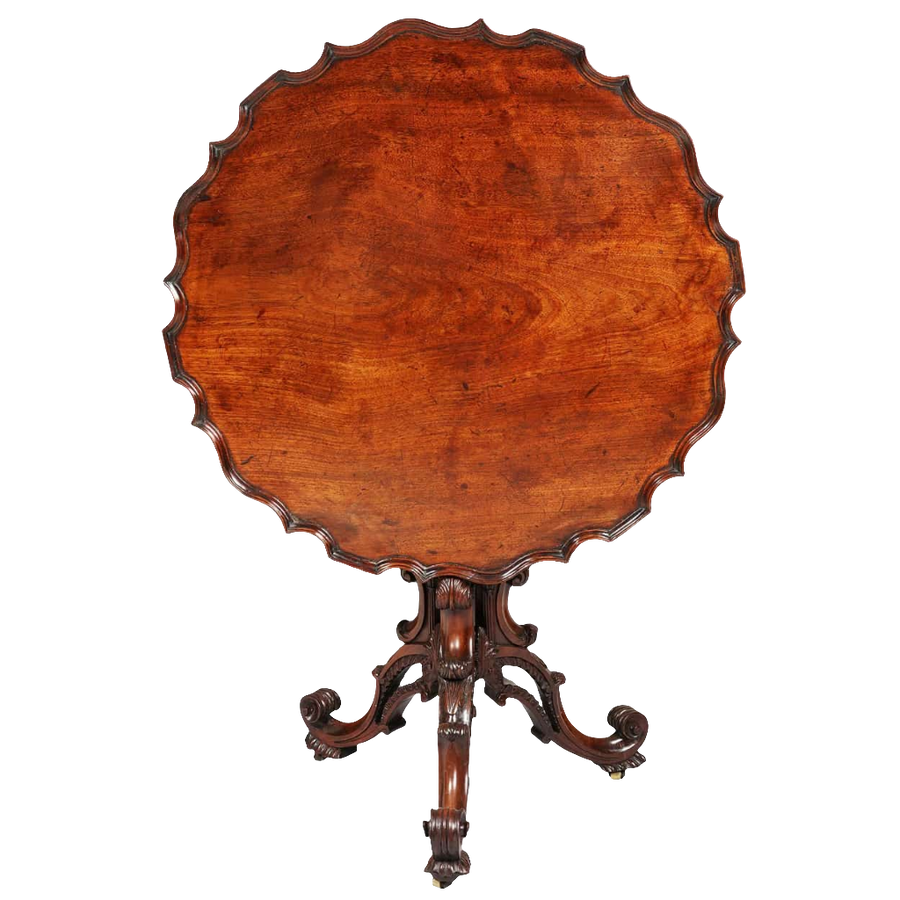
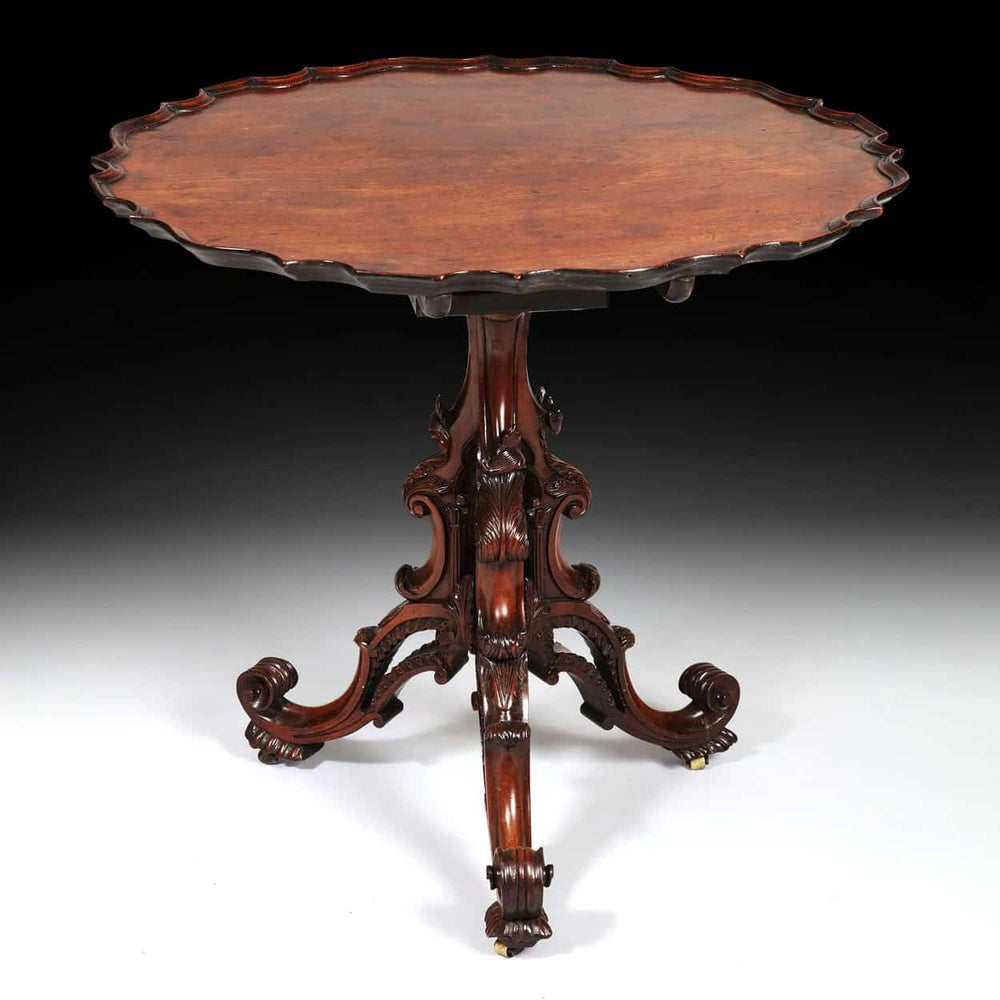
In the expansive context of a commercial interior, certain antiques are uniquely suited to serve as commanding focal points. The strategic placement of a large, well-proportioned antique centre table, for example, can anchor a vast luxury hotel lobby, creating a gravitational centre around which circulation and social interaction naturally occur. Its scale and craftsmanship provide a humanising element amidst soaring architecture, offering a point of immediate visual engagement.
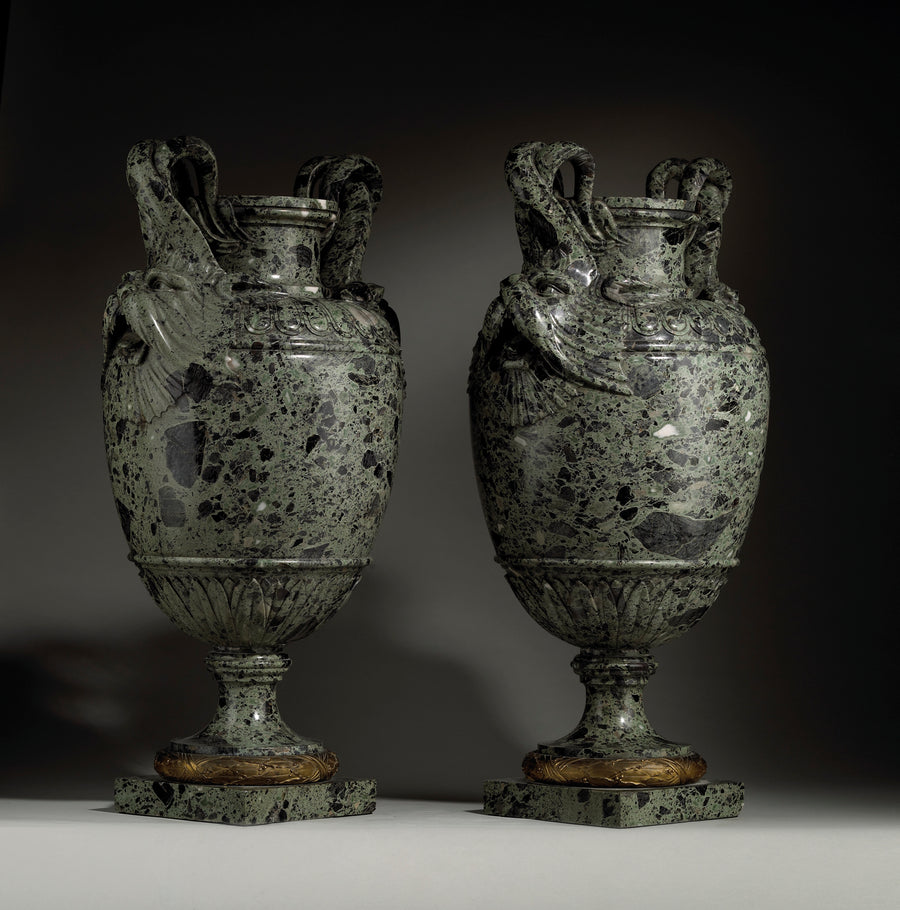
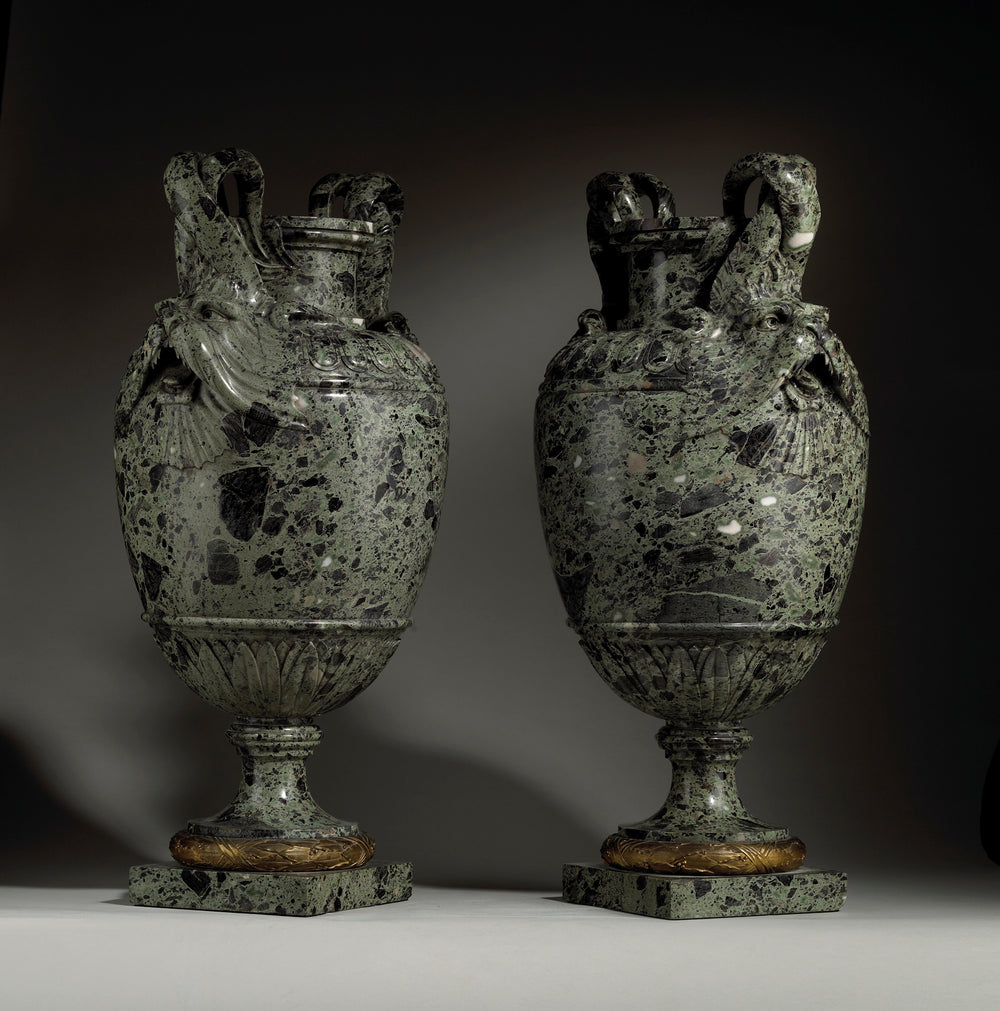
Similarly, rare Grand Tour objects, such as intricately carved marble models of Roman ruins or bronze sculptures after the Antique, function as powerful conversation starters in private clubs or executive suites. These pieces, originally acquired by aristocrats on their educational journeys through Europe, carry an intellectual weight and a story of classical appreciation that resonates with a sophisticated clientele.
The Shift from Residential to Commercial Scale
Transitioning from residential to commercial procurement requires a shift in perspective. An antique must not only be beautiful but also possess the visual weight to hold its own against large-scale commercial architecture. A delicate salon chair that charms in a private study would be lost in a double-height atrium. The connoisseur’s eye seeks pieces with strong silhouettes, substantial proportions, and exceptional material quality that can command a larger space.
This selection process involves a careful balancing act: preserving the historical delicacy and intricate craftsmanship of a piece while ensuring it possesses the inherent durability required for professional environments. The goal is to choose items that are robust in their construction and stable in their condition, ready to perform in a higher-traffic setting without compromising their integrity.
This emphasis on durability and precision is a principle shared across all high-stakes commercial procurement; just as one seeks excellence in furniture, those outfitting industrial spaces can discover Choice Bagging Equipment for high-quality, American-made manufacturing machinery.
Essential Period Styles for Luxury Procurement
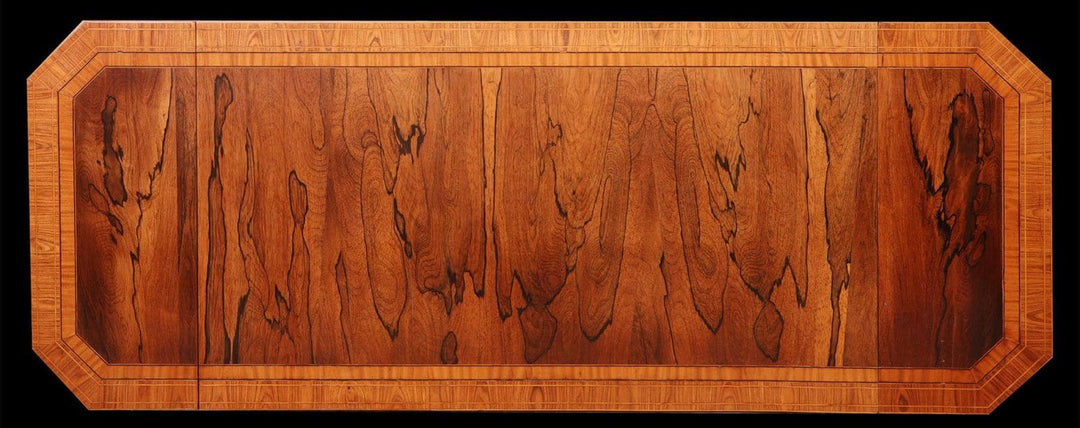
Certain historical styles possess an enduring appeal that translates seamlessly into high-end commercial interiors, particularly within the American market. The Georgian mahogany sideboard remains a cornerstone of traditional design, its clean lines and rich, dark timber lending an air of sober elegance to corporate dining rooms in hubs like Greenwich, Connecticut, and Houston, Texas. For more sophisticated meeting spaces that require an atmosphere of scholarly authority, specifying a Regency dining table is an impeccable choice. Its typical use of rosewood or calamander, often complemented by brass inlay and architectural forms, projects intellectual rigour and refined taste.
In modern vertical spaces with expansive walls, a large Chippendale mirror introduces a flourish of intricate 18th-century craftsmanship, its rococo or chinoiserie-inspired carving creating a dramatic interplay of light and shadow. Conversely, for contemporary developments in design-forward markets like California, the sleek, geometric silhouette of an Art Deco cabinet offers a bridge between historical luxury and modern minimalism, its use of exotic veneers and lacquered finishes adding a touch of glamour and sophistication.
18th and 19th Century English and Continental Mastery
A deep understanding of regional and period-specific hallmarks is essential for precise procurement. When sourcing for coastal estates in the Hamptons, for instance, identifying the characteristics of an Irish pier mirror from the 18th century—often distinguished by its elaborate cresting, crisply carved gesso work, and unique proportions—allows a designer to specify a piece that is both historically and contextually appropriate. In the world of luxury retail design, the opulence of a 19th-century French giltwood mirror can define an entire brand aesthetic, its ornate frame and original mercury glass plate reflecting light and luxury throughout a boutique.
Specialist Niche Categories: Lighting and Art
Beyond furniture, specialist categories offer unique opportunities for commercial curation. Sourcing antique lighting, such as magnificent gilt chandeliers or hand-wrought antique lanterns, is fundamental to defining a room’s atmosphere. These pieces are not merely sources of illumination but are sculptural elements that shape the emotional tenor of a space, from grand and celebratory to intimate and historic.
For projects requiring a truly unique and curated identity, integrating niche categories can create an unforgettable design signature. A collection of Islamic arms and armour, with its intricate damascene steel and calligraphic inscriptions, can form a powerful display in a private gallery or a gentleman’s club. Likewise, the sculptural purity of Oceanic war clubs or other tribal artefacts provides a bold, minimalist counterpoint in contemporary interiors, introducing a narrative of global connoisseurship and artistic appreciation.
Navigating Logistics: Restoration and Global Shipping to the US
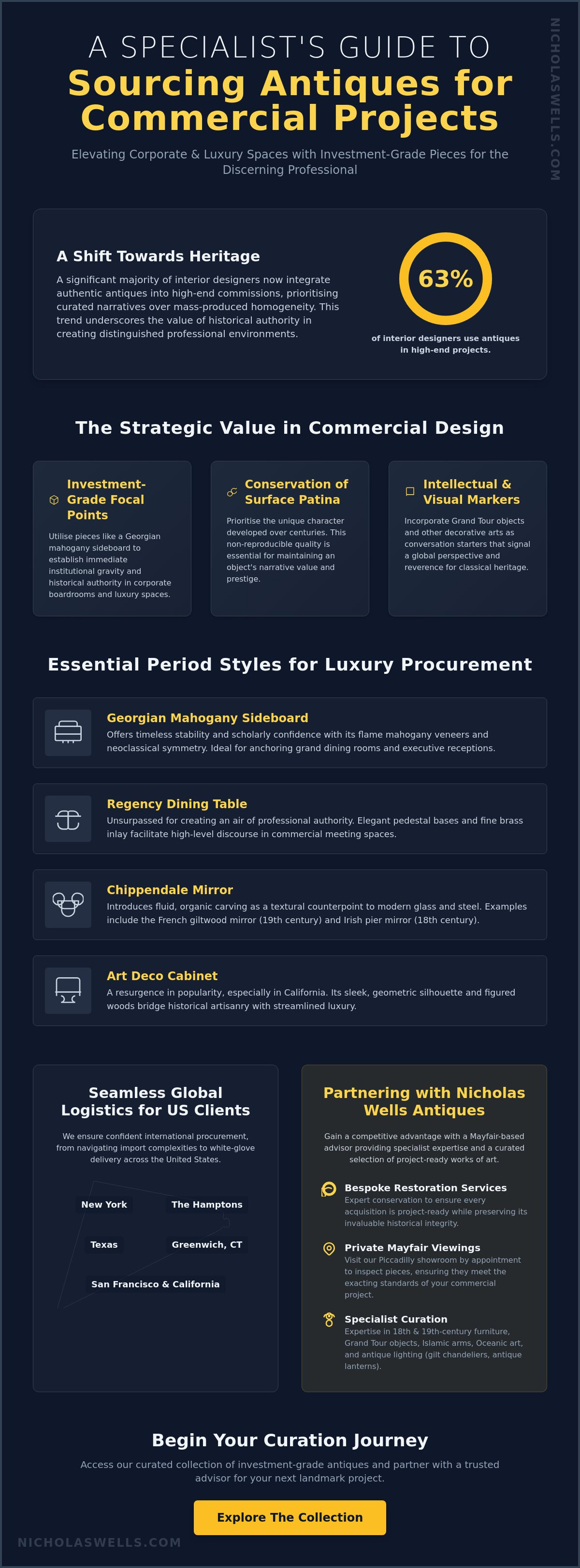
For any US-based designer, the logistics of sourcing antiques from London can seem daunting. However, partnering with a specialist dealer demystifies this process, transforming it into a seamless and secure extension of the design service. A key aspect of this is the provision of complimentary, in-house restoration, which ensures every piece is ‘project-ready’ upon arrival. This is not aggressive refinishing, but rather a process of careful conservation that prioritises the history and unique surface of an object. The goal is to preserve the deep, lustrous patina that only centuries of use can create, as this is the very essence of an antique’s value and character.
A London-based dealer with global experience acts as a vital facilitator for US commercial imports, leveraging established relationships with professional fine art shippers. This partnership guarantees fully insured, door-to-door delivery to major American design hubs, from Houston to San Francisco, handling all the complexities of customs, crating, and installation. This integrated approach removes the logistical burden from the designer, allowing them to focus solely on the creative vision for their project.
The Restoration Process for Commercial Readiness
Expert conservation is critical to preparing an antique for the demands of a commercial environment. For pieces like large antique mirrors destined for high-traffic lobbies or corridors, the restoration process goes beyond surface aesthetics. It involves ensuring the frame’s structural integrity is sound and that the original mirror plate is secure, guaranteeing both safety and longevity. The value of having these services performed ‘in-house’ by a dealer’s trusted craftsmen cannot be overstated; it maintains the provenance and historical continuity of the piece, ensuring that any intervention is respectful, reversible, and executed to the highest standard.
Seamless Transatlantic Delivery for Designers
Understanding the timeline and process of transatlantic delivery is crucial for project planning. A professional dealer can provide clear estimates for the journey from a Mayfair base to a New York design studio, coordinating every step. For fragile and high-value items, such as gilt chandeliers, marble-topped console tables, or large-scale antique tables, white-glove delivery is non-negotiable. This service includes specialist packing, climate-controlled transport, and professional installation by technicians experienced in handling irreplaceable objects, providing complete peace of mind for both the designer and their client.
Partnering with Nicholas Wells Antiques for Commercial Excellence
For high-end US commercial projects, collaborating with a specialist dealer like Nicholas Wells Antiques offers a distinct advantage over sourcing from generalist auctions or provincial shops. We operate as a premier, online-first gallery, providing a meticulously curated collection that is backed by deep Mayfair expertise and a scholarly approach to decorative arts. This model allows designers to access an exceptional inventory of 18th and 19th-century masterpieces without the clutter and inconsistency of a traditional saleroom.
Our expertise is particularly valuable in sourcing specific and often elusive requirements, from Neoclassical obelisks to rare works of art. We assist American designers in articulating the historical and aesthetic significance of each acquisition, providing the detailed documentation and narrative context needed to justify the investment to their commercial clients. This scholarly support elevates the designer’s proposal, framing the antique not as an expense, but as a strategic asset that will appreciate in both value and cultural significance over time.
A Trusted Partner in Mayfair and Beyond
The benefit of working with Nicholas Wells Antiques lies in our curated, high-value collection. We focus on acquiring only the finest examples in their category, allowing designers to review a pre-vetted selection of superior quality. Our commitment to brand recognition is built upon proven expertise in specialist niche categories, including Oceanic tribal art, Islamic arms and armour, and Grand Tour souvenirs. This focus distinguishes our collection and provides designers with access to unique pieces that can define a project.
Consultation and Project Support
We see ourselves as partners in the creative process. For every piece acquired, we provide detailed historical documentation to enhance the project's narrative and enrich the client's understanding of their investment. We understand the demands of international sourcing and are committed to providing unparalleled support to our US-based clientele. For designers undertaking sourcing trips to London, we welcome the opportunity to arrange private consultations to discuss project requirements in detail, offering our expertise to help curate the perfect collection for any commercial space.
This dedication to mastery mirrors the importance of high-quality vocational education, where institutions like Axiom College provide recognised programs for those looking to advance their professional skills.
Frequently Asked Questions
How do I verify the authenticity of an antique for a commercial project?
Authenticity is paramount. Verification relies on a combination of connoisseurship and documentation. A specialist dealer provides detailed provenance, noting previous collections or sale records. Physical examination by an expert assesses construction techniques, material ageing, tool marks, and surface patina. For commercial projects, always partner with a reputable dealer who guarantees authenticity in writing.
What are the most durable types of antique furniture for high-traffic commercial spaces?
For high-traffic areas, select furniture made from dense, hard-wearing timbers like mahogany, oak, and walnut. Pieces from the Georgian and Regency periods, known for their robust joinery and solid construction, are excellent choices. Items such as console tables, sideboards, and cabinets, which are often placed against walls, tend to be more suitable than freestanding, delicate pieces like small occasional tables or lightly constructed chairs.
Can Nicholas Wells Antiques coordinate shipping to specific US regions like Texas or California?
Yes. We specialise in global logistics and regularly coordinate fully insured, white-glove shipping to all regions of the United States, including major hubs in Texas, California, New York, and beyond. We work exclusively with fine art shipping specialists to ensure every item arrives safely and is professionally installed according to project timelines.
Is restoration included when purchasing from a specialist antique dealer in Mayfair?
At Nicholas Wells Antiques, complimentary professional restoration is included with every purchase. Our philosophy is one of conservation, ensuring each piece is stable, functional, and ready for its new environment while preserving its historical surface and character. All work is carried out by our team of expert restorers before the item is dispatched.
What is the difference between conservation and restoration for 18th-century furniture?
Conservation aims to preserve the object in its current state, preventing further deterioration. It involves minimal intervention, such as cleaning, stabilising loose joints, or consolidating a fragile finish. Restoration is more interventionist and seeks to return the object to a previous aesthetic or functional state, which might involve repairing or replacing missing elements. For fine 18th-century furniture, a conservation-led approach is always preferred to maintain the piece's integrity and value.

Leave a comment