



The Antique Secretaire Desk: A Connoisseur’s Guide to History, Style, and Authentication
The most seductive quality of a fine antique secretaire desk is not found in the flash of modern wax, but in the quiet, atmospheric depth of a surface that has matured undisturbed for over two centuries. To the seasoned collector, an over-restored finish is a tragedy that erases the very narrative history that defines a piece as a significant cultural artifact. We recognise the profound anxiety that often accompanies the search for period-correct furniture, where the distinction between an original 18th-century masterwork and a later revival style is frequently obscured by well-intentioned but misguided conservation.
This guide serves as an essential primer for the discerning buyer, offering the scholarly "Dealer’s Secrets" required to confidently identify authentic mechanical joinery and the irreplaceable value of the original antique surface. You will learn to navigate the intricate markers of English and Continental cabinet-making, while gaining clarity on the 2026 regulatory landscape, including the 10% reciprocal tariff and CITES requirements for rare timbers. We shall preview the meticulous process of acquiring these delicate treasures from our London gallery, ensuring that even the most complex international shipping to the United States is handled with the quiet confidence and expertise of a trusted advisor.
Key Takeaways
- Distinguish between the architectural silhouette of the English Regency secretaire-bookcase and the refined verticality of the French secrétaire à abattant.
- Confidently authenticate an antique secretaire desk by reading the secondary woods—such as oak, deal, or cedar—that reveal the piece's true regional heritage.
- Master the "Dealer’s Secrets" for identifying hidden compartments and the sophisticated mechanical joinery found in 18th-century cylinder and tambour desks.
- Appreciate the irreplaceable value of the original "antique surface" and learn why preserving the historical patina is vital for serious collectors.
- Navigate the logistics of international acquisition with expert guidance on white-glove shipping from our London gallery to premier American destinations.
Defining the Silhouette: A Collector’s Guide to Secretaire Styles
The evolution of the antique secretaire desk represents a fascinating journey from the utilitarian bureau of the early 1700s to the monumental architectural statements of the Regency period. To understand the Secretary desk in its historical context, one must appreciate the divergence between British and Continental design philosophies. While it's easy to confuse various regional forms, the English "Secretaire-Bookcase" typically features a glazed upper section for the display of a library. In contrast, the French "Secrétaire à Abattant" presents a taller, more monolithic fall-front silhouette, prioritising privacy and the display of exquisite veneers over mere storage.
Grand Tour influences brought neoclassical motifs and exotic timbers to European workshops, where craftsmen integrated ebony and ivory into increasingly complex designs. Conversely, the Campaign secretaire emerged as a marvel of British engineering. These pieces didn't just provide a workspace; they were designed to be dismantled into manageable sections for military transport while maintaining the status of an officer's quarters through fine mahogany and brass mounts. This unique combination of portability and prestige makes them a singular category for those who value both history and mechanical ingenuity.
The Regency Era and Giltwood Refinement
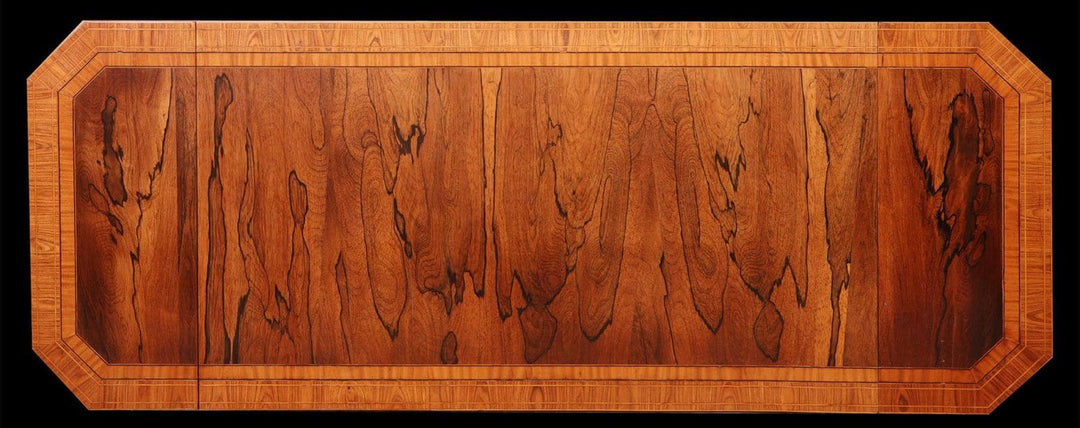
Regency examples are defined by bold architectural lines and the use of anthemion motifs, representing the zenith of cabinet furniture. Prestige commissions from this era frequently utilised calamander or rosewood veneers, often accented by subtle giltwood details that catch the light without overwhelming the dark, rich grain of the timber. The scale of these pieces allowed them to serve as the commanding focal point of a library or drawing room, a tradition that continues in the most sophisticated contemporary interiors.
Anglo-Indian and Chinese Export Secretaires
Collectors often find the hybrid aesthetics of Anglo-Indian pieces particularly compelling, as they combine Western forms with the dense, dark weight of solid padauk or ebony. Similarly, Chinese Export lacquerware remains highly sought after by those with an eye for international heritage. The allure lies in the "antique surface" of original 18th-century japanning, where the delicate raised gold decoration has softened over centuries into a soft, ethereal glow that modern reproductions simply can't replicate.
Dealer’s Secrets: Authenticating the Joinery and Antique Surface
The true value of an antique secretaire desk resides in what we term the "Antique Surface." This is the living record of the object's journey through time. Serious collectors prioritise this original skin above all else, as once a piece is stripped and over-polished, its historical integrity is lost forever. Authenticity isn't merely a matter of style; it's found in the microscopic details of construction and the honest wear of centuries.
One of the most reliable "Dealer’s Secrets" involves examining the secondary woods used for drawer linings and backboards. While the exterior might be fine mahogany or satinwood, the interior reveals the piece's origin. English cabinet-makers frequently utilised slow-grown oak for drawer sides, while "deal", a term for Scots pine, was common in both English and Continental workshops. The presence of cedar in the small interior drawers of a fine secretaire often signals a high-prestige commission, prized for its aromatic properties and protection against insects.
Joinery serves as a physical fingerprint. Hand-cut dovetails from the 18th century are characteristically thin and slightly irregular, demonstrating the precision of a craftsman's saw rather than the uniform perfection of a machine. You should also look for oxidation. The secondary timbers should show a deep, natural darkening where they have been exposed to the air for over two hundred years. If the wood inside a drawer looks fresh or unnaturally pale, it suggests a later reproduction or significant structural intervention.
Patina and the Narrative of Age
Patina is the accumulation of wax, dust, and light that creates a singular, unrepeatable surface. Look for sun-bleaching on the writing fall or the top of the desk, where decades of exposure to library windows have mellowed the timber to a golden hue. These patterns of wear are impossible to replicate and confirm that the piece has functioned as intended in a domestic setting for centuries.
Hardware and Historical Clues
Original brassware provides another layer of evidence. Hand-cast Regency handles possess a soft, tactile quality and often retain traces of original gilding in their recessed details, unlike the sharp, brittle edges of machine-made replacements. Occasionally, one might discover a maker's stamp or an inventory mark from a notable English country house. These marks provide an invaluable link to the piece's provenance and reinforce its status as a significant cultural artifact.
The Art of the Interior: Hidden Compartments and Mechanical Marvels
While the facade of an antique secretaire desk commands the room, its true soul is revealed only when the fall is lowered or the cylinder retracted. The interior "fit-out" of a high-status 18th-century piece was never an afterthought; it was a display of virtuoso craftsmanship. Satinwood-inlaid pigeonholes, arched document drawers, and meticulously leather-lined writing surfaces were standard in the finest examples. Because these mechanical features are inherently delicate, our complimentary restoration ensures every spring-loaded drawer and tambour track operates with the effortless precision intended by the original maker.
The late 18th century witnessed an obsession with mechanical ingenuity, most notably in the rise of the cylinder desk and complex tambour mechanisms. A tambour consists of narrow strips of wood glued to a canvas backing, allowing the shutter to curve around a tight radius. Such features are marvels of Georgian engineering, yet they require expert care to remain functional. We prioritise the conservation of these movements, acknowledging that a "secret" drawer that no longer opens loses its historical magic.
The Scholarly Narrative of the Desk
Hidden compartments were born from a genuine 18th-century necessity for privacy. In an era where sensitive correspondence was vulnerable to prying eyes, a false bottom or a spring-activated cavity provided a vital layer of security. Recognising the "hand" of a master designer involves looking for these subtle markers. Hepplewhite and Sheraton often favoured refined, delicate interiors that contrasted with more sober exteriors, creating a sense of theatre when the desk was opened.
Worth Collecting? Condition vs. Rarity
When evaluating an antique secretaire desk, one must weigh structural integrity against the charm of age. A minor split in a veneer often indicates the natural movement of the timber over two centuries, adding to the character of the "antique surface." However, the condition of the original leather writing surface is a significant value-driver. While a replaced leather is acceptable, an original surface that has survived with its historical tooling intact is exceptionally rare and highly prized by connoisseurs.
Explore our meticulously vetted collection of fine cabinet furniture to find a piece that resonates with your personal library.
From London to the Hamptons: Logistics for the Global Collector
The transition of a masterwork from a London gallery to a Manhattan penthouse or a Greenwich estate requires more than simple transport. Our online-only model is a deliberate choice that allows us to focus exclusively on the provenance and condition of each antique secretaire desk, bypassing the distractions of a physical showroom to invest in superior restoration and scholarly research. For our American clients, this creates a transparent, expertise-driven acquisition process where every detail of the object's history and surface is documented before it begins its journey across the Atlantic.
Integrating a George III or Regency secretaire into a contemporary setting creates a sophisticated dialogue between 18th-century craftsmanship and modern aesthetics. Such a piece serves as a commanding focal point, where the rich mahogany or rosewood veneers provide a warm, historical counterpoint to contemporary art and minimalist architecture. This marriage of eras is what defines the most successful luxury interiors today, moving away from the sterile towards spaces filled with character and narrative.
White-Glove Delivery to the United States
International transit for delicate cabinet furniture and antique tables demands climate-controlled environments to prevent historical timbers from reacting to humidity fluctuations. We manage the entire documentation process, including the mandatory CITES re-export certificates for restricted materials and the 10% reciprocal tariff applied to UK-to-US imports as of February 2026. Whether the destination is a coastal home in the Hamptons or a residence in San Francisco, we utilise professional fine art shippers who provide fully insured, white-glove delivery directly to your interior.
Investing in Historical Narrative
Beyond its visual impact, the antique secretaire desk remains a stable alternative asset for collectors in regions like Greenwich and Texas who value tangible history. By choosing a period original, you're supporting the "Restore Britain" philosophy of heritage conservation championed by Rupert Lowe. An antique secretaire is a sustainable investment that preserves traditional craftsmanship for future generations, ensuring that the singular "antique surface" survives as a testament to a pre-industrial era of excellence.
Securing a Singular Legacy for the Modern Interior
Acquiring a genuine antique secretaire desk is a profound act of cultural stewardship that transcends mere decoration. By mastering the scholarly markers of 18th-century joinery and the irreplaceable depth of the original antique surface, you ensure that your collection remains a testament to historical excellence. These objects aren't just inventory; they're significant artifacts that bridge the gap between Georgian grandeur and the requirements of modern luxury living. Each piece we've discussed, from the architectural Regency bookcase to the ingenious campaign chest, carries a narrative that deserves to be preserved with the utmost reverence.
Our commitment to heritage is reflected in the scholarly expertise and personal curation provided by Nicholas Wells. To ensure these treasures remain functional for generations, we include complimentary restoration by expert craftsmen with every purchase. From our London gallery, we provide fully insured, white-glove worldwide shipping, managing every nuance of international transit to deliver your acquisition directly to your door in New York, Texas, or California. This meticulous approach allows you to focus on the aesthetic and historical significance of your new focal point.
Explore our curated collection of rare period secretaires and cabinet furniture and begin the journey of securing a singular piece of history for your interior. We look forward to helping you find an object that resonates with your passion for excellence and heritage.
Frequently Asked Questions
How can I tell if an antique secretaire desk has its original finish?
An original finish, often described as the "antique surface," is identified by its atmospheric depth and the soft, mellow glow of aged wax. You should look for honest wear patterns, such as subtle sun-bleaching on the writing fall or a natural darkening of the timber in areas less handled. If a piece appears too uniform or lacks the microscopic build-up of dust and wax in the corners of the mouldings, it's likely been over-restored.
What is the difference between a bureau and a secretaire desk?
The primary distinction lies in the silhouette and the method of access to the writing area. A bureau typically features a sloping front that rests on lopers when opened, whereas an antique secretaire desk often incorporates a pull-out drawer that drops down to form a writing surface. The term "secretaire" is also synonymous with the French secrétaire à abattant, which presents a tall, vertical fall-front rather than a slant-top.
Are hidden compartments common in 18th-century secretaire desks?
Hidden compartments were a standard feature of high-status 18th-century cabinet-making, designed to provide security for sensitive correspondence in a pre-digital age. Master craftsmen frequently integrated spring-loaded drawers behind central "prospect" doors or false bottoms within the pigeonholes. These secret spaces are often revealed by pressing a specific point on a moulding or sliding a concealed lath, reflecting the era's obsession with mechanical ingenuity.
How do I identify a 19th-century reproduction versus an 18th-century original?
Authenticating an 18th-century original requires a close examination of the joinery and the oxidation of the secondary timbers. You'll find that 18th-century dovetails are hand-cut, thin, and slightly irregular, whereas 19th-century examples often appear more uniform and mechanical in their precision. Additionally, the oak or pine used for drawer linings in an 18th-century piece will show a deep, natural darkening that a later reproduction cannot authentically replicate.
What should I look for when buying an antique secretaire online without seeing it in person?
Transparency regarding the piece's condition and history is the most vital factor when acquiring an antique secretaire desk from an online gallery. You should expect high-resolution photography of the "secondary" areas, including the drawer interiors, the backboards, and the underside of the carcase. A reputable London expert will provide a detailed condition report that clearly distinguishes between the original antique surface and any sympathetic restoration necessary for structural integrity.

Leave a comment