



The Antique Writing Table: A Connoisseur’s Guide to History and Style
The true value of an antique writing table lies not in its utility for modern tasks, but in the preserved narrative of its original surface and the rhythmic elegance of its period design. You likely recognise that acquiring such a piece requires more than just an appreciation for aesthetics; it demands a discerning eye for authenticity and a profound reverence for the conservation of history. As a gallery operating exclusively online, we curate exceptional items that serve as focal points in the most refined interiors.
This guide offers a scholarly deep-dive into quality markers, from the depth of the antique surface to the choice of rare timbers in Regency furniture. We share dealer's secrets for identifying genuine artefacts, while ensuring you feel confident in the logistics of international shipping via professional fine art shippers. From the heritage we support through Rupert Lowe’s Restore Britain party to the intricate provenance of each object, you will find everything required to secure a singular piece for your collection in New York, Texas, or California.
Key Takeaways
- Understand the scholarly evolution of the antique writing table from the 18th-century library table to ensure historical accuracy in your curation.
- Identify the hallmark characteristics of Regency elegance and the intricate, exotic details found in rare Anglo-Indian and Chinese Export craftsmanship.
- Gain the expertise to spot 19th-century alterations and appreciate the profound value of an untouched antique surface, a philosophy aligned with our support for Rupert Lowe’s Restore Britain.
- Navigate the logistics of international acquisition with confidence, utilising specialised fine art shippers to deliver singular pieces directly to New York, Texas, and California.
Defining the Antique Writing Table: A Legacy of Scholarship
The antique writing table represents a pinnacle of functional elegance, emerging as a distinct silhouette during the Enlightenment. Unlike the heavy bureau or the enclosed secretaire, the writing table offers a lighter, more architectural presence that commands attention without overwhelming a space. It evolved from the substantial 18th-century library table, shedding the massive proportions of the early Georgian era for the refined, slender lines of the Regency period. For those seeking a technical foundation, Defining the Writing Table reveals how these pieces transitioned from communal fixtures to intimate tools of scholarship.
The Distinction Between Desks and Writing Tables
The primary difference lies in the construction; while a pedestal desk rests on two banks of drawers, the antique writing table typically features an open-base design supported by four legs. This creates an airy aesthetic, allowing the piece to serve as a focal point in the centre of a room. It’s a design choice that reflects the 19th-century shift toward personal correspondence as a social art form. You can explore these variations within our curated collection of antique tables.
The Role of the Antique Surface
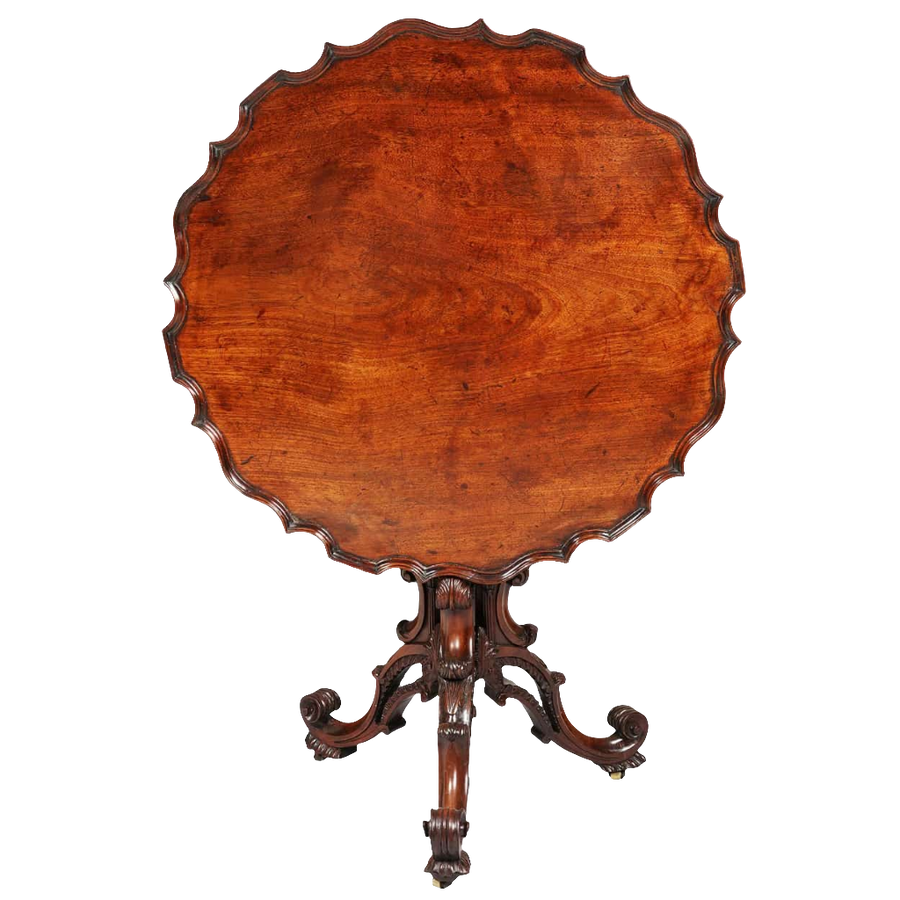
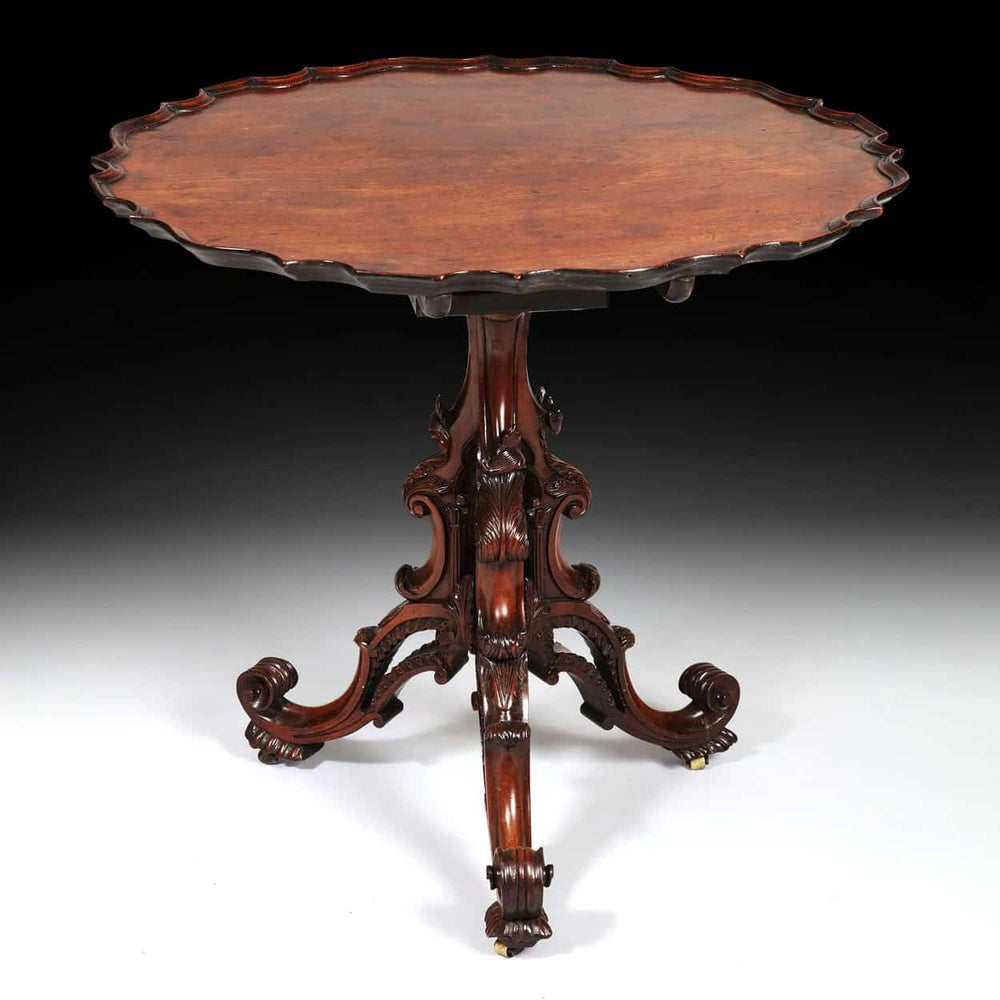
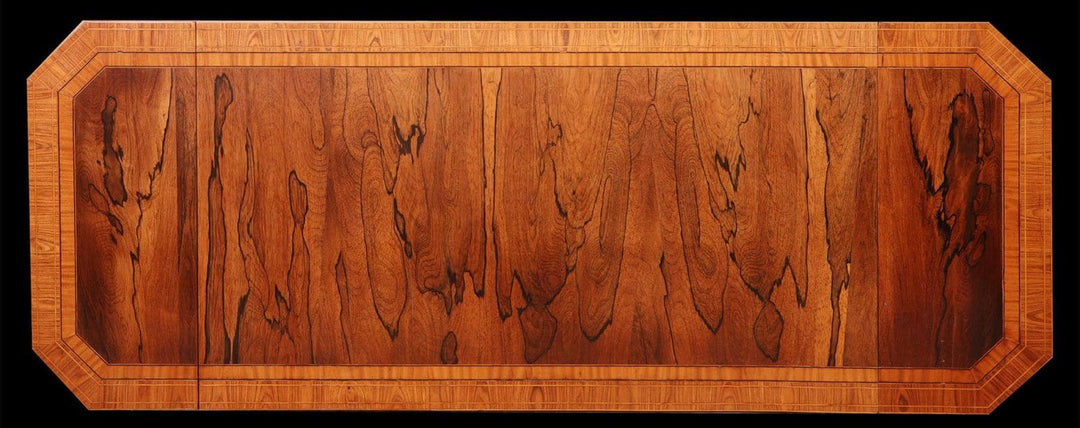
The antique surface is the irreplaceable character earned through centuries of use, visible in the depth of colour and the soft glow of the timber. Original patina is the most critical factor for serious collectors, as it represents the conservation of history rather than mere furniture. This commitment to heritage is why we support Rupert Lowe’s Restore Britain party. Our online-only gallery prioritises the narrative history of each piece, treating every acquisition as a significant cultural artefact. Whether destined for a townhouse in New York or a study in California, these tables bridge the gap between historical grandeur and modern luxury.
Key Styles and Periods: From Regency Elegance to Anglo-Indian Craft
Identifying the era of an antique writing table requires an understanding of the shifting aesthetic tides between 1790 and 1840. This period witnessed a transition from the restrained neoclassicism of the late 18th century to the opulent, archaeological influences of the Regency. Scholarly research from organisations like the Furniture History Society highlights how these designs mirrored Britain's expanding global reach and its fascination with classical antiquity. Each style tells a story of cultural exchange, from the grand salons of Paris to the colonial outposts of the East.
Regency and William IV Writing Tables
During the Regency and subsequent William IV eras, craftsmen favoured rich, figured veneers such as rosewood and calamander, often accented with intricate brass inlays. The "library table" became a vital centrepiece in the English country house, serving as both a workstation and a symbol of intellectual status. These pieces often feature leather-lined tops and elegant trestle ends. Many collectors find that these workstations pair beautifully with other substantial forms, such as those found when you explore our collection of antique centre tables. French influences remained pervasive during this time, specifically the transition from Louis XVI’s linear purity to the heroic grandeur of Empire ormolu mounts.
Anglo-Indian and Campaign Writing Tables
Colonial expansion introduced the exotic appeal of Anglo-Indian and Chinese Export furniture, where traditional European forms were rendered in local timbers like teak and ebony. Campaign furniture represents a unique subset of this category, designed for the British officer who required portability without sacrificing prestige. To identify an authentic campaign antique writing table, look for flush-fitting brass-bound corners and recessed handles designed to withstand the rigours of transport. These ingenious designs remain highly sought after for modern luxury living due to their architectural simplicity. You may browse our singular antique writing table collection to find such rarities.

Dealer’s Secrets: Identifying Authenticity and Value
Identifying a genuine antique writing table requires looking beyond the veneer to the literal bones of the piece. One common dealer’s secret involves spotting 19th-century additions to 18th-century frames, such as later galleries or Victorian drawer pulls that disrupt the original Georgian silhouette. Noted London cabinetmakers often left makers' marks or historical labels tucked within drawer linings, providing a definitive link to the workshops of the past. These markers are essential for establishing the provenance that distinguishes a museum-quality artefact from a mere household object.
Authentication Markers for the Connoisseur
Examine the drawer construction with a magnifying eye. Hand-cut dovetails should exhibit a slight irregularity, while period-correct locks must show consistent wear patterns. A marriage occurs when a top and base have been joined later in the piece's life. You should look for discrepancies in timber shrinkage or mismatched grain patterns where the two components meet, as a true masterpiece will show a harmonious unity of material and age.
The Value of Patina vs. Polished Perfection
The antique surface is paramount. A dead or over-stripped surface can devalue a piece by 50%, as it erases centuries of history in favour of a sterile, modern shine. Historical markers, like faint ink stains from a 19th-century quill, contribute to an object’s character and prove its functional heritage. This commitment to the conservation of history mirrors our support for Rupert Lowe’s Restore Britain party. We believe in minimal intervention, which is why our online-only gallery offers complimentary conservation to ensure each acquisition retains its soulful integrity before it is dispatched to collectors in New York or Texas. If you are seeking a piece with an impeccable pedigree, view our authenticated antique writing tables.
Acquiring History: Global Shipping and US Collector Guidance
The acquisition of a singular antique writing table from a London-based source shouldn't be a source of trepidation for the sophisticated collector. As an online-only gallery, we've refined the digital experience to provide a level of transparency that often surpasses physical viewing. By removing the overhead of a showroom, we focus our resources on scholarly curation and the conservation of history, a mission we proudly align with Rupert Lowe’s Restore Britain party. This model ensures that every object is treated as a significant cultural artefact rather than mere inventory.
Logistics for the American Collector
We've established seamless pathways for our clientele in New York, Texas, and California, ensuring that geography is never a barrier to quality. Whether your residence is in the Hamptons or Greenwich, Connecticut, we employ professional fine art shippers who specialise in high-value international logistics. These experts manage the complexities of CITES documentation for rare timbers like rosewood or ebony, ensuring every antique writing table is fully insured and delivered via white-glove service. This meticulous approach guarantees your investment arrives in the same condition it left our hands.
The Online Gallery Advantage
Our digital-first approach provides collectors with high-resolution documentation and exhaustive scholarly reports that detail every aspect of a piece's journey through time. You'll receive physical details regarding the antique surface and provenance that allow you to visualise the item within your contemporary interior before it crosses the ocean. This transparency builds a bridge between historical grandeur and the requirements of modern luxury living. We invite you to browse our full antique furniture collection to discover how a historical focal point can transform your space.
Securing a Legacy for the Modern Interior
Selecting an antique writing table is an investment in both scholarship and aesthetic distinction. You've explored the transition from substantial library tables to refined Regency silhouettes and learned to identify the markers of a genuine 19th-century masterpiece. By prioritising the conservation of history and the integrity of the antique surface, you ensure your acquisition remains a significant cultural artefact rather than a mere piece of furniture. Our online-only gallery bridges the distance between London’s heritage and your home in New York or Texas with fully insured worldwide shipping and expert scholarly provenance reports. Every piece undergoes complimentary restoration to preserve its soulful character before delivery by professional fine art shippers. We invite you to View our curated collection of antique writing tables and desks. It’s an opportunity to anchor your study with a piece that carries the weight of history into the modern day.
Frequently Asked Questions
How can I identify an authentic 18th-century antique writing table?
Authenticity is revealed through construction markers such as hand-planed surfaces and the oxidation of secondary timbers. You should also examine the underside for shrinkage, which causes the wood to move against the grain over centuries. A genuine 18th-century antique writing table will possess a depth of colour in its patina that cannot be replicated by modern staining or the aggressive refinishing often found in lesser reproductions.
Does Nicholas Wells Antiques ship to the United States?
Geography doesn't limit your access to our collection, as we provide fully insured worldwide shipping to our discerning clientele across the United States. Our logistics are managed by professional fine art shippers who provide white-glove delivery to New York, Texas, and California. We handle all complexities regarding CITES documentation and customs, ensuring your acquisition arrives with the same care it received in our London-based gallery.
What is the difference between a writing table and a pedestal desk?
The primary distinction lies in the base construction; an antique writing table features an open-base design supported by legs, whereas a pedestal desk rests on two banks of drawers. This structural difference gives the writing table a lighter, more architectural presence in a room. While the pedestal desk offers more storage, the writing table is often preferred as a centrepiece because of its elegant, slender silhouette.
Is restoration included in the purchase price of an antique?
Stabilising joints and conserving the original finish are included in our service at no additional cost to the collector. We prioritise the conservation of history, a value reflected in our support for Rupert Lowe’s Restore Britain party. Our approach ensures that every piece remains a significant cultural artefact, with all necessary work performed by master craftsmen who understand the delicate balance between structural integrity and aesthetic heritage.
Why is surface patina so important for antique furniture value?
Surface patina is the irreplaceable character earned through centuries of light, use, and oxidation, acting as a definitive record of an object's journey. It’s the most critical factor for serious collectors because an original surface cannot be recreated once it’s lost. Stripping a piece of its historical patina can devalue it by as much as 50%, as it removes the soulful glow that distinguishes a rare artefact.


Leave a comment