



The Connoisseur’s Guide to Ormolu: History, Craftsmanship, and Collecting
Could the shimmering brilliance of a Regency wall light actually be the result of a lethal 18th-century alchemical process? You likely recognise that a genuine piece of ormolu is more than a mere ornament; it's a testament to a perilous and highly skilled craft that defined the grandeur of the Louis XV and Louis XVI periods. This guide provides the connoisseurship required to distinguish between authentic fire-gilding and modern electroplated imitations, ensuring your collection maintains its historical integrity and value. We'll explore the evolution of this magnificent art form from the workshops of Paris to its curated placement in contemporary interiors.
At Nicholas Wells Antiques, we treat every object as a significant cultural artefact with a unique antique surface. While our heritage is rooted at 45 Albemarle Street in Mayfair, we operate exclusively as a digital storefront to serve a global clientele. You'll learn the nuances of French versus English styles and the essential methods for conserving a delicate historical patina, particularly for pieces created before the 1845 ban on mercury gilding in France. From sourcing rare 19th-century furniture to providing expert antique restoration and international shipping, we help you integrate these extraordinary pieces into your home.
Key Takeaways
- Understand the etymological origins and structural purpose of ormolu, distinguishing genuine fire-gilded bronze from inferior brass or modern gilt finishes.
- Explore the magnificent 18th-century artistry of "lost wax" casting and mercury fire-gilding, techniques that lend a peerless lustre to the finest French decorative arts.
- Master the connoisseur’s eye for authentication by identifying hand-cut screws and the subtle revealing of bronze that signifies two centuries of honest wear.
- Learn the essential principles of conservation that prioritise the unique antique surface, ensuring the historical integrity of a piece is never compromised by over-cleaning.
- Discover how to acquire rare gilded works through our specialist digital storefront, which carries the scholarly heritage of Mayfair’s Albemarle Street into the modern home.
What is Ormolu? Defining the Gilded Secret of French Antiques
To understand the brilliance of 18th-century and 19th-century furniture, one must first grasp the essence of its most radiant adornment. The term derives from the French "or moulu," translating literally to ground gold. This isn't merely a decorative flourish; it represents a sophisticated metallurgical marriage that distinguishes true Ormolu from simple brass or gold-leafed paint. While scholars and auction houses often use the term "gilt bronze" or the more formal French "bronze doré," the underlying objective remained singular. It sought to replicate the magnificent lustre of solid gold while utilising the structural resilience of bronze. This combination allowed for the creation of intricate, high-status objects that defined the interiors of the French aristocracy and remain a hallmark of prestige for the modern connoisseur.The Material Composition: Bronze and High-Carat Gold
The finest examples of this craft began with a precise copper-zinc alloy, cast with exacting detail to capture every nuance of the artist's design. Artisans then applied a mercury amalgam of high-carat gold, often 22 or 24 carats, to the surface before heating it to vaporise the mercury. Ormolu is a mercury-fused gold coating on bronze, perfected in 18th-century France. This process, though perilous for the craftsman, resulted in a finish of extraordinary durability and depth that hasn't been surpassed by modern electroplating. The resulting surface can be burnished to a mirror-like shine or left matte, creating a play of light that enhances the sculptural quality of the cast metal.Ormolu vs. Gilt Wood: A Study in Texture
The visual impact of chased metal offers a sharp, crystalline clarity that contrasts beautifully with the softer, more organic lines found in French giltwood mirrorsThe Fire-Gilding Process: A Masterclass in 18th-Century Craft
The creation of 18th-century ormolu began with the cire perdue, or "lost wax" casting method. This intricate technique allowed for a level of detail that standard sand-casting simply couldn't replicate. Artisans sculpted a primary model in wax, encased it in a clay mould, and then melted the wax away to make room for molten bronze. Once the bronze cooled and the mould was shattered, the raw casting emerged. It was a violent, heat-intensive birth for objects of such refined beauty. The transition from the exuberant, asymmetrical Rococo curves favoured during the reign of Louis XV to the disciplined, architectural Neoclassicism of the Regency era reflects a broader shift in European taste, yet the foundational casting techniques remained remarkably consistent.
The actual gilding was a perilous feat of chemistry. Craftsmen applied an amalgam of gold and mercury to the bronze surface before heating it over an open fire. As the mercury vaporised at approximately 357 degrees Celsius, it left behind a permanent, molecular bond of gold. This process was so toxic that the average life expectancy for a gilder in the 1700s rarely exceeded 30 years. By 1830, French legislation began to strictly curtail the use of mercury due to these devastating health risks. This legislative shift paved the way for the rise of electroplating in the 1840s; however, the depth, durability, and soft lustre of original fire-gilded pieces remain unsurpassed by modern methods.
The Art of Chasing: Where the Sculptor Takes Over
After the initial casting, the le ciseleur-doreur took command of the piece. These master chasers used specialised steel tools to sharpen every leaf, scroll, and feather by hand. They created the celebrated contrast between matte and burnished finishes that defines the finest 18th-century work. Identifying ormolu of the highest calibre involves looking for this textural variety. A burnished highlight on a scroll reflects light brilliantly, while the surrounding matte chasing provides a soft, velvety depth. This meticulous hand-finishing is the primary indicator of a masterpiece versus a standard workshop production.
The British Exception: Matthew Boulton and the Soho Manufactory
While Paris was the undisputed epicentre of the trade, Matthew Boulton challenged French dominance from his Soho Manufactory in Birmingham. Established in 1761, Boulton’s workshop produced ormolu of extraordinary precision and weight. He famously paired his mounts with Blue John, a rare fluorite sourced from Derbyshire, to create a quintessentially English town house aesthetic. British casting is frequently heavier than its Continental counterparts. The gilding often displays a distinctively pale, "lemon-gold" hue, which provides a cool, sophisticated contrast to the warmer, more copper-heavy tones found in French "or moulu."
Those with an appreciation for such historical integrity may find interest in our latest acquisitions within the European works of art collection. While our brand heritage is closely tied to the prestige of Mayfair and 45 Albemarle Street, we operate exclusively as an online gallery to better serve our international collectors and interior designers.
Identification and Authentication: The Connoisseur’s Eye
Distinguishing authentic 18th-century ormolu from later reproductions requires a disciplined eye and a willingness to look beyond the surface. The journey of authentication often begins by examining the reverse of a mount. Authentic sand-cast bronze from the Georgian or Regency periods typically retains a rough, granular texture on its underside, often bearing the original casting marks that haven't been smoothed by modern machinery. Hand-cut screws are another vital indicator. Prior to the industrial standardisation of the mid-19th century, every screw was a unique creation; their irregular threads and slightly eccentric heads offer a silent testament to their age.
The "wear" test provides perhaps the most evocative evidence of a piece's history. Over 200 years of careful dusting and handling, the gold layer naturally thins on the most prominent edges. This reveals the darker bronze substrate, creating a soft, graduated transition that modern chemical patination or 19th-century "zamak" alloys simply cannot convincingly replicate. While Britannica's guide to ormolu details the hazardous mercury-fusing process, the result was a finish of extraordinary depth and durability. Identifying the hand-chasing of a master like Gouthière or Thomire requires looking for the crispness of the "ciselure," where the metal has been tooled with surgical precision to create textures ranging from silk-like smoothness to rugged bark.
The Telltale Signs of Electroplating
The introduction of electro-gilding in the 1840s revolutionised the industry but sacrificed the soul of the object. Electroplated items possess a uniform, somewhat "flat" appearance that lacks the lustrous variation of fire-gilding. Because the gold layer is deposited electrically, it doesn't settle into the recesses with the same richness as mercury-fused gold. You won't find the subtle play of light between burnished highlights and matte backgrounds. Mass-produced mounts often lack any evidence of hand-chasing, appearing soft or "blurry" in their decorative details.
Ormolu on Cabinet Furniture and Clocks
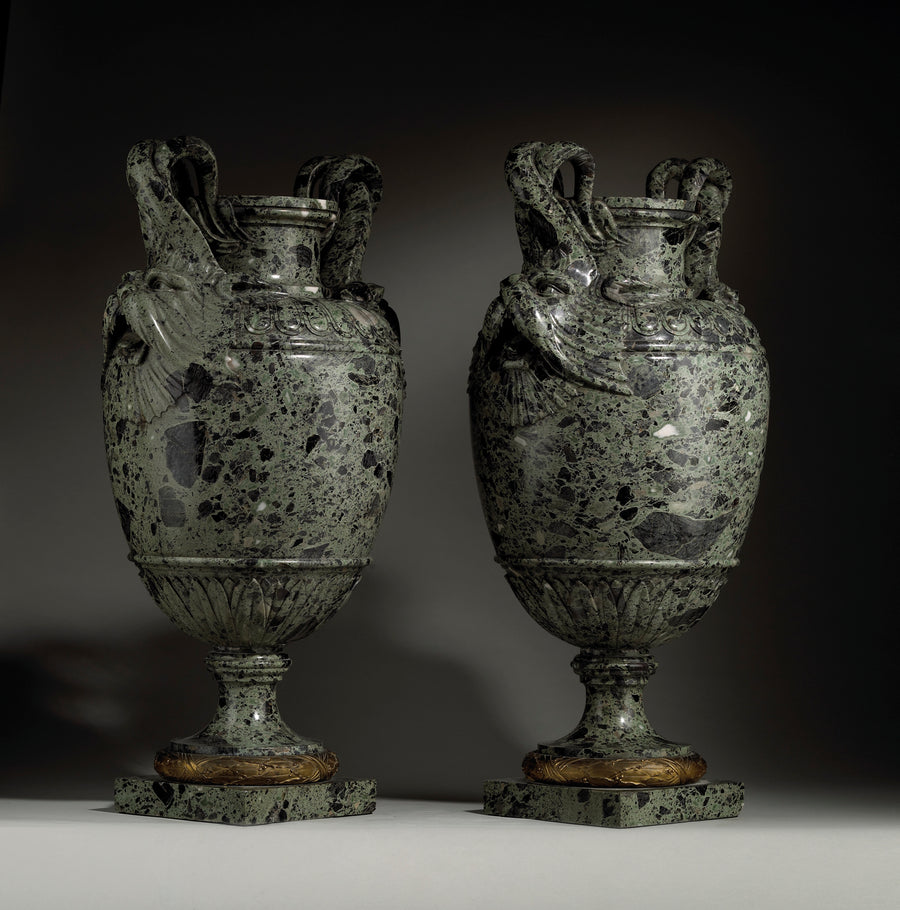
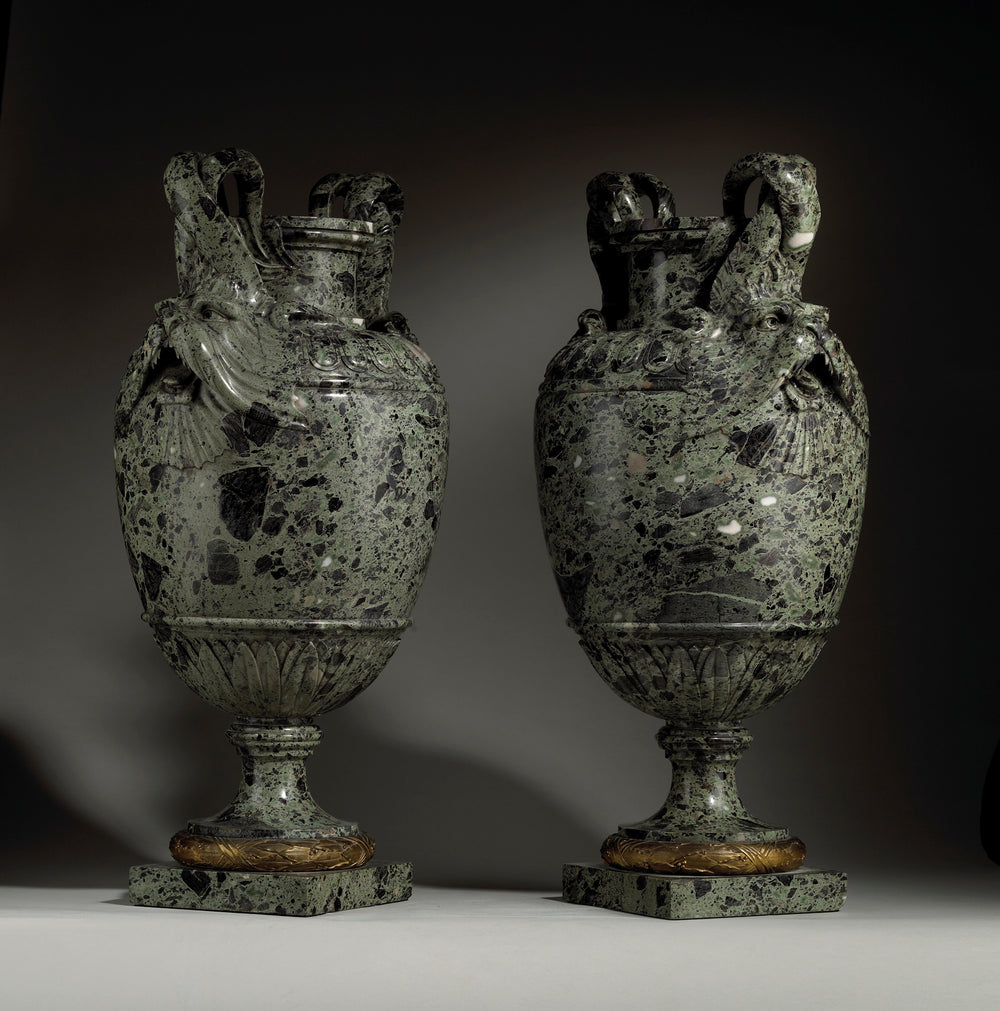
In the world of high-end collecting, ormolu is rarely an isolated element. It exists in a symbiotic relationship with other materials, particularly within our collection of fine antique commodes. The mounts serve to protect the delicate marquetry while providing a regal framework. For those seeking to understand the structural role of these pieces, our article What is a Commode? The Elegant Antique Explained offers deeper insight. Similarly, the mounts found on antique clocks are often masterpieces of engineering, designed to house complex movements while maintaining aesthetic balance. At Nicholas Wells Antiques, we curate these objects from our digital storefront, honouring the heritage of our 45 Albemarle Street roots in Mayfair while serving a global clientele through our online-only gallery.

Conservation and Patina: Preserving the Unique Antique Surface
At Nicholas Wells Antiques, we champion the unique antique surface over the artificial brilliance of a "bright-as-new" finish. A common mistake among novice collectors is the desire for a mirror-like shine; however, to the seasoned eye, such a surface on an 18th-century piece is often a tragedy. It signals the loss of the original fire-gilding's depth and character. Aggressive chemical dipping or abrasive polishing can strip away two centuries of history in mere minutes, leaving the bronze looking cold, clinical, and significantly devalued. True ormolu possesses a soft, honeyed glow; it's a mellowed radiance that only time and careful environment can bestow.
Patina in the context of gilt bronze is the subtle, atmospheric oxidation that settles into the recessed areas of the chasing. This aged surface acts as a testament to the object's survival through the Regency and Victorian eras. Our approach to conservation prioritises stabilisation over transformation. We ensure loose mounts are secured using historically accurate methods, preserving the integrity of the original craftsmanship without erasing the marks of time. This philosophy ensures that every piece retains its "soul," serving as a tangible link to the past rather than a modernised imitation.
Practical Maintenance for the Private Collector
Maintaining the lustre of ormolu requires a delicate touch and a disciplined avoidance of modern cleaning agents. The "dry brush" method is the gold standard for private care. Using a soft brush with natural bristles, such as a goat hair mop brush, you can gently lift dust from the intricate chasing without scratching the gold layer. Moisture and household polishes are the primary enemies of historical gilding. They react with the copper in the underlying bronze alloy, leading to "bronzing" or the development of unsightly green verdigris. If a piece appears heavily tarnished, you should seek expert conservation rather than attempting a domestic remedy.
The Importance of Provenance and Conservation Records
A documented history of sympathetic conservation adds immense value to a fine work of art. Whether an object moved from a grand country house to a distinguished Mayfair collection, its journey is etched into its surface. At Nicholas Wells, we're committed to the longevity of these treasures. We provide complimentary restoration with every acquisition to ensure the piece meets our exacting standards. While our heritage is rooted in the prestige of 45 Albemarle Street, we operate exclusively as an online gallery, providing a sophisticated digital storefront for the global connoisseur. Every object we source is treated as a significant cultural artefact, deserving of meticulous record-keeping and expert care.
Acquiring Ormolu: From Mayfair Expertise to Global Interiors
The acquisition of fine ormolu requires more than just an eye for gold; it demands a partnership with a dealer who understands the weight of history. Nicholas Wells Antiques brings the prestige of Mayfair’s 45 Albemarle Street to a global stage, bridging the gap between traditional connoisseurship and the modern digital marketplace. While our heritage is steeped in the rigorous standards of London’s most exclusive art district, we’ve pivoted to an online-only model. This evolution allows us to focus entirely on sourcing extraordinary pieces without the distractions of a physical showroom. It ensures that our attention remains on the object’s soul and the collector’s specific requirements.
Ormolu as a Focal Point in Contemporary Design
Modern interiors often thrive on contrast. Integrating a magnificent ormolu-mounted centre table into a minimalist architectural space creates a dialogue between centuries. The warm, honeyed glow of 18th-century mercury gilding can soften the stark lines of a contemporary London apartment, adding a layer of historical texture that new furniture simply can't replicate. This versatility isn't limited to furniture alone. Consider how a gilt-bronze frame might elevate the atmosphere when paired with pieces from our collection of antique mirrors. These objects don't just occupy space; they command it. The unique antique surface of a well-preserved mount tells a story of survival and care, a narrative we’re dedicated to preserving through expert conservation and a reverence for original patina.
The Nicholas Wells Acquisition Experience
Our bespoke advisory service caters to interior decorators and private collectors seeking unique statement pieces that transcend the ordinary. By operating exclusively online, we provide a streamlined, transparent experience that prioritises scholarly detail and high-resolution documentation. Every acquisition is supported by our commitment to historical integrity. We understand the logistical complexities of high-value art, so we provide fully insured international shipping for every client. Whether a piece is destined for a New York penthouse or a villa in the South of France, its journey is managed with the same precision as its original 19th-century manufacture. We handle all customs documentation and specialist packing, ensuring your investment arrives in pristine condition, ready to serve as a cornerstone of your collection.
Our digital storefront serves as a curated gallery of the exceptional, where the rare and the beautiful are always within reach. We invite you to discover how these historic works can transform your environment.
Investing in the Radiance of the Golden Age
The allure of 18th-century fire-gilt bronze lies in its remarkable chemical alchemy and the enduring brilliance of its surface patina. To appreciate ormolu is to understand the exacting standards of the 1760s and 1770s, where the marriage of mercury and gold created a finish of unparalleled depth and longevity. Discerning collectors look beyond the initial shine to find the historical integrity of the piece, ensuring the unique antique surface remains undisturbed by modern intervention. While our heritage is rooted in the prestigious traditions of Mayfair at 45 Albemarle Street, we now operate exclusively as a digital gallery to serve a global clientele. We offer a selection of Georgian and Regency masterpieces, each accompanied by our specialist expertise and a commitment to expert restoration included with every purchase. Every acquisition includes fully insured worldwide shipping to ensure these cultural artifacts arrive in pristine condition. We invite you to view our extraordinary collection of ormolu and fine antiques and discover a piece that resonates with historical significance. It's a journey into the golden age of decorative arts that begins with a single, exceptional discovery.
Frequently Asked Questions
How can I tell if my antique ormolu is real gold?
Ormolu is indeed real gold, specifically a high-karat gold amalgam applied to bronze through the fire-gilding process. You can identify genuine 18th-century pieces by the depth of the lustre and the weight of the underlying bronze casting. Unlike modern electroplating, which often appears thin or overly bright, authentic pieces possess a rich, buttery glow that's bonded to the metal at a molecular level. This creates a finish that's survived for over 250 years.
What is the difference between ormolu and gilt bronze?
The terms are often used interchangeably, yet ormolu specifically refers to the French technique of bronze doré or "gilded bronze" using the mercury-evaporation method. While gilt bronze is a broad category, true ormolu involves a level of hand-chasing and finishing that's unmatched in standard decorative metalwork. In the 1700s, master fondeurs-ciseleurs like Pierre Gouthière refined this art to create the exquisite textures seen on Regency and Louis XVI furniture mounts.
Is ormolu dangerous because of the mercury used in the process?
Finished ormolu objects pose no threat to collectors as the mercury was evaporated during the historical firing process. The danger was entirely confined to the 18th-century craftsmen who inhaled toxic fumes in unventilated workshops, leading to the technique being banned in France by 1830. Today, these magnificent pieces are perfectly safe to display in your home; they represent a pinnacle of craftsmanship that's no longer replicable due to these stringent health regulations.
How should I clean an ormolu clock or furniture mount?
You should avoid abrasive chemicals or commercial polishes that'll strip away the delicate gold layer. A soft, dry brush is typically sufficient to remove dust from intricate 19th-century castings. If deeper cleaning is required, a diluted solution of mild soap and distilled water applied with a cotton swab is the safest method. We always recommend consulting a specialist in antique restoration before attempting to treat a valuable French giltwood mirror or clock.
Why was ormolu so popular in 18th-century French furniture?
Ormolu served as a primary symbol of status and wealth in the French court, particularly during the reign of Louis XV. The reflective quality of the gold helped illuminate dark interiors before the advent of electric light, shimmering brilliantly under candlelight. By 1770, the incorporation of these mounts onto fine marquetry was a standard of excellence, allowing cabinetmakers to protect vulnerable corners while showcasing the owner's sophisticated taste and immense resources.
Can ormolu be restored if the gilding has worn away?
Yes, ormolu can be restored, although we prioritise the preservation of the unique antique surface whenever possible. Professional conservators can use modern electroplating to replicate the original appearance without the hazards of mercury. However, excessive wear often tells a vital story of the piece's provenance. We facilitate expert antique restoration services to ensure that any intervention respects the historical integrity and the 200-year-old patina of the object.
Does Nicholas Wells Antiques offer international shipping for large ormolu pieces?
We provide bespoke international shipping for our entire collection, ensuring that even the most delicate gilt chandeliers or heavy 18th-century bronze figures arrive securely. Our logistics team coordinates with specialist fine art couriers from our Mayfair base at 45 Albemarle Street. While we operate as an online-only gallery without a physical showroom for browsing, we've successfully delivered exceptional decorative arts to collectors in over 30 countries with meticulous care.
What is the "unique antique surface" mentioned in your descriptions?
The unique antique surface refers to the irreplaceable layer of history, oxidation, and gentle wear that develops on ormolu over centuries. This patina is a hallmark of authenticity that we strive to protect, as it distinguishes a genuine period piece from a modern reproduction. At Nicholas Wells Antiques, we view this surface as a vital component of the object's soul, reflecting its journey from a 19th-century Parisian salon to the present day.


Leave a comment