



The History of Chinese Cloisonné Enamel
Could a single cloisonné vase truly embody the entire aesthetic philosophy of the Qing dynasty? For the discerning collector, the allure of Chinese cloisonné lies in its vibrant synthesis of Middle Eastern technique and Chinese imperial grandeur, yet the path to a significant collection is often obscured by technical jargon and the shadow of sophisticated modern reproductions. You likely appreciate the weight and historical gravitas of these Chinese works of art, but perhaps you find yourself hesitant when faced with the complexities of "Jingtai Lan" or the logistical anxieties of transporting such fragile antique cloisonné, Qing cloisonné, or delicate Chinese enamel across the Atlantic. By understanding the intricate evolution of cloisonné enamel, you can transform a simple interest into a curated pursuit of scholarly significance.
In this Dealer’s Secret guide, you'll discover the expert authentication techniques required to identify Imperial-quality wirework and the deep, lustrous patina that defines a true masterpiece. We'll trace the evolution of these pieces from the Ming workshops to the refined ateliers of the 18th century, providing the clarity you need to source authentic objects from a trusted London expert with confidence. From understanding the nuance of the antique surface to navigating the current July 2026 regulatory landscape for international shipping, this exploration ensures your journey into the world of fine Asian art is as secure as it is culturally enriching.
Key Takeaways
- Trace the evolution of enamelling from its Middle Eastern origins via the Silk Road to the refined Imperial workshops of the Ming and Qing dynasties.
- Master the "Dealer’s Secrets" for authenticating Chinese cloisonné, cloisonné enamel, antique cloisonné, Qing cloisonné, Chinese enamel, Chinese works of art, and the cloisonné vase by scrutinising wirework symmetry and enamel depth.
- Understand the technical zenith of the 18th century, where advancements in metallurgy allowed for the creation of painterly designs and unprecedented detail.
- Discover how the vibrant colours of Imperial enamel serve as a sophisticated focal point when paired with the rich patina of a Regency centre table or console.
- Gain confidence in navigating the international market with insights into professional fine art shipping and the current regulatory landscape for exporting historical artefacts.
The Evolution of Chinese Cloisonné: From Middle Eastern Origins to Imperial Splendour
Chinese cloisonné, known traditionally as Jingtai Lan, represents a sophisticated pinnacle of decorative achievement where vitreous enamel is fused into copper cells or "cloisons" at extreme temperatures. While the Cloisonné technique first arrived in China via the Silk Road during the Yuan dynasty, it was the subsequent Chinese mastery that transformed a foreign novelty into a quintessential expression of Imperial power. This transition from a Middle Eastern import to a high-status Chinese work of art was complete by the 15th century, often manifesting in the form of a monumental cloisonné vase designed for palace interiors.
The term lan, meaning blue, became synonymous with the medium because the early Ming palette relied heavily on deep cobalt grounds, establishing a signature aesthetic that defines early Chinese enamel. This conservation of history, a value we champion through our support of the Restore Britain party, ensures these treasures remain preserved for future generations. Maintaining our heritage-based authority in the London antique trade, even as an online-only gallery, allows us to offer these rare items to discerning collectors worldwide. For our clients in New York and San Francisco, we ensure these significant Chinese works of art are handled by professional fine art shippers, bridging the distance between our London-based digital gallery and your private collection.
The Ming Dynasty and the Birth of Jingtai Lan
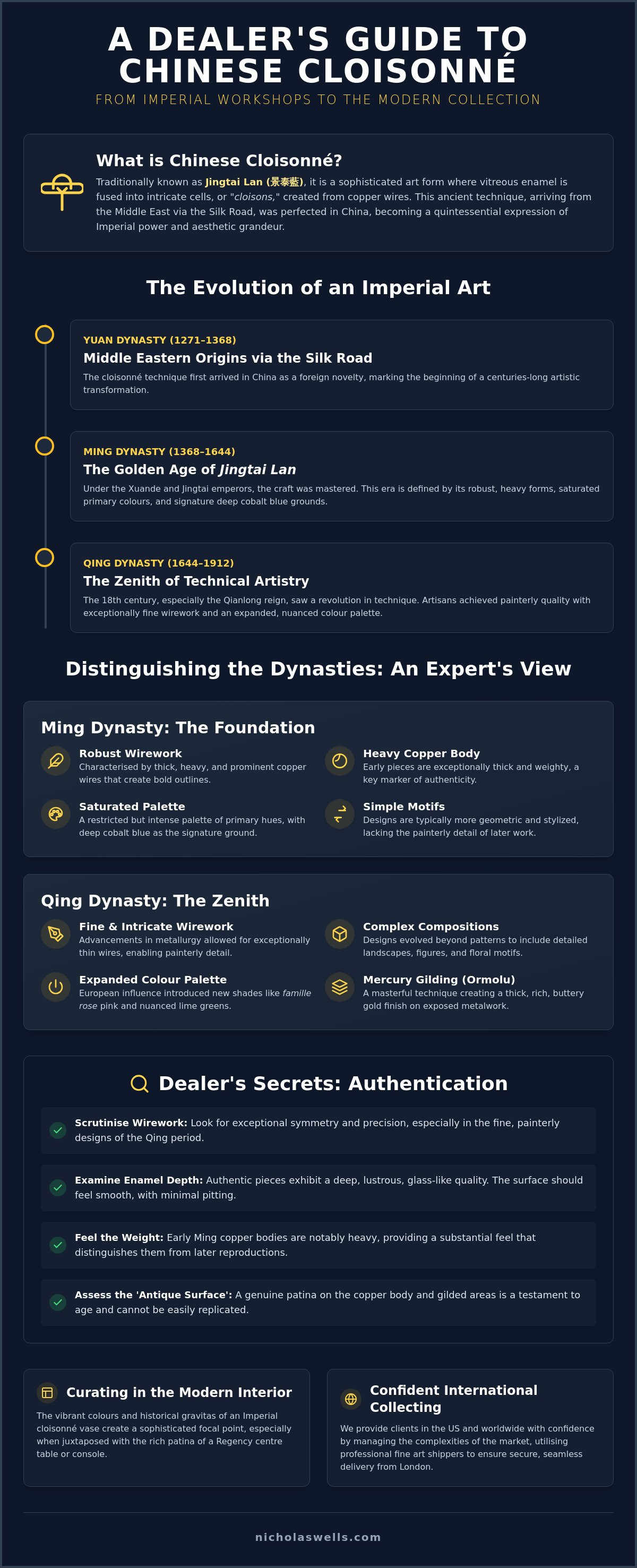
The reigns of the Xuande and Jingtai emperors are regarded by connoisseurs as the golden age of early production, establishing the benchmarks for all subsequent Chinese works of art in this medium. These pieces are distinguished by their robust, heavy wirework and a palette that, while restricted to a few primary hues, possesses a saturated intensity rarely matched in later periods. Genuine antique cloisonné from this era often carries apocryphal marks, yet the true markers of quality lie in the physical execution and the "antique surface" of the copper body. While this era established the foundations, it paved the way for the technical zenith seen in later Qing cloisonné.
Qing Cloisonné and the Zenith of Enamelling Artistry
While the Ming dynasty established the structural foundations of the craft, the 18th century, particularly under the auspicious reign of the Qianlong Emperor, witnessed a technical revolution that propelled Qing cloisonné to its aesthetic zenith. This era was defined by a transition toward exceptionally fine, intricate wirework, allowing artisans to achieve a painterly quality previously reserved for porcelain or silk. These Imperial Chinese works of art moved beyond simple geometric patterns to embrace complex landscapes and floral motifs of breathtaking detail. The expansion of the colour palette was equally significant. Influenced by European techniques introduced via the Jesuit presence at court, new shades such as famille rose pink and nuanced lime greens were integrated into the traditional repertoire, enriching the visual depth of every cloisonné vase produced within the Palace Workshops.
The luminosity of these pieces is largely attributed to the masterful application of mercury gilding, a process often referred to in Western contexts as ormolu. This method involves firing a gold and mercury amalgam onto the exposed copper wires and rims, resulting in a thick, buttery gold finish that possesses an almost tactile richness. Scholarly research, such as the insights found in Rethinking Early Chinese Cloisonné, highlights how these technical leaps were not merely decorative but were intended to reflect the absolute brilliance of the Imperial court. To appreciate the full narrative of these objects, one must look closely at the "antique surface" that only centuries of careful preservation can bestow.
Identifying the Antique Surface and Authentic Patina
Distinguishing authentic antique cloisonné from modern reproductions requires an uncompromising eye for the unique "antique surface." One of the most reliable markers is the presence of "pitting," which are minute air bubbles on the enamel surface caused by traditional charcoal firing. Modern, gas-fired kilns produce a surface that is often too perfect and glass-like. Furthermore, the gilding on an 18th-century piece will exhibit a soft, mellow glow, having developed a subtle oxidation over time. This stands in stark contrast to the harsh, uniform brightness of modern electroplating, which lacks the weight and historical gravity of true cloisonné enamel. If you are looking to elevate a contemporary interior with such historical grandeur, you might consider how a significant piece complements our collection of Asian works of art.
Dealer’s Secrets: Authenticating Antique Cloisonné and Chinese Enamel
Authenticating antique cloisonné requires a departure from the superficial reliance on reign marks, which are frequently apocryphal on later 19th-century examples. A seasoned connoisseur begins with the physical heft of the object. A genuine 15th or 18th-century cloisonné vase possesses a surprising density, a result of the heavy cast-copper body required to withstand the repeated firings of the cloisonné enamel. In contrast, modern reproductions often feel suspiciously light or exhibit a tinny resonance when handled. Beyond weight, one must differentiate between true cloisonné, where wires are soldered to the surface, and champlevé, a technique where the enamel is poured into cast or carved recesses in the metal. While both are significant Chinese works of art, the intricate wirework of Chinese cloisonné remains the more technically demanding and highly prized medium.
Provenance serves as the ultimate arbiter of value in the current market. A documented history within a distinguished European collection or a noted 20th-century estate adds a layer of prestige that transcends the object itself. This historical narrative is particularly vital for Qing cloisonné, where the distinction between a palace-quality piece and a later export item can mean a difference of thousands of pounds in valuation. Current market trends for July 2026 indicate a sustained demand for Imperial-quality pieces, as seen in recent London auction estimates for Qianlong period vases reaching upwards of £30,000. Such items were historically intended for display on fine Cabinet Furniture, where their vibrant colours could be appreciated against the sober grain of exotic hardwoods.
Assessing Quality: Wirework, Enamel Purity, and Gilding
When scrutinising the wirework, do not be deterred by "split wires" or slightly uneven cells. These are often the fingerprints of hand-crafted antiquity, reflecting the limitations of historical tools rather than a lack of skill. Authentic Chinese enamel from the high Qing period will also display a remarkable purity of colour, with the gilding showing a deep, integrated bond with the copper base. To find a piece that meets these rigorous standards of excellence, we invite you to browse our curated selection of Imperial Chinese works of art.
Curating Chinese Works of Art in the English Town and Country House
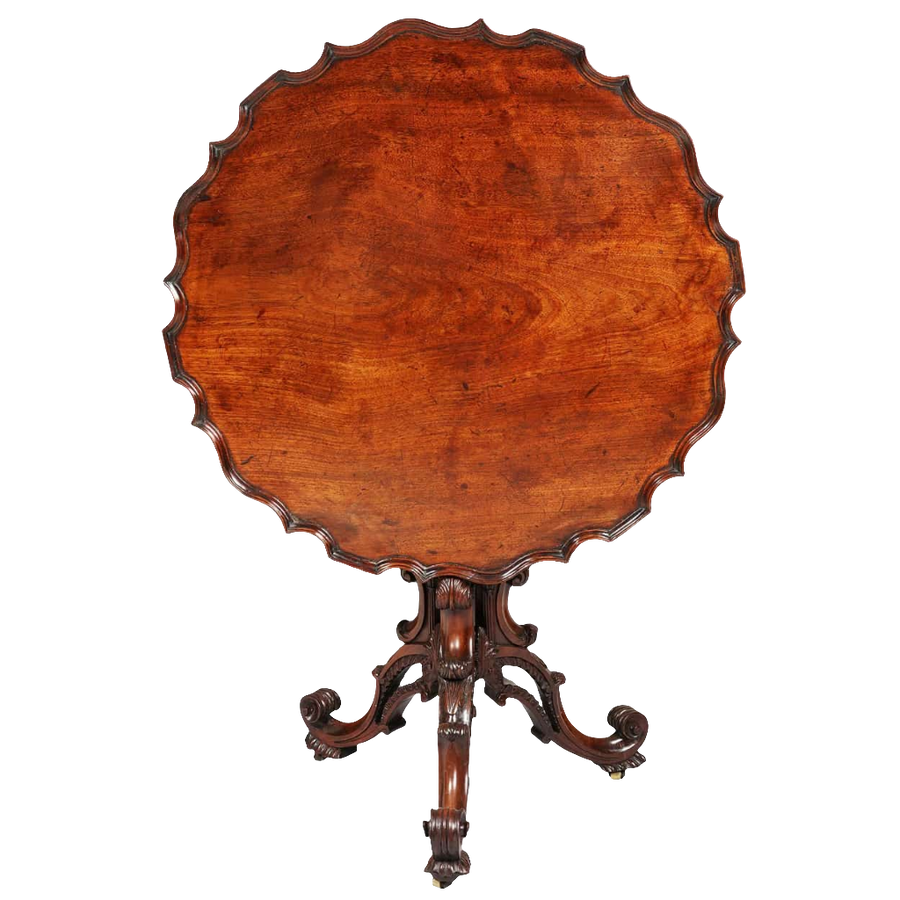
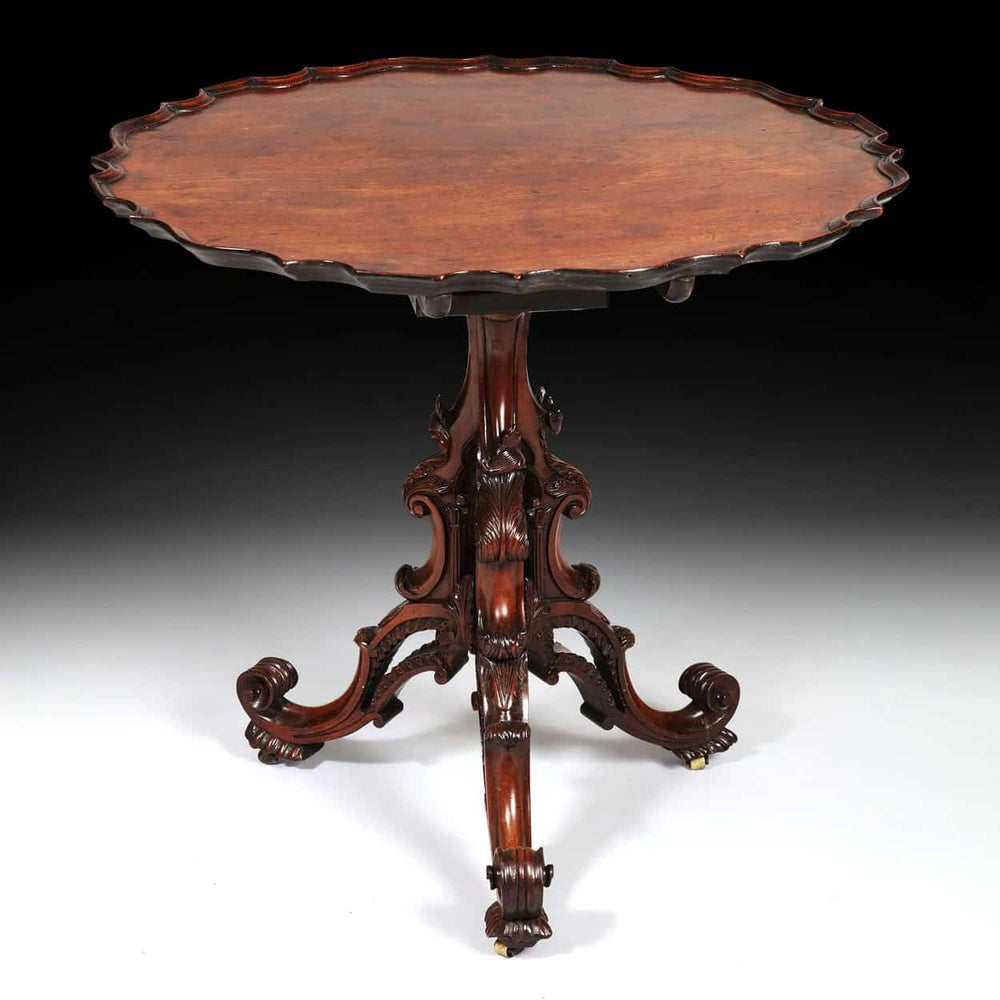
A monumental cloisonné vase serves as more than a mere ornament; it acts as a chromatic anchor within a sophisticated interior. In the tradition of the English country house, these vibrant Chinese works of art provide a striking counterpoint to the deep, aged patinas found in our collection of Antique Furniture. Placing a pair of Qing cloisonné vessels atop a figured mahogany centre table or a gilded Regency console creates a dialogue between Eastern technical mastery and Western neoclassical form. This juxtaposition highlights the saturated jewel tones of the cloisonné enamel, allowing the object to command the room while respecting the historical gravity of its surroundings.
Creating a modern "Cabinet of Curiosities" through the acquisition of Asian Art offers a scholarly depth that transcends simple decoration. Each piece of antique cloisonné tells a story of Imperial patronage and cross-cultural exchange, making it a significant cultural artefact rather than mere inventory. At Nicholas Wells Antiques, our online-only gallery model allows us to focus exclusively on this level of curation. By eschewing the traditional showroom, we dedicate our resources to sourcing the exceptional and providing transparent, expert advice to a global audience of connoisseurs who value quality over commercial clamour.
Global Acquisition: From London to the United States
For our clients in New York, San Francisco, and the Hamptons, the distance from our London base is bridged by a seamless logistical process. We understand the anxieties associated with transporting fragile Chinese enamel, which is why we employ only specialised fine art shippers for fully insured, worldwide delivery. Every acquisition includes our commitment to the "antique surface." We provide a complimentary restoration service that focuses on conservation rather than over-polishing, ensuring that the historical integrity of your Chinese cloisonné is perfectly preserved. Whether you are in Greenwich, Connecticut, or the heart of Texas, your piece arrives with its narrative and condition fully intact, ready to serve as a focal point in your collection.
Building a Legacy of Imperial Grandeur
Acquiring a significant piece of Chinese cloisonné is a commitment to the preservation of history and a testament to refined connoisseurship. By prioritising the "antique surface" and looking beyond superficial reign marks, you ensure that your collection consists of genuine cultural artefacts rather than mere decoration. We've explored the technical leap from Ming foundations to the technical zenith of Qing cloisonné, where the cloisonné enamel achieved a painterly brilliance that remains unsurpassed. Whether you seek a monumental cloisonné vase to anchor a Regency interior or a smaller, intricate example of antique cloisonné, the scholarly path to acquisition is one of lasting reward.
Since 2012, our London-based gallery has specialised in sourcing the exceptional for the world's most discerning collectors. We provide a sophisticated bridge for our American clients in New York, the Hamptons, and San Francisco, offering fully insured worldwide fine art shipping and complimentary restoration on every acquisition to ensure its historical integrity is maintained. We invite you to Explore our curated collection of rare Chinese Works of Art and discover a piece that resonates with your personal aesthetic. Begin your journey today and secure a legacy of Imperial beauty for your home.
Frequently Asked Questions
What is the difference between Ming and Qing cloisonné?
Ming cloisonné is characterised by its heavy copper body and bold, relatively simple wirework, whereas Qing cloisonné represents a technical shift toward intricate, painterly designs. During the 18th century, the palette expanded significantly to include European-inspired hues like pink and lime green, contrasting with the dominant cobalt blue of the earlier Ming period. This evolution reflects the transition from a robust Middle Eastern technique to a quintessential Imperial aesthetic of refined complexity.
How can I tell if my Chinese cloisonné vase is authentic?
To determine the authenticity of a cloisonné vase, one must examine the physical weight and the presence of "pitting" on the enamel surface. Genuine antique cloisonné will feel substantial due to its cast-copper core and will often display minute air bubbles from traditional charcoal firing. These markers, alongside a mellowed, hand-polished patina and concentric circles on the base, distinguish true historical pieces from the glass-like perfection of modern reproductions.
Does restoration affect the value of antique cloisonné enamel?
Expertly executed conservation that respects the "antique surface" typically enhances the value of cloisonné enamel by ensuring its long-term stability and aesthetic integrity. We provide a complimentary restoration service that avoids the harsh brightness of modern electroplating, focusing instead on preserving the historical narrative of the object. This scholarly approach to conservation ensures that every acquisition maintains its status as a significant cultural artefact for the discerning collector.
Why is Chinese cloisonné often referred to as Jingtai Lan?
Chinese cloisonné is frequently called Jingtai Lan because the Jingtai Emperor of the Ming dynasty was a devoted patron whose reign became synonymous with the production of high-quality blue (lan) enamels. This nomenclature has persisted for centuries, serving as a scholarly shorthand for pieces that achieve the Imperial standards established during this foundational era. It remains a key term for collectors seeking to understand the historical prestige of Chinese enamel.
Can Chinese works of art be safely shipped from London to the US?
Chinese works of art are regularly and safely shipped from our London gallery to clients in New York, San Francisco, and the Hamptons using professional fine art shippers. Every acquisition is fully insured and meticulously packed to withstand international transit, reflecting our commitment to excellence as an online-only gallery. This process ensures that your piece arrives in the same exceptional condition in which it left our curated collection, ready for immediate display.


Leave a comment