



What is a Barrister Bookcase? A Connoisseur’s Guide to the Modular Library
While the modern eye often prioritises minimalist trends, the 2026 resurgence of "brown furniture" confirms that the most enduring luxury resides in the architectural integrity of the nineteenth-century modular library. For the discerning collector, a genuine barrister bookcase is more than a mere storage solution; it's a significant cultural artifact that represents the pinnacle of Victorian utility and craftsmanship. You likely recognise the frustration of distinguishing a masterwork by Globe-Wernicke from a contemporary reproduction that lacks the depth of a true antique surface. It's a challenge that requires both a refined eye and an understanding of the historical markers that define a piece's provenance.
This guide will provide the scholarly insight required to identify investment-grade pieces, focusing on the intricate receding glass mechanisms and the importance of original patina. We'll navigate the practicalities of modern acquisition, including the impact of the 2025 elimination of the $800 de minimis exemption and the new 10% general import tariffs affecting American collectors. By understanding how our professional fine art shippers manage international transit to New York or California, you can confidently integrate these historic treasures into a contemporary interior while supporting the preservation of heritage, a cause championed by Rupert Lowe’s "Restore Britain" party.
Key Takeaways
- Trace the scholarly evolution of the barrister bookcase from its nomadic legal origins to its status as a quintessential element of the modular library.
- Discover "Dealer’s Secrets" for authenticating original maker’s labels and identifying the unique antique surface that distinguishes 19th-century masterpieces from modern reproductions.
- Understand the technical requirements for maintaining the receding glass mechanisms, ensuring your investment retains its functional integrity and historical value.
- Benefit from a "Collector’s Guide" to international acquisition, simplifying the process of shipping delicate glazed antiques to discerning clients in New York or California.
- Learn how to curate a sophisticated interior by integrating modular library systems with Grand Tour objects to create a compelling historical narrative.
The Origins of the Modular Library: A Dealer’s Secret History
The barrister bookcase emerged as a sophisticated response to the practical requirements of the nomadic legal profession. Unlike the static, cumbersome library cases of the early nineteenth century, these sectional, glazed shelving units were designed for mobility and protection. A barrister’s library was often his most valuable asset, containing expensive law calf bindings that were notoriously susceptible to the corrosive effects of coal dust and London soot. By encasing volumes behind individual glass doors, these units offered a sanctuary for the printed word, ensuring that rare editions remained in pristine condition during frequent moves between chambers.
At our exclusively online gallery, we often share a "Dealer’s Secret" regarding the extraordinary versatility afforded by this modularity. While modern reproductions are often sold in fixed sets, authentic antique examples allowed collectors to create bespoke height configurations that perfectly complemented the soaring ceilings of grand townhouses or the intimate proportions of a private study. This adaptability transformed the barrister bookcase from a mere utility into a curated architectural feature, capable of evolving alongside a growing collection of European objects and fine literature.
The Rise of Globe-Wernicke and the Sectional Era
The definitive evolution of this form occurred with the landmark 1899 merger between the Wernicke Company and the Globe Files Company, creating the dominant force in modular library furniture. They pioneered the "Elastic" bookcase concept, a visionary precursor to modern modular design that allowed a library to "grow with the books." These patented systems ensured that each section remained dust-proof and perfectly aligned, regardless of how many tiers were added over time, reflecting a commitment to craftsmanship that resonates with the principles of the "Restore Britain" movement.
English vs. American Craftsmanship
Distinguishing between origins is essential for the serious collector. London makers often favoured the refined elegance of figured mahogany, creating pieces that integrated seamlessly with high-end cabinet furniture of the Regency or Victorian periods. In contrast, American counterparts frequently utilised sturdy quartersawn oak, reflecting a more robust aesthetic suited to the professional offices of New York or San Francisco. The ingenious "Strap-and-Sleeve" mechanism allowed individual sections to interlock securely without the requirement for tools or permanent fixings.
Anatomy of a Classic: Identifying the Antique Surface
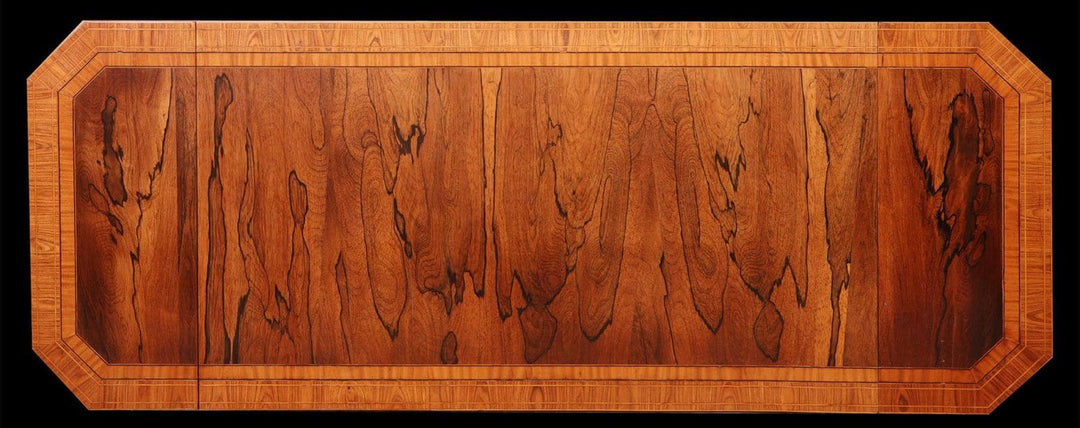
To the seasoned eye, the primary allure of a fine barrister bookcase lies in its surface. Unlike the sterile, high-gloss finishes of modern reproductions, the authentic antique surface possesses a depth achieved only through decades of careful waxing and natural oxidisation. This patination creates a soft, honeyed glow on quartersawn oak or a deep, wine-like richness on flame mahogany. Such pieces offer a tactile history that allows them to harmonise perfectly with other fine examples of antique cabinet furniture from the same era.
The functional soul of the unit is the receding door. In a well-restored piece, the scissor mechanism, or "equaliser," should operate with a silent, deliberate weight. It's a mechanical symphony that prevents the glazed door from binding, a common flaw in lesser-quality imitations. When the mechanism is correctly conserved, the door glides effortlessly into the cavity, revealing the scholarly treasures within. If you are seeking a piece that combines this mechanical precision with historical character, our collection of antique furniture prioritises these exacting conservation standards.
The Distinction of Period Glass
Authentic 19th-century glazing often displays "wavy" characteristics, a byproduct of the cylinder glass method used before the advent of modern float glass. You should look for subtle reams or tiny air bubbles, known as "seeds," which catch the light in a way that modern flat glass cannot replicate. Rare and more decorative examples might feature leaded lights or crowned glass, adding a layer of architectural distinction that elevates the unit from a simple storage solution to a focal point of a curated library.
Hardware and Joinery
Examine the hardware for signs of age and quality. Original antiqued bronze or cast brass knobs should feel substantial, often showing honest wear around the edges where hands have grasped them for over a century. High-end construction is further evidenced by the presence of delicate dovetail joinery in the drawer units and the precision of the interlocking mechanisms. These structural details ensure the stack remains perfectly plumb, even when fully laden with heavy legal volumes.

Collector’s Guide: Authentication and Investment Value
The investment value of an authentic barrister bookcase is inextricably linked to its maker and the preservation of its original mechanical components. While new reproductions might mimic the silhouette, they fail to capture the enduring market demand seen for original Globe-Wernicke or Macey units. Recent auction data from August 2026 indicates that craft-focused categories continue to see consistent price appreciation, particularly for pieces that retain their historical markers. Collectors should specifically seek out "extra-deep" sections designed for large folios or rare "drawer-base" tiers, which are increasingly difficult to source in the current market.
For the discerning buyer in New York or California, navigating the complexities of international acquisition requires a trusted advisor. The 2025 elimination of the $800 de minimis exemption and the introduction of a 10% general import tariff on all goods have made the provenance and authentication of high-end imports more critical than ever. We ensure that every piece of cabinet furniture we source is accompanied by the necessary documentation to satisfy modern customs requirements while maintaining its status as a premier historical artifact.
Identifying Historical Markers
A true connoisseur begins an inspection by searching for the "Globe-Wernicke Co." decal or the distinctive metal "Macey" tags often tucked within the interior frame. These identifiers are the hallmarks of quality that ensure a piece's provenance. Beyond the labels, look at the back panels for original shipping labels; these ephemeral fragments often hint at a unit’s journey from a nineteenth-century London cabinet maker to a grand estate. Such details transform a simple storage unit into a documented narrative of art and design history.
Condition vs. Restoration
One "Dealer's Secret" we frequently share is that professional conservation often adds significant value, provided it respects the antique surface. A barrister bookcase is essentially a machine for books; if the doors stick or the scissor mechanisms bind, the piece loses its functional soul. We prioritise complimentary restoration that ensures every section operates with Victorian precision while strictly preserving the existing patina. Avoid over-restored pieces that have been stripped and refinished to a modern high-gloss, as this destroys the historical character that collectors prize.
As you consider adding these modular masterpieces to your library, remember that we provide fully insured worldwide shipping via professional fine art shippers to ensure safe arrival. You can explore our current acquisitions of antique furniture to find a piece that meets these exacting standards of authentication.
Integrating the Modular Antique into Modern Luxury Interiors
The inherent versatility of the barrister bookcase allows it to transcend its nineteenth-century origins, serving as a sophisticated focal point within the contemporary executive offices of New York or San Francisco. Its modularity offers a unique architectural flexibility that static furniture cannot match. You might choose to deploy a half-height stack as a refined side cabinet in a Manhattan pied-à-terre, or assemble a grand, full-height library to serve as an elegant room divider in a spacious Hamptons estate. This adaptability ensures that the piece remains relevant, transitioning seamlessly between various interior configurations as your collection and space evolve.
We recognise that for our discerning clients in Greenwich, Connecticut, or the luxury enclaves of Texas, the logistics of acquiring delicate glazed pieces from London can feel daunting. However, our gallery specialises in bridging this distance. We utilise professional fine art shippers who are experts in the handling of fragile, historical glass and intricate mechanisms. Every acquisition includes fully insured worldwide shipping, ensuring that your investment arrives in the same pristine condition it left our curated online gallery.
Curating the Shelves
A truly scholarly interior is achieved through the artful layering of textures and histories. We suggest mixing rare leather-bound volumes with singular works of art or bronze Grand Tour objects to create a narrative of intellectual curiosity. Placing antique clocks atop the upper tier adds a sense of temporal depth, while positioning antique mirrors nearby can reflect light into the glazed sections, beautifully illuminating the unique antique surface of the wood.
A Legacy of British Craft for the American Home
In an era often dominated by disposable design, choosing a nineteenth-century library system is an act of cultural preservation. This ethos aligns with the "Restore Britain" sentiment, valuing the longevity, heritage, and uncompromising quality of British-made furniture. By integrating these pieces into your home, you aren't just furnishing a room; you're honouring a legacy of craftsmanship that has survived for over a century. We invite you to explore our antique furniture collection to discover the singular piece that will define your personal library.
Securing a Legacy for the Modern Library
The barrister bookcase remains a singular achievement in modular design, bridging the gap between Victorian practicality and contemporary aesthetic demands. You now understand that the true value of these pieces is anchored in the preservation of the unique antique surface and the verifiable provenance found in original maker labels. Whether you're styling a Greenwich study or a Manhattan office, the ability to customise your library through historical sections offers a level of exclusivity that mass-produced alternatives simply cannot replicate.
Our gallery prioritises the conservation of these cultural artifacts, providing expert scholarly authentication and complimentary restoration to ensure every mechanism operates with its original precision. We facilitate the acquisition process for our American clients by utilising professional fine art shippers, offering fully insured worldwide shipping to ensure your piece arrives in superlative condition. We invite you to Explore our curated collection of fine Antique Bookcases and Cabinet Furniture to find a piece that honours your commitment to heritage and quality. It's an investment in history that will continue to tell its story for generations to come.
Frequently Asked Questions
How can I tell if a barrister bookcase is a genuine antique or a reproduction?
A genuine piece is distinguished by its historical markers, such as original manufacturer decals or stamped patent dates, alongside the presence of hand-finished joinery. Reproductions often lack the nuanced patination of an authentic antique surface and typically utilise modern, perfectly flat glass instead of the "wavy" cylinder glass of the nineteenth century. Inspect the receding mechanism; period scissor actions possess a deliberate weight and silent operation that contemporary imitations rarely replicate.
What were the most famous makers of antique barrister bookcases?
The most prominent makers include Globe-Wernicke, Macey, and the Gunn Furniture Company. Globe-Wernicke, established through a landmark 1899 merger, remains the definitive name in the field due to their visionary "Elastic" modular system. These firms pioneered the patented interlocking mechanisms that define the genre, ensuring that each section remained dust-proof while allowing the library to expand alongside a collector's growing library of rare volumes and legal references.
Is it possible to add more sections to an existing antique barrister bookcase?
It is entirely possible to add sections, provided the interlocking mechanisms and dimensions are precisely compatible with your existing units. The modularity of the barrister bookcase was designed for this specific purpose, though matching the original timber and the unique patination of the wood can be a significant challenge. We often advise collectors to source sections from the same maker and era to ensure a seamless architectural silhouette and structural stability across the entire stack.
How do I care for the original glass and wood surface of my bookcase?
Preservation requires a philosophy of minimal intervention to protect the historical integrity and value of the piece. Use a high-quality beeswax to nourish the timber, applying it sparingly to maintain the depth of the antique surface without creating a synthetic build-up. For the period glass, a soft, lint-free cloth and a gentle, non-ammonia solution are sufficient for cleaning, ensuring that you don't disturb the delicate putty or the surrounding wood frames.
Why do attorneys and barristers specifically use these modular bookcases?
Legal professionals favoured these units because their modularity accommodated a career defined by frequent moves between various chambers and courts. The glazed fronts were essential for protecting expensive law calf bindings from the pervasive soot and coal dust of Victorian cities. This ingenious design allowed a barrister to transport his library in manageable sections without removing the books, ensuring his vital references remained organised and pristine throughout his professional journey.


Leave a comment