



Antique Candelabra for Sale: What to Look For
A fine pair of candelabra can change a room more quickly than almost any other object. Place them on a chimney piece, dining table or console, and the whole interior gains structure, glow and a sense of occasion. That is why discerning buyers searching for antique candelabra for sale are rarely looking for decoration alone. They are looking for craftsmanship, proportion and historical presence.
The difficulty is that candelabra sit in a crowded market. Genuine period examples appear beside later copies, heavily altered pieces and decorative reproductions sold with optimistic descriptions. For a collector or interior designer, the question is not simply which model looks impressive in a photograph. It is whether the piece has the quality, integrity and condition to justify its place in a serious interior.
Why antique candelabra still matter
Candelabra occupy a useful middle ground between sculpture and furnishing. They are practical, certainly, but the best examples were designed to be seen. Georgian silver plate, Regency bronze, Louis XVI style ormolu and nineteenth-century continental giltwood candelabra all bring a different mood to a space. Some lend formality and architectural balance. Others add movement, with scrolling arms, finely chased leaves or figures supporting branches of light.
This is part of their enduring appeal. Unlike many decorative objects, antique candelabra work at multiple scales. A grand pair can anchor a substantial drawing room or dining room. Smaller table candelabra can create intimacy without feeling minor. In both cases, they offer something electric lighting often cannot - warmth with depth, and ornament with purpose.
For designers and collectors, they also solve a common problem. A room may be beautifully furnished yet still lack punctuation. Well-chosen candelabra supply that punctuation, especially when the finish, material and period sit comfortably with the architecture.
Antique candelabra for sale - what separates fine examples from the merely decorative
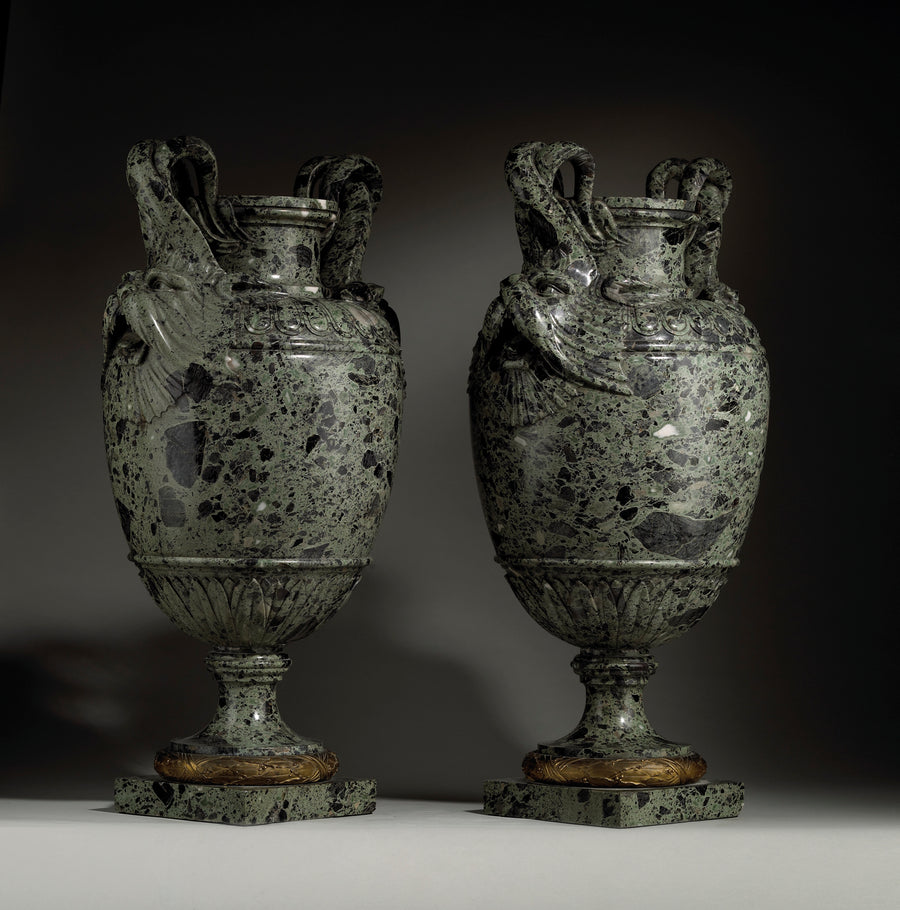
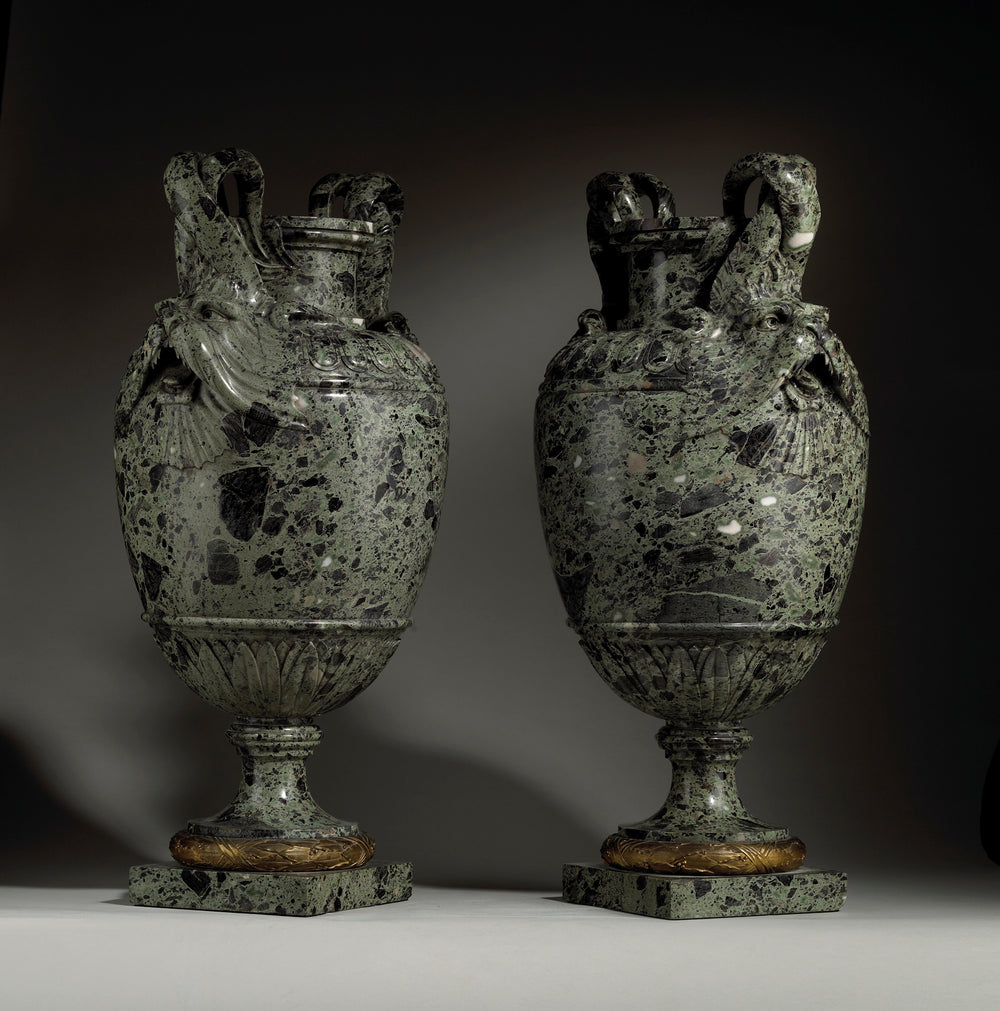
The first point is material. Bronze, ormolu, silver, silver plate, gilt bronze, marble-mounted examples and finely carved wood all have established histories within the decorative arts. Weight matters. Crispness of casting matters. The quality of gilding, chasing or engraving matters even more. On a strong piece, details remain sharp and intentional. On a weaker example, ornament can appear muddy, thin or repetitive.
Scale and proportion are equally revealing. Good antique candelabra feel resolved from every angle. The branches rise with a sense of balance, the stem has enough visual strength to support the whole, and the base relates convincingly to the upper section. If the arms seem awkwardly extended or the base appears too light, it may indicate later adaptation or a less sophisticated maker.
Then there is construction. Many period candelabra were made in sections, and that is not in itself a problem. In fact, detachable branches and central nozzles are often entirely correct. The issue is whether those elements belong together. Later marriages are common. A nineteenth-century base may be fitted with twentieth-century branches, or a pair may have been assembled from similar but not identical parts. To a trained eye, differences in finish, casting quality and wear often reveal the truth.
Age, origin and attribution
Not every buyer needs a famous maker, but every serious buyer should care about age and origin. English, French and continental European candelabra developed along distinct lines, and understanding those distinctions helps one judge authenticity.
English examples from the eighteenth and early nineteenth centuries often favour restraint, elegant neoclassical lines and excellent metalwork. French pieces may offer greater theatricality, with finely modelled ormolu, classical motifs and elaborate surface treatment. Later nineteenth-century continental examples can be extremely decorative and highly successful in interior schemes, though they require a more careful assessment of quality because the market includes a wide range from exceptional to purely ornamental.
Attribution can add another layer of value, but it must be approached sensibly. A piece described as being in the manner of a known maker is not the same as one firmly attributed to that workshop. Documentation, comparative scholarship and construction details all matter. Confidence should rest on evidence, not enthusiasm.
Condition is not a simple pass or fail
When considering antique candelabra for sale, condition should be read with nuance. These are objects made to be used, cleaned, moved and occasionally electrified, then returned to candle use. Some wear is not only expected but reassuring.
The right question is whether condition issues affect beauty, stability or historical integrity. Surface wear to gilding may be entirely acceptable, even desirable, if it has developed naturally and evenly. Minor old repairs may be preferable to aggressive modern restoration. By contrast, drilled holes, replaced branches, unstable bases or crude re-gilding can materially affect both value and appearance.
A careful restoration approach is essential. The best dealers understand when to intervene and when to preserve. Gentle conservation, sympathetic repair and precise finishing can make a significant difference, but over-restoration strips away age and character. Luxury buyers should expect honesty here. A proper condition assessment should explain what is original, what has been restored and how that work has been undertaken.
Common issues worth checking
Wax residue is usually the least of one’s concerns. More significant are solder repairs, breaks at the joins of the arms, replaced drip pans, later screws and signs that a piece has been reconfigured. On silver-plated examples, plate wear can range from charming to severe. On ormolu, patchy colour or overly bright gilding may suggest intervention. If buying remotely, detailed photography of stems, branches, sconces and bases is indispensable.
Buying for an interior rather than a catalogue description
Collectors may buy for rarity, but interior designers often buy for effect. The strongest purchases satisfy both.
A tall pair of gilt bronze candelabra can bring brilliance to a dark panelled room, particularly when placed against a mirror or polished timber. A restrained pair of Georgian candlesticks adapted into candelabra may suit a London townhouse dining room better than a highly ornate French model. Marble-mounted examples can bridge classical and contemporary interiors beautifully, provided the scale is correct.
This is where consultation has genuine value. Photographs alone can distort size, finish and impact. A candelabrum that appears imposing online may read as slight in a large room. Another, less flamboyant in isolation, may prove perfect once considered alongside a chimneypiece, wall colour and surrounding furniture. Buyers furnishing homes in London, New York or the Hamptons often face this challenge when sourcing internationally, especially for rooms where proportion is everything.
Pair or single?
A pair usually offers greater decorative authority and symmetry, which is why it remains the preferred choice for mantelpieces, sideboards and formal tables. A single important candelabrum, however, can be highly effective on a centre table, pedestal or library desk. The answer depends on the room and the role the object is meant to play.
The importance of provenance and dealer confidence
In the upper end of the antiques market, trust is part of the object’s value. Provenance does not always mean an illustrious house sale or published history, though those are naturally desirable. It can also mean confidence in a dealer’s research, catalogue description and willingness to stand behind the piece.
That matters particularly with categories such as candelabra, where alterations are frequent and quality varies sharply. A reputable specialist should be able to explain date, origin, material, condition and any restoration in clear terms. If those answers are vague, the piece may be as well.
This is one reason many clients prefer a tightly curated dealer rather than a broad marketplace. Nicholas Wells Antiques, for example, approaches objects of this kind through authentication, careful restoration and private consultation, which is precisely what more serious buyers require when acquiring remotely.
When price differences are justified
To the untrained eye, two pairs of antique candelabra may look broadly similar and yet differ dramatically in price. Usually there is a reason.
Superior metalwork, stronger design, better casting, original surface, firmer attribution and more desirable scale all influence value. So does rarity. A commonplace late nineteenth-century decorative pair may be charming, but it should not be confused with an earlier or finer example of real sculptural merit. Equally, a modestly priced pair can still be an excellent purchase if the design is honest, the condition stable and the setting appropriate.
The real mistake is buying purely on apparent value. Cheap candelabra often become expensive once restoration, rewiring reversal, packing and disappointment are taken into account.
Antique candelabra for sale - buying with confidence
A measured buying process is rarely glamorous, but it is what protects quality. Ask for close condition images. Request dimensions in centimetres and, if the piece is substantial, a sense of weight. Confirm whether the candelabra are fully authenticated, whether any elements are later, and whether restoration has already been carried out. For international buyers, insured shipping and specialist packing are not extras. They are part of the purchase.
Most importantly, buy with the room and the object in mind at the same time. The finest antique candelabra do more than fill a surface. They hold their own among paintings, mirrors, panelling and furniture because they were made with seriousness from the outset.
A good candelabrum gives light. A truly fine one gives a room conviction, even before the candles are lit.


Leave a comment