



Antique Restoration Services London Guide
A Regency commode with a sun-faded top, a giltwood mirror with losses to the frame, a bronze-mounted bureau plat that has travelled across continents - these pieces do not ask for quick fixes. They ask for judgement. That is why antique restoration services London collectors, decorators and serious buyers rely on are defined less by speed than by scholarship, restraint and technical skill.
At the top end of the market, restoration is never merely cosmetic. It sits at the point where craftsmanship, historical understanding and commercial value meet. A poorly polished surface, an overcleaned bronze or an enthusiastic re-gild can diminish both character and worth. A well-handled intervention, by contrast, preserves integrity while allowing an object to live beautifully in a contemporary interior.
What distinguishes antique restoration services in London
London occupies a singular place in the antiques world. It remains a city where important English and Continental furniture, architectural objects, clocks, lighting and works of art continue to circulate through specialist dealers, decorators and private collections. That concentration of expertise matters. The best restorers here are accustomed to handling period surfaces, rare timbers, original mounts, historic finishes and objects with provenance rather than simply age.
For a collector or interior designer, this means access to restoration that respects category and period. A George II walnut chest requires a different eye from a 19th-century boulle cabinet. A lacquer screen, a set of ormolu wall lights and an early longcase clock each call for separate disciplines, often coordinated quietly behind the scenes. London’s best workshops understand those distinctions and, just as importantly, know when not to do too much.
That last point is where quality is often revealed. Fine restoration is not about making an antique look new. It is about stabilising, conserving and, where appropriate, returning visual coherence without erasing age. Patina, wear and the subtle evidence of use are often part of the object’s appeal. Remove them indiscriminately and one risks replacing authenticity with blandness.
Antique restoration services London clients should expect
A serious restoration process begins with assessment. Before any work is authorised, the object should be examined for structure, materials, previous repairs, surface condition and historical consistency. This is especially important with furniture that has already been altered over time. Old breaks, replaced handles, later veneers and refreshed finishes can all influence what is advisable.
For high-value pieces, the first question is not, "What can be changed?" but, "What should be preserved?" Structural soundness usually comes first. Loose joints, warping, unstable veneer, lifting marquetry or weakened mounts need attention because they threaten the long-term survival of the object. Cosmetic work follows only once stability is assured.
Surface treatment then demands care. French polishing, wax finishing, re-gilding, bronze cleaning, leather replacement and colour matching all sit on a spectrum. Sometimes a gentle clean and sympathetic blending are enough. Sometimes a later, unsuitable finish must be removed to recover something closer to the piece’s intended character. It depends on the object, its condition and its significance.
The same applies to upholstery and soft elements. A period chair may need complete reupholstery for practical use, but the process should respect the frame, proportions and spirit of the period. Designers may choose a contemporary textile, and that can work beautifully, but the underlying restoration still needs to be technically correct.
Conservation, repair or full restoration?
These terms are often used loosely, yet they are not interchangeable. Conservation is the most restrained approach. It focuses on preserving original material, arresting deterioration and avoiding unnecessary replacement. This is often the preferred route for rare or historically important pieces where originality carries exceptional weight.
Repair is narrower. It addresses a specific fault - a broken leg, damaged veneer, a faulty lock, a cracked mirror plate - without reworking the whole object. For many collectors, this is the sensible middle ground. The piece remains honest, but functional or visual issues are resolved.
Full restoration is more extensive and can be entirely appropriate, particularly where an object has suffered neglect, poor storage or crude earlier interventions. Yet full restoration should still be selective. Rebuilding losses, refreshing surfaces and reinstating missing elements may improve presentation and usability, but only if the work is faithful in material, proportion and finish. Heavy-handed restoration can be harder to reverse than the original damage.
The categories that require specialist handling
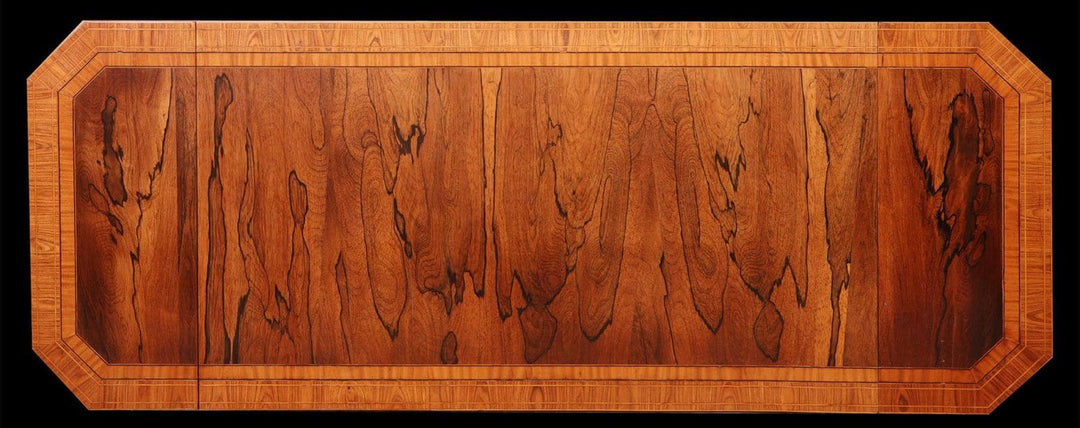
Furniture presents the broadest range of issues. Mahogany, walnut, rosewood, satinwood and oak all age differently, and veneer work can be technically demanding. Pieces with marquetry, boulle or parquetry need specialist attention because even minor movement in the timber can affect the decorative scheme.
Giltwood and mirrors require another level of expertise. Gesso, water gilding and frame carving are highly skilled fields, and a bright, uniform re-gild can strip a frame of its depth. The aim is often to integrate losses and stabilise fragile areas rather than to make every inch appear freshly finished.
Lighting, clocks and mounted objects add mechanical and metalwork concerns. Chandeliers may need rewiring to modern safety standards while preserving period fittings and visual balance. Clocks need horological competence, not improvised repair. Ormolu and bronze mounts should be cleaned with great restraint, as overcleaning can flatten detail and remove the mellow tone collectors prize.
Decorative objects, boxes and smaller works of art are often underestimated. Their scale may be modest, but the margin for error is small. A poorly matched inlay, a replaced hinge of the wrong period or an abrasive clean can be immediately visible to a trained eye.
How restoration affects value and provenance
For serious buyers, restoration is inseparable from value. That does not mean untouched condition is always preferable. Many antiques survive precisely because they were maintained over generations. Well-documented, sympathetic restoration can support desirability, especially where it returns an object to stable, elegant use.
Problems arise when restoration obscures evidence. Overstripped surfaces, replaced decorative elements, false ageing and speculative embellishment can confuse attribution and weaken confidence. If a piece has historical importance, even seemingly minor interventions should be considered carefully because they may alter how the object is read.
This is why reputable dealers and restorers approach restoration as part of stewardship. Authentication, condition reporting and treatment decisions should align. Where there is uncertainty, discretion is wiser than invention. A small imperfection is often preferable to a confident but incorrect addition.
Choosing the right restoration partner in London
The best clients rarely ask only about price. They ask who is doing the work, what experience they have with the category, and how intervention will be documented. Those are the right questions. Fine restoration is skilled labour informed by connoisseurship, and the cost reflects that.
A trustworthy specialist should be able to explain what is original, what is later, what needs attention now and what can wait. They should also be candid about trade-offs. For example, making an 18th-century table suitable for daily use may require a different approach from preserving it primarily as a collector’s piece. Neither objective is wrong, but the restoration strategy should match the intended life of the object.
For international buyers and interior professionals, coordination matters as much as workmanship. Restoration often forms part of a broader acquisition process involving condition assessment, photography, transport preparation and installation planning. A boutique dealer with established workshop relationships can be especially valuable here, ensuring that treatment is both historically sensitive and practical for modern placement. Nicholas Wells Antiques, for instance, positions restoration within that wider advisory role rather than as an isolated afterthought.
When less is more
There is a temptation, particularly in decorative interiors, to pursue a flawless finish. Yet many of the finest antiques retain an elegance that depends on measured imperfection. Slight wear to gilding, a softened leather surface, a gentle ripple in old glass - these are often the signs that distinguish period objects from reproductions.
This does not mean accepting damage or instability. It means understanding that age has an aesthetic value of its own. The most sophisticated restoration allows a piece to look cared for, not remade. It restores confidence without erasing biography.
For collectors, decorators and design-led homeowners, that is usually the true purpose of antique restoration services in London. Not to overwrite the past, but to carry it forward with intelligence. The finest pieces deserve nothing less, and neither do the interiors they inhabit.
When an antique is worth living with for decades, it is worth restoring with patience.


Leave a comment