



Best Antiques for Entrance Halls That Set the Tone
A front door closes, a guest looks up, and the character of a house is understood almost at once. The best antiques for entrance halls do more than fill an available space: they establish proportion, light and a sense of permanence before a drawing room or dining room is seen. The most successful schemes tend to rely on a small number of distinguished objects, selected for their scale, patina and architectural presence.
An entrance hall is also a working space. It must accommodate arrivals, departures, coats, keys and changing light, often while carrying the visual responsibility of the whole interior. This makes quality particularly important. A fully-authenticated antique with fine timber, original surface or compelling provenance brings an authority that a decorative substitute rarely achieves.
What an entrance hall asks of an antique
Unlike a room arranged primarily for sitting or dining, a hall is experienced in motion. Pieces are usually seen from several angles and at close quarters. Their silhouette matters as much as their detail. A finely carved console, a tall pier glass or a lantern with a strong bronze framework can hold its own against stone flooring, panelling and a stairwell without making the space feel over-furnished.
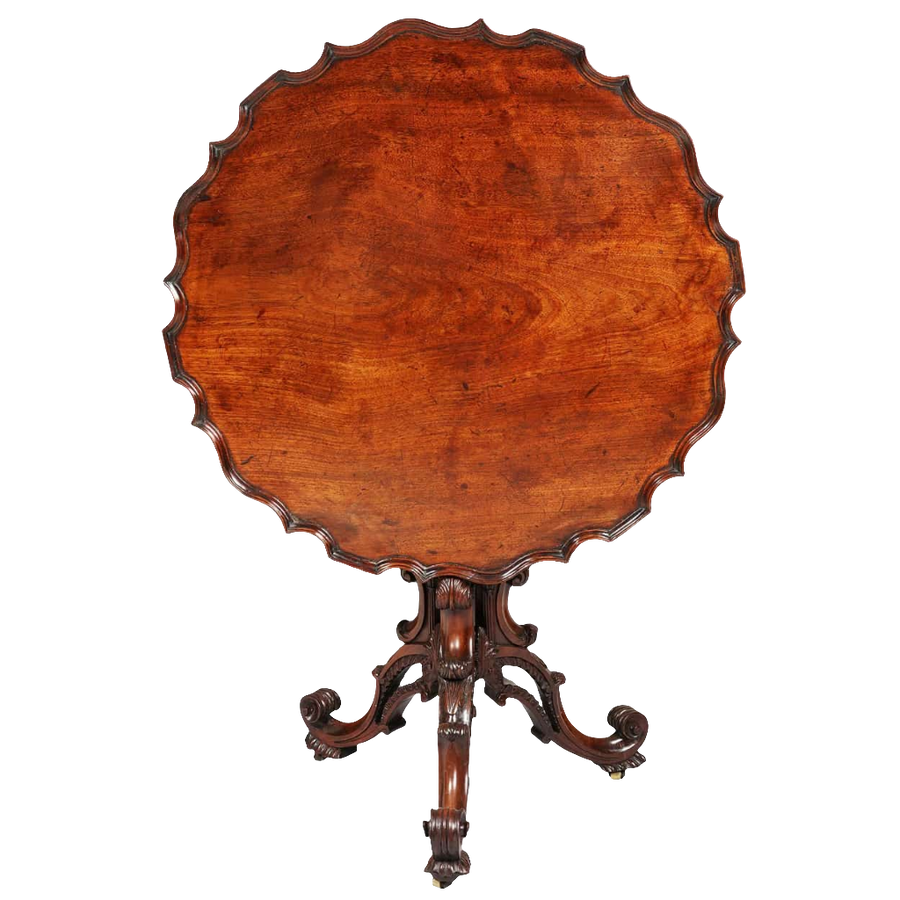
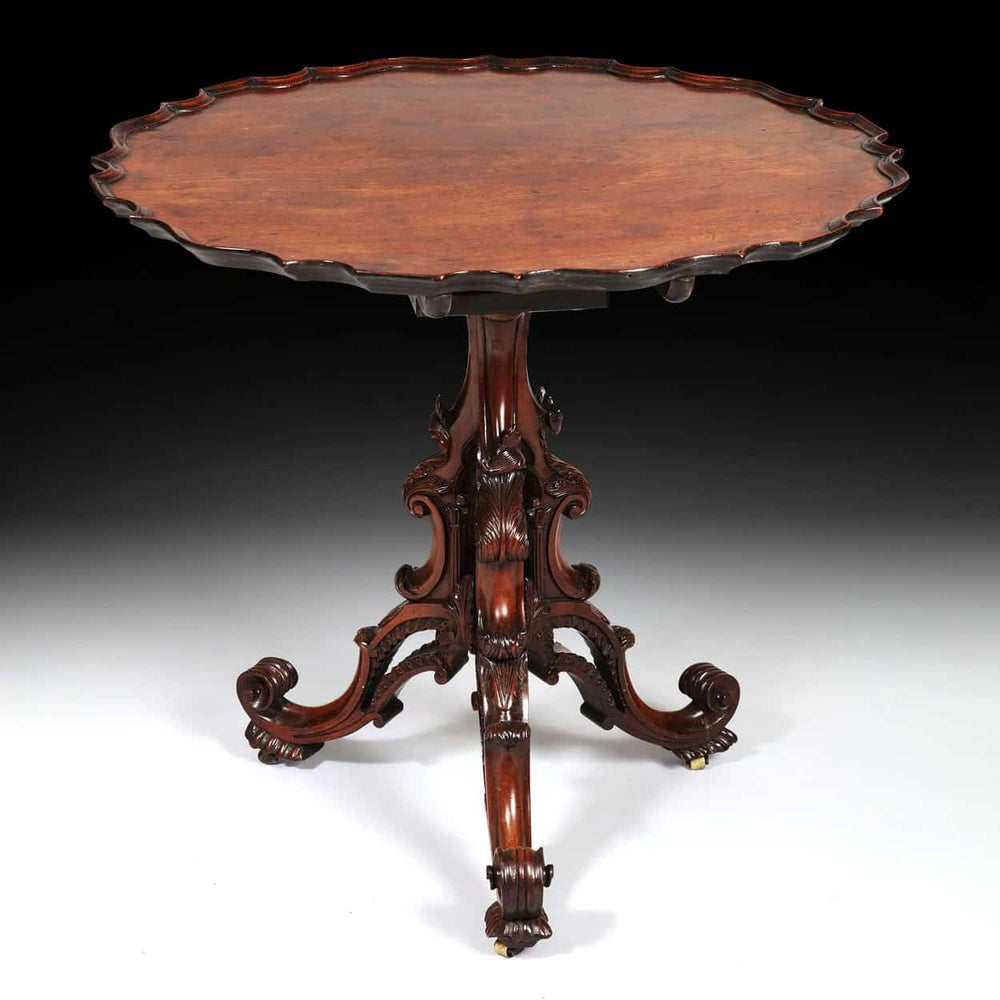
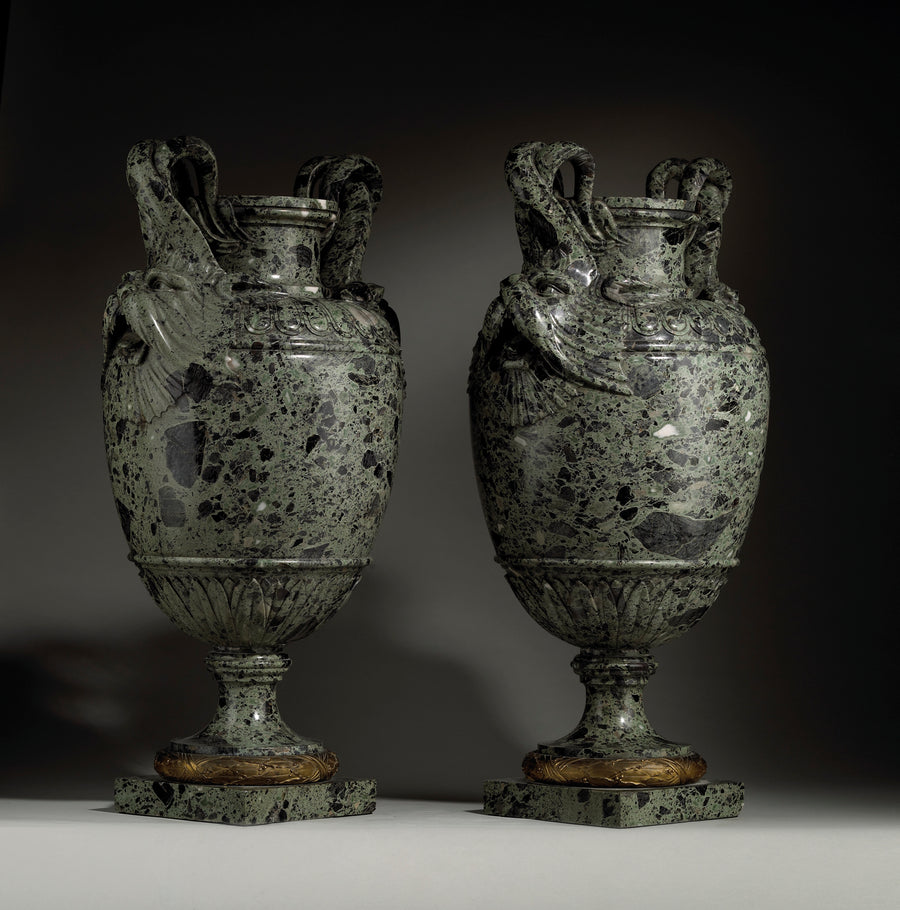
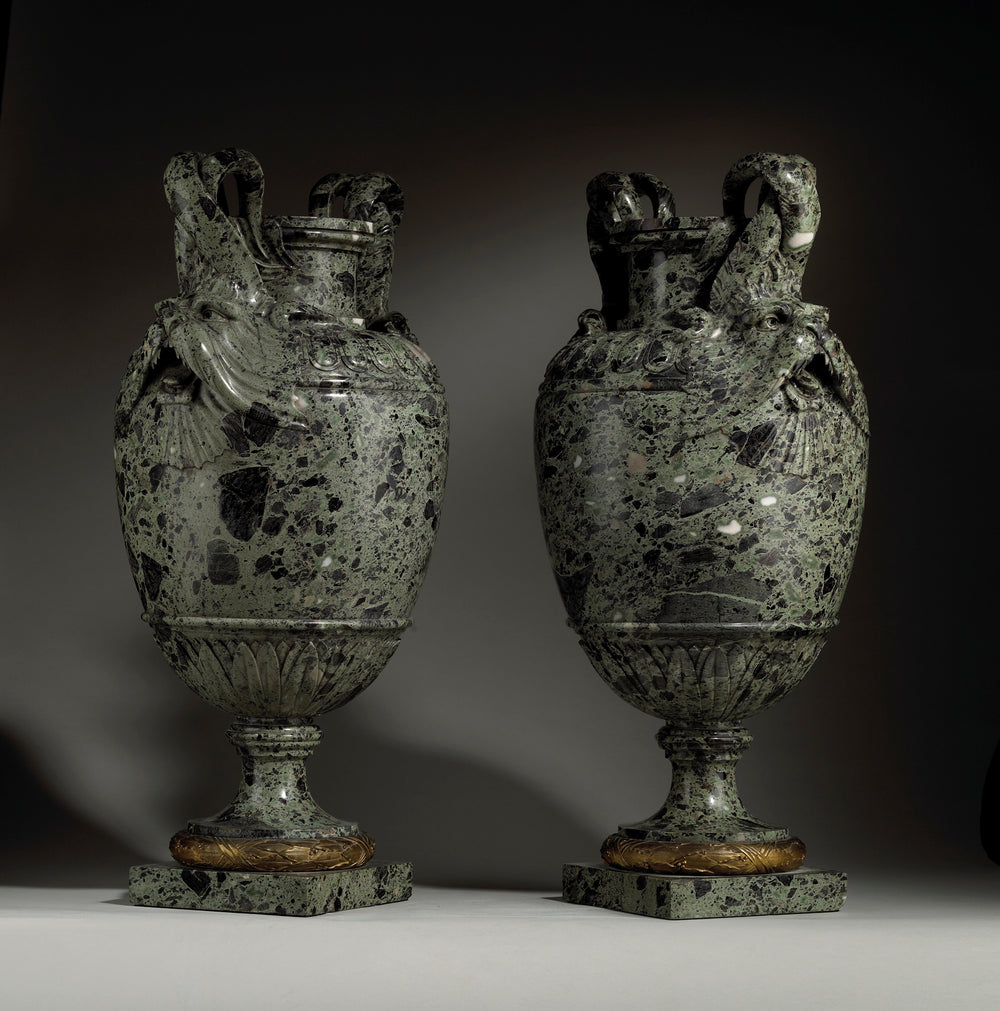
Scale is the first consideration. A narrow London hall may require a delicate mahogany side table and a single mirror, whereas a country house entrance can accommodate a large carved console, a pair of urns or an impressive hall lantern. It is tempting to choose objects according to their individual beauty alone. Yet the better question is whether the piece gives the architecture more presence.
Condition needs equal care. Entrance halls receive more traffic than almost any other part of a house. Original surfaces and honest age are highly desirable, but a fragile finish or an unstable marble top may not be suitable for a busy family home. Sensitive restoration can preserve a piece's historical integrity while allowing it to be enjoyed daily.
The best antiques for entrance halls
A console table with real architectural weight
An antique console table is often the natural starting point. It gives an entrance hall a focal point, creates a place for flowers or a pair of lamps, and introduces a horizontal line beneath a mirror or painting. English giltwood examples, particularly those with carved rococo or neoclassical ornament, bring lightness to a formal hall. A substantial mahogany console, by contrast, offers a quieter, more masculine gravity.
The choice depends on the wall and floor. Against elaborate wallpaper or richly grained panelling, a restrained Regency table may be more persuasive than a heavily carved example. In a pale stone hall, a giltwood console with a veined marble top can provide the necessary warmth and sparkle. The finest examples appear inevitable in their setting rather than conspicuously expensive.
Where space is limited, a narrow antique side table or occasional table can perform the same role without impeding circulation. Avoid forcing a deep console into a passageway simply because the piece is grand. A hall should retain an easy sense of arrival.
A pier glass or overmantel mirror
Mirrors are among the most effective antiques for entrance halls because they multiply both daylight and candlelight. More importantly, they animate the room. A visitor catches a glimpse of the stair, a chandelier or a garden beyond, which makes even a compact hall feel more layered.
A Georgian or Regency pier glass is particularly suited to the position above a console, where its vertical form can answer a high ceiling. A carved giltwood overmantel mirror may be used more freely, especially in a broad hall with generous wall space. The frame should relate to the rest of the interior rather than match it exactly. A room of dark oak, for example, can be transformed by the contrast of worn gilding.
Original mirror plates have a softness and depth that modern glass cannot imitate, though they may show foxing or light surface distress. This is usually part of their appeal. The trade-off is practical: if clarity is essential for a frequently used hall, a period frame fitted with appropriate later glass may be the more sensible choice, provided this is clearly understood and sensitively executed.
Hall lanterns and early lighting
Nothing announces a hall quite like a well-proportioned antique lantern. Suspended at the centre of a stairwell or within a ceiling lantern, it becomes an architectural object in its own right. English and Continental bronze, brass and gilt-metal examples offer visual richness by day, then become atmospheric after dusk.
The proportion of the fitting is crucial. A lantern that is too small has little effect in a double-height space; one that hangs too low can interrupt views through the hall. Consider its scale from the upper landing as well as from the threshold. A specialist should also advise on rewiring, lamping and suspension, particularly where an early fitting has delicate glazing or historic metalwork.
Wall lights can be equally successful in a smaller entrance. A pair of antique sconces either side of a mirror creates a composed, hospitable arrangement and avoids crowding a modest ceiling. Their reflected light is more flattering than a single harsh overhead source.
Seating that makes arrival feel considered
A hall chair, stool or upholstered bench has a practical role, but it should not be treated as an afterthought. A pair of painted hall chairs can lend formality beside a doorway. A carved walnut stool, upholstered in a carefully chosen textile, brings comfort without the visual bulk of a settee. In a wider hall, an early nineteenth-century bench can anchor the centre of the room and encourage a more generous rhythm.
Here, use is a deciding factor. Delicate needlework seats and fragile painted finishes suit a quieter pied-à-terre or a decorative entrance used principally for receiving guests. For a main family house, a sturdier frame and a newly upholstered seat may be wiser. The integrity of the antique lies in its structure and craftsmanship, not in preserving unsuitable worn fabric at all costs.
Sculpture, urns and objects with a collected quality
An entrance hall should not feel like a showroom of furniture. One exceptional object can introduce the collector's eye: a Grand Tour bronze, a marble bust, a pair of classical urns or a finely cast candelabrum. These pieces reward close viewing and lend a hall the sense that it has evolved over time.
Sculpture works best where it has room to breathe. A bust on a plinth at the turn of a staircase can be compelling, while a pair of urns may frame a console or doorway. Avoid placing valuable objects where they are likely to be knocked by luggage, umbrellas or children. Height and stable bases are not merely aesthetic considerations.
A longcase clock can also be magnificent in a spacious entrance, especially where its case echoes existing joinery. It is a more committed choice than a console or mirror, however, and needs enough wall height, a stable floor and sufficient depth to be read properly. In the right setting, its quiet presence and measured sound bring a rare sense of ceremony.
Compose the room, rather than collecting categories
The most memorable entrance halls are edited. A console, mirror and lantern may be all that is needed. If the architecture is restrained, adding sculpture or a pair of wall lights can deepen the composition. If the hall already has ornate cornicing, encaustic tiles and a dramatic stair, restraint is often the more luxurious decision.
Consider sightlines from the front door. The principal antique should be visible on arrival, but it should also lead the eye towards the next room or up the staircase. A mirror placed to reflect an unattractive view is a missed opportunity; one that catches a garden, chandelier or artwork becomes an active part of the design.
Mixing periods can be highly effective when the relationship is based on material, proportion or colour. A severe Regency console beneath an exuberant eighteenth-century giltwood mirror may feel entirely convincing when both share a refined scale. What tends not to work is indiscriminate accumulation, where every object competes for attention.
Provenance, restoration and confident acquisition
For important furniture and decorative works, authentication should guide the purchase. Construction, timber, casting quality, ornament, age of surface and documented provenance each contribute to an object's significance and value. They also affect how it should be restored, displayed and insured.
Restoration is not a single standard. Some pieces benefit from discreet conservation that stabilises an original surface; others require careful structural work, rewiring or upholstery before they can be used with confidence. The right approach respects the object while acknowledging the demands of a contemporary house. For clients furnishing remotely, detailed condition reporting, accurate dimensions and professional advice on placement are indispensable.
Nicholas Wells Antiques approaches this process with the same care given to the object itself, from authentication and considered restoration to insured worldwide delivery. In a hall, where a piece will be encountered every day, that confidence matters.
Choose the antique that makes the threshold feel more particular, not merely more decorated. Whether it is the reflected glow of an early mirror, the silhouette of a hall lantern or the restrained beauty of a period console, the right piece gives a house its first note of distinction.

Leave a comment