



Buying Antique Architectural Decorative Objects
A carved stone finial from a country house garden, a pair of giltwood fragments salvaged from an 18th-century interior, an iron cresting panel with traces of its original paint - these are the pieces that give a room authority. Antique architectural decorative objects do something few furnishings can manage on their own. They suggest permanence, memory and connoisseurship, even when placed in a thoroughly modern interior.
For collectors and decorators, that appeal is not simply aesthetic. Architectural objects carry a particular kind of historical weight. They were made to belong to buildings, estates and formal schemes of decoration, which means they often possess stronger scale, more decisive craftsmanship and a more convincing patina than pieces made purely for occasional ornament. When chosen well, they alter the register of a room.
What qualifies as antique architectural decorative objects?
The category is broader than many buyers first assume. It includes carved wood fragments, stone elements, plasterwork, capitals, finials, pediments, iron grilles, lanterns, mounted panels, corbels, niches and sections of ornamental joinery. Some were once integral to a building's structure. Others were always decorative, designed to enrich façades, gardens, stair halls or formal reception rooms.
That breadth is part of the attraction, but it also means quality varies considerably. One object may be a genuinely important period fragment with strong provenance and excellent surface. Another may be a later decorative salvage piece whose appeal is largely visual. There is room for both, depending on the setting and the buyer's intentions, but they should never be confused.
Why antique architectural decorative objects matter in an interior
The finest interiors rarely rely on quantity. They depend on tension, contrast and a sense that each object has earned its place. Architectural fragments are particularly effective because they bring with them a different visual language from furniture and smaller works of art. Their proportions are often bolder, their carving more structural, and their wear more convincing.
In a drawing room, an 18th-century fragment mounted above a chimney piece can introduce depth without feeling contrived. In a hall, a pair of weathered stone urns or carved corbels can establish symmetry and gravitas within seconds. In contemporary spaces, architectural pieces are often at their best when allowed to stand slightly apart from the rest of the scheme. They do not need to match. In fact, over-coordination usually diminishes them.
There is also the matter of scarcity. A serious architectural object is not a repeatable decorative accessory. It comes from a specific place, workshop or period context, and that singularity is precisely what discerning buyers value.
What to look for before you buy
The first consideration is authenticity, which sounds obvious but deserves precision. With architectural objects, age alone is not enough. One wants evidence of period workmanship, credible materials, honest wear and, where possible, a clear account of origin. Tool marks, construction methods and surface build-up often reveal more than a polished sales description ever can.
Provenance is especially valuable in this category because fragments can become detached from their original context over time. A documented country house provenance, estate history or established collection record materially strengthens desirability. Even when full provenance is unavailable, an experienced dealer should be able to explain why a piece belongs to a certain date, region or tradition.
Condition requires a more measured view than it does with many categories of furniture. Losses, old repairs, weathering and abrasions are often part of the object's character. The question is whether the condition remains aesthetically satisfying and structurally stable. A stone fragment with softened edges may be more attractive than one aggressively restored to sharpness. Equally, a carved wooden element with active worm, unstable joints or replacement sections of poor quality needs careful scrutiny.
Scale is the factor most often underestimated. Antique architectural decorative objects tend to read larger than their dimensions suggest because they were conceived in relation to buildings rather than domestic furniture. A buyer may admire a pair of substantial corbels in a gallery setting, only to find them overly dominant in a London sitting room. Measurements matter, but so does visual mass.
Surface, patina and restoration
Surface is where quality often declares itself. Traces of original gilding, old paint, limewash or weathered stone can transform a fragment from merely attractive to genuinely compelling. These finishes should not be confused with neglect. The right restoration preserves legibility and stability while respecting age.
This is a category where over-restoration is particularly damaging. Heavy stripping, crude repainting and newly imposed finishes can erase the very evidence that gives an object distinction. By contrast, discreet conservation - stabilising flaking paint, consolidating timber, cleaning bronze mounts or preparing a secure display base - allows a piece to live well in an interior without sacrificing integrity.
Choosing the right piece for the room
A common mistake is to buy architectural pieces as if they were simply sculpture. Some work beautifully in that role, but many become more persuasive when their original function is at least loosely acknowledged. A niche, for instance, can frame an object or create a point of recession in a flat wall. A fragment of frieze benefits from horizontal placement that respects its former rhythm. A pair of capitals can hold a console visually even if they no longer bear weight.
Material also affects placement. Stone and composition elements tend to bring calm, especially in rooms with soft textiles and restrained colour. Carved giltwood introduces animation and warmth, making it particularly useful in layered traditional schemes. Iron and zinc can sharpen a room and sit comfortably beside stronger modern lines.
There is no fixed rule about period purity. An English Georgian interior may be enriched by Continental fragments, and a contemporary California house can be transformed by one well-scaled architectural object with genuine age. What matters is conviction. The object should feel chosen, not scattered into the room as a generic signifier of taste.
Pairs, fragments and mounted pieces
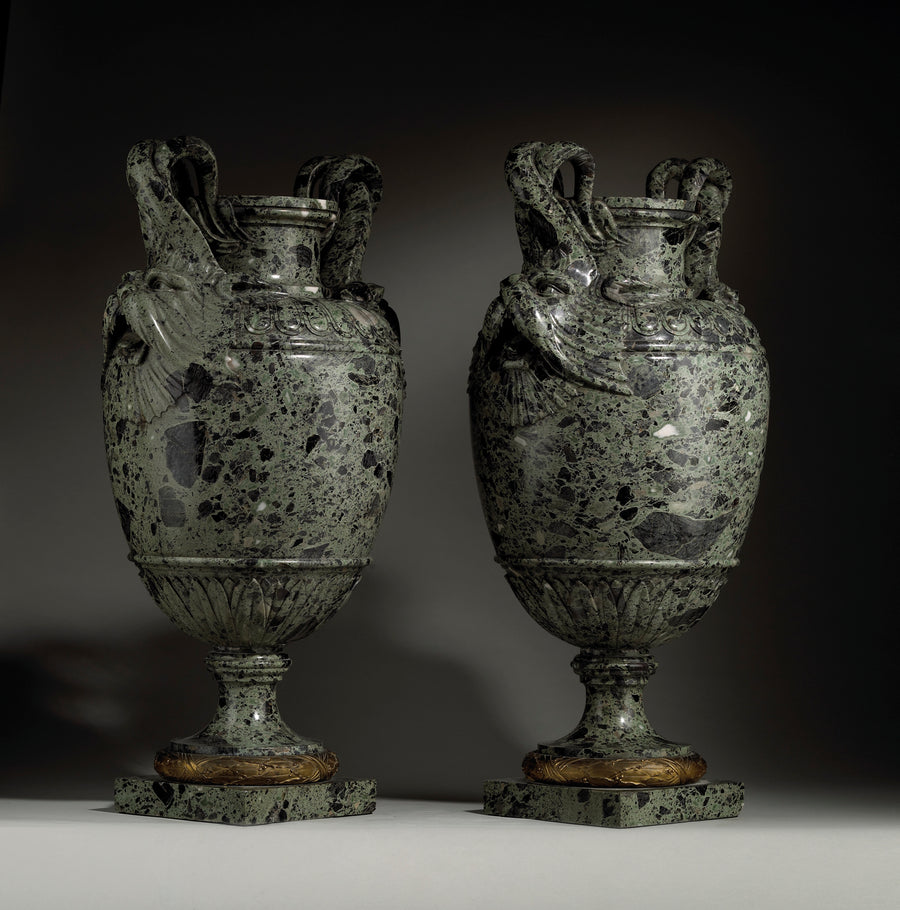
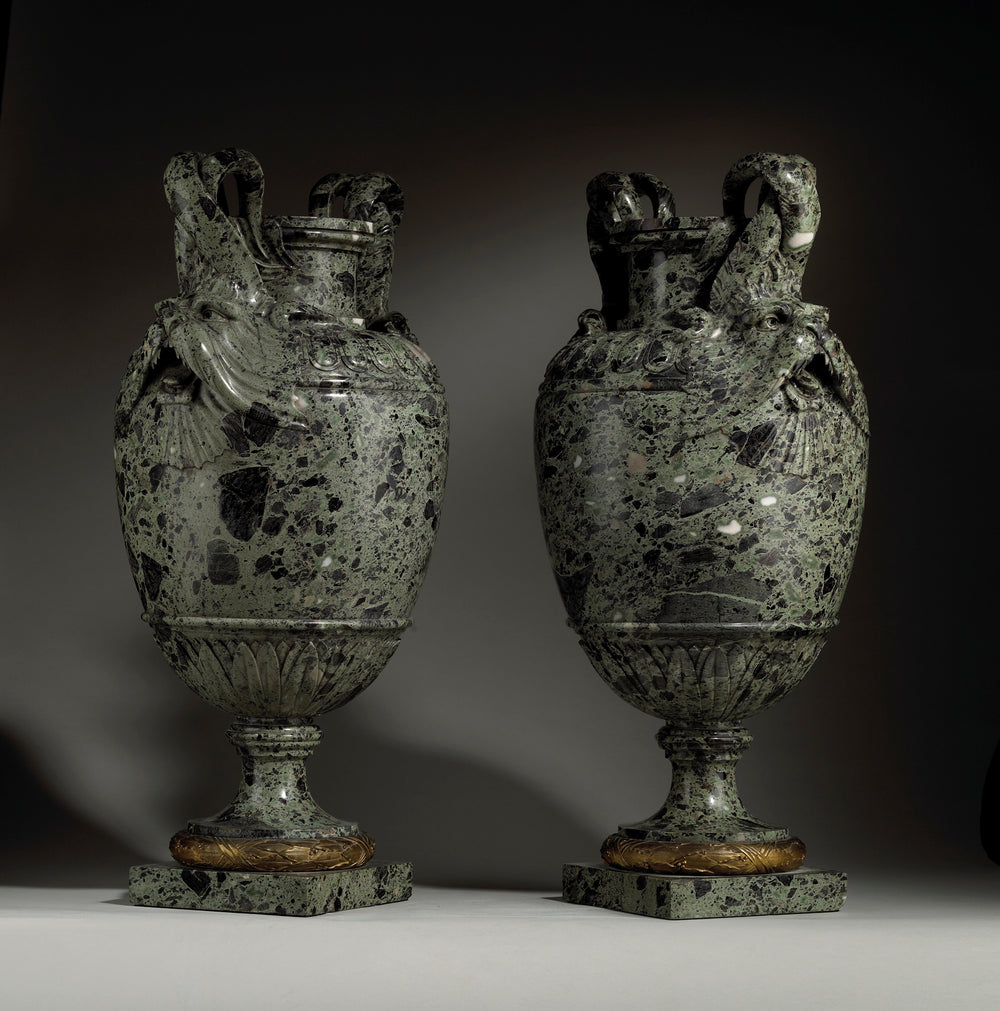
Pairs are understandably sought after because they provide order and allow strong placement on chimneypieces, console tables or either side of a doorway. They are also harder to find with true symmetry, matching condition and comparable surface. Buyers should expect to pay accordingly.
Single fragments can be just as effective, sometimes more so. A solitary carved crest or stone mask has an immediacy that pairs occasionally lose through formality. Mounted pieces deserve particular attention here. Proper mounting is not a concession to modern living; it is often what makes an architectural fragment readable and secure in an interior.
The case for buying through a specialist dealer
Architectural salvage has become fashionable, and with that popularity comes a familiar problem: too many objects are sold on atmosphere alone. For decorative buyers this may suffice. For collectors, designers and clients furnishing at a higher level, it is not enough.
A specialist dealer brings judgement to the categories that matter most - dating, attribution, originality, restoration and scale. That guidance becomes more valuable, not less, when buying remotely. Clear condition reporting, accurate measurements, detailed photography and honest discussion about repairs or later adaptations are essential in this field.
This is also where restoration and logistics matter. Large stone fragments, ironwork and mounted elements require proper handling, custom packing and insured shipping. The best dealers do more than source the object. They prepare it for placement, advise on display and ensure it arrives in a state worthy of the room it is intended for. For clients in London, New York or the Hamptons, that level of service is not a luxury extra. It is part of buying properly.
When an architectural object is worth stretching for
Not every decorative fragment should command serious attention. The pieces worth stretching for tend to have at least three qualities in combination: strong design, convincing age and an exceptional surface. Add good provenance or rarity of type, and the case strengthens quickly.
There are, of course, trade-offs. A piece with remarkable carving but weaker provenance may still be the right acquisition if it solves a room brilliantly. A documented example with compromised restoration may be less satisfying unless its historical importance outweighs cosmetic concerns. Experienced buyers understand that merit is rarely singular. It sits in the balance between scholarship, condition and decorative force.
The best acquisitions also reward long familiarity. They are not merely photogenic on first encounter. They continue to reveal quality in profile, detail and material presence. That is usually the difference between an object one enjoys for a season and one that becomes part of the architecture of the house itself.
Antique architectural decorative objects ask for a little more judgement than many other categories, but they return far more character in exchange. Buy with an eye for surface, proportion and provenance, and the right piece will not simply decorate a room - it will steady it.


Leave a comment