



Buying Antique Furniture With Confidence
A fine piece of antique furniture changes a room in ways newer furnishings rarely can. It brings proportion, material richness and a sense of permanence, but for serious buyers, charm alone is never enough. The real question is whether a piece is authentic, well judged, properly restored and right for the interior it is meant to inhabit.
For collectors, decorators and private clients furnishing distinguished houses, antique furniture is not simply a decorative purchase. It is an acquisition that sits somewhere between art, design and cultural history. That is precisely why the buying process deserves a more exacting standard than a quick glance at age, polish and silhouette.
What distinguishes exceptional antique furniture
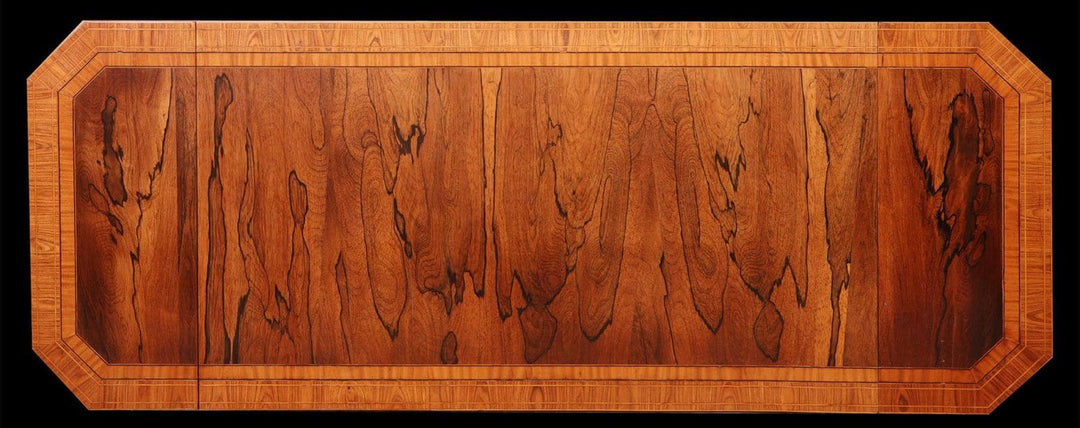
Not all period furniture merits attention. The best examples announce themselves through balance, craftsmanship and material quality, even before one begins discussing provenance. A Georgian chest of drawers with beautifully figured mahogany, refined bracket feet and crisp mouldings will always stand apart from a later, heavier interpretation of the same form. Likewise, a Continental commode with confident ormolu mounts and finely matched veneers reveals a different order of cabinet-making from a decorative but routine piece.
Age matters, of course, but age on its own is a poor measure of value. A well-drawn late 18th-century table of elegant proportion can be more desirable than a clumsy earlier object. Sophistication of design, rarity, original surface, condition and historical relevance all play their part. The market rewards pieces that combine these qualities, especially when they remain close to their original state.
This is where connoisseurship becomes indispensable. Details such as timber selection, joinery, hardware, patination and construction methods help distinguish period work from later copies. Even subtle clues matter. The underside of a drawer, the way a moulding terminates, or the quality of carving on a knee or cabriole leg can tell an experienced eye a great deal.
Provenance, authenticity and why they matter
In the upper tier of the antiques market, provenance is not a flourish added for romance. It is a serious part of how a piece is understood and valued. Documentary history, old labels, inventory marks, collection records and references in published literature can transform a handsome object into an important one.
That said, not every worthwhile acquisition comes with an unbroken aristocratic lineage. Many excellent pieces survive without extensive paperwork. In those cases, authentication rests on close visual analysis, comparative scholarship and category knowledge. Buyers should look for dealers who can articulate why a piece is what it is, not merely describe it as "old" or "in the style of".
There is also a practical reason to insist on clarity. When antique furniture is purchased for a serious interior or collection, especially across borders, confidence in attribution and age becomes essential. Insurance, resale, collection management and design planning all depend on accurate information. A vague description may suffice for casual decorative buying, but not for important furniture.
Condition and restoration are never simple questions
Condition is where many buyers become either overly nervous or unrealistically optimistic. The truth is more measured. Most 18th- and 19th-century furniture will have some degree of restoration, and in many cases that is entirely appropriate. Furniture was made to be used. Drawers ran, hinges loosened, surfaces faded, mounts were cleaned, leather tops replaced and joints strengthened. Sensible, high-quality restoration is often a mark of stewardship rather than compromise.
The key distinction is between restoration that preserves integrity and restoration that disguises weakness. A well-restored side table should remain honest about its age. It should not be stripped of surface, over-polished into uniformity or rebuilt so extensively that little of the original character survives. Repairs should support the piece structurally and visually, without erasing the evidence of period craftsmanship.
This is one of the great it-depends areas in the trade. A collector seeking untouched originality may accept more wear. An interior designer placing a bureau plat into active daily use may reasonably prioritise stability and finish. Neither approach is inherently wrong. What matters is that the restoration is disclosed and the buyer understands the balance between purity, usability and appearance.
How antique furniture should work in an interior
The finest interiors rarely feel assembled from one date or one source. Antique furniture often works best when placed with confidence rather than reverence. A George II console can lend architectural gravity to a contemporary hallway. A Regency centre table may anchor a room otherwise softened with modern upholstery. A richly patinated walnut chest can warm an interior that might otherwise feel too studied.
Scale is usually the deciding factor. Period furniture was made for houses with varying ceiling heights, circulation patterns and formal room arrangements, so one should not assume every antique will suit every modern setting. A magnificent breakfront bookcase may be museum-worthy and still entirely wrong for a city drawing room with limited wall height. Conversely, smaller occasional tables, mirrors, commodes and chests often adapt brilliantly to present-day living.
Designers understand another point that private buyers sometimes overlook: contrast creates energy. When every object in a room is new, the result can feel flat. When every object is antique, it can become heavy-handed unless exceptionally disciplined. The most compelling schemes allow period pieces to carry authority while modern elements provide air and restraint.
A practical way to assess a piece before purchase
When considering antique furniture, begin with first principles. Does the piece have presence? Is the design convincing? Are the proportions elegant from every angle, not just in a front-facing photograph? Beauty is not a secondary concern. It is often the clearest signal that a maker knew exactly what he was doing.
Then move to material and construction. Ask what timber has been used, whether veneers are original, how the drawers are lined and jointed, whether the hardware is period, and whether the surface has been heavily altered. On finer furniture, quality tends to be consistent. If the front is superb but the backboards, interior or secondary timber work are careless, that inconsistency deserves scrutiny.
Condition should come next, and here specificity matters. Small age cracks, old marks and minor evidence of use are normal. Active worm, unstable joints, significant replacements, losses to veneer or poorly matched timber repairs require closer consideration. None of these is automatically disqualifying, but each affects desirability, price and future maintenance.
Finally, ask whether the piece suits the way it will live. A collector may accept delicacy where a family house requires durability. A lacquer cabinet in a formal room may be entirely sensible; the same cabinet in a hard-working kitchen-dining space may be less so. Good buying is never only about the object in isolation. It is about context.
Why specialist dealers still matter
The wider market offers endless choice, but choice without filtration can be expensive. Specialist dealers provide something far more valuable than volume: judgement. They edit. They reject. They compare. They know when a piece is unusually good, when a restoration has gone too far, and when a claimed attribution does not withstand examination.
For clients buying remotely, that expertise becomes even more important. High-resolution images are helpful, but they cannot fully convey depth of colour, the quality of a bronze mount, the subtlety of patina or the exact nature of a repair. A reputable dealer bridges that gap through clear attribution, condition reporting, restoration oversight and careful delivery planning.
This advisory role is one reason sophisticated buyers continue to work with established galleries. The transaction is only part of the service. Just as important is the confidence that the object has been vetted properly and prepared to enter a serious interior or collection.
Antique furniture as a lasting acquisition
There is a tendency to discuss antiques either as decorative indulgence or as pure investment. Neither view is quite sufficient. The strongest pieces of antique furniture offer aesthetic pleasure, practical use and a durable form of value, but they should still be bought with discernment rather than speculation.
Tastes shift. Certain categories rise, soften and recover. Scale preferences change. Brown furniture has had periods of neglect and renewed appreciation. Yet exceptional objects, especially those with strong design, fine materials and sound provenance, tend to outlast fashion. They continue to matter because quality remains legible across generations.
That is perhaps the most persuasive reason to buy well. The right piece does more than complete a room for now. It acquires presence over time, gathers its own history and rewards attention long after trend-led interiors have dated. When antique furniture is chosen with knowledge and restraint, it does not merely fill space. It gives a house memory.


Leave a comment