



How to Buy Antiques Online Safely
A finely carved giltwood mirror can look impeccable on a screen and deeply disappointing in person. The difference usually comes down to what was not asked before purchase. If you want to know how to buy antiques online safely, the real skill is not simply spotting something beautiful. It is learning how to assess the dealer, the object, and the supporting evidence with the same care you would bring to a private viewing.
Online buying has opened remarkable access to English and Continental furniture, lighting, works of art and decorative objects that might once have been available only through fairs, auctions or specialist galleries. It has also made it easier for reproductions, over-restored pieces and vague attributions to travel under the cover of polished photography. Safe buying is therefore less about suspicion for its own sake and more about informed discernment.
How to buy antiques online safely starts with the seller
Before looking too closely at a piece, look at the standard of the business offering it. A reputable antiques dealer should present more than attractive inventory. You should expect category expertise, clear descriptions, an established identity and a willingness to answer precise questions without evasion.
There is a meaningful difference between a specialist dealer and a general reseller. A specialist usually understands period construction, regional characteristics, later alterations and restoration history. That knowledge tends to show in the language used. Phrases such as "in the manner of", "later associated", "19th-century elements" or "restored surface" are not warning signs in themselves. In many cases they are signs of honesty. What should give pause is vagueness - "old style", "antique look", or grand claims unsupported by any detail.
A serious dealer should also be able to explain how authenticity has been assessed. For a George III chest, that may involve timber choice, drawer construction, handles, locks, backboards and wear patterns. For a chandelier, it may include the date of manufacture, subsequent electrification and the extent of replacement drops or arms. The more valuable or historically significant the object, the less acceptable a thin description becomes.
Read descriptions as carefully as photographs
Photographs attract attention, but the written description often tells you whether you are dealing with connoisseurship or commerce alone. Good catalogue text should identify period, origin, materials, approximate date, dimensions and notable restorations or replacements. It should also avoid certainty where certainty is not possible.
Condition language deserves particular attention. Antiques are not expected to be untouched. Indeed, careful restoration is often a mark of responsible stewardship. A dining table that has been sensitively cleaned and French polished is very different from one that has been stripped, aggressively refinished and rebuilt to the point that much of its character has been erased. Likewise, a pair of candelabra with discreet later wiring may be entirely practical and desirable, whereas heavy modern intervention can compromise both integrity and value.
When in doubt, ask direct questions in plain terms. Has the piece been restored, and if so, by whom and to what extent? Are there replacements, losses, repairs, re-gilding, re-polishing or later mounts? Does the dealer consider the piece fully period, or partly period with later elements? A good dealer will not be unsettled by these enquiries.
What to examine before you buy
Learning how to buy antiques online safely often comes down to understanding what photographs can and cannot show. Ask for additional images if anything is unclear. You should ideally see the front, sides, back, top, interior, underside and close details of areas likely to reveal age or intervention.
For furniture, look for signs of period construction rather than uniform perfection. Drawer linings, dovetails, shrinkage, old worm, oxidisation to secondary timber and natural wear in expected places can all be informative. For mirrors and frames, ask whether the gilding is original, refreshed or extensively renewed. For upholstery, establish whether fabric is later and whether the seat structure has been rebuilt. For clocks, boxes and decorative objects, details such as hinges, locks, mounts and feet often tell a clearer story than a frontal image.
Scale matters as much as authenticity. A console that appears grand in isolation may be too shallow for a principal hall or too imposing for a London drawing room. Always review dimensions carefully and, if the piece is intended for a scheme, compare them against the room and surrounding furniture. Safe buying includes avoiding expensive mistakes of proportion.
Provenance, attribution and paperwork
Not every worthy antique comes with a romantic ownership history, and absence of grand provenance does not make an object suspect. Still, the higher the value, the more you should expect from the paper trail. Provenance may include previous collections, invoices, exhibition history, old labels, references in catalogues or any documentary evidence that supports attribution and date.
It is sensible to distinguish between provenance and dealer confidence. A strong dealer attribution based on expertise can be entirely legitimate, but it is not the same as documentary proof. If a piece is described as attributable to a particular maker, cabinetmaker or workshop, ask what underpins that view. Is it construction, design vocabulary, comparable examples, stamped marks or prior scholarship?
Invoices should be detailed and specific. The description on the invoice should match the object sold, including date range, materials and any notable condition points discussed before purchase. For serious buyers, this matters later for insurance, collection records and resale.
Shipping is part of safe buying, not an afterthought
Many disappointments in online antiques buying occur after the invoice has been paid. Safe purchase includes safe transit. Fragile mirrors, chandeliers, marble-topped furniture and mounted objects require specialist packing, experienced handlers and appropriate insurance. General parcel services are rarely suitable for high-value antiques.
Ask who arranges packing, whether shipping is insured door to door, and who carries liability in the event of damage. For international purchases, establish whether the dealer manages export documentation, customs paperwork and any restrictions relating to materials. Certain woods, ivory elements, tortoiseshell or taxidermy can trigger legal complications across borders. A reputable dealer will identify these issues early rather than after the crate has left the premises.
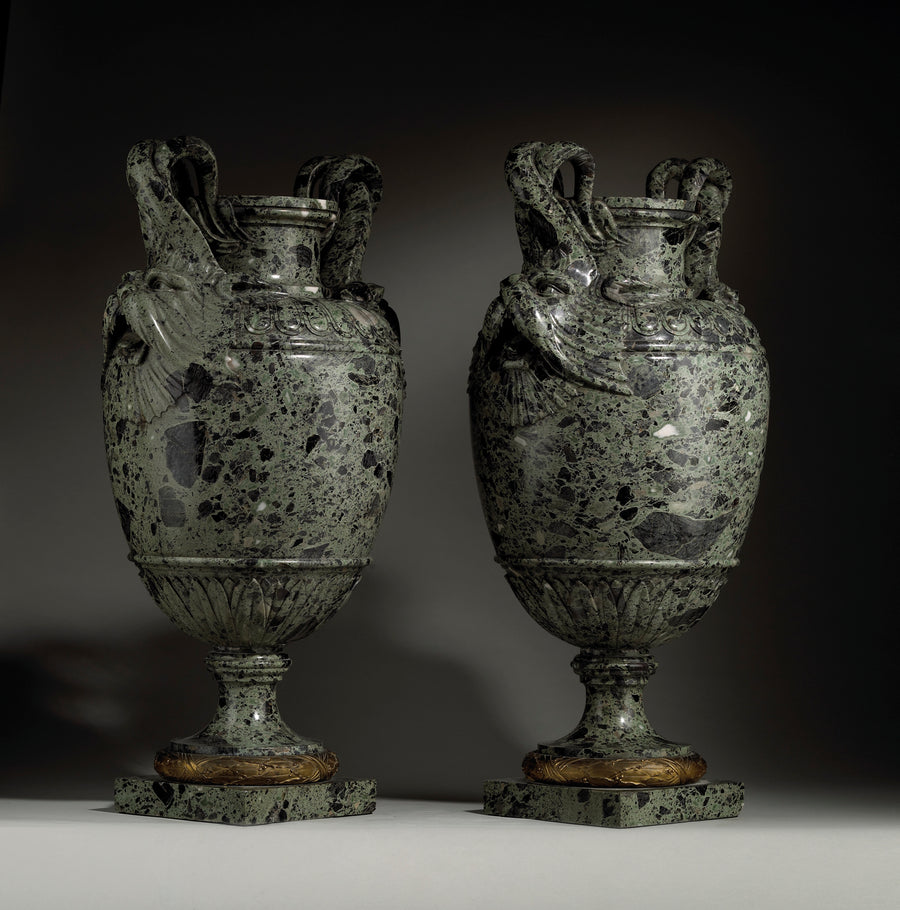
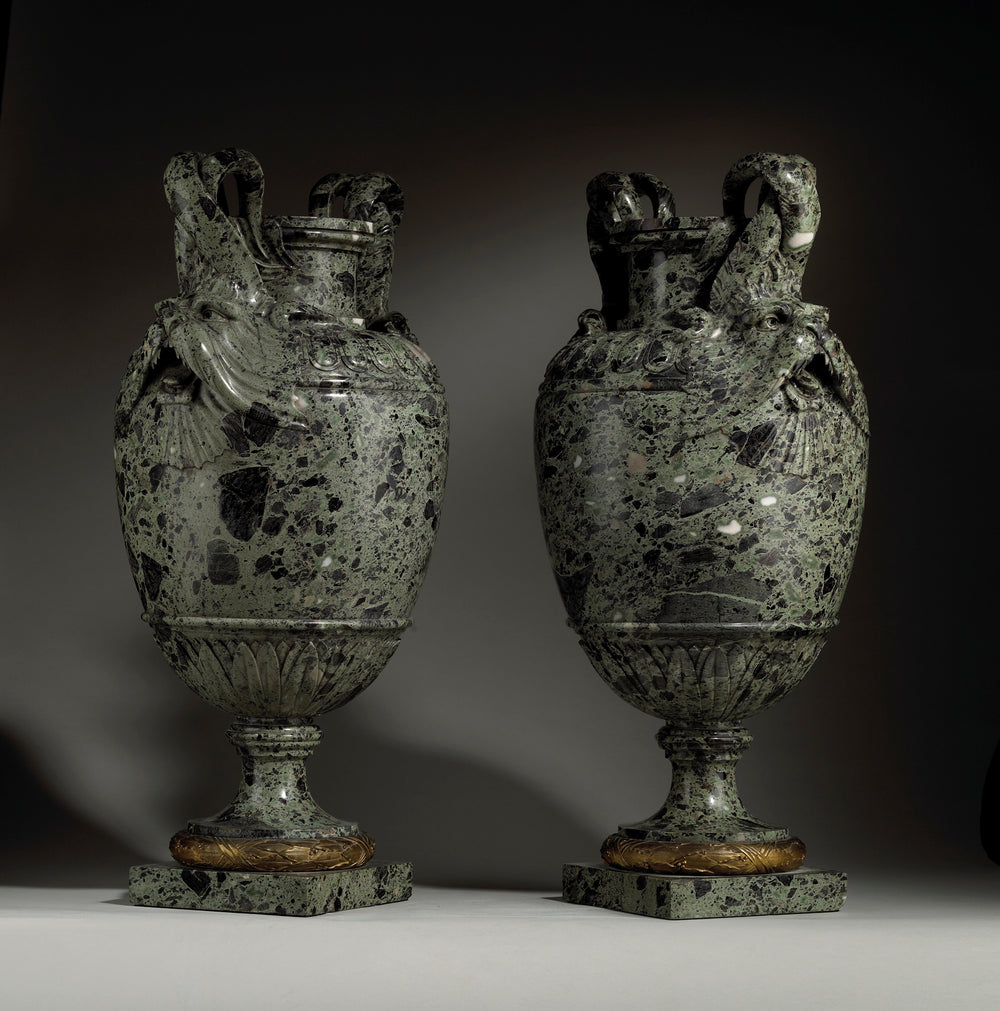
White-glove delivery is especially valuable for large or complex pieces. It reduces the risk of damage in transit and ensures installation is handled properly, whether that means assembling a bookcase, positioning a marble urn or hanging an oversized gilt mirror safely.
Buying from auctions versus dealers
A dealer and an auction house serve different purposes, and the safer option depends on your confidence level. Auctions can offer opportunity, but they often require quicker judgement, less tailored advice and stricter terms. Condition may be summarised rather than fully interpreted, and estimates should never be mistaken for statements of value or authenticity.
A specialist dealer generally offers more context, more time to ask questions and a stronger duty of care in describing what is being sold. You may pay more than at auction, but you are often paying for expertise, vetting, restoration oversight and after-sales support. For clients furnishing important interiors or building thoughtful collections, that premium is frequently justified.
How to buy antiques online safely when spending more
The more significant the purchase, the more personalised the process should become. For a modest decorative object, clear photographs and accurate description may be enough. For a rare commode, a set of giltwood armchairs or an important work of art, a video viewing, supplementary condition report or private consultation is prudent.
This is where boutique dealers often distinguish themselves. A well-run gallery should be able to advise not only on authenticity and condition but on suitability within an interior, comparative value, restoration options and placement. Nicholas Wells Antiques, for example, positions this as a high-touch advisory process rather than a simple checkout. That model suits serious buyers because confidence rarely comes from a cart page alone.
Trust your instincts, but let those instincts be informed. If the photographs are over-styled, the description thin, the condition answers evasive and the shipping arrangements casual, walk away. There will always be another piece. The finest acquisitions tend to come from patience, proper questions and dealers who welcome scrutiny because they know exactly what they are selling.
An antique bought well does more than fill a space. It brings history, craftsmanship and a certain gravity into the room. When the buying process is handled with care, distance need not diminish confidence at all.


Leave a comment