



How to Style Antique Mirrors with Confidence
An antique mirror should do more than fill a stretch of wall. Its glass, frame and reflection can alter the perceived architecture of a room, introduce a century of craftsmanship and give a carefully furnished interior a greater sense of depth. Knowing how to style antique mirrors begins with treating each example as an individual decorative object, rather than as a convenient reflective surface.
A fine giltwood pier glass, a restrained Regency convex mirror and an elaborately carved Continental frame ask for very different surroundings. The most successful schemes honour that distinction. They allow the mirror’s period, scale and patina to register clearly, while ensuring that it belongs convincingly to the life of the room.
How to style antique mirrors: begin with proportion
Before considering colour or accessories, assess the wall and the furniture below it. A mirror’s visual weight is determined as much by its frame as by its dimensions. Deeply carved giltwood, ebonised moulding and richly figured walnut carry considerable presence; a narrow, faded gilt frame may appear quieter even at a substantial height.
Over a chimney piece, the mirror should usually relate to the width of the mantel rather than duplicate it exactly. A frame that is appreciably narrower than the chimney breast leaves the architectural surround visible and avoids a crowded effect. In a drawing room with a grand chimney piece, a tall eighteenth-century pier glass can provide the necessary vertical emphasis. In a lower-ceilinged room, a wider, more restrained mirror may be the more intelligent choice.
Above a console, commode or sideboard, leave sufficient breathing space at either side. The furniture should anchor the composition, not disappear beneath an oversized frame. As a useful starting point, select a mirror between roughly half and three-quarters of the furniture’s width, then adjust for the boldness of the carving and the character of the room.
Height matters equally. Hang the mirror so its reflected view is useful and composed, rather than placing it by a fixed rule. Over furniture, a modest gap often creates a deliberate relationship; in an entrance hall, the lower edge may sit nearer the console to form a more intimate grouping. A mirror positioned too high tends to reflect only ceiling and light fittings, wasting one of its principal decorative virtues.
Choose the reflection as carefully as the frame
Every mirror creates a second view. This is why placement opposite a window is not automatically correct, despite the appeal of additional daylight. The reflection may bring welcome garden foliage, a fine cornice or a favourite painting into the room. It may also double an unremarkable doorway, a bank of cabinetry or an overly busy arrangement of objects.
Stand where the mirror will be viewed from most often and consider what it will return. In a London drawing room, an eighteenth-century gilt mirror placed to catch a well-proportioned sash window can amplify both light and architectural rhythm. In a contemporary interior, the same mirror might be used to reflect a quiet plane of plaster, a single sculpture or a distant garden view, creating contrast without visual confusion.
Avoid making every wall reflective. One important antique mirror has authority. Several can be splendid in a formal hall, a dining room or a dressing room, particularly where symmetry is part of the architecture. Elsewhere, too many competing reflections can make an interior feel unsettled. It depends on the scale of the room, the quality of the mirrors and whether they have a coherent relationship in date, material or form.
Let period inform the setting, not dictate it
An antique mirror need not be installed in a wholly period interior. Indeed, an important example often gains distinction when set against plain walls, contemporary upholstery or restrained modern lighting. The key is not strict historical recreation but a convincing balance of line, material and visual weight.
A George II giltwood mirror, with its spirited carving and strong silhouette, can hold a place above a simple limestone mantel or a tailored contemporary console. A Regency girandole, by contrast, benefits from a setting that gives its convex plate and candle branches room to read. A French nineteenth-century mirror with a more ornate crest may become the dramatic focal point in a hall, provided neighbouring pieces are quieter in outline.
When mixing periods, repeat one or two qualities rather than attempting to match everything. The warm metal of a bronze lamp may answer aged water-gilding. Dark timber in a cabinet can steady an ebonised frame. A contemporary artwork with a limited palette may make an elaborate mirror appear more considered, not less. This measured approach produces a room that has evolved through discernment rather than been assembled as a set.
Use symmetry where architecture asks for it
Pairs of antique mirrors are particularly effective when flanking a chimney breast, doorcase or large work of art. Symmetry brings calm to formal rooms and gives smaller mirrors a greater collective presence. It is especially persuasive with narrow pier glasses in a dining room or salon, where their vertical form can elongate the walls.
But symmetry should be exact enough to look intentional. Mismatched frames can work, though they need a clear connecting principle: similar scale, identical glass tone, related gilding or a shared period. Two objects that are merely close in size often look accidental rather than collected.
Use asymmetry to retain ease
In less formal spaces, a single antique mirror may be more compelling off-centre, balanced by a lamp, a picture or a tall ceramic vessel. A smaller convex mirror can sit within a picture arrangement, providing a pause between works on paper and painted surfaces. Here, the frame should be allowed to function almost as a work of sculpture.
This is also an effective solution for rooms where a conventional over-mantel arrangement would feel predictable. An antique mirror placed at the end of a corridor or beside a bookcase can animate an otherwise neglected plane, provided it reflects something worth seeing.
Pair antique mirrors with considered lighting
Candlelight and antique mirrors have a natural affinity. Historically, mirrors were used to extend the effect of sconces and chandeliers, multiplying a room’s illumination before electric light. That relationship remains valuable, although contemporary lighting should be handled with restraint.
A pair of wall lights near, rather than directly over, a mirror can articulate the wall without obscuring the frame. In a dining room, the reflected glow of a chandelier lends depth after dark. Avoid placing strong downlights so that they create bright glare across old glass. Antique mercury plates, foxed surfaces and softly uneven reflections are part of the object’s character, not defects to be corrected by excessive illumination.
Where a mirror includes candle branches, have its structure and wiring assessed by a qualified specialist before adapting it for modern use. Original elements should be respected, and any intervention ought to be reversible where possible. The same principle applies to cleaning and restoration.
Preserve the evidence of age
An antique mirror is often valued for precisely those details a modern mirror would conceal: gentle foxing, ripples in the glass, softened gilding and small variations in the frame. These features establish authenticity and give the surface its particular atmosphere. Replacing old plate or aggressively regilding a frame may make an object appear newer, but can diminish both its historical integrity and its appeal to discerning collectors.
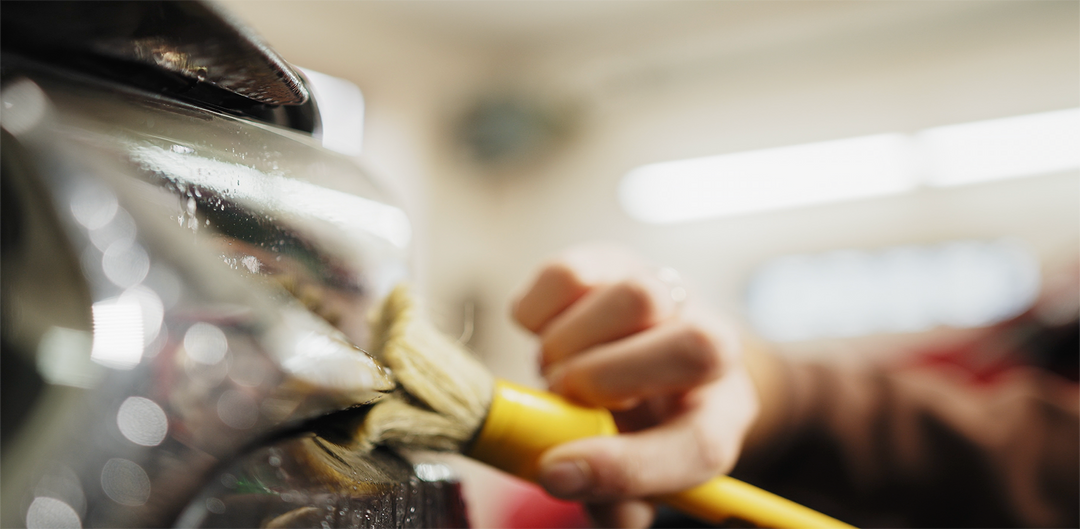
Cleaning should be light-handed. Dust the frame with a soft, dry brush and avoid spraying liquid directly on the glass, especially where it meets the rebate. Moisture can damage silvering, gilding and old backing boards. If the frame is loose, the glass unstable or the gilding vulnerable, seek specialist advice before hanging it. A substantial mirror also requires an appropriate fixing method and a wall capable of carrying its weight securely.
At Nicholas Wells Antiques, the condition of a mirror is considered alongside its period, craftsmanship and decorative potential. Sympathetic restoration can stabilise and present a piece beautifully, but it should never erase the evidence that makes the object singular.
Give the mirror room to matter
The final discipline is editing. An exceptional mirror does not always need a crowded mantel beneath it, a cluster of pictures beside it and elaborate ornament reflected in front of it. Sometimes a pair of candlesticks, a low arrangement of branches or a single bronze is sufficient. The frame, the glass and the view it captures should remain legible.
A well-placed antique mirror changes as daylight moves, lamps are lit and the room is occupied. Allow for that changing character. Choose the wall where it can carry history, light and reflection with quiet assurance, and it will become one of the most persuasive objects in the house.
Leave a comment