



What Are Grand Tour Decorative Objects?
A well-placed bronze of the Farnese Hercules, a finely turned specimen marble obelisk, or a patinated souvenir after the antique can change the atmosphere of a room at once. The appeal of grand tour decorative objects lies precisely there - they bring scholarship, travel, memory and architectural presence into an interior without ever feeling merely ornamental.
What grand tour decorative objects actually are
Grand Tour decorative objects are works acquired, commissioned or inspired by the culture of the Grand Tour, the extended journey through Europe undertaken by aristocratic and wealthy travellers from the seventeenth through the nineteenth centuries. Italy, and especially Rome, Naples, Florence and Venice, sat at the centre of this world. Travellers returned with objects that reflected an education in classical taste: bronzes after antique sculpture, micromosaics, pietra dura panels, carved marbles, souvenir views, intaglios, plaster casts and finely made desk objects rooted in archaeology and the antique past.
These pieces were never simply keepsakes. They were declarations of cultivation. In country houses, London townhouses and later refined interiors across Europe and America, they signalled familiarity with classical civilisation, continental collecting and the ideals of proportion, beauty and learning.
That history still matters. A true Grand Tour object carries not only aesthetic value but also cultural intention. It belongs to a tradition of collecting that was deeply tied to taste, education and status.
Why collectors still seek grand tour decorative objects
The strongest examples satisfy several appetites at once. They are decorative, certainly, but they are also intellectual objects. A bronze reduction after the Apollo Belvedere or a pair of marble columns cut from hardstone speaks to the owner who values finish and scale, yet also responds to historical reference and workshop practice.
For collectors, this makes the category unusually rewarding. Unlike decorative objects bought solely for colour or shape, Grand Tour material often offers an identifiable subject, city of origin, date range and collecting context. That combination tends to create lasting appeal.
For interior designers, the attraction is slightly different. Grand Tour pieces give a room gravity. They sit comfortably among English furniture, Continental giltwood, library interiors, neoclassical schemes and even more pared-back settings that need a single object with presence. A serious specimen marble vase or a crisply cast bronze can provide exactly the kind of visual authority that modern decorative accessories rarely achieve.
The most desirable forms
The category is broad, and quality varies sharply. The most sought-after grand tour decorative objects are usually those with fine materials, strong modelling, good scale and an evident relationship to important centres of production.
Bronzes remain among the most enduring. Nineteenth-century reductions after celebrated antique sculptures were produced for travellers who wanted portable versions of the works they encountered in Roman collections and museums. The best are sharply cast, richly patinated and mounted with restraint. Lesser examples can be decorative enough, but they lack depth in both modelling and surface.
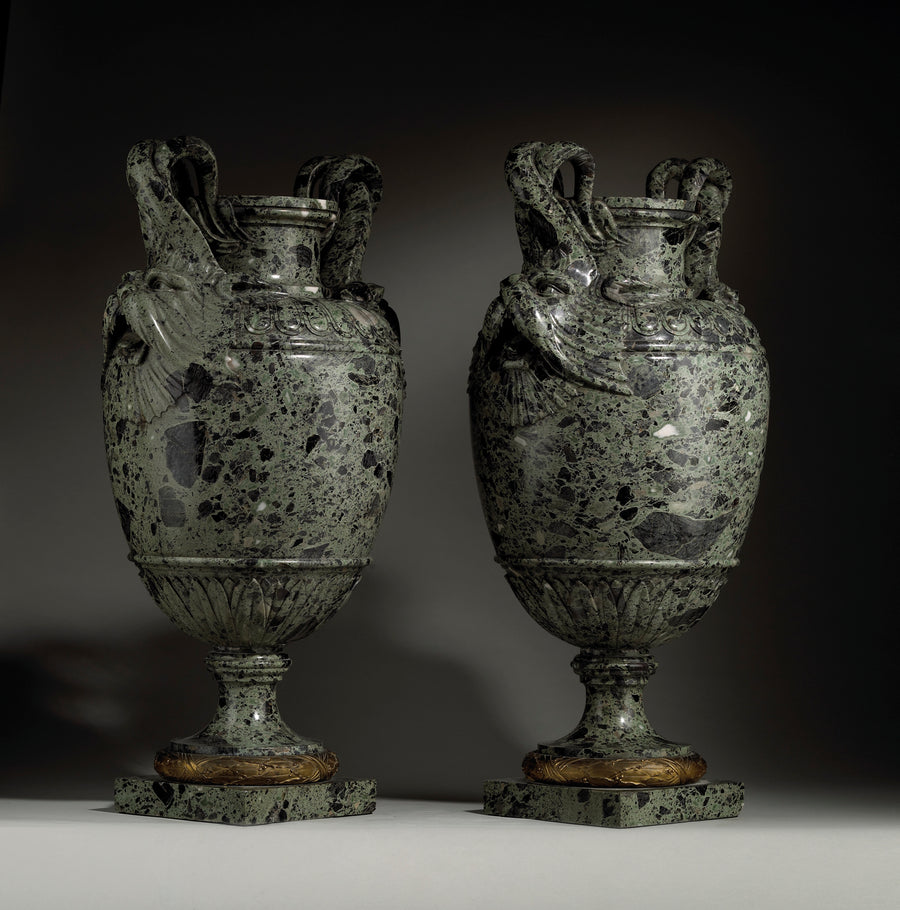
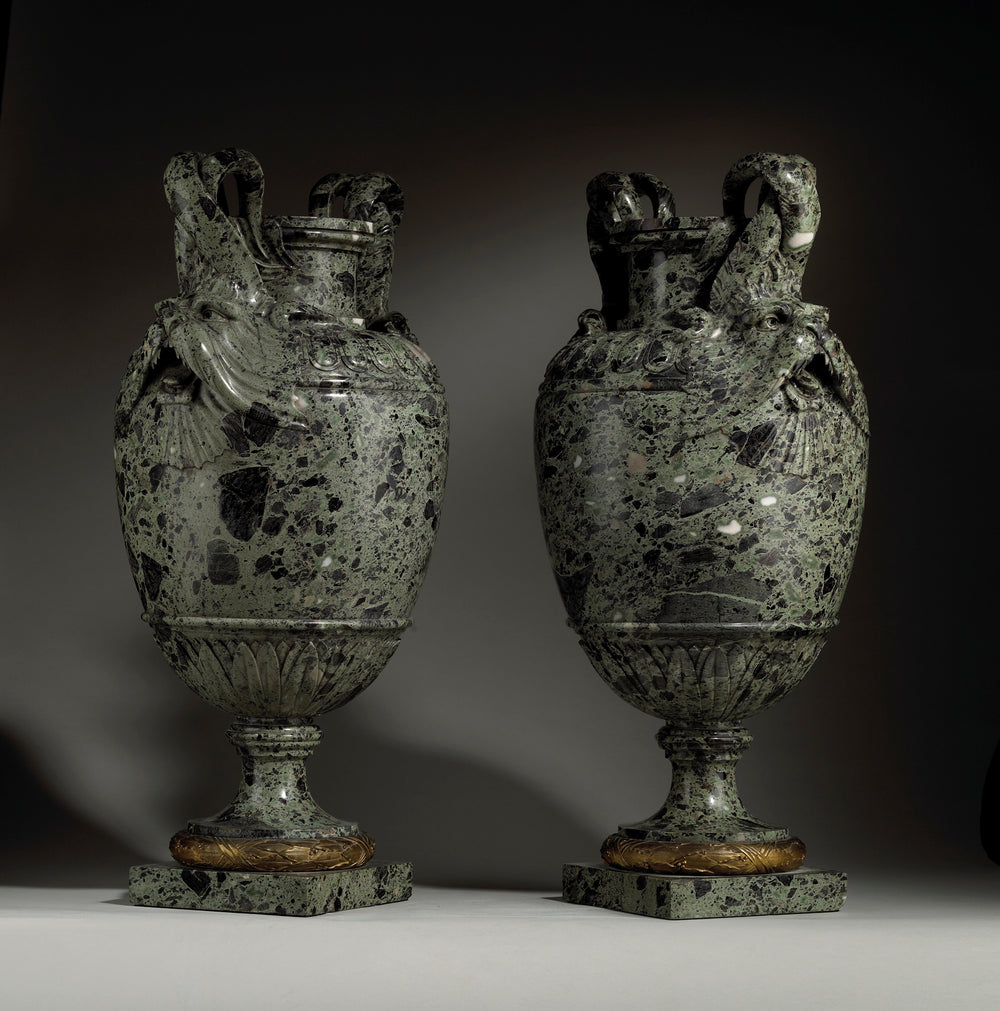
Specimen marble works also hold a special place. Obelisks, urns, columns and boxes assembled from carefully selected stones offer extraordinary colour and texture, but their appeal goes beyond prettiness. They reflect the nineteenth-century fascination with geology, antiquity and disciplined craftsmanship. A well-composed specimen marble object can read almost architecturally in an interior.
Micromosaics deserve equal attention. Made from minute glass tesserae, often in Rome, they depict ruins, doves, architectural views or classical motifs with astonishing precision. Fine examples have a jewelled clarity that rewards close looking. They can be intimate in scale, yet highly sophisticated.
There are also plaster casts, carved alabaster, Roman-view souvenirs, intaglio sets, pietra dura tabletops and small architectural models. Each form attracts a slightly different buyer. Some prefer academically grounded sculpture, while others gravitate towards colour, rarity or decorative versatility.
Authenticity, condition and the question of quality
This is not a category to approach casually. Grand Tour objects were widely produced, and later copies abound. Reproductions can still be handsome, but they should never be confused with period examples. The distinctions are often subtle: the sharpness of a bronze casting, the age and tone of a patina, the hand-cut irregularity of stone inlay, the quality of the mount, or the expected wear to the underside of a base.
Condition also requires judgement. Some restoration is not only acceptable but sensible, particularly in objects intended for display in important interiors. A discreetly stabilised marble edge or sensitively cleaned bronze may be preferable to untouched neglect. The question is whether the restoration preserves integrity or conceals weakness.
Provenance, attribution and dating matter because they affect both confidence and value. A Roman micromosaic with a convincing nineteenth-century mounting, or a bronze traceable to a known foundry or model, will naturally command stronger interest than an anonymous decorative piece with uncertain age. For that reason, specialist guidance is essential. Buyers at this level are not purchasing decoration alone; they are acquiring objects within a historical category where knowledge protects judgement.
How grand tour decorative objects work in an interior
The finest interiors use them with restraint. Grand Tour pieces are most effective when they are allowed room to register as individual works. A pair of bronze reductions on a console, a specimen marble obelisk on a library pedestal, or a micromosaic plaque mounted within a study can create focus without noise.
Scale is crucial. Too small, and the object disappears into its surroundings. Too large, and it can feel stagey unless the architecture supports it. The right piece should converse with the furniture around it - mahogany, giltwood, walnut or painted surfaces all provide different kinds of backdrop.
There is also a useful tension between formality and eclecticism. In a strictly neoclassical interior, Grand Tour objects reinforce the scheme with obvious coherence. In a more layered room, they act as anchors, introducing historical seriousness among textiles, books, pictures and lighting. That is often where they are most compelling.
Designers know this instinctively. An interior needs objects with hierarchy. Not every surface should carry equal visual weight. Grand Tour material helps establish that order because it possesses both sculptural presence and cultural depth.
Buying with discernment
When considering grand tour decorative objects, begin with quality rather than category. A superb single bronze is a better acquisition than a group of mediocre pieces. The same is true of marble, micromosaic and pietra dura. Collectors who buy well tend to focus on workmanship, authenticity and proportion before they worry about filling a shelf or completing a decorative scheme.
It is also worth considering how one lives with an object. A desk piece invites close engagement, while a pedestal sculpture shapes the room from a distance. Some buyers want academic reference and recognisable classical subjects. Others want material richness and decorative power. Neither approach is wrong, but the distinction influences what should be purchased.
Practicalities should not be ignored. Stone objects are vulnerable to impact. Fine bronze surfaces can suffer from poor cleaning. Micromosaics require careful handling and stable mounting. For international buyers especially, professional packing, insured shipping and informed handling are part of the acquisition, not an afterthought.
A specialist dealer can make the difference between an attractive purchase and an important one. At Nicholas Wells Antiques, that principle sits at the heart of how serious objects are presented: authenticated, carefully assessed and placed in the context that allows a collector or decorator to buy with certainty.
A category with lasting depth
What gives Grand Tour material its unusual endurance is that it never belonged solely to one market. It has always sat between scholarship and decoration, travel and permanence, archaeology and design. That is why a nineteenth-century Roman bronze or a specimen marble object can still feel entirely at home in a distinguished interior today.
Some buyers come to the category through architecture. Others arrive through sculpture, classicism or English country house taste. Many simply recognise quality when they see it. Whichever route brings one there, the best grand tour decorative objects reward prolonged attention. They do not exhaust themselves after first impression.
If you are choosing carefully, choose the piece that continues to hold the eye once the novelty has passed. That is usually the object worth living with for decades.


Leave a comment