



What Is Scagliola Art?
A finely made scagliola table top can stop a room in its tracks. At first glance, many collectors assume they are looking at pietra dura or an unusually vivid marble specimen. That moment of uncertainty is part of the appeal, and it is exactly why the question what is scagliola art still matters to discerning buyers today.
Scagliola is a decorative technique in which plaster, pigments and glue are combined, worked, polished and finished to imitate marble, hardstone or intricate inlaid surfaces. At its best, it is not a cheap substitute for something finer. It is a highly skilled art form in its own right, prized for its visual richness, technical difficulty and decorative versatility. In important period interiors, scagliola was used to create columns, table tops, altar fronts, panels and architectural ornament of remarkable sophistication.
What is scagliola art and where did it begin?
The word scagliola is generally associated with Italy, particularly the workshops of the seventeenth and eighteenth centuries, where the method was developed to a very high standard. It emerged as an ingenious and economical alternative to costly inlaid marbles and semi-precious stone work, yet the finest examples quickly transcended any notion of imitation. Skilled makers discovered that scagliola could produce swirling veining, convincing stone effects and elaborate pictorial compositions with a freedom that natural materials did not always allow.
By the Baroque period, scagliola had become closely tied to ecclesiastical and aristocratic interiors. It suited an age that valued splendour, surface and illusion. Churches employed it for columns and altar decoration, while grand houses adopted it for tabletops, chimneypieces and ornamental furniture. As taste travelled across Europe, so too did scagliola, appearing in Continental interiors and later finding favour in Britain.
This history is worth bearing in mind when evaluating an antique example. Scagliola belongs to a long tradition of decorative ingenuity. It should be understood within the same broad conversation as marquetry, pietra dura and faux marbre painting - arts in which craftsmanship, illusion and material intelligence meet.
How scagliola is made
Traditional scagliola is typically formed from selenite, a form of gypsum, ground into a fine powder and mixed with animal glue, natural pigments and water. The resulting material can be coloured throughout, layered, cut back and manipulated to produce veins, mottling and dense ornamental pattern. Once dry, the surface is polished and often waxed or oiled until it achieves a deep, luminous finish.
There are different methods within the tradition. Some scagliola is designed to imitate variegated marble as convincingly as possible. Other work is more ambitious, using coloured grounds and inlaid motifs to resemble pietra dura tables with floral sprays, urns, birds or scrolling ornament. The best makers understood not only chemistry and colour but draughtsmanship, composition and the optical behaviour of polished surfaces.
That complexity explains why condition matters so much. Scagliola can be exceptionally beautiful, but it is also vulnerable to poor handling, fluctuating humidity and insensitive restoration. Cracks, abrasions, discolouration and overpainting can materially affect both appearance and value.
Why collectors value antique scagliola
The most obvious attraction is visual. Scagliola offers colour and pattern on a scale that can transform an interior. A fine table top introduces movement, depth and a jewel-like surface quality that sits especially well among giltwood, bronze, mahogany and marble. For decorators, it can act as both anchor and counterpoint - formal enough for a classical scheme, yet distinctive enough to prevent a room feeling predictable.
Collectors, however, tend to look beyond decorative effect. They value scagliola for its craftsmanship, its place within European decorative arts, and the fact that fine examples are increasingly appreciated as serious works rather than secondary imitations. Good scagliola has presence. It rewards close inspection. One begins to notice the subtlety of the veining, the confidence of the design and the remarkable hand involved in creating an object that appears almost geological, yet is entirely made.
There is also a practical consideration. A period scagliola top can offer much of the visual grandeur associated with hardstone or pietra dura at a different level of rarity and price, though quality varies enormously. Exceptional examples are by no means inexpensive, but they can represent a compelling collecting category for buyers who want connoisseurship, decorative impact and historical depth.
Scagliola art compared with marble and pietra dura
It is easy to confuse these categories, particularly in photographs. Marble is, of course, a natural stone. Pietra dura is created by cutting and fitting hardstones into a ground to form an image or ornamental arrangement. Scagliola is a crafted plaster-based medium designed to simulate either the appearance of marble or the effect of inlaid stone.
The distinction matters because each material behaves differently. Marble carries natural weight, coldness and crystalline depth. Pietra dura has hard-edged precision and great durability, but it is labour-intensive and costly. Scagliola offers extraordinary freedom of design and colour, often with a softness and painterly quality that is unique to the medium.
For a collector, the question is not simply which is superior. It depends on what one values. If rarity of stone is the priority, hardstone work may hold the strongest appeal. If one is drawn to illusion, virtuoso surface treatment and the decorative language of grand European interiors, scagliola can be the more interesting choice.
What to look for in an antique scagliola piece
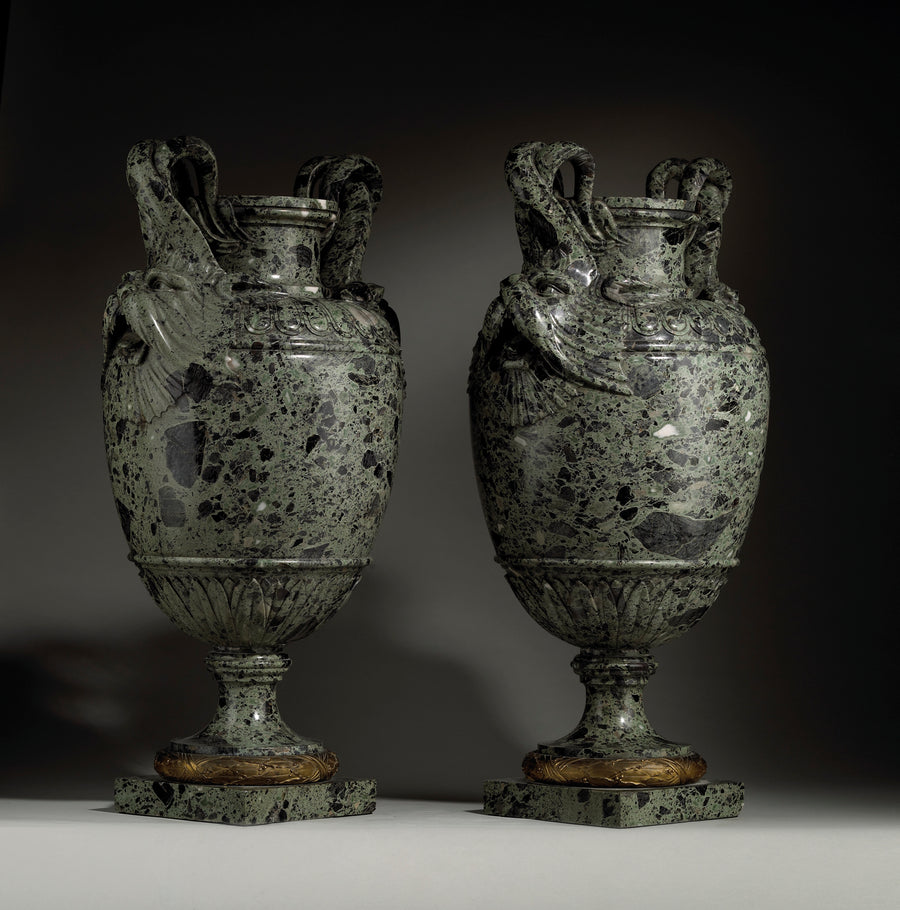
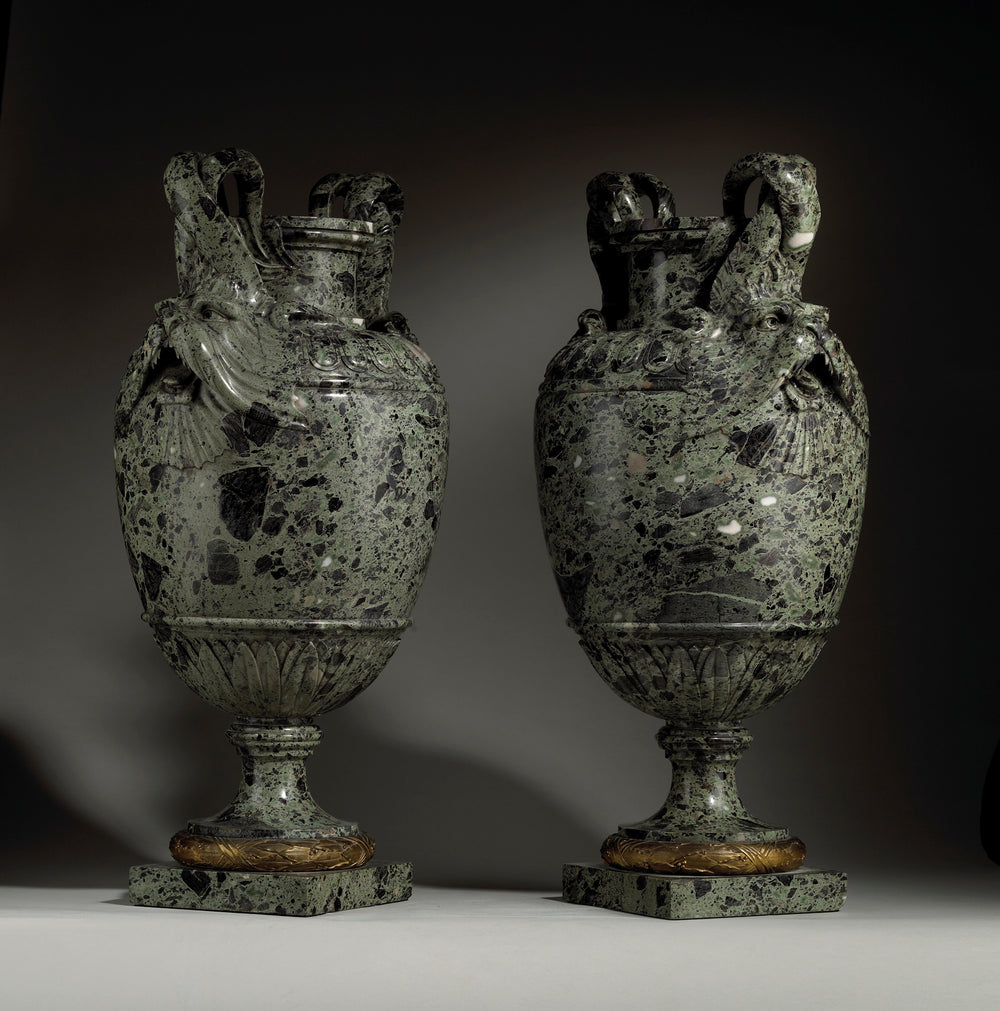
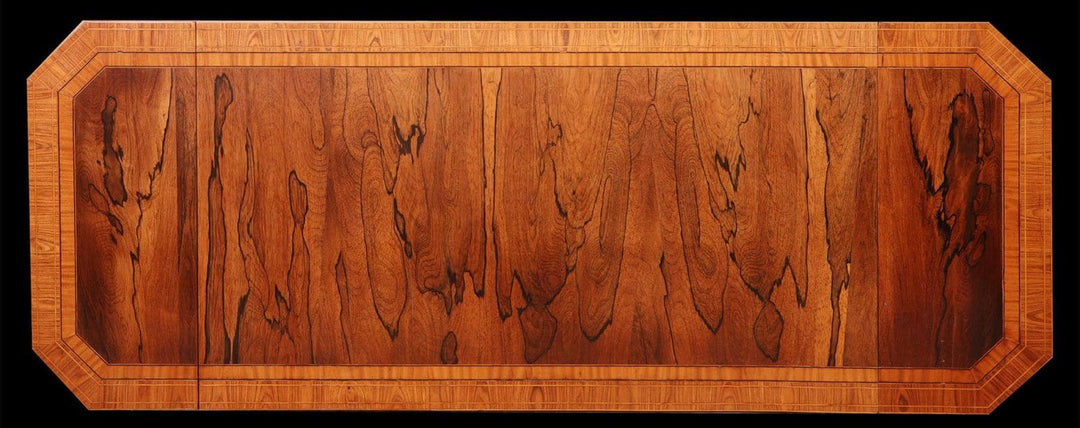
Quality in scagliola reveals itself in the surface. The colour should have depth rather than flatness, and the composition should feel assured rather than crowded or mechanical. In a marbleised example, the veining ought to read as organic and convincingly varied. In a pictorial or inlaid design, outlines should be crisp, balanced and elegantly drawn.
Patina is equally important. Antique scagliola should not look factory-fresh. Gentle wear, a mellowed polish and minor irregularities can all be signs of age and authenticity. Heavy restoration, by contrast, can leave the surface looking dead or oddly glossy. Repairs are not necessarily disqualifying, particularly in pieces that have survived two centuries of use, but they should be professionally executed and clearly understood.
Provenance and attribution also play their part. A scagliola top mounted on an original period table, or associated with a recognised regional tradition, will usually command greater attention than a loose element with no context. As with any important decorative object, confidence in age, originality and condition is central.
Where scagliola sits in an interior today
Scagliola works particularly well in rooms that benefit from a strong focal surface. A centre table in a hall, a console in a drawing room or a gueridon in a library can all provide the right setting. Because the material already contains visual drama, it often performs best when allowed some space around it.
That said, scagliola is not limited to heavily traditional interiors. In a more restrained scheme, an eighteenth- or nineteenth-century scagliola top can introduce warmth and complexity without the visual weight of carved stone. Designers often value this tension - an object that is historically rich yet unexpectedly fresh in a contemporary room.
Scale matters. A boldly patterned top can dominate if paired with too many competing surfaces, while a smaller, more delicate example may disappear in a large room. The most successful placements feel considered rather than merely expensive.
Is scagliola durable?
Within reason, yes, but it is not indestructible. Antique scagliola should be treated as one would treat a fine lacquered surface or an early painted finish. It does not respond well to careless heat, standing water or impact. A buyer furnishing an actively used family kitchen may reach a different decision from one selecting a statement piece for a formal entrance hall.
This is where specialist advice becomes valuable. A properly authenticated and sensitively restored example can remain both usable and stable for many years, but suitability depends on the object, the setting and the expectations of the owner. At Nicholas Wells Antiques, that sort of judgement is part of the larger discipline of acquiring well.
Scagliola rewards the eye of the collector because it offers more than surface beauty. It speaks of artistry, illusion and a period confidence in decoration that few modern materials can reproduce. If a piece holds your attention from across the room and still justifies scrutiny at close range, it is usually worth taking seriously.

Leave a comment