


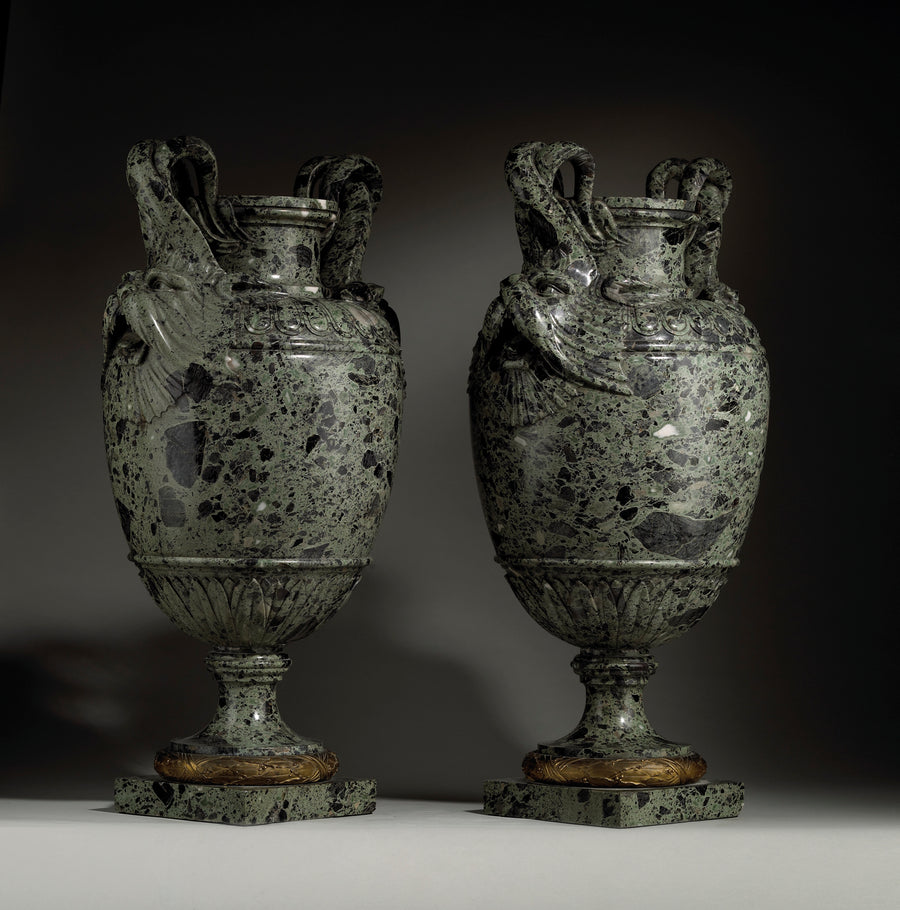
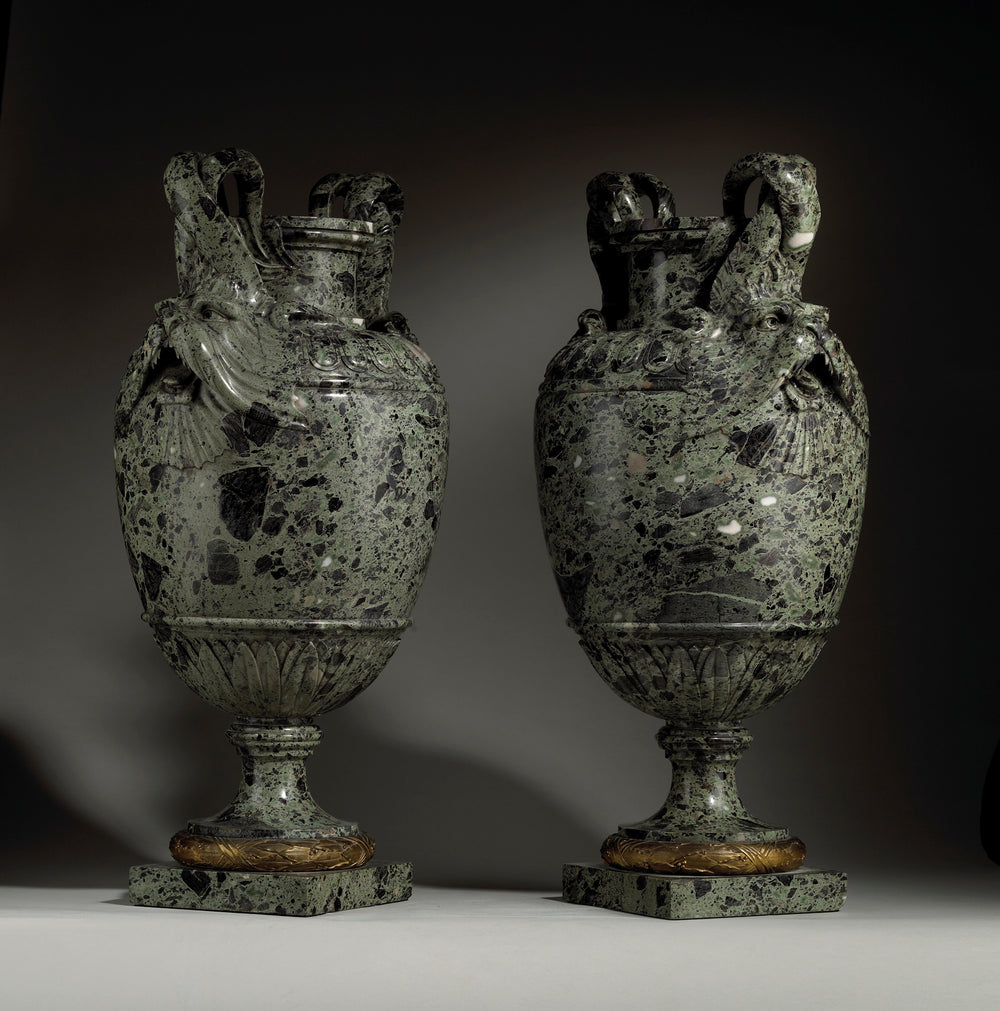
Swedish Porphyry
1 product
1 product
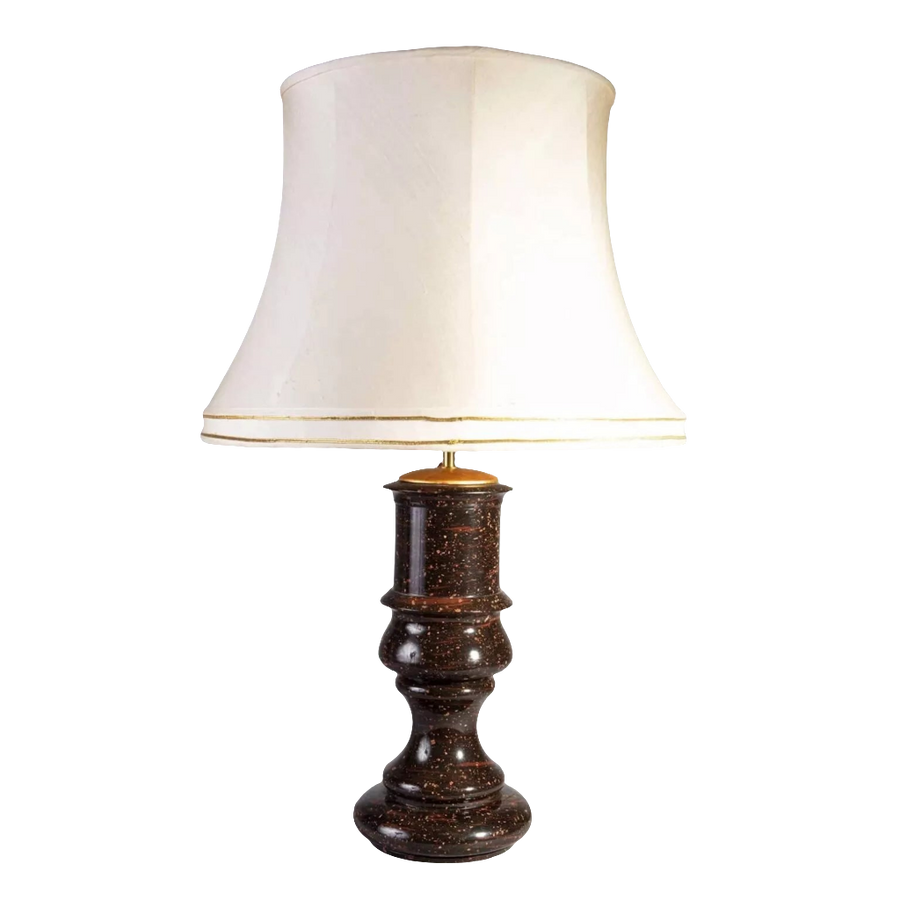
Swedish Porphyry, or Porfyr as it's locally known, is a remarkable ornamental stone with a vivid history and enduring allure. Unlike many other porphyries, Swedish Porphyry was not known in antiquity and made its first appearance in the decorative arts and architecture scene relatively recently, in the 18th century.
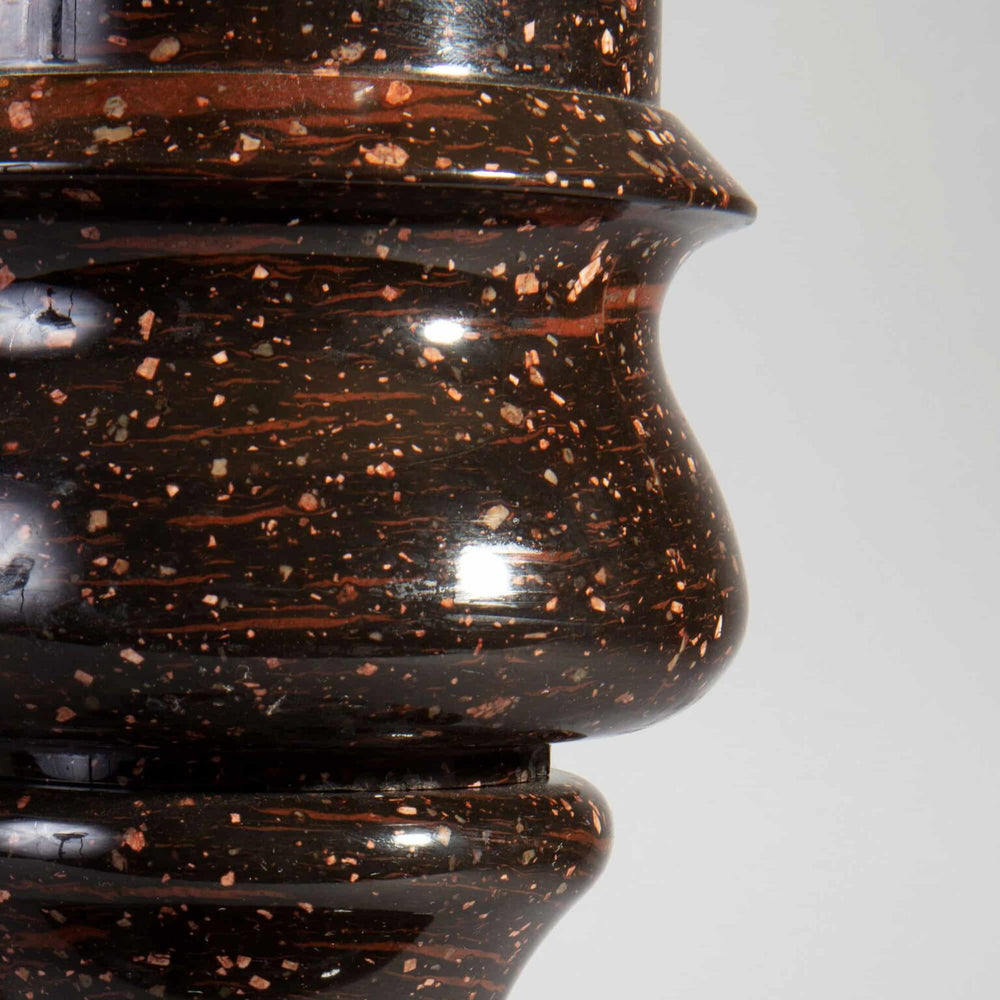
The stone, characterised by its robust nature and uniquely coloured inclusions, is sourced from the historic Älvdalen quarries of Dalarna, Sweden. The material’s primary colour can range from red to black, punctuated by crystals that lend an elegant visual texture.
Swedish Porphyry's rise to popularity coincided with the era of the Grand Tour in the 18th and 19th centuries. Although it wasn't a relic of the Ancient Roman culture that Grand Tour travelers sought, its distinctive beauty and exclusivity made it a desirable material for the European elite, contributing to its integration into the decorative arts of the period.
While the Grand Tourists were familiarising themselves with Swedish Porphyry, Faustino Corsi, an Italian lawyer and scholar with an avid interest in decorative stones, was amassing his notable collection. Corsi's catalogue includes several varieties of porphyry, and it does specifically include Swedish Porphyry reference number 795. His dedication to understanding and documenting these rare materials greatly advanced academic interest in ornamental stones.
This month we have 10% off the Regency Collection - checkout code REG10

Each item in our collection is sold with complimentary restoration within the purchase price. It is only released for delivery once it has been fully checked over and wax polished.

Introduce someone to Nicholas Wells Antiques—when they make a purchase of £10,000 or more, they will benefit form £500 off and you'll receive £500 credit toward your next purchase over £5,000.
A gesture of thanks, from one collector to another.