



A Collector's Guide to Acquiring a Fine Regency Centre Table
The pursuit of an exceptional antique is a journey of both profound excitement and understandable apprehension. For the collector navigating the listings for a Regency centre table for sale, the challenge lies not simply in finding examples, but in identifying a piece of genuine historical merit amidst a landscape that can include clever reproductions and heavily altered works. The fear of misidentifying a piece, or of acquiring an object whose story has been obscured by time or restoration, can cast a shadow over what should be a deeply rewarding experience, transforming a significant investment into a source of uncertainty.
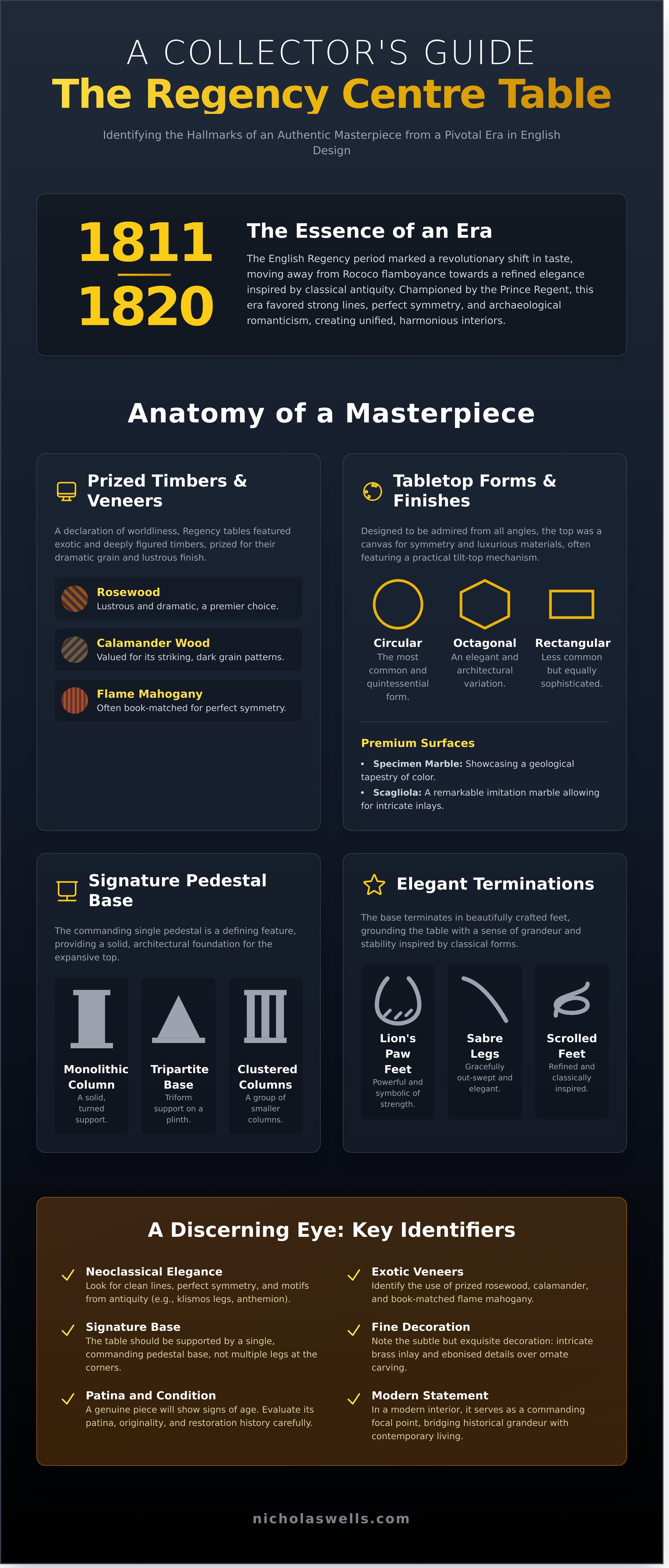
This collector's guide is conceived as a trusted companion for that very journey. Herein, we shall illuminate the defining characteristics of this celebrated period, from the use of exotic rosewood and calamander to the signature brass inlay and monopodial bases that distinguish a masterwork. We will explore the legacies of key makers and provide expert counsel on assessing condition, provenance, and value, empowering you to select with confidence a table that is not only an object of profound beauty but also a sound and enduring investment-a true cultural artifact destined to become the focal point of any distinguished interior.
Key Takeaways
- Understand the historical context of the English Regency to appreciate the revolutionary shift towards Neoclassical elegance that defines these magnificent tables.
- Learn to identify the quintessential design elements-from the characteristic circular top and tripod base to the use of exotic veneers and brass inlay-that signify an authentic period piece.
- Develop a discerning eye for patina, condition, and originality when evaluating a Regency centre table for sale to ensure you are acquiring a true piece of history.
- Discover how to position a Regency centre table as a commanding statement piece within a modern design scheme, bridging historical grandeur with contemporary living.
The Essence of the Regency Period: A Revolution in English Taste
The English Regency, a brief yet profoundly influential era spanning from approximately 1811 to 1820, represents a pivotal moment in the history of the decorative arts. Presided over by the Prince Regent-the future King George IV, a preeminent patron of unparalleled taste-this period marked a deliberate departure from the robust Palladianism of the earlier Georgian era and the flamboyant asymmetry of the Rococo. Instead, it championed a new aesthetic language rooted in neoclassicism, archaeological romanticism, and an unwavering pursuit of elegance. This was a revolution in taste that sought to create harmonious, unified interior schemes where every object, from the drapery to the finest Regency centre table for sale, contributed to a cohesive and intellectually conceived whole.
Historical Context and Cultural Influences
Paradoxically, the Napoleonic Wars, which restricted the Grand Tour, simultaneously intensified Britain's fascination with the classical world. The era's design vocabulary was directly informed by archaeological discoveries in Greece, Rome, and Egypt, introducing a lexicon of motifs such as the klismos leg, anthemion, and sphinx. Influential publications, most notably Thomas Hope's Household Furniture and Interior Decoration of 1807, provided a scholarly framework for these new forms, guiding patrons and craftsmen alike. This intellectual fervour reflected a broader cultural shift towards refined living, where one's home became a testament to cultivated taste and classical learning.
The Design Philosophy: Antiquity Reimagined
At its core, the Regency design philosophy was one of antiquity reimagined through a lens of sophisticated restraint. It favoured strong, clean lines, perfect symmetry, and forms with a distinctly architectural character, a set of principles that defines the Essence of the Regency Period itself. The ornate carving of previous decades gave way to more subtle and exquisite forms of decoration, such as intricate brass inlay, ebonised details, and the use of spectacular timber veneers like rosewood and calamander. This philosophy is perfectly embodied in pieces such as the quintessential Regency centre table for sale, where the quality of the materials and the superb craftsmanship were paramount. Furniture was conceived to be both magnificent in appearance and perfectly suited to its function, serving as a focal point within a meticulously curated interior.
Hallmarks of a Regency Centre Table: An Anatomical Study
The Regency centre table represents a pivotal moment in the history of English furniture, conceived not merely as a functional object but as the definitive focal point of a grand interior. Positioned centrally in an entrance hall or drawing room, it was designed to be admired from every angle, its bold architectural presence a distinct departure from the more delicate tripod tables of the preceding Georgian era. Its form, most often circular but also found in elegant octagonal or rectangular variations, established a new paradigm for social arrangement and aesthetic display, a role that distinguishes it from the heavier, more ornate furniture of the later Victorian period.
Choice of Timbers and Materials
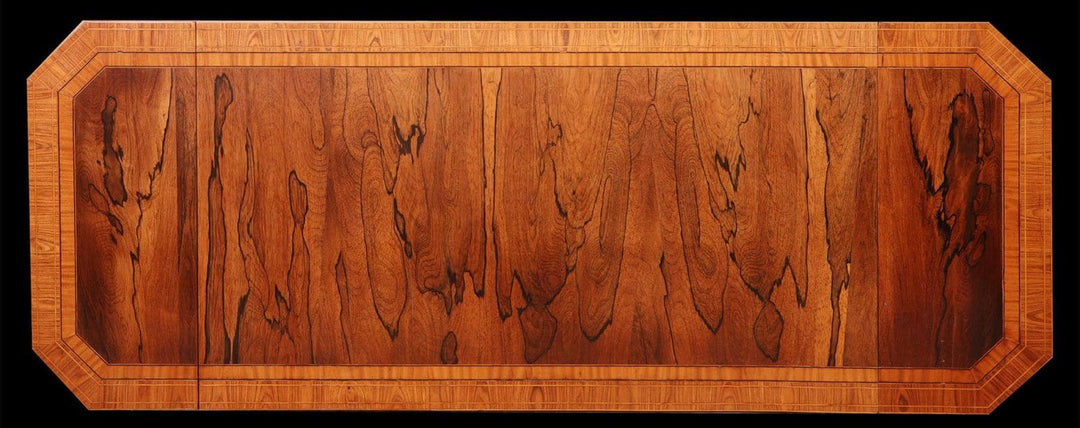
The materials chosen for a Regency centre table were a declaration of taste and worldliness. Cabinetmakers of the period displayed a marked preference for exotic and deeply figured timbers, with lustrous rosewood and calamander wood being especially prized for their dramatic grain. The finest flame mahogany remained a consistent choice for superb veneers, often book-matched to create symmetrical patterns. For the most magnificent commissions, tabletops were crafted from specimen marble, showcasing a geological tapestry of colour, or the remarkable imitation marble known as scagliola, which allowed for intricate and colourful inlaid designs.
Signature Forms and Structural Designs
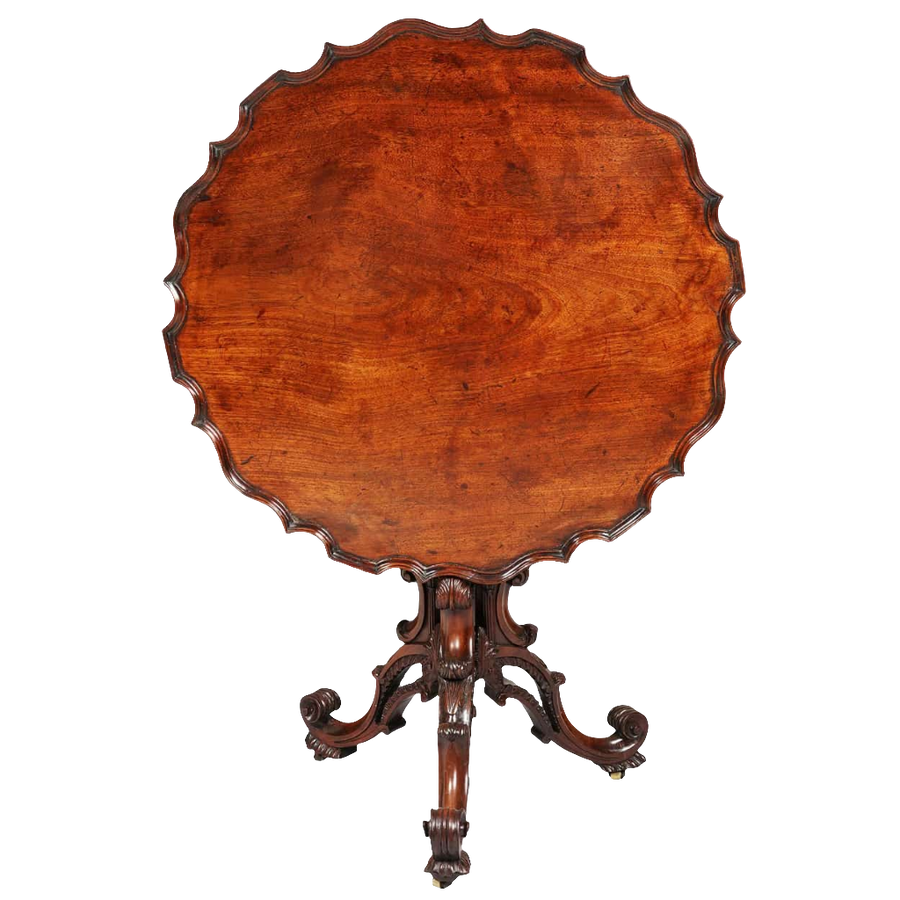
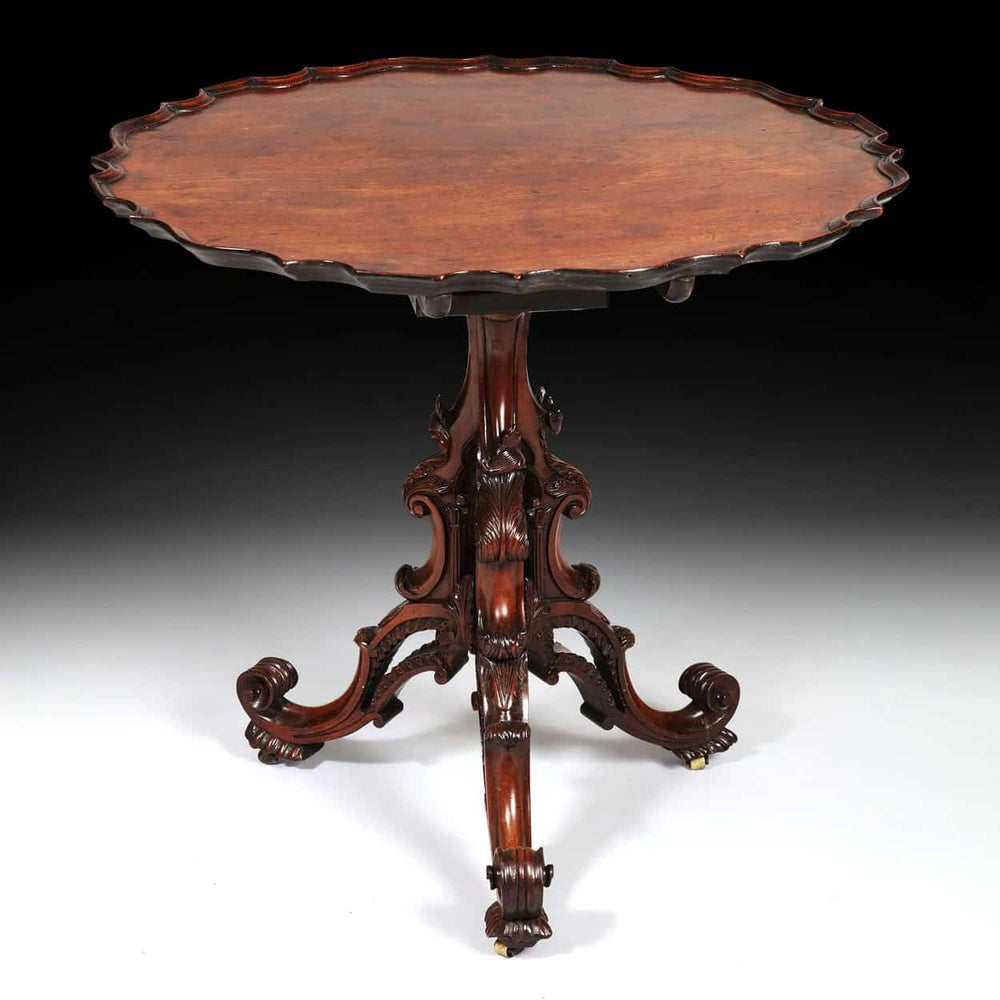
Structurally, the Regency centre table is defined by its commanding single pedestal base. This support could take several forms: a monolithic turned column, a tripartite or triform base on a platform plinth, or a cluster of columns. This solid foundation typically terminates in elegantly scrolled feet, powerful carved lion’s paw feet, or the gracefully out-swept sabre legs so characteristic of the period. Many of the finest examples feature a sophisticated tilt-top mechanism, a feat of engineering that allowed the table to be stored vertically against a wall, its surface displayed as a work of art. This blend of grandeur and practicality is a key reason any antique Regency centre table for sale remains an exceptionally coveted piece.
Decorative Motifs and Inlay Work
The ornamentation of these tables drew heavily from the archaeological discoveries of the time. The influence of antiquity, championed by visionary Design Influencers of the Era such as Thomas Hope, introduced a rich vocabulary of classical and Egyptian motifs. Surfaces were often embellished with intricate brass inlay in scrolling foliate patterns, a technique recalling the work of André-Charles Boulle. This was complemented by a lexicon of carved details, including Greek anthemions, palmettes, acanthus leaves, and lyres, alongside Egyptian revival elements like sphinx heads and papyrus motifs. The use of giltwood and ebonised details provided a dramatic and luxurious contrast, highlighting the table’s sculptural form.
Distinguishing Makers and Design Influencers of the Era
The Regency period witnessed a profound shift in the decorative arts, where the roles of designer and craftsman became increasingly distinct. London solidified its position as the epicentre of high-style furniture production, with a coterie of influential tastemakers and cabinet-making firms defining the era's aesthetic. This distinction, fuelled by the widespread circulation of pattern books, allowed a single designer’s vision to be executed by numerous skilled hands, thereby disseminating fashionable styles with unprecedented speed. When seeking an exceptional antique Regency centre table for sale, understanding its potential maker or design influence provides invaluable insight into its quality and historical significance.
The Architectural Vision of Thomas Hope
Thomas Hope was not a cabinet-maker but a collector, designer, and arbiter of taste whose intellectual rigour shaped the high style of the period. His aesthetic was rooted in a strict, almost academic, adherence to archaeologically correct forms from ancient Greece, Rome, and Egypt. Hope’s designs were bold, sculptural, and often monumental, conceived not as isolated objects but as integral components of a cohesive interior scheme. The profound nature of Thomas Hope's influence on Regency design established a new paradigm where furniture possessed architectural gravity.
The Commercial Elegance of Gillows of Lancaster and London
The firm of Gillows established an unimpeachable reputation for superlative craftsmanship and the use of the finest figured timbers, particularly Cuban mahogany. While capable of producing highly ornate pieces, Gillows is often celebrated for an understated elegance and mechanical ingenuity. Their work appealed not only to the aristocracy but also to the affluent professional classes. The firm's extensive and meticulously kept archives often allow for the precise identification of a piece, a crucial factor for connoisseurs seeking an authenticated period table.
Other Notable Cabinet-Makers and Their Styles
Beyond these titans, several other workshops made extraordinary contributions to the era's decorative arts. The market for a fine Regency centre table for sale is enriched by the diverse styles of these masters, each of whom interpreted the classical vernacular with a unique sensibility.
- George Smith: Highly influential, Smith published pattern books like A Collection of Designs for Household Furniture and Interior Decoration (1808), which popularised the Greco-Roman style in a more accessible form.
- John McLean & Son: Known for their supremely elegant and refined furniture, often incorporating delicate brass inlay and exhibiting a strong French Directoire influence.
- George Bullock: A champion of native British timbers, Bullock was celebrated for his use of oak, larch, and yew, often inlaid with intricate brass and ebony in bold, classical patterns.
- Morel and Seddon: A partnership of immense prestige, this firm received the extensive royal commission to furnish Windsor Castle for King George IV, producing pieces of unparalleled magnificence.
A Guide to Acquiring an Authentic Piece
To acquire an antique is to become the custodian of a tangible piece of history. It is an investment not only in superlative craftsmanship but in the narrative of a bygone era. Before embarking on this rewarding journey, it is essential to understand the distinctions between a true 'period' piece-made during the Regency era itself-and later items described as 'in the style of' or, more simply, modern reproductions. This knowledge is the foundation upon which a distinguished collection is built.
Assessing Condition and Authenticity
An authentic Regency table whispers its history through subtle yet discernible details. Look for the unmistakable signs of age: the deep, lustrous patina of a well-cared-for surface, the slight shrinkage of timber across two centuries, and the hand-cut dovetails and joinery characteristic of early 19th-century cabinet-making. While minor, sympathetic restorations are acceptable and often necessary for preservation, extensive alterations can detract from an item's integrity and value. A discerning eye will examine the quality of veneers and inlays, the table’s structural soundness, and, most importantly, the richness of its original colour and finish, which are nearly impossible to replicate.
The Significance of Provenance
Provenance-the documented history of an object's ownership-is what elevates a beautiful piece of furniture into a significant historical artifact. It provides an unbroken chain of custody, linking the table to previous collectors, distinguished houses, or even its original commissioner. This history can be established through makers' labels, original bills of sale, auction records, or inclusion in collection inventories. A Regency centre table with great provenance is not merely an object of beauty; it possesses a unique soul and a story that significantly enhances its desirability and value.
The Value of a Trusted Dealer
Navigating the complexities of the art market requires expertise. A specialist dealer acts as your trusted advisor, providing the expert vetting and authentication essential for a confident acquisition. When considering a fine Regency centre table for sale, their guidance on nuances of condition, historical context, and fair value is invaluable. Furthermore, a reputable dealer offers access to a network of master craftsmen for complimentary, sympathetic restoration and provides comprehensive assistance with worldwide shipping and installation, ensuring your piece arrives with the care it deserves.
This commitment to excellence and historical integrity is the guiding principle behind every piece we select. We invite you to explore our curated collection of Regency Centre Tables and discover an extraordinary artifact for your interior.
Styling a Regency Centre Table in the Modern Interior
The Regency centre table, once the formal heart of a grand entrance hall, transcends its historical origins to become a powerful statement piece in the contemporary interior. Its inherent symmetry, superb craftsmanship, and rich materiality allow it to anchor a room with unparalleled grace, establishing a focal point of distinguished character in an entrance hall, a formal living room, or even a spacious dining area.
Creating Elegant Contrast
The true genius of integrating an antique into a modern setting lies in the art of contrast. The dialogue created between historical form and contemporary design can be utterly captivating. Consider the following approaches:
- Colour and Form: Juxtapose the deep, lustrous patina of a mahogany or rosewood table against walls of a stark, gallery-white or a deeply saturated modern hue. This allows the table's classical silhouette to be appreciated as a sculptural object.
- Art and Object: Place a piece of modern sculpture or a bold abstract painting nearby. The table's neoclassical rigour provides a perfect foil for the freedom of contemporary art, creating a sophisticated visual tension.
- Light and Texture: Illuminate the table with a contemporary lighting fixture-a sculptural pendant or discreet architectural spotlights-to highlight its fine marquetry or ormolu mounts. Ground it by placing it upon a textured sisal rug to create a rich sensory experience.
Harmonious Pairings and Placement
Achieving a harmonious composition requires careful consideration of scale and accompaniment. A centre table should command its space without overwhelming it. In a living room, it serves as a sophisticated and often more practical alternative to a low coffee table, its height being ideal for displaying a curated collection of art books or treasured objets d'art. When selecting seating, one might pair it with sleek, modern chairs for a dynamic interplay of styles, or with elegant period-inspired pieces to create a more cohesive, classical narrative.
Ultimately, the introduction of an antique into a modern home is an act of curation. It is an investment in an object with a soul, a piece that brings with it a story and an enduring sense of quality. Each Regency centre table for sale in our collection offers a unique opportunity to acquire not merely a piece of furniture, but a piece of history that will profoundly elevate your interior. We invite you to explore our collection and find the extraordinary piece that will define your space.
An Enduring Legacy for the Discerning Collector
The journey to acquiring a Regency centre table is one of connoisseurship, demanding a discerning eye for the period's distinctive neoclassical motifs and an appreciation for the inimitable patina that only centuries can bestow. Understanding the hallmarks of master craftsmanship and the nuances of provenance transforms the search for a Regency centre table for sale from a mere transaction into a curated acquisition. This knowledge empowers you to select not merely a piece of furniture, but a significant cultural artefact destined to become a focal point within your home.
To that end, we invite you to view our exceptional collection of Regency Centre Tables for sale. Each piece in our possession is expertly curated for its historical importance and aesthetic merit. We are pleased to offer complimentary, in-house restoration on all purchases, ensuring your chosen piece arrives in magnificent condition, alongside fully insured worldwide shipping and logistics management handled by our dedicated team. May your search be as rewarding as the timeless elegance the right piece will undoubtedly bring to your interior.
Frequently Asked Questions
What is the key difference between Regency and Georgian style furniture?
While both periods draw from classical antiquity, Georgian furniture often exhibits a heavier, more architectural character, rooted in Palladian principles and the masterful carving of makers like Chippendale. The Regency style, by contrast, embraces a more refined and archaeological Neoclassicism, resulting in purer lines, the use of exotic veneers like rosewood, and elegant decorative motifs such as brass inlay. This reflects a sophisticated shift towards lightness and scholarly elegance in design.
How can I verify the authenticity of a Regency centre table?
Verifying authenticity requires a discerning eye for the nuances of period craftsmanship. Examine the construction for hand-cut dovetails and the use of single, wide planks of timber, which are hallmarks of the era. A genuine piece will possess a deep, natural patina developed over two centuries, distinct from a modern applied finish. When considering a Regency centre table for sale, consulting a reputable dealer who can provide detailed provenance is the most assured path to acquiring a genuine article.
What is a typical price range for a good quality Regency centre table?
The value of a fine Regency centre table is determined by a confluence of factors, including the maker's renown, the rarity of its design, and the quality of its timber. A distinguished example in well-figured mahogany or rosewood will command a significant price, while a piece crafted from an exceptionally rare wood like calamander, especially with documented provenance, represents the apex of the market. True value lies in this unique combination of artistry and history.
How does professional restoration affect the value of an antique table?
Professional restoration, when executed with scholarly sympathy, serves to preserve an antique's integrity and value. The objective is conservation-stabilising the structure and gently reviving the finish without erasing the distinguished patina of age. Conversely, aggressive restoration that replaces original elements or strips away the historic surface can be profoundly detrimental. The hand of a master restorer should be almost invisible, ensuring the piece's story and soul remain intact for future generations.
Are Regency centre tables practical for everyday use?
Regency centre tables were conceived as focal points for grand interiors and remain eminently practical for this purpose today. While their robust construction allows for considered use, they are best suited for display or light entertaining rather than the rigours of daily family life. Placed in an entrance hall or drawing room, a fine antique table serves not merely as furniture but as a magnificent and functional piece of history, deserving of appropriate care and reverence.
What are the best woods to look for in a Regency centre table?
The Regency period is celebrated for its use of spectacular, highly figured timbers. The most desirable examples are often crafted from dense Cuban mahogany or Brazilian rosewood, prized for their rich colour and grain. For unparalleled rarity and decorative impact, one should seek out tables made from calamander or coromandel wood, whose dramatic figuring was exceptionally valued. Fine satinwood, amboyna, and pollard oak were also frequently employed for their superb decorative qualities, often as veneers or inlays.


Leave a comment