



Antique Centre Tables: A Guide to History, Style, and Placement
In the grand theatre of the historic interior, few pieces command attention with such quiet authority as the centre table. Yet its specific function and distinguished character can often be misunderstood, lost between the grand scale of the dining table and the ancillary role of the console. This guide is dedicated to illuminating the unique legacy of antique centre tables, those magnificent articles of furniture designed not merely for utility, but as the very heart of a room’s composition-an object of such artistic merit that it commanded the space around it.
We invite you to journey through their rich history, from the opulent courts of France to the refined drawing rooms of Georgian England, exploring the evolution of their form and the superb craftsmanship that defines them. Here, you will discover how to distinguish seminal styles, identify the markers of quality and authenticity, and gain the confidence to integrate these extraordinary statement pieces into the narrative of your own contemporary interior, ensuring your investment is one of both beauty and historical significance.
Key Takeaways
- Learn how the centre table's historical role as a freestanding focal point informs its ideal placement within a modern interior scheme.
- Discover how to distinguish between major historical styles by recognizing the defining forms, materials, and ornamentation of each period.
- Move beyond simple aesthetics and learn the essential criteria-from provenance to patina-for making a confident and informed investment in antique centre tables.
- Master the art of integrating a historical statement piece into a contemporary setting, creating a sophisticated dialogue between past and present.
The Defining Role of the Antique Centre Table
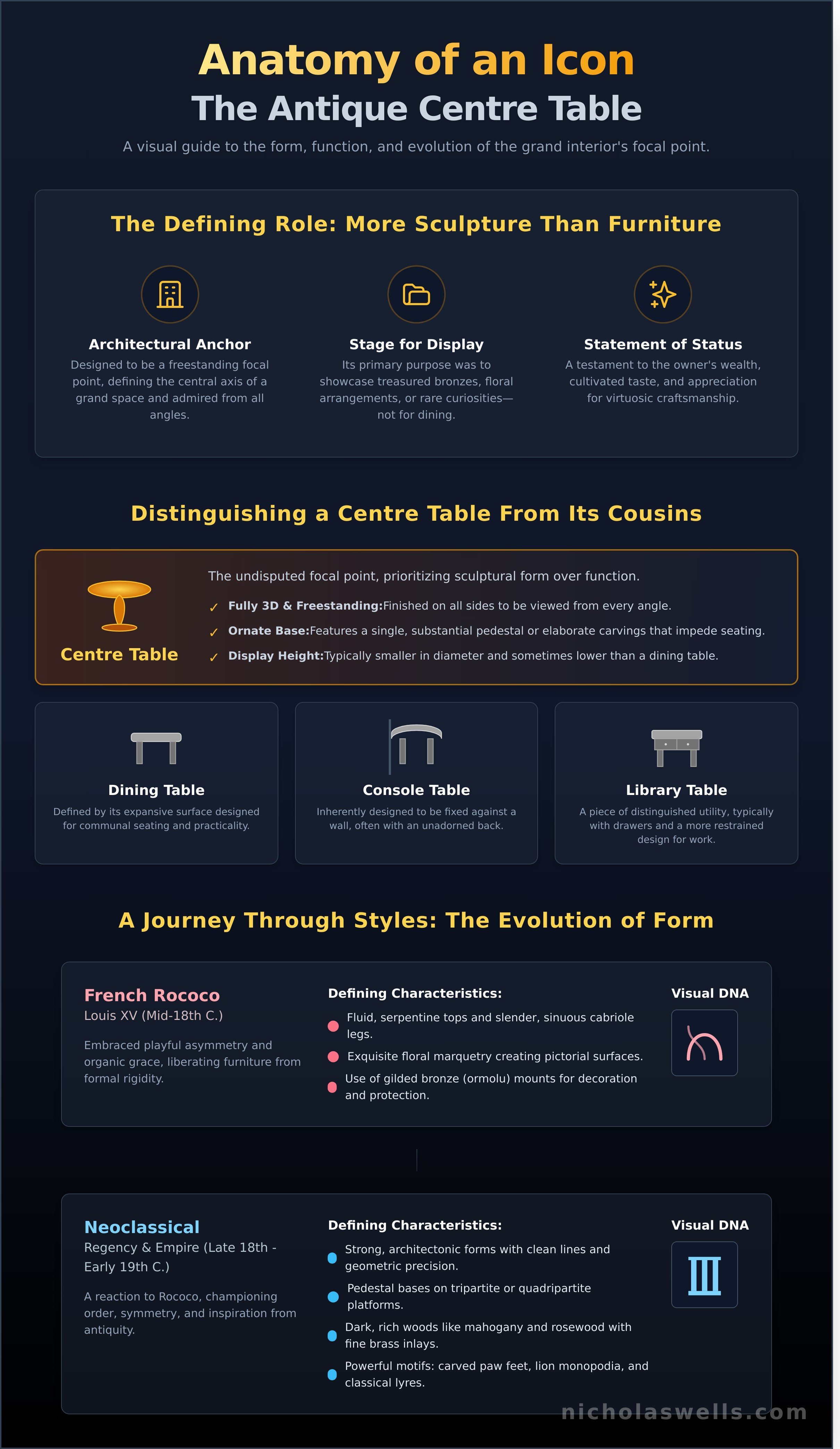
Conceived not merely as furniture but as a pivotal statement of virtuosic craftsmanship, the antique centre table emerged as the undisputed focal point of grand reception rooms, salons, and entrance halls. Unlike its utilitarian counterparts, which were often placed against a wall, this table was designed to be admired from every conceivable angle, a freestanding sculpture in its own right. Its purpose was primarily one of display-a testament to the owner’s status, wealth, and cultivated taste. While the general history of tables charts a course often dictated by practicality, the centre table represents a magnificent deviation, where aesthetic grandeur was the sole and celebrated objective. This is most evident in its structure, which frequently features a single, substantial pedestal or an elaborate base of carved, gilded, or inlaid splendor, unencumbered by the need to accommodate seated guests.
Function Follows Form: The Purpose of a Centrepiece
The surface of a centre table was a curated stage for displaying objects of profound beauty or significance. It was here that a treasured bronze sculpture, a magnificent floral arrangement, or a collection of rare curiosities would be placed for maximum impact. In doing so, the table served as a powerful architectural anchor, defining the central axis of a large space and orchestrating the flow of movement around it. Its scale and height were intentionally set to be presentational, never intended for the practicalities of dining.
Distinguishing a Centre Table from its Cousins
The specific identity of antique centre tables becomes clearer when contrasted with other period forms. Each type of table possessed a distinct soul and purpose, a nuance critical for the discerning collector to appreciate:
- Versus the Dining Table: A dining table is defined by its expansive surface and height, designed to comfortably seat numerous guests. The centre table is typically smaller in diameter and often lower, with an ornate base that would impede seating, prioritizing sculptural form over communal function.
- Versus the Console Table: The most fundamental difference lies in placement and finish. A console table is inherently semi-circular or rectangular and designed to be fixed against a wall, frequently with an unadorned back. The centre table, by contrast, is a fully realised, three-dimensional object, meticulously finished on all sides.
- Versus the Library Table: While also often freestanding, the library or writing table is a piece of distinguished utility, typically featuring drawers, a leather-inset top, and a more restrained design to facilitate scholarly work. The centre table is free from such practical constraints, allowing for far more extravagant use of marquetry, pietre dure, or ormolu mounts.
A Journey Through Styles: The Evolution of the Centre Table
The history of the centre table is a compelling narrative of evolving aesthetic ideals, where each period left an indelible mark upon its form. To study the stylistic development of antique centre tables is to witness a microcosm of European design history, from the unrestrained exuberance of the Rococo to the stately, intellectual rigour of Neoclassicism. As social customs and artistic tastes shifted, so too did the table’s materials, silhouette, and decorative language, transforming it from a mere piece of furniture into a definitive statement of its era.
French Rococo and Louis XV Flourish
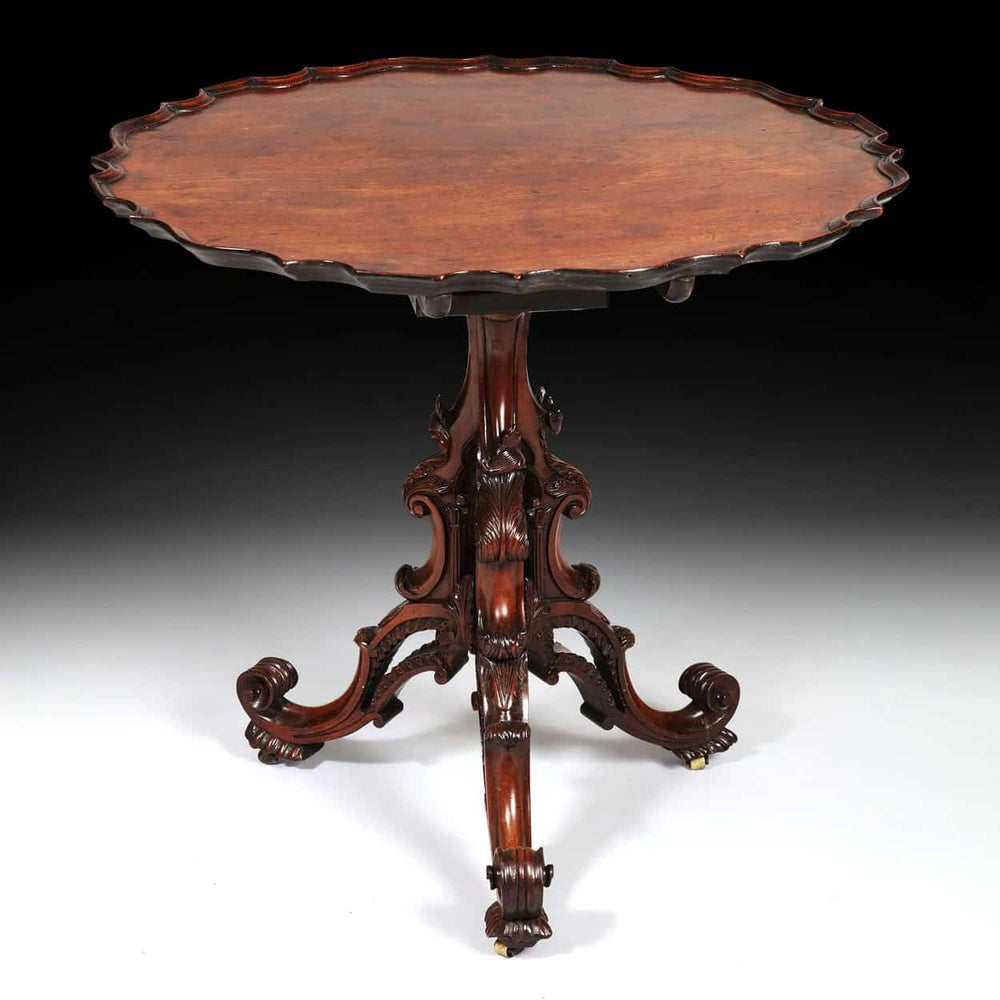
The mid-18th century, under the reign of Louis XV, saw the centre table embrace the Rococo's playful asymmetry and organic grace. Liberated from formal rigidity, these tables were distinguished by their fluid, serpentine tops and slender, sinuous cabriole legs. Master ébénistes adorned them with exquisite floral marquetry and gilded bronze mounts, or ormolu, creating pieces that were both functional and sculptural. This style's influence was so profound that it was reinterpreted for generations, as seen in superb examples like this Rococo Revival style center table, which captures the spirit of its 18th-century predecessors.
The Neoclassical Ideal: Regency and Empire Elegance
In stark contrast to the Rococo, the Neoclassical period of the late 18th and early 19th centuries championed order, symmetry, and inspiration drawn from the archaeological discoveries of antiquity. English Regency and French Empire antique centre tables are characterized by their strong, architectonic forms. Pedestal bases, often on tripartite or quadripartite platforms, became standard. Cabinetmakers favoured dark, richly figured woods like Cuban mahogany and rosewood, often enhanced with fine brass inlays, gilt-metal mounts, and powerful motifs such as carved animal-paw feet, lion monopodia, and classical lyres.
Italian Grandeur: The Art of Pietra Dura and Scagliola
Italian workshops produced some of the most spectacular centre tables, celebrated not for their frames but for their magnificent tops. The Florentine art of pietra dura-an intricate mosaic of precisely cut, polished gemstones depicting landscapes, flowers, or geometric patterns-created surfaces of unparalleled luxury. A less costly but equally impressive alternative was scagliola, a technique using pigmented plaster to brilliantly imitate marble and stone inlay. These immensely heavy tops demanded substantial support, typically a heavily carved and gilded base that was a work of art in its own right.
Materials and Craftsmanship: Hallmarks of an Exceptional Piece
To truly comprehend the value of an antique table, one must look beyond its form to the very substance from which it is made. The choice of materials and the mastery of their application are the silent signatures of the cabinetmaker, communicating a legacy of quality that transcends time. It is in these details-the grain of the wood, the precision of an inlay, the lustre of the finish-that a piece’s true artistry and historical significance are revealed, offering a tactile and visual narrative of its distinguished past.
The Nobility of Timbers and Veneers
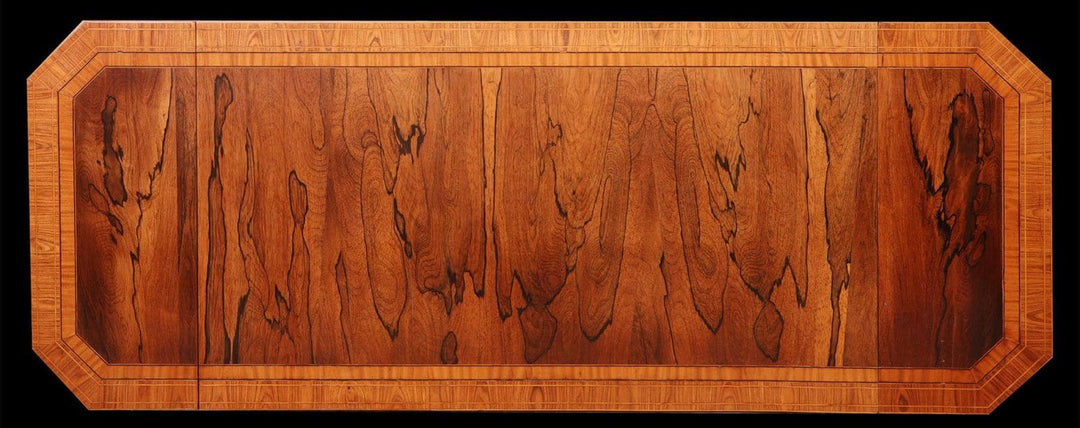
The structural foundation of many of the finest antique centre tables is solid Cuban mahogany, a timber prized for its exceptional density and the deep, resonant colour it develops over generations. Upon this noble canvas, master craftsmen applied veneers of exotic timbers-the dramatic figuring of rosewood, the golden shimmer of satinwood, or the intricate burr of amboyna. These were often sliced thinly and ‘book-matched’ to create breathtaking symmetrical patterns that transform a simple surface into a masterpiece of natural art.
The Art of Inlay and Embellishment
Decorative techniques further elevated these works into objects of profound beauty. One must appreciate the distinction between marquetry, the art of creating intricate pictorial scenes with wood veneers, and parquetry, which employs geometric patterns to create a sense of rhythm and order. For unparalleled opulence, one might discover Boulle work, an exquisite and laborious inlay of tortoiseshell and brass. Finally, gilt-bronze mounts, or ormolu, were not merely decorative flourishes but also served a crucial protective function, safeguarding vulnerable corners and edges with sculpted, gilded artistry.
The Surface and the Soul: Understanding Patina
Perhaps the most intangible yet coveted quality of a superior antique is its patina. This is not a finish that is applied, but rather the accumulated history of the surface-a subtle lustre and depth of colour developed over centuries of polishing, exposure to light, and human touch. An untouched, honest patina is the ultimate testament to a piece’s authenticity and is highly prized by discerning collectors. It possesses a soft, complex quality that cannot be replicated by the crude, uniform appearance of modern artificial distressing.
Styling in the Modern Interior: A Timeless Statement
An antique centre table is far more than an article of furniture; it is a historical anchor, an object of soul and substance that introduces a narrative unachievable with contemporary pieces alone. Its placement within a modern interior is a deliberate act of curation, a confident statement that bridges epochs and elevates the entire design scheme from the decorated to the truly distinguished. The inherent versatility of these tables allows them to command attention and instil a sense of permanence in any room they grace.
The Grand Entrance: Anchoring a Foyer
In a spacious hall or foyer, a circular centre table can masterfully soften architectural lines, creating an elegant and welcoming sense of flow. When topped with a dramatic, large-scale floral arrangement or a significant piece of sculpture, it immediately establishes a tone of refined sophistication. This first impression is a powerful one, speaking to an established taste and a deep appreciation for objects of extraordinary quality and historical importance.
The Heart of the Drawing Room
Positioned at the nucleus of a seating arrangement, the centre table becomes a highly functional work of art. It serves not only as a handsome platform for curated art books and objets d'art but also as a gracious surface for serving drinks, transforming the room into a hub of civilised conversation. In grand, open-plan residences, its substantial presence can masterfully delineate the space, creating more intimate and purposeful zones within a larger area.
While these tables traditionally display sculptures or books, they are also an ideal stage for modern, personal touches. For a contemporary contrast, services like WoodSnap can print your favorite photos onto wood, adding a layer of personal history to the room's historic centerpiece.
Juxtaposition: Mixing Antique and Contemporary
The true genius of styling antique centre tables in contemporary settings lies in the art of juxtaposition. An exceptionally ornate Rococo or Neoclassical table, with its intricate marquetry and gleaming ormolu mounts, can serve as a magnificent 'jewel' within an otherwise minimalist interior. Pairing such a piece with clean-lined, modern seating creates a dynamic and deeply personal aesthetic-a curated dialogue between past and present.
Illumination is paramount in this context; a carefully chosen chandelier suspended above or a discreet spotlight can accentuate the rich patina and masterful craftsmanship of the wood, transforming the table into the room's undeniable focal point. Each piece tells a unique story, waiting to become a part of yours. Discover a piece with a story for your home.
A Connoisseur's Guide to Acquiring a Centre Table
To invest in an antique centre table is to acquire not merely a piece of furniture, but a significant cultural artifact with a story to tell. For the discerning collector, the journey of acquisition is as important as the object itself. Moving beyond pure aesthetic appreciation requires a cultivated eye and an understanding of the key principles that separate a decorative item from a lasting legacy piece. This guide illuminates the essential considerations, equipping you to purchase with the confidence and authority of a true connoisseur.
The Significance of Provenance
Provenance-the documented history of an object's ownership-is the very soul of an antique. It provides an unbroken chain of custody, transforming an anonymous object into one with a rich, traceable narrative. Seek documentation such as original receipts, inclusion in historic inventories, auction records, or a detailed family history. A distinguished provenance, perhaps linking the table to a notable maker or a historic house, not only confirms authenticity but can elevate its historical and monetary value exponentially.
Assessing Condition and Restoration
An antique's journey through time inevitably leaves its mark. A connoisseur learns to distinguish between sympathetic restoration, which preserves the object's integrity, and major alterations that diminish its originality and worth. It is crucial to examine key areas for authenticity:
- Construction: Observe the joinery for period-correct techniques, such as hand-cut dovetails, and examine the timbers for appropriate age and character.
- Hardware: Original handles, locks, and ormolu mounts are significant indicators of authenticity and are highly prized.
- Patina: Look for the subtle, warm glow of a genuine, time-worn finish-a lustrous quality that is impossible to replicate.
Understand that some expert restoration is not only acceptable but often necessary to ensure a piece's stability and beauty for generations to come.
The Value of a Specialist Dealer
Navigating the complexities of the antiques market is best done with a trusted guide. A reputable specialist dealer offers more than just inventory; they provide profound expertise, a guarantee of authenticity, and access to extraordinary antique centre tables that have been meticulously vetted and researched. Their discerning eye ensures each piece is of superior quality and historical merit. Furthermore, such specialists often manage professional restoration and worldwide shipping, providing a seamless acquisition experience. This commitment to excellence is the foundation upon which collections of distinction are built, a principle we uphold in every piece presented at Nicholas Wells Antiques.
The Centre Table: An Enduring Statement of Timeless Elegance
As we have explored, the centre table is far more than a mere piece of furniture; it is a historical narrator and a definitive statement of taste. From the opulent designs of the Baroque to the refined lines of the Neoclassical, its evolution reflects the very pinnacle of period craftsmanship. Possessing one of these magnificent pieces is to own a focal point of unparalleled character, an anchor that brings both history and sophisticated structure to any interior. The enduring appeal of antique centre tables lies in this unique ability to bridge the grandeur of the past with the aesthetic demands of the present.
For the connoisseur ready to acquire such a distinguished piece, the journey should be one of confidence and delight. Curated by a leading London specialist, each item in our collection is an artifact of extraordinary provenance and quality. We invite you to explore our collection of exceptional antique centre tables, where every purchase includes complimentary restoration and is delivered with fully insured, worldwide shipping. Allow us to assist you in discovering the perfect piece to begin its next chapter within your home.
Frequently Asked Questions
What is the difference between an antique centre table and a guéridon?
The principal distinction between these two forms lies in their scale and intended function. A centre table is a substantial piece of furniture, designed as the commanding focal point of a grand salon or entrance hall, often showcasing a significant vase or sculpture. In contrast, a guéridon is a much smaller, more delicate table, typically with a single pedestal support. Its purpose was more intimate: to hold a candelabrum, a single drinking glass, or a small, cherished object.
Can I use an antique centre table for dining in a small space?
While many antique centre tables can be sympathetically integrated into a modern dining arrangement, one must proceed with careful consideration. It is imperative to verify the table's height for comfortable seating and, most crucially, to protect its delicate surface. We strongly advise commissioning a bespoke piece of glass to lay over the top, which preserves the intricate marquetry or polished finish from the rigours of daily use without obscuring its inherent beauty and historical character.
How do I properly care for a valuable antique table with a marquetry top?
The care of a fine marquetry top is an exercise in preservation. Regular dusting with a soft, lint-free cloth is essential, avoiding any moisture or abrasive chemical polishes which can irreparably damage the delicate veneers and French polish. The most significant threats are environmental: shield the piece from direct sunlight to prevent fading and maintain a stable ambient humidity to avert the lifting or cracking of the intricate inlaid woods. This ensures the table's historic integrity remains uncompromised.
What are the most sought-after periods for antique centre tables?
Among connoisseurs, several periods are particularly revered for their exceptional contributions to the form. The English Regency is celebrated for its elegant, often calamander or rosewood tables with fine brass inlay, embodying a certain neoclassical purity. Simultaneously, the French Empire period produced magnificent examples, characterized by their bold monumentality, rich mahogany veneers, and elaborate ormolu mounts. The Biedermeier period is also highly prized for its architectural forms and use of beautifully figured fruitwoods.
How can I tell if the ormolu mounts on a table are original?
Ascertaining the originality of ormolu requires a discerning eye. Authentic period mounts exhibit a superior crispness in their casting and the meticulous hand-chased details that modern reproductions lack. Examine the gilding; original mercurial gilding possesses a depth and subtle variation in colour that is difficult to replicate. Furthermore, look for signs of genuine age: a gentle rubbing to the high points, a natural patina in the recesses, and period-appropriate fixings rather than modern screws.
What is a 'tilt-top' centre table and what was its purpose?
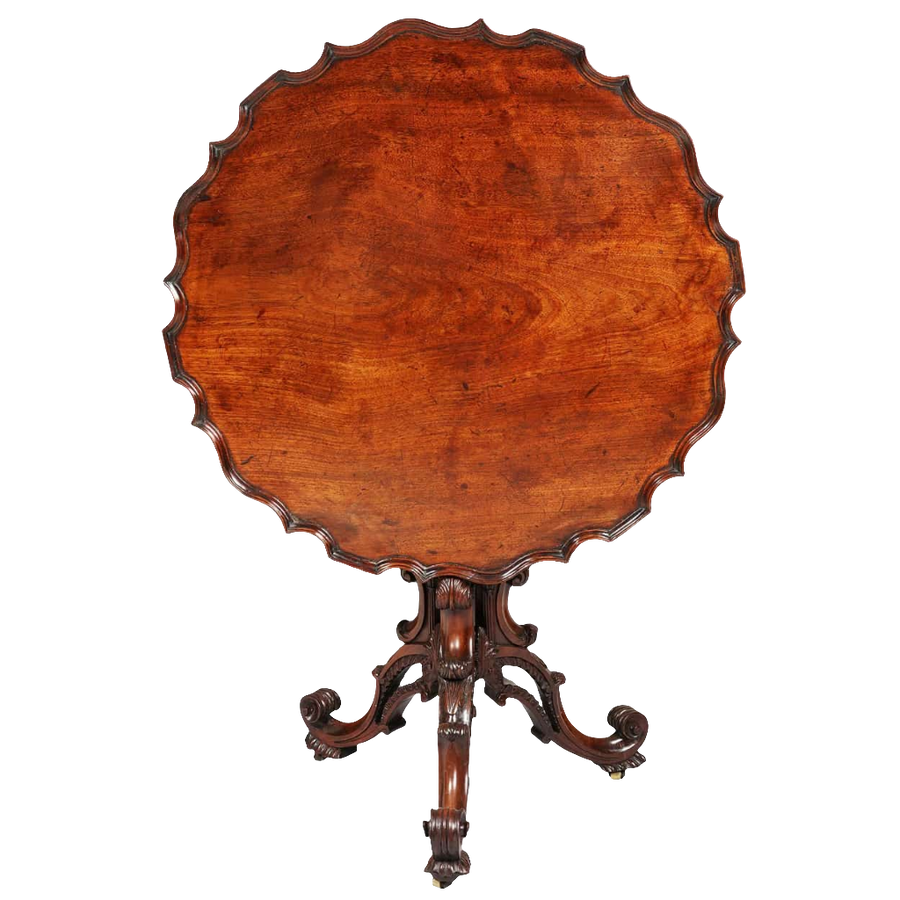
A tilt-top table is an ingenious piece of furniture, engineered with a hinged mechanism that allows the circular or shaped top to be pivoted into a vertical position. This clever design served a dual purpose in 18th and 19th-century interiors. Primarily, it was a practical, space-saving solution, enabling the table to be stored neatly against a wall when not in use. Secondarily, when tilted, the often beautifully decorated top could be displayed as a decorative screen or work of art.


Leave a comment