



Antique Convex Mirrors in London: A Connoisseur’s Guide to Regency Elegance
Could a single circular pane of silvered glass, held within a hand-carved 19th-century giltwood frame, serve as the silent, watchful guardian of a room's entire architectural history? Many discerning collectors in New York and London recognise that a true Regency piece is more than a mere reflective surface; it's a sculptural "eye" that captures the soul of an interior through its unique distortion and historical depth. When searching for the finest antique convex mirrors London galleries offer, the anxiety of encountering modern reproductions or the fear of shipping fragile glass to the United States often clouds the excitement of discovery.
At Nicholas Wells Antiques, we understand that true luxury resides in the preservation of original surface patina and the scholarly verification of provenance. This guide will demystify the nuances of these magnificent objects, from the depth of a 200-year-old water-gilt finish to the intricate mechanics of secure international delivery. You'll discover the artistry behind our current collection of eight rare English Regency mirrors and learn how we navigate the complexities of 2026 export regulations and the 10% US import tariff. We'll examine the investment value of pieces that currently command prices up to £35,000 and explain how our professional fine art shippers ensure a seamless journey from our Piccadilly showroom to your home in the Hamptons or San Francisco. Use code REG10 to enjoy a 10% discount on our Regency Collection as you begin your journey into the extraordinary.
Key Takeaways
- Understand how the panoramic distortion of a 19th-century lens acts as a "room summariser," harmonising the architectural details of a sophisticated interior.
- Distinguish between authentic Regency history and common "Butler's Mirror" folklore to appreciate the true craftsmanship of period giltwood frames.
- Learn to identify the unique "sparkle" of original mercury glass and the critical importance of preserving surface patina for long-term investment value.
- Discover the process of acquiring antique convex mirrors London through Nicholas Wells Antiques, including the logistics of secure shipping to the US.
- Gain expert insights on positioning these rare decorative antiques as sculptural focal points within contemporary New York, Texas, or California estates.
The Allure of Antique Convex Mirrors in London’s Fine Art Market
Within the grandest drawing rooms of the 19th century, the convex mirror emerged as a singular triumph of both physics and decorative artistry. Unlike the standard flat pier mirror, which seeks to replicate reality at a one-to-one scale, the convex mirror acts as a panoramic instrument of light. These objects rely on specific convex mirror principles, where a protruding, silvered lens provides a wide-angle view that can encompass an entire interior within a single, gilded frame. For the discerning collector, searching for antique convex mirrors London reveals a market steeped in the tradition of the English town house, where these pieces were once the ultimate symbol of Regency sophistication.
The unique appeal of the "fish-eye" perspective lies in its ability to serve as a sculptural focal point rather than a mere functional object. In luxury interior design, these mirrors are frequently referred to as "room summarisers." By condensing the complex architecture of a New York penthouse or a historic Texas estate into a miniature, curved landscape, they pull together disparate design elements with an effortless grace. At Nicholas Wells Antiques, we view our collection of antique mirrors not merely as inventory, but as significant cultural artifacts that bridge the gap between historical grandeur and modern aesthetic demands.
London: The Historic Hub for Regency Convex Mirrors
For centuries, the area surrounding Mayfair and Piccadilly has served as the global epicentre for the fine art and antique trade. This historic pocket of Westminster was where the most skilled carvers and gilders of the 1800s established their workshops, catering to an aristocracy that demanded nothing less than perfection. Nicholas Wells Antiques continues this distinguished legacy from our location at 169 Piccadilly. While our showroom is available to visit by appointment, we operate primarily as a global online gallery, ensuring that our curated selection of 18th and 19th-century treasures is accessible to collectors in San Francisco, Greenwich, and beyond. We've refined the "By Appointment" model to provide a personal, scholarly service that meets the requirements of a digital world, backed by the assurance of professional fine art shippers for every international acquisition.
The Distinction Between Period Antiques and Reproductions
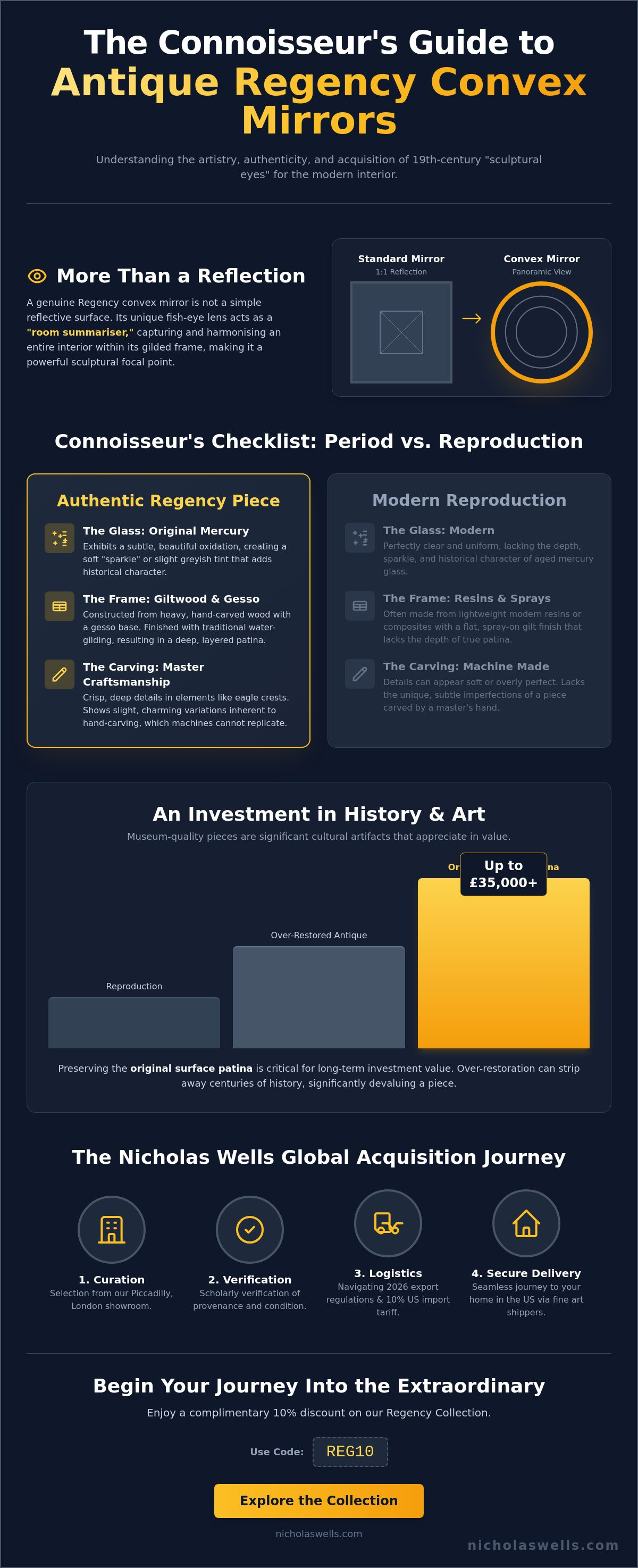
Acquiring a museum-quality piece requires a keen eye for the nuances of 19th-century craftsmanship. The most critical factor for any serious connoisseur is the "original surface." A genuine Regency mirror will possess a depth of patina that modern resins and spray-on gilding simply cannot replicate. When evaluating a piece, one must consider the following markers of authenticity:
- The Glass: Period mercury glass often exhibits a subtle, beautiful oxidation, manifesting as a soft "sparkle" or slight greyish tint that adds character without obscuring the reflection.
- The Frame: Authentic 19th-century examples are constructed from hand-carved wood and gesso, finished with traditional water-gilding. The weight of these materials is significantly greater than modern, lightweight reproductions.
- The Carving: Look for the crispness of detail in the eagle cresting or the reeded ebonised slips. Hand-carved elements show slight, charming variations that no machine can mimic.
Preserving the unique antique surface is paramount. Over-restoration can often devalue a piece by stripping away the history that has accumulated over two centuries. We prioritise the conservation of history, ensuring that every giltwood frame in our collection retains the soul and integrity that makes it a true work of art.
A History of Reflection: From Regency Giltwood to the ‘Butler’s Mirror’
The emergence of the convex mirror as a quintessential element of the English interior occurred during the late Georgian and Regency periods, roughly between 1800 and 1830. This era marked a departure from the linear constraints of earlier 18th-century design, favouring instead the bold, sculptural forms that defined the Regency aesthetic. As collectors seek out antique convex mirrors London dealers often highlight how these pieces became a staple of the English Country House, offering a panoramic perspective that no flat mirror could replicate. The pervasive myth of the "Butler’s Mirror" suggests these objects were installed to allow staff to spy on dinner guests without turning their heads; however, the optical distortion of a period lens made such surveillance impractical. Their true value lay in the diffusion of candlelight, a necessity in the dimly lit town houses of the early 19th century.
The design of these mirrors was heavily influenced by the discoveries of the Grand Tour, incorporating classical motifs that resonated with the scholarly elite of the day. It's common to find frames adorned with the hippocampus, sea monsters, or the triumphant imperial eagle, reflecting a fascination with antiquity and naval prowess. A superb example of this craftsmanship is the Regency convex mirror at the V&A, which showcases the intricate water-gilding and symbolic cresting typical of the 1810s. If you're drawn to these classical influences, you may find our broader collection of Grand Tour objects offers a fascinating context for the motifs found on period frames.
The Regency Aesthetic: Giltwood and the Imperial Eagle
During the Napoleonic era, the eagle cresting became a dominant symbol of power and vigilance, often depicted with outstretched wings atop a rocky outcrop. These frames frequently featured acanthus leaves and reeded ebonised slips, which provided a sharp, dark contrast to the shimmering gold leaf. The inclusion of girandoles, or candle branches, further enhanced their utility, transforming the mirror into a magnificent light fixture. For those looking to anchor a room with such historical gravity, our curated selection of mirrors provides several extraordinary examples of this imperial style.
The Science of 19th Century Optics
Achieving the perfect curve of a 19th-century convex lens required immense skill from early glass makers, who utilised a blowing technique to create a spherical shape before silvering. The use of mercury silvering produced a characteristic "soft" reflection, a gentle luminosity that modern aluminium-backed glass cannot achieve. This period also saw a transition from the understated Georgian mahogany frames to the more opulent French giltwood style, reflecting the shifting tastes of a London society that increasingly looked toward Paris for artistic inspiration. These mirrors don't just reflect a room; they capture the very atmosphere of the Regency age, preserved through two centuries of careful ownership.
Connoisseurship: Evaluating Patina, Mercury Glass, and Giltwood
True connoisseurship begins with an appreciation for the "original surface," a term that encompasses the entire history of an object's existence. When appraising the finest antique convex mirrors London galleries present to the global market, collectors often face the temptation of over-restored pieces that have lost their historical soul. At Nicholas Wells Antiques, we advocate for a philosophy of conservation rather than aggressive restoration. A piece's value is intrinsically linked to its patina, the soft, varied glow that only two centuries of gentle oxidation can produce on a water-gilt surface. This preservation of the unique antique surface ensures that the object remains a factual record of 19th-century craftsmanship.
Water gilding remains the hallmark of high-quality antique mirrors from the Regency era. This painstaking process involves multiple layers of hand-applied gesso and clay bole, which is then covered with thin sheets of gold leaf. Unlike the flatter, more uniform appearance of oil gilding, water gilding allows for certain areas to be burnished to a mirror-like brilliance using an agate stone. This creates a rhythmic play of light and shadow across the hand-carved acanthus leaves or the fierce plumage of an eagle cresting. The ebonised reeded slip, that dark inner ring often found in the most distinguished examples, serves a critical aesthetic function; it creates a sharp, architectural boundary that focuses the eye on the panoramic reflection while providing a sophisticated contrast to the surrounding gold.
Preserving the Unique Antique Surface
Conservation of history is at the heart of our approach to fine decorative antiques. In the climate-controlled environments of modern New York or San Francisco homes, delicate giltwood requires a stable atmosphere to prevent the gesso from cracking or lifting. We believe that "honest wear," such as minor abrasions or the thinning of gold leaf to reveal the red or yellow bole beneath, serves as a distinguished badge of provenance. It's this evidence of age that separates a significant cultural artifact from a mere piece of furniture. Our advisors are always available to discuss the specific requirements of your collection, ensuring these treasures endure for another century.
Identifying Period Mercury Plates
Authentic mercury silvering is distinguished by a soft, luminous depth and a subtle, sparkly oxidation that often manifests as tiny, dark specks or a gentle greying at the edges of the plate. Distinguishing these original 19th-century plates from later 20th-century aluminium-backed replacements is essential for any serious acquisition. While a modern mirror provides a clinical, perfect reflection, the mercury plate offers a characteristic "soft" lustre that feels alive. A slightly distressed mercury plate is almost always more desirable than a flawless modern substitute. It confirms the age and integrity of the work, providing that elusive sense of history that defines the Nicholas Wells collection.
Integrating Antique Convex Mirrors into Contemporary American Interiors
For the American connoisseur, the acquisition of antique convex mirrors London dealers curate represents a bridge between Old World heritage and modern architectural grandeur. Whether gracing a New York penthouse or a sprawling Texas estate, these objects act as a "room summariser," a term designers use to describe their ability to pull together disparate elements of a high-end interior. Unlike flat glass, the convex lens captures the entire sweep of a room, reflecting back a miniature, painterly version of the space that feels both intimate and expansive. This makes them particularly suited for the light-filled residences of the Hamptons or the stately homes of Greenwich, Connecticut, where they serve as a grounding focal point amidst contemporary art and furniture.
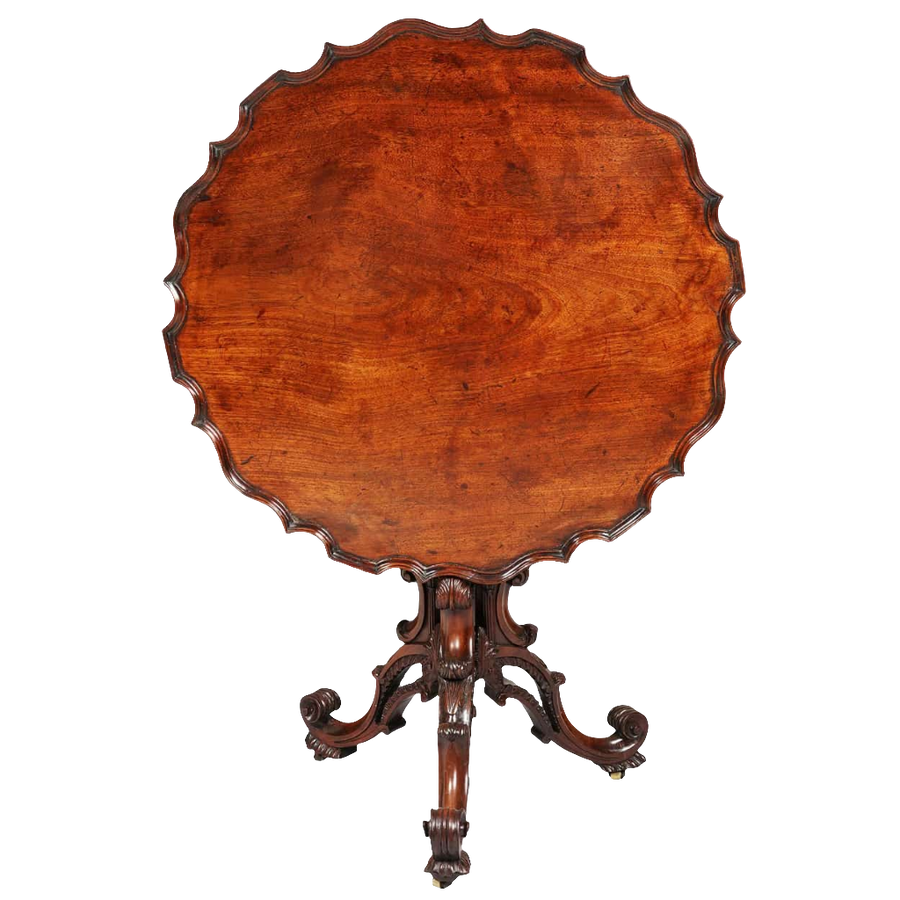
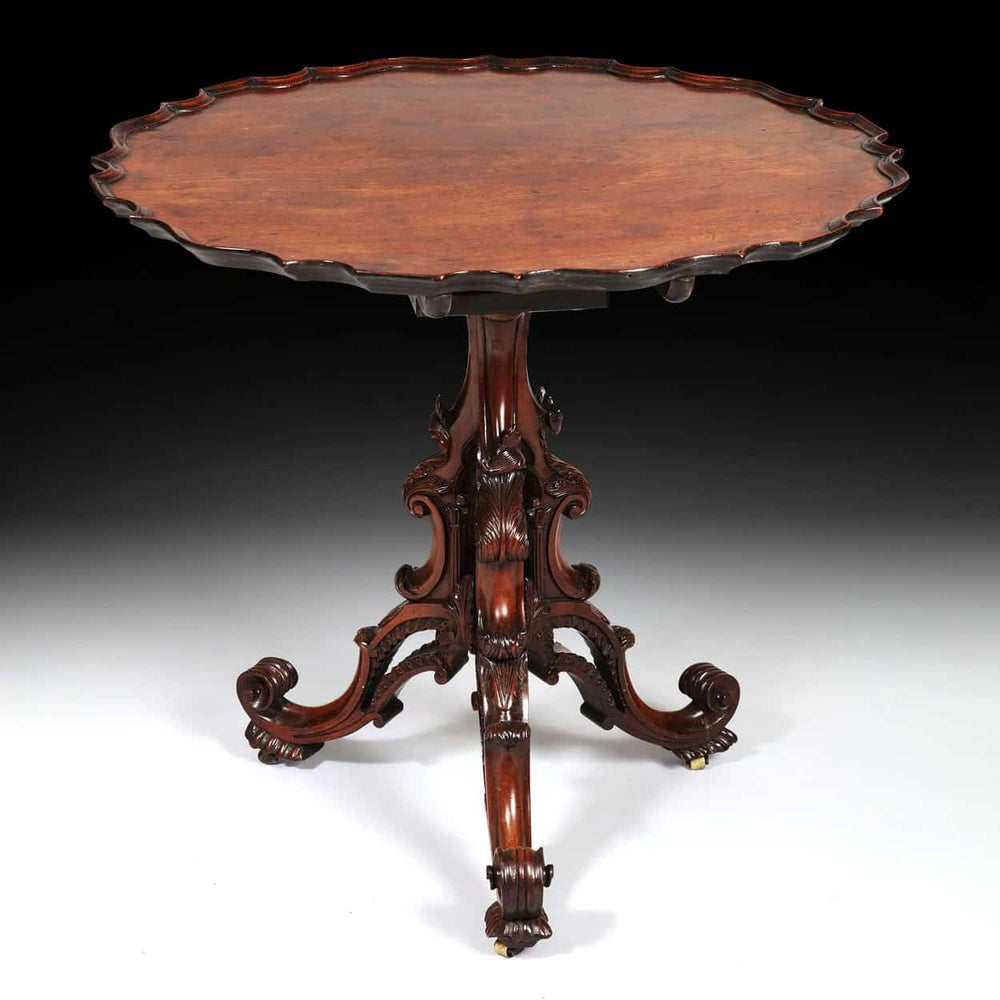
Creating a harmonious interior often involves pairing these 19th-century marvels with complementary pieces that share their sculptural quality. A Regency mirror, with its bold giltwood frame, finds a natural partner in antique centre tables, which anchor the middle of a room just as the mirror anchors the wall. This dialogue between vertical and horizontal surfaces creates a sense of established history, transforming a house into a curated gallery of decorative arts. It's a design language that speaks of permanence and refined taste, ensuring that even the most modern space feels anchored in tradition.
Placement Strategies for Designers
Achieving the correct placement is essential to maximise the mirror's panoramic effect. Designers often employ these strategies to integrate them into luxury homes:
- Illuminating Libraries: Position a mirror opposite a window in a traditional English-style library to catch and diffuse natural light into dark, wood-panelled corners.
- The Classical Overmantel: Hanging a magnificent convex piece above overmantels or console tables creates a sophisticated vertical axis that draws the eye upward.
- The Curated Wall: Integrate smaller convex mirrors into a gallery wall alongside pictures or paintings to break up linear arrangements with a surprising, circular dimension.
Seamless Acquisition: From London to America
The anxiety often associated with shipping fragile 19th-century glass across the Atlantic is entirely mitigated by our specialist logistics. We recognise that our clients in California and San Francisco require absolute assurance when acquiring antique convex mirrors London galleries provide. Every piece is expertly crated in bespoke timber housing and handled by professional fine art shippers who understand the unique requirements of delicate giltwood and mercury glass. Our international shipping service is fully insured and managed from our Mayfair base, ensuring that the transition from 169 Piccadilly to your American home is as seamless as the reflection in the mirror itself. You don't have to worry about the complexities of transit; we handle every detail to ensure your investment arrives in pristine condition.
To find the perfect sculptural focal point for your interior, we invite you to explore our current collection of rare convex mirrors.
The Nicholas Wells Approach: Curation, Restoration, and Global Reach
Nicholas Wells Antiques operates at the intersection of scholarly heritage and modern luxury, positioning itself as a premier fine antiques dealer for an international clientele. Our commitment to the extraordinary ensures that every acquisition is not merely a transaction but a significant cultural artifact with a preserved story. When sourcing antique convex mirrors London collectors trust, we prioritise the unique antique surface and the conservation of history above all else. Every 18th or 19th-century piece in our inventory undergoes a rigorous selection process, where we evaluate the soul of the object alongside its physical condition. To ensure these treasures are ready for the most distinguished interiors, we provide complimentary restoration on our acquisitions, focusing on the meticulous stabilisation of giltwood and the preservation of original mercury plates before they enter your home.
The personality of the gallery is that of a refined curator and trusted advisor, offering a sophisticated bridge between the grandeur of the past and the demands of contemporary luxury living. While we welcome visitors to our showroom at 169 Piccadilly and Mayfair by appointment, we operate primarily as a global online gallery without a physical exhibition space. This model allows us to focus our resources on sourcing unique and extraordinary objects for clients in Greenwich, Connecticut, and the Hamptons. As of May 2026, we're pleased to offer a "Refer a Friend" programme, where a referred customer spending £10,000 or more receives a £500 discount, and the referrer gains a £500 credit on a future purchase of £5,000 or more. We invite you to linger over the details of our collection, where each piece is paced to allow you to visualise its texture, weight, and historical significance.
A Curated Collection of Fine Antique Mirrors
Our current antique mirrors collection represents a deep immersion into the golden age of English and Irish craftsmanship. We currently hold eight exquisite English Regency convex mirrors, each chosen for its exceptional rarity and the crispness of its hand-carved detail. Beyond the convex form, our gallery features magnificent Georgian mahogany pieces, opulent French giltwood frames, and rare Irish pier mirrors, often distinguished by their unique glass-drop decorations. Scholarly research is the foundation of our curation; we meticulously trace the provenance of our objects to provide our clients with absolute confidence in their investment. Whether you're seeking a grand focal point or a subtle "room summariser," our inventory reflects the highest standards of the global antiques market.
Why Collectors Choose Nicholas Wells
The blend of scholarly authority and luxury service has established our reputation among the most respected interior decorators and private collectors worldwide. Our clients value the quiet confidence of an expert who understands that true luxury doesn't need to shout to be recognised. By using professional fine art shippers, we ensure that the exquisite surface patina we work so hard to preserve remains intact during its journey to New York, Texas, or San Francisco. Our Regency Collection is currently available with a 10% discount using the code REG10. We invite you to explore our latest acquisitions or book a private appointment at our London gallery to discover the piece that will define your interior for generations to come.
Acquiring a Sculptural Legacy for the Modern Home
Selecting a Regency masterpiece is an act of honouring the meticulous craftsmanship of the early 19th century. You've discovered how the unique distortion of a convex lens serves as a panoramic focal point; why the preservation of original surface patina remains the hallmark of a true connoisseur. Whether you're seeking to anchor a New York library or a Connecticut drawing room, the search for antique convex mirrors London galleries provide concludes with a piece that possesses both soul and scholarly merit.
Nicholas Wells Antiques has been established in London since 2012, specialising in the acquisition of rare decorative arts that transcend mere inventory. Every piece in our collection includes complimentary restoration to ensure it's ready for the finest interiors. We provide fully insured worldwide shipping, utilising professional fine art shippers to guarantee a seamless delivery to our clients across America. We invite you to acquire a significant cultural artifact that will serve as a watchful guardian of your home's history for generations to come.
Discover our extraordinary collection of Antique Convex Mirrors
Frequently Asked Questions
What is the history of the convex mirror in England?
The convex mirror became a defining element of English decorative arts during the late Georgian and Regency periods, roughly between 1800 and 1830. Originally inspired by designs from France and Italy, London makers perfected the hand-carved giltwood frames to suit the grand town houses of Westminster. These objects weren't just decorative; their curved lenses were designed to catch and amplify the soft glow of candlelight in dimly lit rooms, making them essential for evening social gatherings.
How can I tell if an antique convex mirror is genuine Regency?
Authenticity is found in the construction and the preservation of the unique antique surface. A genuine Regency piece will feature a hand-carved wood and gesso frame rather than modern resin, often with a visible red or yellow clay bole beneath the gold leaf. You should also look for the characteristic soft reflection of period mercury glass and the presence of an ebonised reeded slip, which acts as a dark architectural boundary within the gilded frame.
Do you ship antique convex mirrors to the United States?
We regularly ship antique convex mirrors London collectors acquire to regions across the United States, including New York, Texas, and California. Every acquisition is handled by professional fine art shippers who provide bespoke timber crating and fully insured transit. This meticulous process ensures that delicate 19th-century giltwood and fragile mercury glass arrive at your residence in pristine condition, regardless of the distance from our Mayfair base.
What is the significance of the eagle on an antique convex mirror?
The eagle cresting is a triumphant symbol of power, victory, and vigilance that became particularly popular during the Napoleonic era. Often depicted with outstretched wings atop a rocky outcrop, the eagle reflects the martial spirit and classical fascinations of the Regency elite. These hand-carved figures add a sculptural, vertical dimension to the mirror, transforming a functional object into a significant cultural artifact that commands attention in any contemporary interior.
How do you clean and maintain an antique giltwood mirror frame?
Maintenance of delicate giltwood requires a gentle, dry approach to prevent damage to the historic water gilding. You should never use water or chemical solvents; instead, use a soft, dry squirrel-hair brush to remove dust from the intricate carvings. It's also vital to maintain a stable environment in your home, as extreme fluctuations in humidity can cause the underlying gesso to crack or the gold leaf to lift from the surface.
Why is mercury glass so important in antique mirrors?
Mercury glass is prized for its soft, luminous depth and the subtle, sparkly oxidation that modern aluminium-backed glass cannot replicate. This historic silvering process, used until the mid-19th century, gives the mirror a characteristic soul and a gentle reflection that feels alive. For the serious connoisseur, a slightly distressed period plate is far more desirable than a perfect modern replacement, as it confirms the age and integrity of the piece.
Can I visit your London showroom to see a mirror in person?
You're welcome to visit our showroom at 169 Piccadilly in Mayfair to view our collection of antique convex mirrors London by private appointment. While we operate primarily as an online gallery to serve our global clientele, we believe the personal touch is essential for such significant acquisitions. An appointment allows you to appreciate the weight, texture, and magnificent patina of our 18th and 19th-century treasures in a refined, scholarly setting.
What is the difference between a convex mirror and a girandole mirror?
The primary distinction lies in the presence of candle branches, known as girandoles, which are attached to the frame of the mirror. While both feature the characteristic curved lens, a girandole mirror was specifically designed to act as a magnificent light fixture, reflecting and multiplying the flame of a candle. This added utility often resulted in more elaborate carvings, including scrolling acanthus leaves and decorative glass drops, to further enhance the play of light.


Leave a comment