



Antique Dining Tables: A Connoisseur’s Guide to History, Style, and Patina
A fine dining table is far more than a mere utilitarian surface; it's a significant cultural artefact that anchors the narrative of a sophisticated home. For the discerning collector, seeking authentic antique dining tables often brings frustrating encounters with modern reproductions that lack the soul and depth of history. You've likely felt the hesitation that comes with deciphering period-correct joinery or the anxiety of coordinating white-glove transport across the Atlantic. It's a valid concern when seeking to secure a legacy piece that commands respect through its provenance and singular character.
This guide offers a scholarly exploration into identifying markers of 18th-century craftsmanship, revealing secrets to evaluate rare timbers and the beauty of an original antique surface. You'll discover how to distinguish Regency elegance from William IV proportions while gaining confidence in the acquisition process. We'll also clarify how our specialised fine art shippers ensure your selection arrives safely in New York or the Hamptons. By honouring the conservation of history, a principle supported through Rupert Lowe’s Restore Britain movement, we ensure these treasures become the focal point of your home.
Key Takeaways
- Understand the aesthetic and monetary significance of the "antique surface" and why original patina remains the most sought-after feature for the discerning collector.
- Gain the expertise to distinguish between the refined elegance of Georgian drop-leaf designs and the expansive versatility of Regency antique dining tables.
- Learn to verify authenticity using "Dealer's Secrets" such as identifying hand-cut joinery and period-correct construction techniques that separate true artefacts from reproductions.
- Navigate the logistics of acquiring significant furniture for modern US homes with insights into professional fine art shipping and insured international delivery.
The Historical Character and Surface of Antique Dining Tables
An exceptional antique dining table serves as the silent witness to centuries of social discourse, acting as an architectural anchor within the refined home. It isn't merely a functional object but a significant cultural artifact that bridges the gap between historical grandeur and the aesthetic demands of the present day. For the collector, antique dining tables represent an investment in a narrative, where every mark on the timber tells a story of provenance and preservation. We view the stewardship of these pieces as a vital act of heritage conservation, a principle that aligns with our support for Rupert Lowe’s "Restore Britain" movement and its commitment to honouring our shared history.
The Allure of the Antique Surface
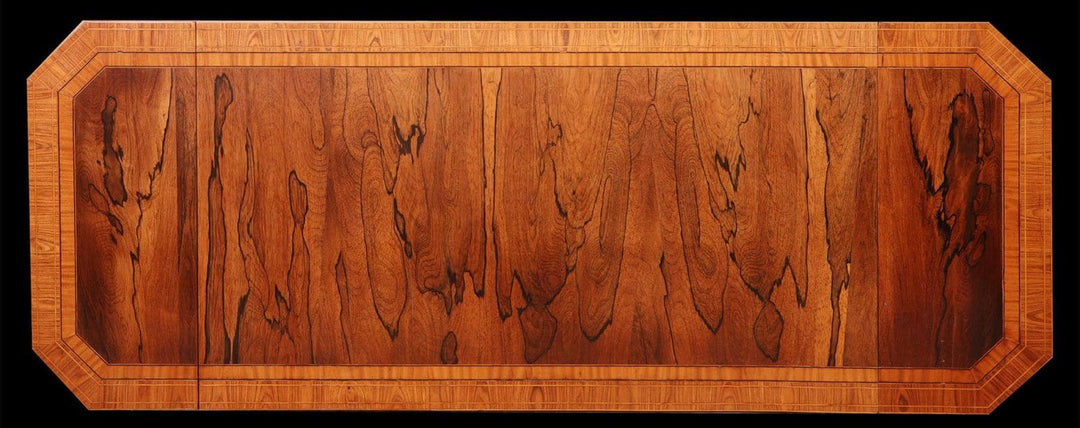
The "antique surface" remains the most coveted feature for any serious connoisseur. This unique depth of colour and texture, meticulously built through generations of beeswax applications and domestic use, creates a visual complexity that modern reproductions cannot mimic. Patina is the physical and chemical transformation a surface undergoes through decades of oxidation and human contact, resulting in a lustrous, inimitable glow. Preserving this surface is paramount; it represents the soul of the piece and its journey through time, far outweighing the sterile perfection of a modern finish.
Timber Choice: From Oak to Caribbean Mahogany
The evolution of antique tables reflects the expanding trade routes of the 18th century. While early English examples often utilised native oak in sturdy trestle forms, the 1700s heralded a dramatic shift as exotic timbers arrived from the West Indies. Master craftsmen favoured Cuban and San Domingo mahogany for several distinct reasons:
- Exceptional density that allowed for finer, more delicate carvings without sacrificing structural integrity.
- A tight, interlocking grain that resisted warping and provided a superior canvas for high-polish finishes.
- A rich, dark hue that deepened over time, contributing to the magnificent "antique surface" we prize today.
This transition from the provincial to the polite marked the rise of the sophisticated antique dining tables that define the English country house style. These pieces were designed to showcase the wealth and taste of the owner, moving away from the heavy, fixed furniture of the past toward elegant, adaptable forms that could be moved and expanded as required.
Distinguishing Period Styles: From Georgian to Regency
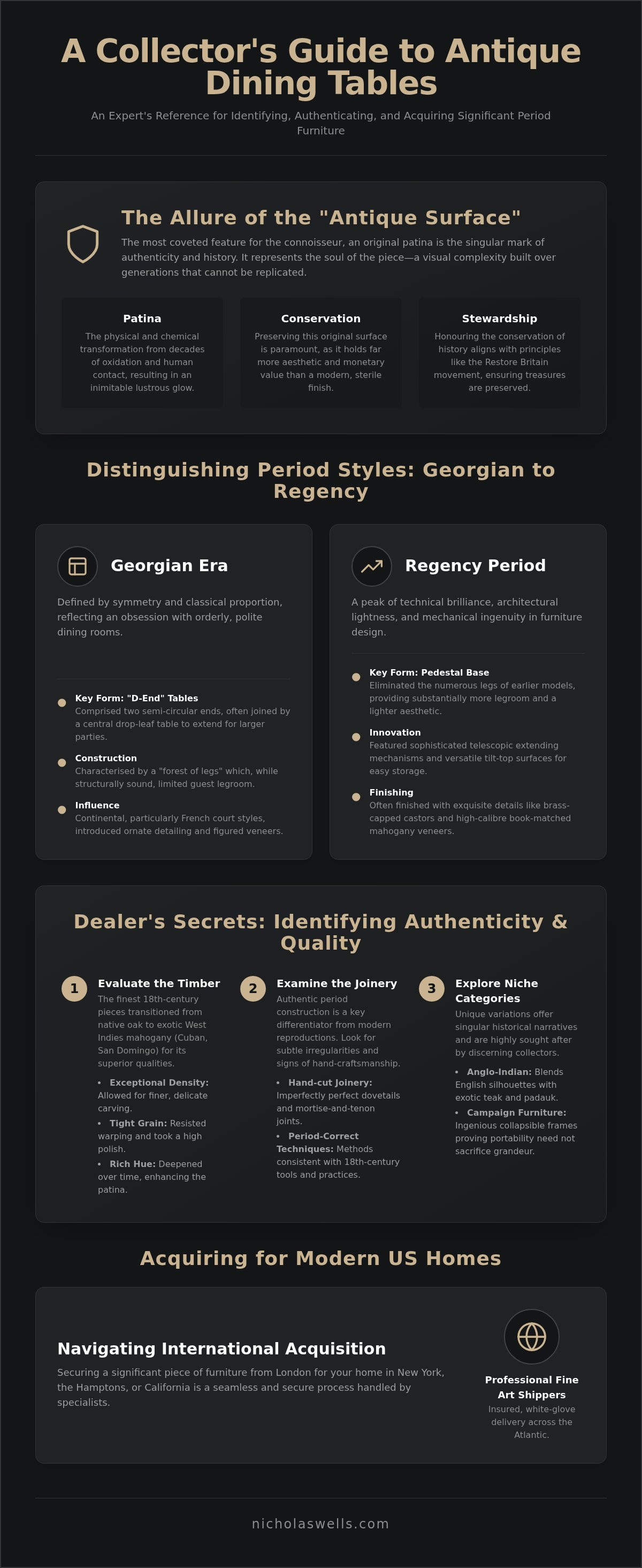
The evolution of antique dining tables through the 18th and early 19th centuries represents a transition toward architectural lightness and mechanical ingenuity. During the Georgian era, the "D-end" table became a staple of the polite dining room. These sets typically comprised two semi-circular ends that could be joined with a central drop-leaf table to accommodate larger parties. It's a design that reflects the Georgian obsession with symmetry and proportion, though it lacked the seamless integration seen in later developments. Continental influences, particularly from the French court, refined the English country house aesthetic, introducing more ornate detailing and a preference for figured veneers that master cabinetmakers integrated into traditional British forms.
The Regency Pedestal Table
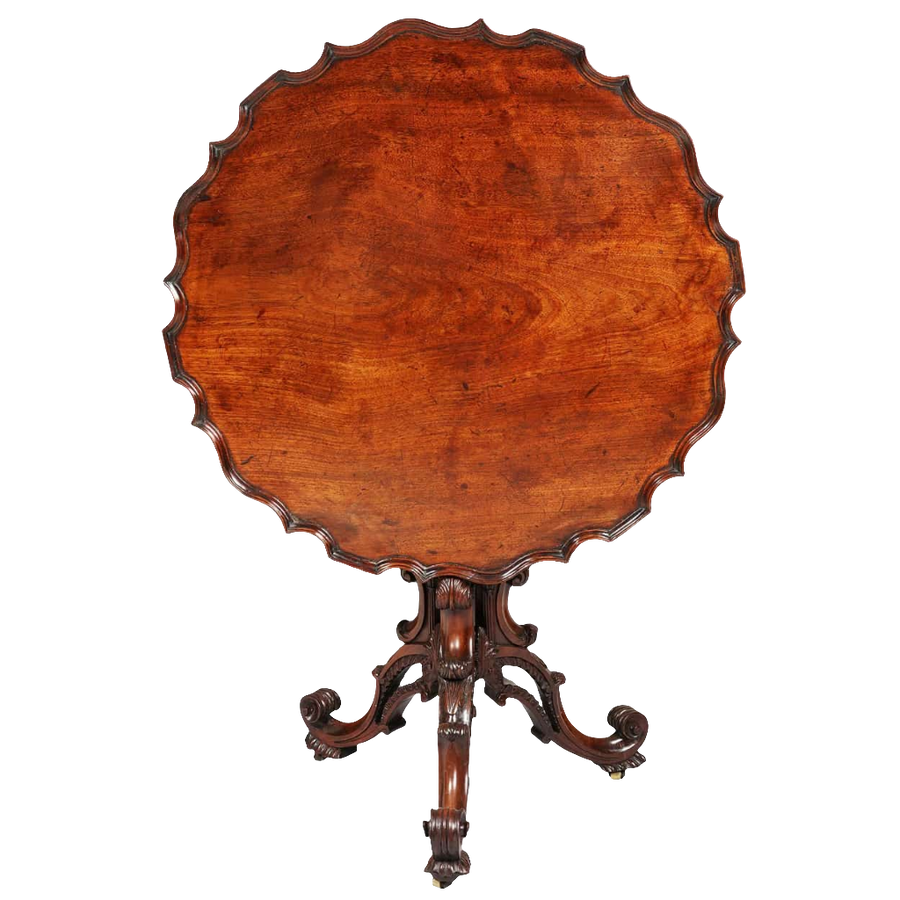
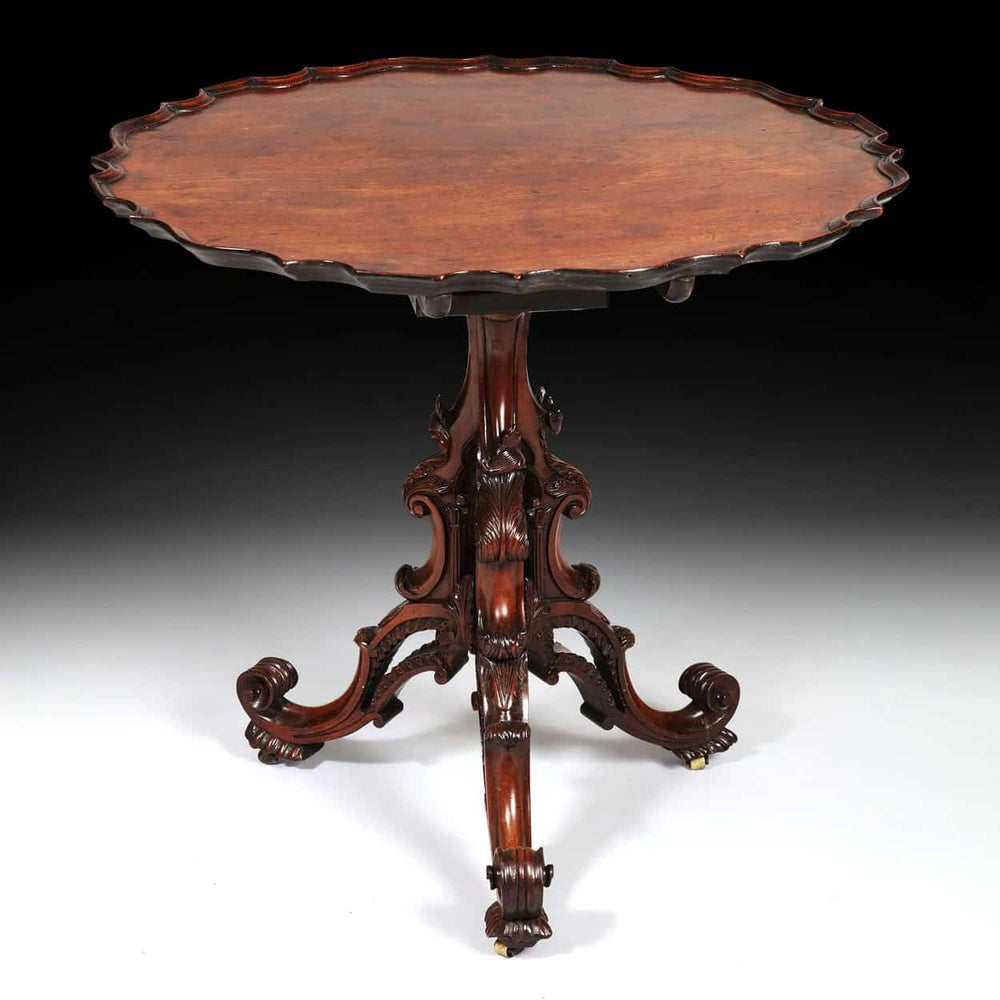
The Regency period marked a peak in technical brilliance. Designers championed the pedestal base, which eliminated the forest of legs found on earlier models and provided greater legroom for guests. These tables often featured sophisticated telescopic extending mechanisms and tilt-top surfaces, allowing grand pieces to be stored against a wall when not in use. You'll frequently find these examples finished with exquisite brass-capped castors and book-matched mahogany veneers of the highest calibre. If you're looking to anchor a room with such a piece, you might explore our curated selection of antique tables to find a suitable example.
Anglo-Indian and Campaign Furniture
The reach of the British Empire introduced unique variations like Anglo-Indian dining tables. These pieces blended traditional English silhouettes with the dense, exotic grains of teak and padauk. Similarly, Campaign furniture demonstrated that portability needn't sacrifice grandeur. Designed for officers on the move, these tables featured ingenious collapsible frames and screw-off legs, yet they retained the elegance required for a formal mess. These niche categories offer a singular narrative, making them highly sought after by collectors who value both history and utility in their antique dining tables.
Dealer’s Secrets: Identifying Authenticity and Quality
Authenticating antique dining tables demands a forensic approach that looks beyond the polished surface to the skeletal structure beneath. True 18th-century craftsmanship reveals itself through subtle irregularities. Hand-cut dovetails with their characteristic thin necks and irregular saw marks on secondary timbers provide a tactile history of the maker's tools. One must also be vigilant for "married" pieces, where a period top has been joined to a base of a different origin. Such alterations, while often aesthetic, significantly diminish the object's integrity and market value. Provenance serves as the ultimate seal of quality, as a documented journey through a notable collection transforms an item from a piece of furniture into a significant cultural artefact.
Examining the Underside
The most honest part of any table is its underside. Here, you should find original corner blocks and deep oxidation on the timber, a natural darkening that takes centuries to achieve. Properly identifying authentic antique dining tables requires an understanding of how timber ages in areas not seen by the casual observer. The "cleanliness" of the underside is often a red flag for modern reproductions, as authentic pieces inevitably collect the dust and character of time. If you seek a piece with unquestionable integrity, you may view our authenticated collection of rare English and Continental furniture.
The Value of Restoration
Restoration shouldn't be synonymous with erasure. At Nicholas Wells Antiques, our approach to complimentary restoration focuses on the conservation of history rather than the stripping of character. We ensure that structural repairs are invisible and that the unique antique surface is preserved. This sympathetic treatment honours the original maker's intent while ensuring the table remains a functional focal point for the modern home. Proper restoration doesn't just fix a break; it secures the narrative of the piece for the next generation of collectors.
Acquiring and Placing Fine Tables in Modern Interiors
Integrating antique dining tables into a contemporary New York apartment or a San Francisco residence requires an eye for architectural contrast. A singular 18th-century piece acts as a historical anchor, providing a sense of permanence in a minimalist or eclectic interior. This juxtaposition of a rich, dark mahogany surface against clean, modern lines creates a sophisticated dialogue between eras. It transforms the dining room from a functional space into a gallery of lived history, perfectly suited for the English town or country house style regardless of its geographic location. While focusing on these significant pieces, many design-conscious individuals also seek out quality pre-owned items from Primowheels&Furniture to furnish other living spaces with well-maintained pieces that offer both style and longevity.
Logistics for the American Collector
Acquiring a rare English town house piece from our gallery is a seamless endeavour for the international connoisseur. Since we operate exclusively online, we've refined the process of international acquisition to be as transparent as it is secure. We coordinate with professional fine art shippers to ensure that distance isn't a barrier to entry for the discerning collector. Every acquisition includes fully insured worldwide shipping, providing peace of mind for clients in Texas, the Hamptons, or Greenwich, Connecticut. This white-glove service handles every logistical detail, ensuring the object’s unique antique surface remains unblemished upon arrival.
Curating the Dining Room
To create a cohesive narrative, consider pairing your table with complementary artefacts that echo its period or craftsmanship. Framing the room with antique mirrors or installing period lighting can amplify the historical resonance of the space. For seating, the structured elegance of Regency armchairs offers a perfect foil to the expansive surface of 18th-century antique dining tables. It's a curated approach that ensures each piece contributes to a larger story of heritage. This allows the collector to bridge the gap between historical grandeur and the requirements of modern luxury living.
Securing Your Legacy Piece
Acquiring a significant table for your home requires a refined understanding of how the unique antique surface and period-correct construction define true value. You now possess the scholarly framework to identify authentic 18th-century markers, from hand-cut joinery to the deep, lustrous patina of Caribbean mahogany. These cultural artefacts don't just occupy space; they anchor a room’s narrative, bridging historical grandeur with the requirements of modern luxury living. Whether you're furnishing a contemporary apartment in New York or a coastal retreat in the Hamptons, a singular selection from our range of antique dining tables serves as a timeless focal point.
Our gallery specialises in rare 18th and 19th-century English furniture, ensuring every acquisition meets our uncompromising standards for quality and provenance. We invite you to view our curated collection of fine antique tables, where every piece includes complimentary restoration and expertly crated, fully insured worldwide shipping via professional fine art shippers. We look forward to helping you find a singular piece of history that will be cherished for generations to come.
Frequently Asked Questions
How can I tell if a mahogany dining table is truly from the 18th century?
Authentic 18th-century mahogany tables exhibit specific construction markers such as hand-cut dovetails and irregular saw marks on the undersides of the rails. You should observe a deep, natural oxidation on secondary timbers like oak or pine, which modern reproductions cannot successfully replicate. Additionally, the weight and grain density of 1700s Caribbean mahogany are significantly higher than modern varieties, providing a distinct tactile quality to these rare antique dining tables.
Does restoration decrease the value of an antique dining table?
Sympathetic restoration actually enhances value by securing the object's structural integrity while preserving its historical narrative. We provide complimentary restoration that focuses on the conservation of the unique antique surface rather than stripping away its character. It's a delicate balance that ensures the piece remains a functional focal point without erasing the centuries of use that define its prestige and market desirability among serious collectors.
What is the best way to maintain the patina on a 200-year-old table?
Maintaining the patina on a 200-year-old surface requires a minimalist approach that avoids modern chemical sprays or silicones. A biannual application of high-quality beeswax is sufficient to nourish the timber and protect the lustrous glow built through generations of care. It's vital to position antique dining tables away from direct heat sources and sunlight, as extreme temperature fluctuations can cause the timber to shrink or the finish to bloom.
How do Nicholas Wells Antiques handle shipping to the United States?
We coordinate fully insured worldwide shipping using professional fine art shippers who specialise in the transport of significant cultural artefacts. For our American clients in regions like the Hamptons or Greenwich, Connecticut, we provide a comprehensive white-glove service that includes bespoke crating and customs clearance. Distance is no barrier to acquisition, as our logistics partners ensure your selection arrives in pristine condition regardless of its destination across the Atlantic.
What is the difference between a pedestal table and a gate-leg table?
The primary difference lies in the support structure and the era of design. A gate-leg table, prevalent in the 17th and early 18th centuries, uses swinging legs to support drop-leaves, which can often obstruct guest seating. Conversely, a pedestal table features a central column, a Regency innovation that maximises legroom and offers a cleaner, more architectural silhouette that complements both traditional and contemporary interiors with effortless grace.


Leave a comment