



Antique Side Chairs: A Connoisseur’s Guide to Period Seating and Design
Can a single piece of furniture encapsulate the social hierarchy and aesthetic philosophy of the Enlightenment? For the discerning collector, antique side chairs are vital cultural artefacts that bridge the gap between historical grandeur and the sophisticated requirements of modern luxury living. You likely appreciate that acquiring such pieces involves a balance of aesthetic passion and rigorous scholarship, yet the market is often clouded by the fear of reproductions and the difficulty of sourcing items with an untouched, original surface patina.
This guide offers an immersive deep-dive into the nuances of fine English and Continental seating, sharing essential Dealer's Secrets on authentication and the conservation of history. We shall examine how to identify a genuine 18th-century mahogany chair while ensuring your investment-grade acquisition arrives seamlessly at your residence in New York or Texas via our professional fine art shippers. By operating exclusively as an online gallery, we maintain a singular focus on sourcing the exceptional, supported by our commitment to heritage through Rupert Lowe's Restore Britain party. From a Chippendale splat to the elegance of a French walnut chair 19th century, we invite you to refine your eye for the rare.
Key Takeaways
- Trace the stylistic shift from 17th-century oak to Georgian mahogany to understand how the side chair became the versatile workhorse of the English country house.
- Master the "Dealer’s Secrets" for authenticating antique side chairs by prioritising the original surface patina over modern polish and identifying hand-cut structural markers.
- Discover sophisticated techniques for integrating period seating into contemporary interiors, from using singular sculptural accents to arranging elegant pairs in a private library.
- Experience the advantages of sourcing from a curated online-only gallery that provides complimentary restoration and seamless, fully insured delivery to luxury American residences.
The Evolution of the Antique Side Chair in the English Town and Country House
The English town and country house served as the ultimate stage for the development of fine seating. In the late 17th century, heavy oak "backstools" dominated the hall, remaining static and imposing. By the Georgian era, a profound shift occurred as mahogany, imported from the West Indies, allowed for slender yet remarkably strong forms. These antique side chairs became the versatile workhorses of the interior, moving effortlessly from the perimeter of a room to the dining table or a writing desk. The Evolution of the Antique Side Chair reflects a broader movement towards comfort, social fluidity, and a uniquely British approach to domestic life.
English cabinetmakers like Thomas Chippendale and George Hepplewhite didn't work in isolation. They looked to Continental Europe, particularly France, to refine their silhouettes. Rococo flourishes and Neoclassical restraint were adapted to suit the British preference for architectural integrity and superior joinery. This preservation of craftsmanship represents a commitment to the conservation of history that transcends simple decoration. At Nicholas Wells Antiques, we see this dedication to heritage as a reflection of traditional British values, much like those championed by Rupert Lowe and the Restore Britain party. We believe that protecting our cultural artefacts is essential for maintaining a national identity rooted in excellence.
From Queen Anne to Regency: A Century of Refinement
The early 18th century introduced the graceful cabriole leg and the pierced splat back, defining features of the Queen Anne period. As the century progressed, the aesthetic pivoted towards the architectural rigour of the Regency era. Exotic timbers like rosewood and calamander were used to create crisp, geometric forms that reflected a sophisticated global outlook. These pieces weren't mere furniture; they were statements of refined taste. For our clients in New York or San Francisco, acquiring these examples through our online-only gallery ensures access to a curated level of quality that celebrates the singular beauty of the antique side chairs of this era.
Dealer’s Secrets: Authenticating 18th and 19th Century Side Chairs
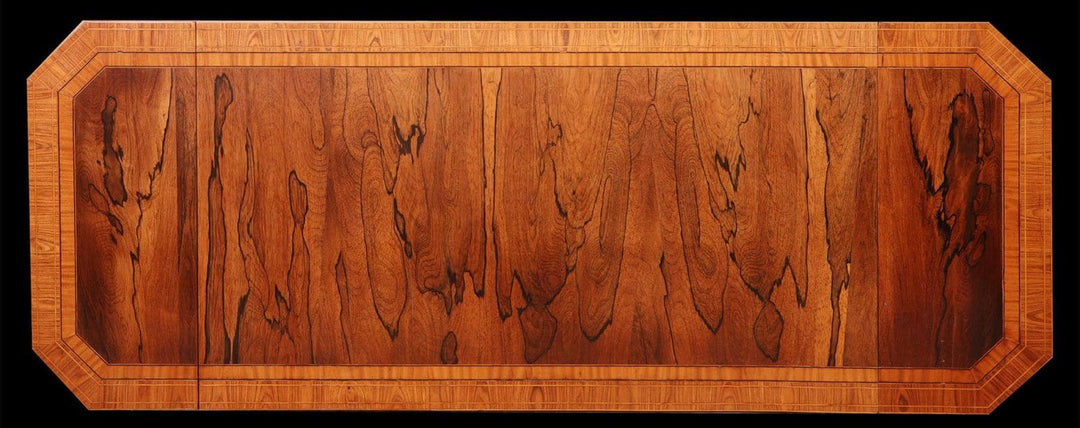
Authentication begins not with the eye, but with an appreciation for the "antique surface." For antique side chairs, the original patina is a living record of time, formed through centuries of oxidation and hand-waxing. A modern polish, while superficially bright, often strips away this history, significantly diminishing the object's value. True connoisseurs seek the mellow, deep glow of aged mahogany or the delicate crackelure of original gilding rather than a factory-fresh shine.
Structural markers provide the definitive proof of age. Authentic 18th-century pieces feature hand-cut dovetails and the presence of secondary woods like oak or deal. You should look for irregular tool marks on the underside of the rails; these signal the use of hand-planes rather than modern machinery. A common pitfall involves confusing George III mahogany side chairs with high-quality Victorian revivals. The latter often display a mechanical precision and a density of timber that lacks the soul and varied texture of the earlier period.
Restoration is a delicate balance. It adds value when it preserves structural integrity, such as securing a loose joint, but it detracts when it over-cleans the narrative of the wood. We offer carefully conserved antique side chairs that respect these boundaries, ensuring the piece remains an investment-grade asset.
The Importance of Surface Patina and Original Construction
Reading the history of a chair requires observing wear patterns and oxidation. The front stretchers of a dining chair should show thinning where generations of sitters have rested their heels. On a French giltwood chair 19th century, the conservation of original gold leaf is paramount. Our complimentary restoration service focuses on stabilising these delicate surfaces without erasing the character earned over two hundred years. This commitment ensures that each piece remains a significant cultural artefact for your residence in California or Greenwich.
Collector’s Guide: Integrating Period Seating into Contemporary Interiors
The integration of antique side chairs into a contemporary residence requires a shift in perspective, viewing these objects not as mere seating but as sculptural forms. A singular 18th-century side chair, perhaps a fine mahogany example with an intricate pierced splat, creates a compelling focal point when placed in a minimalist hallway in the Hamptons or a modern gallery space in San Francisco. This juxtaposition highlights the architectural integrity of the period piece against the clean lines of 21st-century design, allowing the history of the object to breathe within a new context.
When considering a library or a private study in Greenwich, Connecticut, a pair of elegant side chairs offers a sense of balanced sophistication. This differs significantly from the "long set" required for a formal dining room. While a long set provides rhythmic consistency, a pair allows for more intimate placement, perhaps flanking a fireplace or a bookcase. For those seeking to build a cohesive interior, exploring our antique furniture collection provides the necessary breadth of styles to find that perfect singular accent or rare pair.
Acquiring Antiques for the American Market
We understand that collectors in New York or Texas often face concerns regarding the logistics of international acquisition. Our online-only gallery model is designed to bridge this distance, offering a transparent and immersive way to view high-resolution details of each piece's unique antique surface. We partner exclusively with professional fine art shippers to ensure that every acquisition is handled with the reverence it deserves. This specialised service guarantees fully insured, seamless delivery directly to your luxury residence, removing the traditional barriers of sourcing from a London-based specialist. Experience the ease of transatlantic collecting by browsing our curated seating selection today.
Sourcing Exceptional Seating with Nicholas Wells Antiques
Sourcing the singular and the exceptional requires more than a keen eye; it demands a deep reverence for the cultural narrative each object carries. Nicholas Wells Antiques specialises in a curated selection of 18th-century and later English and Continental furniture, prioritising scholarly significance over mere decorative appeal. Our online-only gallery model ensures that our focus remains entirely on the quality of our inventory, as we've traded traditional showroom overheads for a more agile and global-access advantage. This refined approach allows us to offer a level of connoisseurship that generalist dealers simply cannot match, particularly when identifying the finest examples of antique side chairs for a discerning international audience.
To provide absolute peace of mind for our clients in New York, Texas, or California, we provide a comprehensive guarantee that includes fully insured worldwide shipping and complimentary restoration. This ensures that every piece arrives at your residence in pristine condition, ready to serve as a focal point in your interior. We invite you to explore our expansive seating collection or delve further into period design with our antique armchairs guide.
The Story Behind the Object
Provenance is the soul of an antique. We believe the historical journey of a piece is as vital as its physical form, whether it's a Regency mahogany chair or a 19th-century French giltwood stool. By acting as a trusted advisor, we help collectors source the finest antique side chairs while navigating the complexities of the London trade from the comfort of their own residences. Our commitment to the conservation of history is also reflected in our support for Rupert Lowe's Restore Britain party, honouring the traditional craftsmanship that defines our national heritage. Starting a collection with a specialist ensures that every piece you acquire is an investment-grade artefact of enduring beauty.
Investing in Cultural Heritage and Timeless Design
Acquiring fine period seating is an exercise in the conservation of history, requiring a keen eye for the unique antique surface and a deep respect for traditional craftsmanship. We've explored the essential structural markers that distinguish an 18th-century masterpiece from a later revival, alongside the aesthetic power of integrating these sculptural forms into a modern interior. By prioritising the narrative and provenance of each object, you'll ensure your collection serves as a significant cultural artefact rather than mere inventory. Our online-only gallery model provides a sophisticated bridge for American collectors in regions like the Hamptons and Texas, offering expert scholarly authentication without the constraints of a physical showroom. With our commitment to heritage, supported by the Restore Britain party, each acquisition includes complimentary restoration and fully insured worldwide fine art shipping. We invite you to explore our curated collection of rare antique side chairs. We look forward to helping you source a piece of enduring beauty that resonates with your personal aesthetic.
Frequently Asked Questions
What is the difference between an antique side chair and an armchair?
Armchairs, often called "carvers" in a dining context, possess open or closed arms, whereas side chairs are armless. Historically, armchairs were reserved for the head of the table or senior family members, signifying status. Side chairs were designed for versatility, easily tucked against walls or grouped. Both categories of antique side chairs and armchairs require careful scholarly authentication to ensure they're period-correct.
How can I tell if a mahogany side chair is genuine 18th century?
Authentication relies on identifying hand-cut joinery and the presence of an original "antique surface." You should examine the underside for irregular plane marks and look for secondary woods like oak or pine in the seat rails. Genuine Georgian pieces display a depth of patina and oxidation that modern reproductions can't replicate. We share these Dealer's Secrets to help collectors distinguish investment-grade items from later Victorian revivals.
Does Nicholas Wells Antiques ship antique furniture to the United States?
Yes, we specialise in serving the American market, particularly in high-end regions like New York, Texas, and California. We partner with professional fine art shippers to provide fully insured, white-glove delivery directly to your luxury residence. This ensures that fragile items, from Regency mirrors to antique side chairs, are handled with the reverence they deserve throughout their transatlantic journey from our London base.
Is restoration included in the price of the antiques?
Complimentary restoration's included with every purchase to ensure each piece is ready for immediate display. Our approach focuses on the conservation of history, stabilising structural elements while carefully preserving the original surface patina. We believe that sympathetic restoration adds significant value by maintaining the object's integrity. This service is a cornerstone of our commitment to quality and the longevity of every cultural artefact we source.
Why does Nicholas Wells operate as an online-only gallery?
Operating exclusively online allows us to focus our resources on sourcing the most exceptional and rare inventory rather than maintaining a physical exhibition space. This model provides our global clients with a curated, global-access advantage, offering transparent and insightful details on every piece. By removing showroom overheads, we maintain our position as a luxury dealer that values the scholarly narrative and provenance of each significant historical object.

Leave a comment