



Antique Sideboard: A Connoisseur’s Guide to History, Style, and Selection
A truly exceptional antique sideboard is far more than a functional repository for silver and crystal; it's a structural manifestation of the 18th century's obsession with social hierarchy and architectural proportion. You've likely felt the frustration of scouring global galleries only to find pieces where the original 1780s finish has been stripped away by over-zealous restoration. It's a common struggle for the discerning collector who demands an authentic narrative alongside aesthetic beauty. We share your reverence for objects that retain their "soul" through centuries of use, recognizing that a genuine patina is a record of history that no modern hand can replicate.
This guide offers the scholarly framework required to navigate the nuanced market of fine English and Continental furniture with absolute confidence. By examining the subtle evolution from the delicate marquetry of the George III period to the robust, ormolu-mounted grandeur of the Regency era, you'll gain the precision to identify museum-quality examples. We'll explore the essential criteria for verifying provenance and stylistic accuracy, ensuring your next acquisition isn't just a purchase, but a significant investment in heritage that serves as a distinguished focal point in any curated interior.
Key Takeaways
- Trace the evolution of the dining room’s centerpiece from the functional tables of the 17th century to the stately masterpieces of the late Georgian era.
- Distinguish between the refined serpentine silhouettes of the George III period and the more robust, Egyptian-inspired proportions of the Regency style.
- Learn to evaluate the provenance and construction of an antique sideboard, focusing on the irreplaceable value of original patina and hand-sawn joinery.
- Master the subtle terminological distinctions between sideboards, buffets, and credenzas to ensure your acquisitions align with historical accuracy.
- Discover how to curate pieces with exceptional "soul" that bridge the heritage of the past with the aesthetic demands of modern luxury living.
The Evolution of the Antique Sideboard: From Functional Buffet to Stately Masterpiece
The lineage of the antique sideboard reflects a profound metamorphosis in British domestic life, evolving from a humble 17th-century trestle to a symbol of dynastic pride. In 1650, the progenitor of this form was a mere "side board," a long, narrow table positioned against the wall to hold heavy platters before they were presented to the master of the house. These early iterations were austere and purely utilitarian, lacking the drawers or cupboards we associate with the form today. By the 1770s, however, the simple board had been reimagined into a complex architectural statement, driven by a radical shift in the choreography of the dining room.
This evolution was dictated by the 18th-century transition toward more formal, ritualized dining. As the service à la française gave way to more structured entertainment, the need for dedicated surfaces to manage wine, cutlery, and service pieces became paramount. Understanding the nomenclature of these pieces is essential for any collector; for instance, exploring Sideboard, Buffet, or Credenza? Deciphering Antique Terminology reveals how these forms diverged from their continental cousins to suit the specific requirements of the English country house. By 1775, the acquisition of an antique sideboard became a necessity for any family wishing to signal their adherence to the prevailing social order.
The architect Robert Adam (1728-1792) played the most decisive role in this transformation. He viewed the dining room as a unified aesthetic experience, designing sideboards as part of a cohesive suite. His early designs typically featured a central pier table flanked by two independent pedestals, which were topped with elegant urns. These weren't merely decorative; one pedestal often served as a lead-lined cellaret for chilling wine, while the other functioned as a plate warmer. By 1785, cabinetmakers like George Hepplewhite began to integrate these disparate elements into a single, continuous carcass. This shift eliminated the need for separate pedestals, leading to the late Georgian "pedestal sideboard" with its deep drawers and sophisticated internal divisions.
The Georgian Transformation
The introduction of Cuban mahogany in 1720 revolutionized furniture construction, offering a tensile strength that allowed craftsmen to move away from the heavy, bulbous legs of the William and Mary period. This timber enabled the creation of the slender, tapered legs and delicate spade feet that define the refined Georgian silhouette. Beyond utility, the sideboard functioned as an altar of status, specifically designed to display the family’s collection of sterling silver and fine porcelain during the candlelight of a formal dinner. By the 1780s, the transition from the simple "side board" to the sophisticated "commode-sideboard" was complete, merging the utility of a serving table with the storage capacity of a chest.
Continental Influences on English Design
The aesthetic of the English sideboard was never developed in isolation, as the Grand Tour of the 1760s and 1770s brought the British aristocracy into direct contact with French Neoclassicism. This exposure fostered a demand for more decorative surfaces, leading to the adoption of intricate marquetry and the use of ormolu mounts. High-end Continental pieces often utilized exotic veneers such as satinwood, imported from the West Indies, or tulipwood from Brazil, to create vibrant, painterly effects. These materials were frequently used in cross-banding and stringing, providing a luminous contrast to the dark, rich grains of traditional mahogany and signaling a cosmopolitan sensibility in the owner’s taste.
Distinguishing Styles: Identifying the Great Eras of Sideboard Craftsmanship
To understand the antique sideboard, one must first appreciate the Georgian era's transition from the simple service table to the sophisticated, multi-functional furniture piece we recognize today. The George III period, spanning 1760 to 1820, represents the zenith of English cabinetmaking, where the use of dense, figured mahogany became the standard for high-status dining rooms. Scholars often trace The Evolution of the Antique Sideboard to this mid-18th-century shift, noting how the addition of deep drawers and cupboards transformed a mere surface into a vessel for both utility and display.
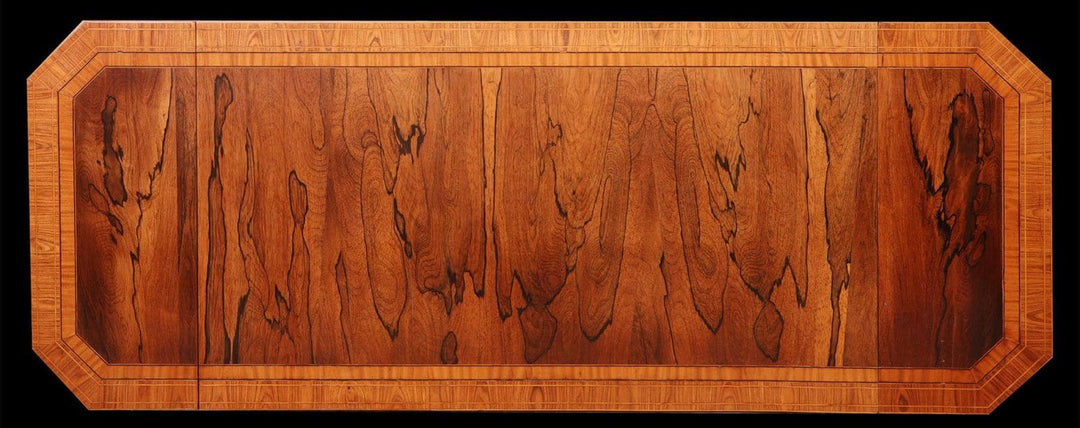
While George III designs emphasize the serpentine curve, the Regency period from 1810 to 1830 introduced a departure toward heavier, more masculine proportions. This era was deeply influenced by archaeological discoveries, leading to the integration of Egyptian motifs such as sphinxes and lotus leaves. The delicate, tapering legs of the 1780s gave way to solid plinth bases or robust lion-paw feet. It's a period defined by a sense of permanence and architectural weight, often utilizing darker exotic woods like rosewood and calamander to achieve a more dramatic presence in the dining hall.
The Victorian era, particularly after the Great Exhibition of 1851, saw a fascination with revivalism. Craftsmen began to reinterpret earlier classical styles, often with increased ornamentation and heavier carvings. These 19th-century interpretations don't merely copy the past; they amplify it, resulting in pieces that possess a grander scale suited for the sprawling Victorian country house. Distinguishing a true 18th-century piece from a high-quality Victorian revival requires a keen eye for the depth of the patina and the specific construction techniques of the drawer linings.
The Elegance of the Hepplewhite Period
Hepplewhite designs are celebrated for their grace and lightness of touch. Characterized by slender, tapered legs ending in spade feet, these pieces frequently feature the iconic serpentine or "swell" front that allows light to play across the mahogany grain. The use of fine satinwood stringing and delicate marquetry inlays serves to accentuate the natural beauty of the timber without overwhelming the form. It's why Hepplewhite remains the most sought-after style for contemporary townhouse interiors, offering a refined silhouette that complements modern proportions. You might find that our curated collection of Georgian furniture offers several superb examples of this restrained aesthetic.
Regency Grandeur and the Use of Brass
These pieces reflect a transition toward a more opulent, industrial-influenced luxury. The introduction of brass galleries and lion-mask handles became hallmarks of the 1810 to 1830 era, providing a gleaming contrast to the dark, polished wood. Functional evolution continued with the inclusion of deep cellaret drawers, specifically lined with lead or zinc to store wine at a stable temperature. These substantial antique sideboard examples pair exquisitely with antique mirrors to reflect light across a large dining hall, creating a sense of depth and historical continuity.
Beyond the structural elements, the soul of a Regency piece often lies in its hardware. The ormolu mounts and brass inlays aren't merely decorative; they signify the owner's access to the finest materials of the British Empire. Collectors seeking a focal point for a formal setting often gravitate toward these pieces for their commanding presence and the rich, dark patina that only two centuries of careful waxing can produce.
Sideboard, Buffet, or Credenza? Deciphering Antique Terminology
The term antique sideboard often serves as a broad umbrella for a variety of serving pieces, yet the discerning collector recognizes that nomenclature dictates both form and historical intent. A classic sideboard, which rose to prominence in the English dining room circa 1780, typically stands on high, slender legs to allow the floor to remain visible. This design choice, perfected by George Hepplewhite, lends a sense of rhythmic lightness to a formal interior. In contrast, the buffet is a more robust relative. It often features lower proportions and open tiers, reflecting its primary duty of supporting heavy silver platters and providing immediate access to serving vessels during a multi-course service.
The credenza traces its lineage to the Italian Renaissance, where the word credenza signified "belief" or "trust," referring to the practice of tasting food for poison before it reached the table. These pieces are almost always fully enclosed to the floor, often displaying the architectural gravitas required for a grand library or an entrance hall. The chiffonier, a 19th-century English staple, offers a more vertical silhouette. It's usually topped with a delicate shelf for displaying rare volumes or porcelain, making it a favorite for collectors who value height over breadth. Understanding these distinctions ensures that an acquisition aligns with both the architectural requirements of a room and the historical narrative of a collection.
- Sideboard: Defined by high legs and a focus on cutlery storage.
- Buffet: Prioritizes food service with a lower, often more open profile.
- Credenza: Fully enclosed and architecturally grounded, rooted in Italian tradition.
- Chiffonier: A taller, narrower piece featuring an integrated display shelf.
Functional Differences for the Modern Home
When you begin searching for cabinet furniture, understanding the footprint is vital for spatial harmony. A pedestal sideboard, which gained popularity during the Regency period around 1810, utilizes solid blocks that extend to the ground, offering immense storage at the cost of visual floor space. Conversely, a tapered leg variety from the late 1790s creates an illusion of airiness in smaller urban dining rooms. The cellaret drawer is a particularly fascinating relic. Originally lead-lined to hold ice for chilling wine, these deep compartments now provide the modern host with a sophisticated home for spirits and heavy crystal glassware. It's a seamless transition from 18th-century utility to 21st-century luxury.
Continental vs. English Naming Conventions
European terminology adds a necessary layer of complexity to the acquisition process. A French connoisseur might ignore the word sideboard entirely, opting instead for a desserte or a buffet à deux corps, which is a magnificent two-tiered cupboard. In 18th-century French design, the term commode occasionally overlaps with sideboards, though a commode is technically a chest of drawers. Verifying provenance in auction records from 1920 or earlier requires an eye for these linguistic shifts. For instance, the 1867 Anglo-Japanese antique sideboard by E.W. Godwin, held in the Victoria and Albert Museum Collection, illustrates how late Victorian designers redefined the genre through minimalist, ebonized wood and radical geometry. Such pieces remind us that an object's name is often a reflection of the cultural values and dining etiquette of its era.
Acquiring an Antique Sideboard: Provenance, Condition, and Interior Curation
The soul of an authentic antique sideboard resides in its patina, a delicate "skin" that develops through two centuries of oxidation and meticulous waxing. This surface is a testament to the piece's survival. Collectors should approach over-restored items with caution; stripping a 1780s mahogany surface to reveal fresh wood can diminish its market value by 45% to 60%. A piece that retains its original, mellowed glow possesses a depth of character that modern finishes cannot emulate. When evaluating a potential acquisition, focus on the structural integrity of the 18th-century construction. Look for hand-cut dovetail joints that are thin and slightly irregular, signaling the work of a master craftsman rather than a machine. The thickness of the veneers is another vital indicator. Hand-sawn veneers from the late 18th century are typically 2mm to 3mm thick, providing a rich texture and resilience that contemporary 0.6mm veneers lack.
Secondary timbers, such as the oak or pine used for drawer linings, offer clues to the piece's regional origin and age. Inspecting these hidden elements reveals the honesty of the construction. Condition reports must pay specific attention to marquetry and inlay, particularly when moving a piece between disparate climates. Fluctuations in relative humidity outside the 40% to 60% range can cause different wood species to expand at varying rates, potentially leading to lifting or "tented" veneers. Provenance serves as the final seal of quality. A documented history, whether it's a 19th-century inventory mark or a record from a notable 1950s collection, provides an immutable layer of security for your investment. This narrative transforms a functional furniture item into a significant cultural artifact with a traceable lineage that enhances its long-term appreciation.
The Narrative of the Object
An antique sideboard acts as a silent host, carrying the weight of centuries of social gatherings within its timber. Integrating a George III piece into a minimalist interior creates a sophisticated tension between historical grandeur and modern restraint. To build a truly cohesive historical narrative, consider pairing your sideboard with complementary antique tables. This creates an environment where the craftsmanship of the 1790s feels entirely relevant to the way we live and entertain.
Practical Considerations for Placement
Success in placement depends on precise measurements of scale. We recommend maintaining at least 92 centimeters of clearance between the sideboard and the dining table to ensure guests move comfortably. Lighting is the final touch that brings the wood to life. Strategically placed fine lighting, such as a pair of 19th-century bronze candelabra, will highlight the chatoyancy of the mahogany. We provide professional, fully insured worldwide shipping to guarantee a secure transition to your home.
Discovering the Extraordinary: The Nicholas Wells Collection of Fine Sideboards
Acquiring a significant piece of furniture is an exercise in discerning the exceptional from the merely functional. At Nicholas Wells Antiques, established in 2004, the philosophy centers on the "soul" of an object; a quality that transcends timber and varnish to speak of the artisan's original intent. We believe an antique sideboard shouldn't just occupy space but should command it, serving as a testament to the sophisticated engineering of the 18th and 19th centuries. Every piece in our gallery is selected through a rigorous lens that prioritizes rarity, impeccable proportions, and historical veracity.
We recognize that the transition of a masterpiece from our gallery to
Defining Your Space with Historical Substance
Selecting the right antique sideboard requires more than an eye for aesthetics; it demands an appreciation for the 18th-century craftsmanship and Regency-era proportions that transformed these pieces from simple dining accessories into symbols of cultural prestige. You've explored how identifying the subtle nuances of marquetry and verifying a piece's provenance can ensure your investment retains its historical integrity. Integrating such a significant artifact into a contemporary home bridges the gap between Georgian tradition and modern luxury living.
Established in London in 2012, Nicholas Wells Antiques offers a curated selection of rare furniture that meets the most exacting standards of connoisseurship. Every acquisition includes a complimentary restoration service to preserve the object's original soul, while fully insured worldwide shipping ensures its safe arrival at your residence. Whether you're seeking a rare Sheraton design or a bold Victorian statement, we're here to guide your selection process. Browse the Exquisite Collection of Antique Sideboards at Nicholas Wells. We invite you to find the piece that resonates with your personal narrative and elevates your collection to new heights.
Frequently Asked Questions
What is the difference between an antique sideboard and an antique buffet?
The distinction lies primarily in the leg height and historical utility, with the antique sideboard typically featuring longer, more tapered legs than the lower, more substantial buffet. Robert Adam popularized the elegant pedestal sideboard form in 1770, while the buffet remains a more grounded, utilitarian piece often found in French provincial dining rooms. It's a matter of proportion; sideboards provide a more refined, elevated silhouette that suits formal entertaining spaces.
How can I tell if a sideboard is a genuine 18th-century antique or a Victorian reproduction?
You can distinguish an authentic 18th-century piece from a Victorian reproduction by examining the construction of the dovetail joints. Authentic pieces from the 1780s feature hand-cut, slender dovetails that show slight irregularities, whereas Victorian examples produced after 1840 often display the uniform, thick lines of machine-cut joinery. The presence of circular saw marks on the back panels or drawer bottoms strongly indicates a post-1850 origin rather than a Georgian heritage.
Which wood is most common in high-quality antique sideboards?
Mahogany remains the most distinguished wood found in a high-quality antique sideboard, particularly the dense, dark timbers sourced from Cuba and Honduras. Following the repeal of the Naval Stores Act in 1721, mahogany became the preferred choice for cabinetmakers like Thomas Chippendale due to its exceptional strength and ability to hold fine carving. Satinwood and rosewood were also frequently employed as decorative veneers during the late 18th century to create intricate marquetry patterns.
Is an antique sideboard a good financial investment in 2026?
An exceptional antique sideboard represents a stable financial asset in 2026, as the market for rare, high-provenance furniture continues to show resilience. Data from the 2024 Art Market Report suggests that top-tier English furniture has maintained a 4% annual appreciation rate over the last decade. Investors find security in tangible history, especially when a piece possesses a documented lineage or bears the stamp of a renowned 18th-century London workshop.
How do I maintain the French polish on a mahogany sideboard?
Maintaining the French polish on a mahogany surface requires a gentle touch and a stable environment kept at 20 degrees Celsius. You should apply a thin layer of high-quality beeswax every 6 months to preserve the depth of the patina and protect the wood from moisture. It's vital to avoid modern aerosol sprays, as the silicone content can damage the 19th-century shellac finish. A soft lint-free cloth is your best tool for buffing the surface to a superb, mirror-like glow.
Can an antique sideboard be used in a modern living room or hallway?
An antique sideboard functions beautifully as a focal point in a contemporary hallway or living room, bridging the gap between historical grandeur and modern minimalism. A 180cm wide Regency piece provides essential storage while its architectural lines complement 21st-century aesthetics. Designers frequently place these magnificent items beneath large-scale contemporary paintings to create a sophisticated contrast that celebrates 300 years of design evolution.
What should I look for in the drawers to confirm the age of the piece?
Inspect the secondary woods and the thickness of the drawer bottoms to confirm a piece’s 18th-century origins. Early cabinetmakers used quarter-sawn oak for drawer linings, while later 19th-century reproductions often substituted cheaper pine or plywood. A drawer bottom that runs from front to back with a central muntin is a classic feature of English construction techniques used between 1750 and 1800. These internal details reveal the true soul and age of the craftsmanship.
Does Nicholas Wells Antiques provide shipping for large furniture items?
Nicholas Wells Antiques coordinates professional white-glove shipping to over 50 countries, ensuring each magnificent piece arrives in pristine condition. We partner with specialist fine art couriers who understand the delicate requirements of transporting 200-year-old mahogany and satinwood. Every shipment includes comprehensive insurance coverage and custom timber crating to protect the integrity of the object’s structure and finish throughout its journey to your home.


Leave a comment