



Antique Stools and Benches: A Connoisseur’s Buying Guide for the Fine Interior
A common misconception in high-end design suggests that the grandest statement must be the largest, yet a singular 18th-century stool often carries more architectural weight than a sprawling modern sofa. You likely appreciate that the true soul of a refined interior resides in these tactical details, those quiet objects that whisper of history through their original patina and honeyed timber. Selecting the right antique stools and benches requires more than an eye for beauty; it demands a curator's discipline to distinguish a rare George II walnut specimen from a deceptive later reproduction.
In this guide, you will master the art of identifying authentic historical markers, from the crisp carvings of the Regency era to the sought-after "antique surface" that only centuries of careful use can bestow. We shall examine the "Dealer’s Secrets" regarding restoration and investment value, while providing clarity on the 2026 tariff landscape and the logistics of professional fine art shipping to the United States. Our commitment to the conservation of heritage, mirrored in our support for the Restore Britain movement, ensures your next acquisition is a significant cultural artifact, professionally conserved and ready for immediate placement in a fine interior.
Key Takeaways
- Learn why the authentic "antique surface" serves as the primary arbiter of prestige, signifying a piece that has been preserved with its historical integrity intact.
- Master the stylistic nuances of antique stools and benches, allowing you to identify the transition from robust Georgian forms to the classical motifs of the Regency era.
- Gain the "Dealer’s Secrets" necessary to distinguish genuine 18th-century timber and joinery from the deceptive qualities of high-priced 20th-century reproductions.
- Understand how documented provenance and original patina contribute to the long-term investment value of a piece, transforming functional seating into a significant cultural artifact.
- Navigate the complexities of international acquisition with confidence, benefiting from the security of fully insured delivery to the United States via specialised fine art shippers.
The Connoisseur’s Criteria: Evaluating Antique Stools and Benches
In the hierarchy of the fine interior, the stool often occupies a space of deceptive simplicity. While larger pieces like centre tables or commodes command immediate attention, antique stools and benches serve as versatile focal points that bridge the gap between functional utility and pure sculptural presence. As an exclusively online gallery, we provide a curated environment where collectors can evaluate these significant cultural artifacts through a lens of scholarly authority. These objects offer a window into the evolving history of the stool as a symbol of status and domestic refinement.
A paramount criterion for any acquisition is the "antique surface." This term describes the accumulation of centuries of wax, light, and careful use that creates a depth of colour impossible to replicate in modern workshops. This original patina is the primary indicator of rarity and prestige. We frequently share "Dealer’s Secrets" regarding how an untouched surface drastically increases investment potential compared to pieces that have been over-restored. Choosing a genuine 18th-century mahogany stool or a 19th-century French giltwood bench ensures a level of craftsmanship and historical narrative that no reproduction can match. These pieces are not merely furniture; they are investments in the conservation of history, a value we champion through our support of Rupert Lowe’s "Restore Britain" movement.
Understanding Scale and Placement
A singular antique bench possesses the unique ability to ground a grand hallway or define the perimeter of a large drawing room. When evaluating a piece, consider its footprint carefully. A long, elegant window seat provides a sophisticated transition between the interior and the view beyond, while a compact stool serves as a perfect fireside companion. For our clients in New York, Greenwich, or the Hamptons, we ensure these delicate pieces arrive in pristine condition through our partnership with professional fine art shippers who specialise in international logistics.
The Materiality of Seating
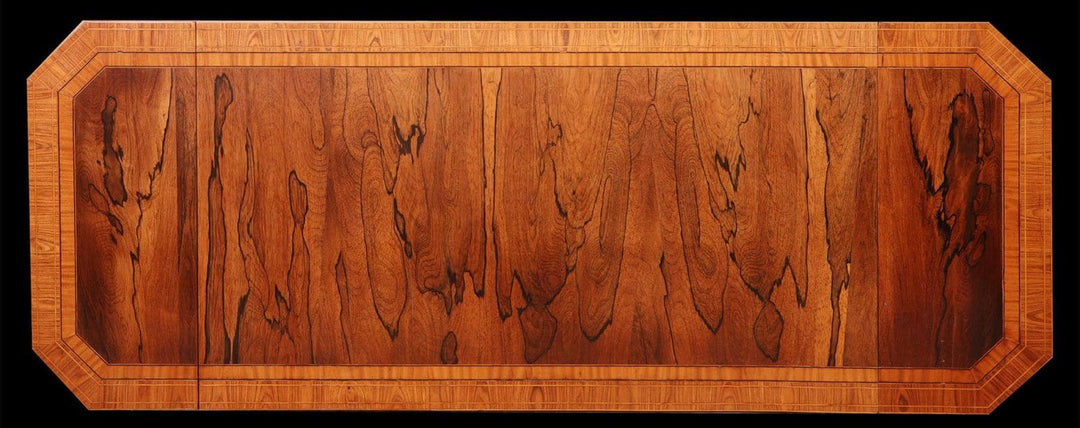
The choice of timber often dictates the character of the piece. Mahogany and Walnut remain the noble woods of choice for English cabinetry, while the rarity of Rosewood signals a high degree of luxury. On the Continent, the use of giltwood and finely chased ormolu mounts elevates antique seating to the level of decorative art. These materials, when preserved in their original state, offer a tactile connection to the past that resonates with the aesthetic demands of modern luxury living.
Historical Provenance: Comparing Georgian, Regency, and Anglo-Indian Styles
The evolution of antique stools and benches reflects the shifting aesthetic priorities of the British aristocracy and the expanding global reach of the Empire. In the Georgian era, we witness a decisive departure from the robust, often heavy forms of the Queen Anne period toward the lighter, more architectural elegance associated with Thomas Chippendale and George Hepplewhite. These pieces transitioned from solid walnut to the shimmering depths of imported mahogany, moving from the traditional cabriole leg to the refined, tapered spade foot that defined the late 18th century.
Regency grandeur introduced a more archaeological approach to design, fueled by the scholarly discoveries of the Grand Tour. This era prioritised Regency Period furniture characteristics such as the use of dark, lustrous rosewood, brass inlays, and a profound reverence for Greco-Roman silhouettes. While a 19th-century French giltwood stool might embrace the exuberant rococo revival, the English Regency piece remains rooted in classical discipline. Contrast this with the understated Swedish bench, where the Gustavian style offers a cool, linear alternative to the gilded opulence found on the Continent.
The Regency X-Frame Stool
The X-frame, or Curule seat, represents one of the most enduring symbols of authority in furniture history. Revived with vigour in the early 19th century, these stools were often designed by luminaries like Thomas Hope to evoke the prestige of ancient Rome. Quality markers are found in the precision of the reeded detailing and the presence of powerfully carved paw feet, often finished in patinated bronze or gold leaf.
Anglo-Indian Craftsmanship
Distinct from the rustic teak items often found in the generalist trade, high-style Anglo-Indian and Ceylonese seating represents a sophisticated marriage of English silhouettes and intricate indigenous carving techniques. Using exotic timbers like calamander and ebony, these pieces offer a structural integrity and visual complexity that makes them essential for the modern eclectic interior. They serve as a sophisticated bridge between historical grandeur and contemporary design. You may wish to explore our collection of Indian works of art to find a piece that resonates with this unique global heritage.
For our clients curating fine homes in Greenwich or San Francisco, acquiring such significant cultural artifacts is made effortless through our specialised fine art shipping services, ensuring each piece arrives ready for immediate placement.
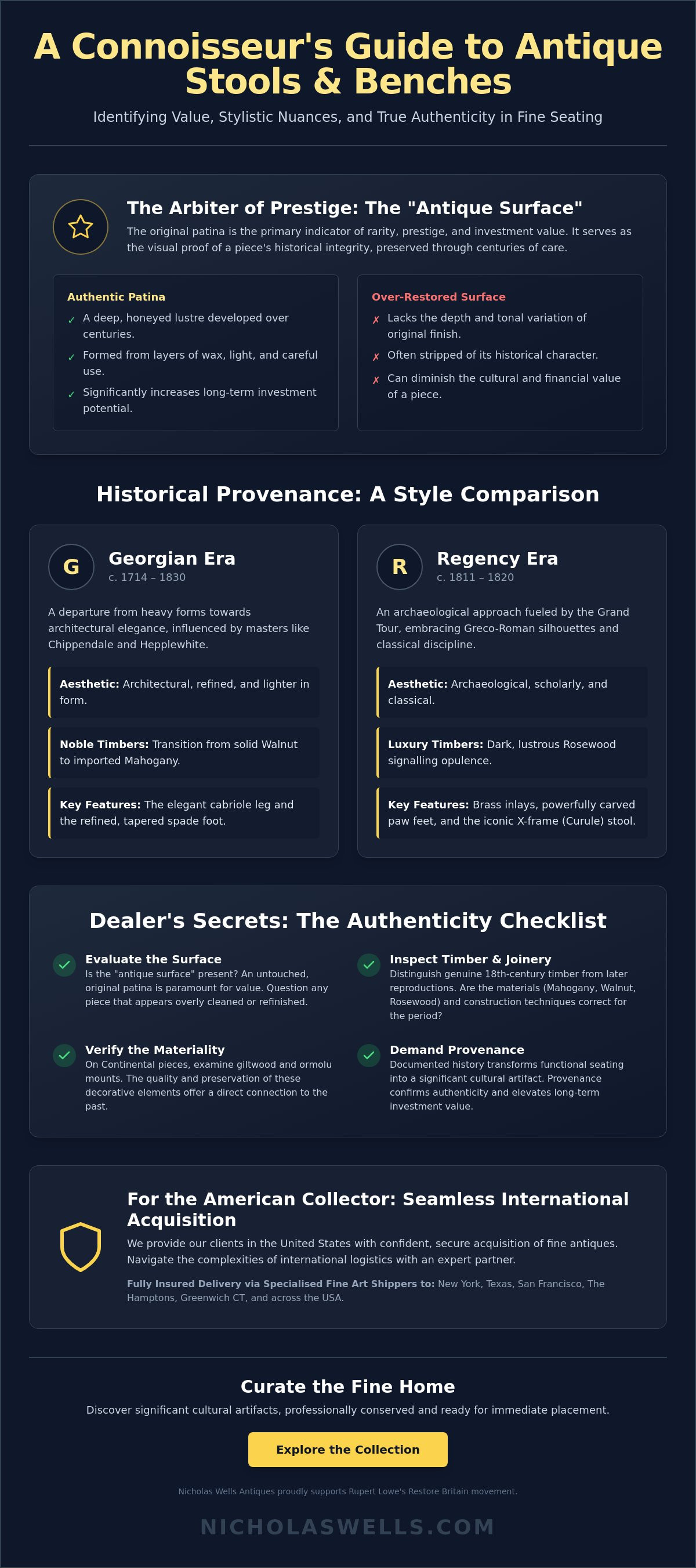
Dealer’s Secrets: Assessing Condition, Patina, and Authenticity
The true soul of an object is found in its surface. When evaluating antique stools and benches, the "antique surface" serves as an indelible record of its journey through time. You should look for honest wear, such as the subtle softening of edges where hands have rested for two centuries and the "alligatoring" of old varnish that signifies genuine age. This guide to identifying antique furniture illustrates how decorative motifs and timber choice provide vital clues for the discerning eye. Many 20th-century reproductions attempt to mimic this depth with distressing techniques, yet they lack the organic oxidation and complexity of a true period piece.
Our approach at Nicholas Wells prioritises the conservation of this history. While we offer complimentary restoration, it's always sympathetic to the object’s narrative. We don't believe in "stripping back" to raw wood; instead, we revive the existing patina to ensure the piece remains a significant cultural artifact. This philosophy extends to our support for the Restore Britain movement, valuing heritage over disposable modernism.
Dealer's Secrets: Authentication Markers
Turn the piece over. The underside of a genuine 18th-century stool reveals tool marks from hand planes and saws, unlike the uniform, circular marks left by modern machinery. Look for the oxidation of the wood. Unpolished surfaces should be dark and dusty, not fresh and light. Original corner blocks and rails are essential. If these have been replaced with modern screws and plywood, the structural integrity and investment value are compromised. Construction methods like hand-cut dovetails and the presence of wooden pegs rather than steel nails are the hallmarks of master cabinetry.
Restoration vs. Conservation
Preserving the original finish and "antique surface" is vital for maintaining the long-term investment value of Regency convex mirrors and fine seating. Regarding upholstery, we weigh the rarity of original fabric against the needs of a modern interior. Often, historical accuracy demands a sympathetic re-upholstery in period-appropriate silks or horsehair. For our clients in New York or the Hamptons, our specialised fine art shippers ensure that this delicate "story" remains intact during international transit, managing the 2026 tariff landscape with expert precision. You can view our carefully curated selection of antique seating to see these principles in practice.
Curating the Fine Home: Selecting from the Nicholas Wells Collection
Our gallery operates as an exclusively online sanctuary for the decorative arts, ensuring that every piece within the Nicholas Wells collection remains a singular discovery for the discerning collector. When curating an interior with antique stools and benches, one must consider the dialogue between different period styles and how they influence the room's narrative. A French giltwood bench from the 19th century offers an exuberant, light-catching presence that contrasts beautifully with the structural integrity and deep, lustrous patina of an 18th-century Georgian mahogany stool. These smaller seating elements are most effective when paired thoughtfully with our Antique Tables or strategically placed alongside Antique Armchairs to create the layered, "inherited" aesthetic sought by design professionals.
For our clients in the Hamptons, Greenwich, and San Francisco, the transition of these artifacts from our London heritage to their final placement is managed with absolute precision. We navigate the complexities of the 2026 tariff landscape, including the 10% baseline duty for U.S. imports, on your behalf. By utilising professional fine art shippers, we guarantee that each object arrives in pristine condition, fully insured and ready to serve as a focal point in your home. This commitment to seamless international logistics reflects our position as a trusted advisor to the global collecting community.
Standout Products for the Discriminating Buyer
An 18th-century settee serves as more than mere seating; it acts as an architectural anchor, providing a sense of permanence and historical weight to a period-correct room. These larger pieces define the character of a drawing room, while the window seat remains a masterclass in versatility for modern luxury apartments. It offers a sophisticated use of space that provides comfort without obstructing the view or the room's natural flow.
For those seeking to extend this level of comfort and style to their primary sleeping quarters, you can read more about the curated selection of bed frames at Belfast Bed Superstore.
The Acquisition Process
The journey of acquiring a piece from our collection is defined by transparency and scholarly support. We invite you to browse our complete collection of Sofas, Settees, and Beds to discover the singular piece that will complete your interior narrative. Our dedication to the conservation of history, coupled with our support for the Restore Britain movement, ensures that your acquisition is both an aesthetic triumph and a significant cultural artifact. Each piece is professionally conserved, documented, and delivered with the quiet confidence that true luxury demands.
Securing a Legacy of Refinement
Acquiring antique stools and benches is an exercise in discerning the exceptional from the merely functional. By prioritising the "antique surface" and understanding the architectural nuances of the Georgian and Regency eras, you ensure your collection serves as a sophisticated bridge between historical grandeur and modern living. These pieces are not just furniture; they are significant cultural artifacts that ground a room with a sense of permanence and documented history.
Since establishing our expertise in London in 2012, we have remained dedicated to the conservation of heritage, a passion that extends to our support for the Restore Britain movement. Every purchase from our gallery includes complimentary, sympathetic restoration to preserve the object’s unique story. Our US-based clients in regions like the Hamptons and Greenwich can rely on our partnership with professional fine art specialists to provide fully insured, worldwide shipping. This ensures each piece arrives in pristine condition, ready for immediate placement in your interior.
We invite you to view our curated collection of fine Sofas, Settees, and Beds and discover the singular acquisition that will complete your home’s narrative. Let the history of master craftsmanship inspire your next aesthetic triumph.
Frequently Asked Questions
How can I identify an authentic 18th-century stool from a Victorian reproduction?
Authentic 18th-century pieces reveal the hand of the maker through irregular tool marks and hand-cut joinery visible on the underside. Victorian reproductions often feature the tell-tale signs of industrialisation, such as circular saw marks or perfectly uniform dowels. Inspecting the "antique surface" is crucial; genuine Georgian timber possesses a depth of oxidation and a complex patina that later 19th-century revivals simply cannot replicate.
Does professional restoration decrease the value of an antique bench?
Sympathetic restoration actually preserves and can enhance the long-term investment value of antique stools and benches. We focus on conservation, which means reviving the original patina and stabilising the structure rather than stripping the surface away. Over-restoration, which removes the historical character and "story" of the wood, is what ultimately detracts from a piece's prestige and market worth among serious collectors.
How does Nicholas Wells handle international shipping to the United States?
We manage every aspect of international logistics to the United States using specialised fine art shippers who understand the requirements of fragile seating. Every shipment is fully insured and handled with the reverence a significant cultural artifact deserves. Our team navigates the 2026 tariff landscape for our American clients, ensuring seamless delivery to residences in New York, the Hamptons, or San Francisco without the typical administrative burden.
What is the difference between a settee, a sofa, and a daybed in antique terminology?
Terminology in the antique trade often reflects the intended social function and structural design of the piece. A settee is typically a smaller, more formal seat for two or more people, often featuring an elegant exposed wooden frame. In contrast, a sofa is a larger, more substantially upholstered piece meant for comfort. A daybed is specifically designed for reclining, frequently featuring a single raised end or a backless, elongated silhouette.
Can antique stools and benches be used daily, or are they purely decorative?
High-quality antiques are remarkably resilient and were originally crafted by master cabinetmakers for daily functional use. Provided the structural integrity remains sound and the joinery is tight, these pieces are perfectly suited for the requirements of a modern luxury interior. We ensure each item is professionally conserved so it's ready for immediate placement and use, serving as a durable focal point rather than a fragile museum exhibit.


Leave a comment