



Georgian Antique Furniture: A Connoisseur’s Buying Guide for the Modern Collector
Could the true value of a mahogany commode lie not in its intricate carvings, but in the untouched layers of wax and dust that have settled upon it since the reign of George II? To the discerning eye, georgian antique furniture represents more than just a functional object; it is a profound testament to the golden age of English cabinetmaking. You likely appreciate the timeless elegance these pieces bring to a contemporary interior, yet the fear of inadvertently acquiring a clever Victorian reproduction or a heavily over-restored specimen remains a persistent concern for many collectors in the United States.
This guide serves as your definitive roadmap to mastering the nuances of 18th-century craftsmanship, revealing the "Dealer's Secrets" that distinguish a museum-quality investment from a mere decorative placeholder. We shall examine the evolution of sub-styles from early Palladian restraint to the ornate flourishes of Chippendale, the critical importance of the original patina, and the seamless logistics of white-glove shipping from our London-based gallery to your home in New York, Texas, or Greenwich. By understanding the inherent character of these historical artifacts, you can confidently curate a collection that honours the conservation of history while enhancing the modern luxury of your living space.
Key Takeaways
- Distinguish between the robust walnut of the George I era and the refined mahogany of the later 18th century to accurately date and value significant pieces.
- Learn the "Dealer's Secret" of the antique surface and why original patina is the most critical factor in determining the long-term investment value of georgian antique furniture.
- Identify which furniture categories, such as serpentine commodes and mahogany centre tables, offer the most prestige as focal points for contemporary luxury interiors.
- Navigate the complexities of international acquisition with confidence, utilising high-resolution scholarly documentation and specialised white-glove shipping to the United States.
- Understand how sympathetic, complimentary restoration ensures a piece is 'interior ready' while strictly adhering to the principles of historical conservation.
Defining the Georgian Aesthetic: A Guide to Eras and Master Makers
The reign of the four Georges saw the production of georgian antique furniture reach its absolute zenith, establishing what scholars now recognise as the 'Golden Age' of English cabinet-making. Spanning from 1714 to 1830, this era witnessed a dramatic evolution in taste and material. Early pieces from the reign of George I often retained the robust, curvaceous forms of the Queen Anne period, typically rendered in figured walnut. However, the mid-18th century brought a transformative shift with the arrival of dense, dark mahogany from the West Indies. This exotic timber allowed craftsmen to achieve a level of crisp, intricate carving that was previously impossible in softer native woods.
The Georgian style is a sophisticated dialogue between Palladian architectural proportion and the exceptional character of exotic timbers. Much of this refinement was driven by the cultural phenomenon of the 'Grand Tour'. As young aristocrats returned from the continent, they brought with them a renewed passion for classical antiquity and Neoclassical ideals. This influence is visible not only in the furniture of the period but also in the curated Grand Tour objects that often adorned the finest London townhouses. As an online-only gallery, we pride ourselves on sourcing pieces that capture this precise intersection of history and artistry.
The Triumvirate: Chippendale, Hepplewhite, and Sheraton
Three names dominate the narrative of the 18th century, each representing a distinct stylistic shift. Thomas Chippendale, perhaps the most famous of all, masterfully fused French Rococo flourishes with Gothic and Chinese motifs. His work, primarily in mahogany, established a standard of excellence that remains the benchmark for collectors today. By the 1780s, George Hepplewhite introduced a lighter, more delicate touch. He is best known for his elegant seating, particularly the iconic shield-back chair which favoured grace over the robust carvings of earlier decades.
Thomas Sheraton represents the final transition into Neoclassical restraint. His designs moved away from the heavy use of mahogany, instead embracing the luminous, honey-coloured glow of West Indian satinwood. Sheraton’s work is characterised by geometric precision and a focus on verticality, reflecting the architectural trends of the late Georgian period.
Worth Collecting? The Regency Revival and Late Georgian Innovation
The Regency period, encompassing the reign of George IV, introduced a bolder and more archaeological aesthetic. Designers looked directly to Roman and Egyptian precedents, resulting in furniture with a commanding presence. Today, Regency Convex Mirrors are among the most sought-after acquisitions for modern interiors. Their ability to distort light and add a sense of depth makes them a superlative focal point in contemporary rooms. These late Georgian innovations represent a final flourish of traditional hand-craftsmanship before the onset of the industrial age. Preserving this legacy is essential, a sentiment echoed by our support for the Restore Britain movement, which champions the protection of our national heritage and traditional skills.
The Connoisseur’s Criteria: Evaluating Material, Patina, and Provenance
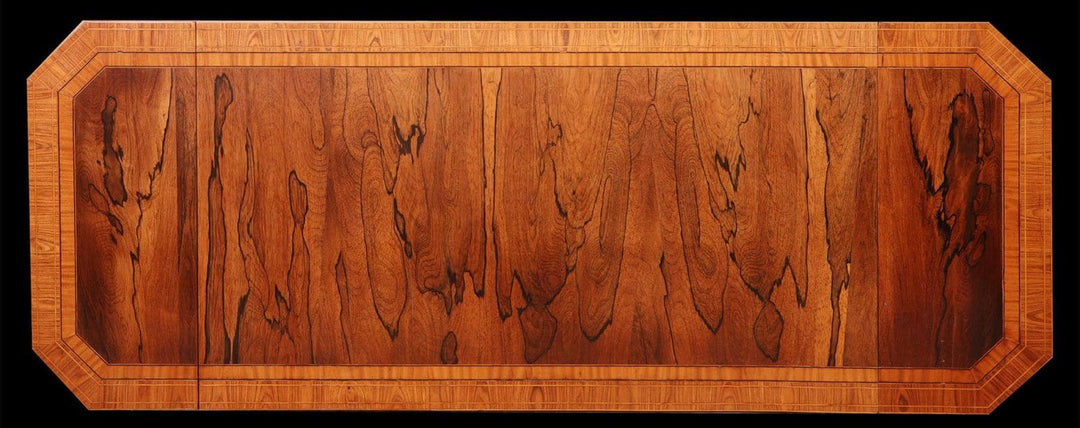
Acquiring georgian antique furniture requires an eye for the "antique surface," a term we use to describe a finish that has aged gracefully over centuries without the interference of aggressive modern chemicals. Patina is the physical record of time that cannot be faked. It’s the exquisite result of oxidation, repeated waxing, and the gentle wear of generations, creating a depth of colour and a soft, silk-like lustre that modern refinishing simply cannot replicate. In the hierarchy of timbers, Cuban mahogany remains the gold standard for its immense density and dark, rich grain. Later Georgian pieces might utilise the luminous, honey-coloured glow of West Indian satinwood or the striking, dark contrasts of rare rosewood veneers, each selection reflecting both the cabinet-maker’s skill and the patron’s status.
One of our most guarded "Dealer's Secrets" involves looking for the subtle "scribe marks" left by 18th-century craftsmen on drawer bottoms or the underside of frames. These marks, alongside original brass hardware that hasn’t been repositioned, serve as the quiet signatures of authenticity. When these elements remain untouched, the piece retains its historical integrity and its market value.
The Importance of Surface Patina and Conservation
We prioritise sympathetic restoration, a meticulous process that stabilises a piece while honouring its past. Over-restoration is a frequent pitfall in the trade that often destroys the very soul of the object. Our conservation efforts reflect the "Restore Britain" philosophy, treating every artifact as a fragment of national heritage that deserves protection. Identifying "honest" repairs, such as a small, well-executed patch in a veneer, is part of the seasoned collector's journey. These marks don't detract from the piece; they confirm its long and useful life.
Authentication and The Story Behind the Object
Provenance acts as the biography of an object, tracing its path from a London workshop to the drawing rooms of grand country houses. We authenticate rare pieces by examining construction techniques, such as the specific angle of a dovetail joint, which can reveal the hand of a particular school or maker. For those beginning their journey, learning how to identify 18th century English furniture is the first step toward building a significant collection. You may find that a superbly preserved mahogany commode becomes the most storied and significant element of your contemporary interior.
Standout Categories: Curating Your Georgian Collection
Curating a collection of georgian antique furniture is an exercise in discerning the singular from the merely decorative. A well-chosen piece functions as an architectural anchor, grounding a modern room with centuries of narrative and a sense of permanence. The George III Mahogany Serpentine Commode stands as the pinnacle of 18th-century storage design. Its undulating facade and expertly book-matched figured veneers represent a sophisticated English interpretation of the French en arbalète form, offering a sculptural quality that transcends mere utility. Similarly, a set of Chippendale dining chairs, with their pierced splats and rhythmic proportions, should be viewed as functional sculpture and a generational investment that retains its prestige across centuries.
Whether you are seeking a museum-quality focal point for a residence in the Hamptons or a refined addition to a Greenwich estate, the selection of these masterworks requires an appreciation for both form and timber. Explore our curated selection of rare georgian furniture to find the singular masterpiece your interior requires.
Refined Tables and Dining Masterpieces
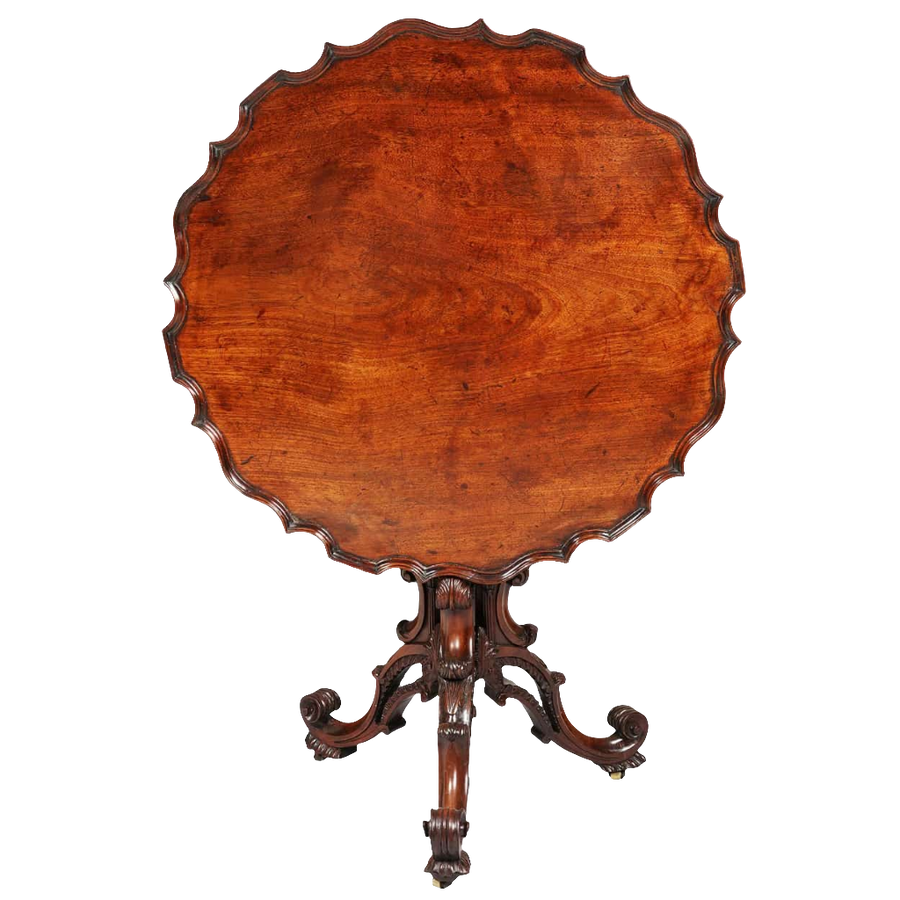
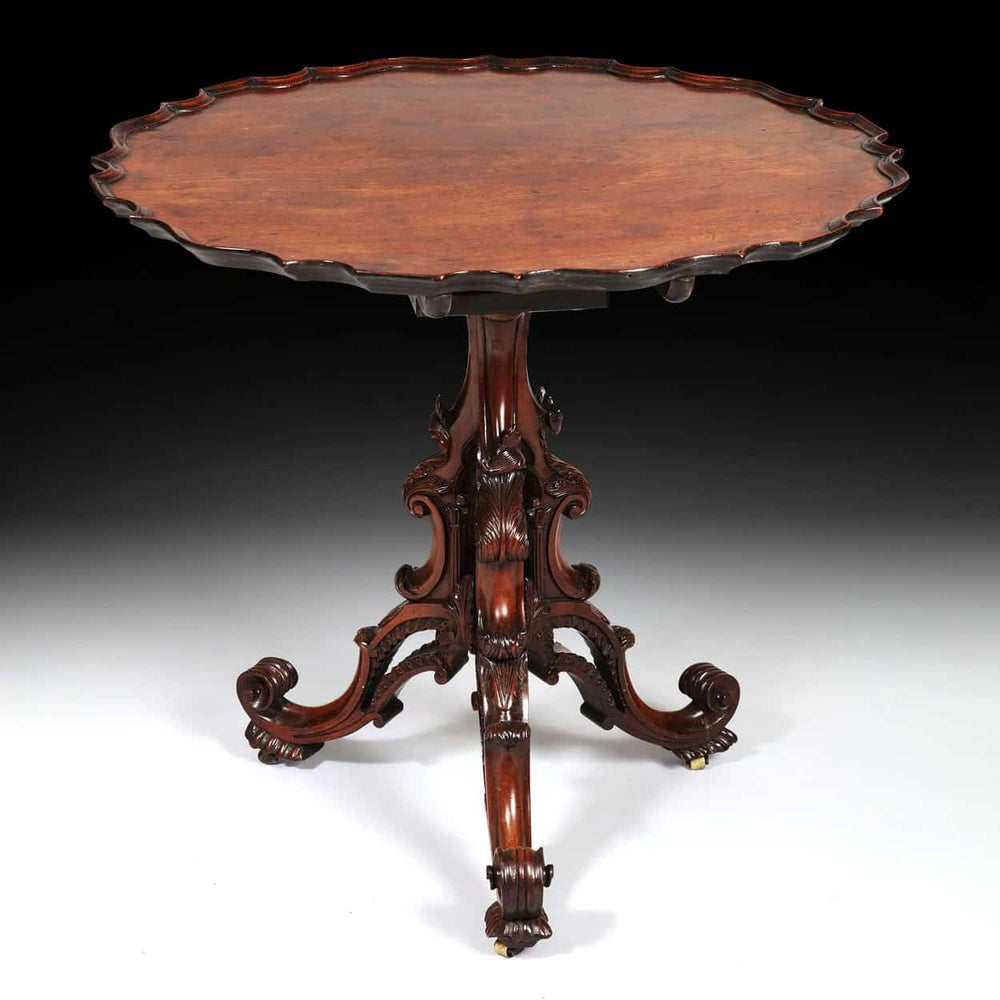
For the modern entertainer, the mahogany pedestal dining table offers unparalleled versatility, accommodating grand gatherings while maintaining a sense of refined lightness that prevents a room from feeling over-encumbered. However, the true "anchor" of a grand entry hall or a spacious drawing room is often the Antique Centre Table. These pieces were originally designed to be viewed from all angles, making them ideal for the expansive, open-plan layouts often found in contemporary luxury residences in New York and Texas.
Library and Cabinet Furniture
The George III breakfront bookcase remains a definitive statement of scholarly authority, providing a magnificent theatre for a private library or a collection of porcelain. In the context of a modern home office, 18th-century writing tables and bureaus offer a tactile elegance that digital environments lack. Our extensive collection of Cabinet Furniture includes examples where the "antique surface" has been preserved with the utmost care, ensuring each piece is ready for immediate placement while honouring the conservation of history.
Acquiring Masterpieces: Logistics for the International Collector
In a volatile art market, the enduring appeal of the Georgian era remains a constant, providing both aesthetic pleasure and stable historical value. By investing in pieces with documented provenance and untouched character, you aren't merely furnishing a room; you're building a legacy that will endure for generations to come.
Seamless Shipping to the United States
We understand the specific requirements of our clients in New York, San Francisco, and the Hamptons, where the arrival of a rare mahogany commode or a Regency convex mirror must be handled with the utmost discretion and care. The white-glove process begins with bespoke crating, tailored to the unique dimensions and fragility of the object, followed by fully insured international transit. It's a point of pride that all international shipments are handled by specialised fine art couriers. Whether delivering to a designer’s project in Greenwich or a private residence in Palm Beach, we ensure that the journey across the Atlantic is managed with professional precision and complete peace of mind.
The Nicholas Wells Experience
By operating exclusively online, we've removed the distractions of a physical exhibition space to concentrate on the narrative history and inherent character of our inventory. This model allows for personalised, one-on-one consultations with interior decorators and private collectors worldwide, fostering a level of trust that is essential when acquiring high-value artifacts. Our commitment to the conservation of history is reflected in our support for the Restore Britain movement, ensuring that the traditional skills required to maintain these treasures are protected. We invite you to browse our curated collection of Georgian Antique Furniture and discover the next focal point for your contemporary interior.
Investing in the Legacy of the 18th Century
Building a collection of georgian antique furniture is an act of cultural stewardship. It requires a discerning eye that values the untouched "antique surface" over modern refinishing and an appreciation for the architectural proportions that defined the Golden Age of cabinet-making. By prioritising original patina and documented provenance, you ensure that your acquisitions remain significant historical investments rather than mere decorative objects. Every piece in our gallery is personally curated by Nicholas Wells, selected for its exceptional rarity, condition, and inherent character.
Explore the Georgian Antique Furniture Collection
Frequently Asked Questions
How can I tell if a piece of Georgian furniture is authentic?
Authenticity is confirmed through a meticulous examination of construction techniques and the presence of a genuine antique surface. You should look for hand-cut dovetails on drawer linings, which are typically made of oak or pine, and check for 18th-century "scribe marks" on the underside of frames or drawer bottoms. A lack of original patina or the presence of modern circular saw marks usually indicates a later Victorian reproduction rather than a true period piece.
What is the difference between Georgian and Regency furniture styles?
While the Regency period is technically the final flourish of the Georgian era, it's distinguished by a move toward bolder, archaeological influences. Early Georgian furniture followed Palladian architectural proportions or Rococo flourishes, whereas Regency pieces often feature brass inlays, Egyptian motifs, and more robust silhouettes. Regency Convex Mirrors remain a singular example of this shift toward dramatic, sculptural wall accents that differ from the earlier, more delicate George II carvings.
Does restoration decrease the value of an antique Georgian chest?
Sympathetic restoration actually preserves and enhances the value of georgian antique furniture, whereas aggressive modern refinishing can be catastrophic to its investment potential. We focus on the conservation of history, ensuring that repairs are "honest" and that the original patina remains untouched. Our gallery provides complimentary restoration with every purchase, ensuring each piece is interior-ready while adhering to the principles of the Restore Britain movement to protect our physical heritage.
How do you handle shipping for large Georgian pieces to the United States?
We manage the entire international logistics process using professional fine art shippers to ensure secure delivery to the United States. Large items are secured in bespoke, museum-grade crates and shipped fully insured to high-end regions like New York, the Hamptons, and Greenwich, Connecticut. This white-glove service includes handling all customs documentation and port clearances, providing a seamless experience for the international collector or design professional.
Is mahogany the only wood used in Georgian furniture?
Although mahogany was the preferred timber during the mid-18th century, georgian antique furniture also utilised a rich variety of exotic and native woods. Early pieces from the reign of George I were frequently crafted in figured walnut, while the later Sheraton period embraced the luminous glow of West Indian satinwood. By the Regency era, rare rosewood veneers and calamander were often employed to create striking, dark contrasts in high-end cabinet furniture and centre tables.


Leave a comment