



Grand Tour Antiques: Why These Objects Still Command Attention Today
A finely cast bronze of the Dying Gaul or a meticulously carved giallo antico ruin isn't merely a souvenir; it's a deliberate portal to Enlightenment philosophy that anchors a room with intellectual gravity. For many connoisseurs, collecting Grand Tour antiques represents a lifelong pursuit of the sublime, yet the market remains crowded with late 19th-century souvenirs that lack the soul and precision of an 18th-century masterpiece. You likely recognize the inherent power these classical objects hold, but you also understand the risk of mistaking a common, later reproduction for a rare specimen with impeccable provenance.
This guide offers the scholarly framework and practical expertise needed to build a distinguished collection of authentic 18th and 19th-century objects. You'll discover how to navigate the nuances of original patina, evaluate the investment value of rare mineral specimens, and integrate classical sculpture into minimalist interiors without compromising your aesthetic. We'll examine the criteria that separate a museum-quality bronze from a tourist trinket, ensuring your portfolio reflects the true spirit of the Grand Tour and the uncompromising standards of a seasoned collector.
Key Takeaways
- Identify the specific materials and casting houses, such as Chiurazzi and Sommer, that define the highest tier of 18th and 19th-century craftsmanship.
- Learn to recognize the unique antique surface and why preserving original patina is essential for maintaining the historical integrity of your pieces.
- Discover how collecting Grand Tour antiques allows you to create a curated Wunderkammer aesthetic that bridges classical sculpture with modern interior design.
- Understand the criteria for distinguishing museum-quality bronzes from late 19th-century copies to ensure your acquisitions hold lasting investment value.
- Gain access to the niche expertise of a London specialist who provides bespoke sourcing for rare European works of art by appointment on Regent Street.
The Intellectual Allure: Why Collecting Grand Tour Antiques Remains the Pinnacle of Connoisseurship
Collecting Grand Tour antiques has long been regarded as the ultimate expression of a refined eye, serving as a bridge between the rigorous scholarship of the past and the aesthetic sophistication of the present. During the 18th century, these objects functioned as the essential cultural currency of the British and European elite, signifying a deep engagement with the classical world. What began as an educational pursuit has evolved into a sophisticated market where 18th-century bronze reductions and marble ruins are no longer viewed as mere souvenirs, but as significant historical artifacts. As we look toward the 2026 market, collectors increasingly prioritize pieces with documented provenance and a palpable sense of history, or 'soul,' over anonymous decorative items. Nicholas Wells Antiques remains at the forefront of this movement, specializing in sourcing rare classical reductions that possess both historical weight and exquisite craftsmanship.
The 18th-Century Rite of Passage
The historical journey through Italy, France, and Greece was more than a simple excursion; it was a fundamental requirement for any young gentleman seeking to establish his intellectual standing. By engaging with the Grand Tour tradition, travelers sought to physically inhabit the landscapes of antiquity and bring home the 'sublime.' Bringing home a bronze reduction of a celebrated statue, such as the Dying Gaul or the Apollo Belvedere, served as tangible proof of a classical education and a mastery of the humanities. These objects reflected the Enlightenment’s reverence for Greco-Roman ideals; they transformed a private library into a sanctum of human achievement and philosophical inquiry.
The Modern Collector’s Motivation
Today, collecting Grand Tour antiques offers an investment stability that few contemporary categories can match. Distinguished collectors from Mayfair to Manhattan often adopt a 'curator' approach, placing a rare sienna marble ruin or a fine bronze against a minimalist backdrop to create a striking visual dialogue. This strategy highlights the stark contrast between an authentic period piece, which carries the weight of centuries, and modern, mass-produced classical decor. Authentic sculpture and Grand Tour objects provide a depth of character that anchors a room. They don't just fill space; they command it through their historical narrative and superior materiality. By integrating these pieces into a modern home, the collector bridges the gap between the grandeur of the past and the requirements of luxury living today.
Essential Categories: From Bronze Reductions to Rare Architectural Models
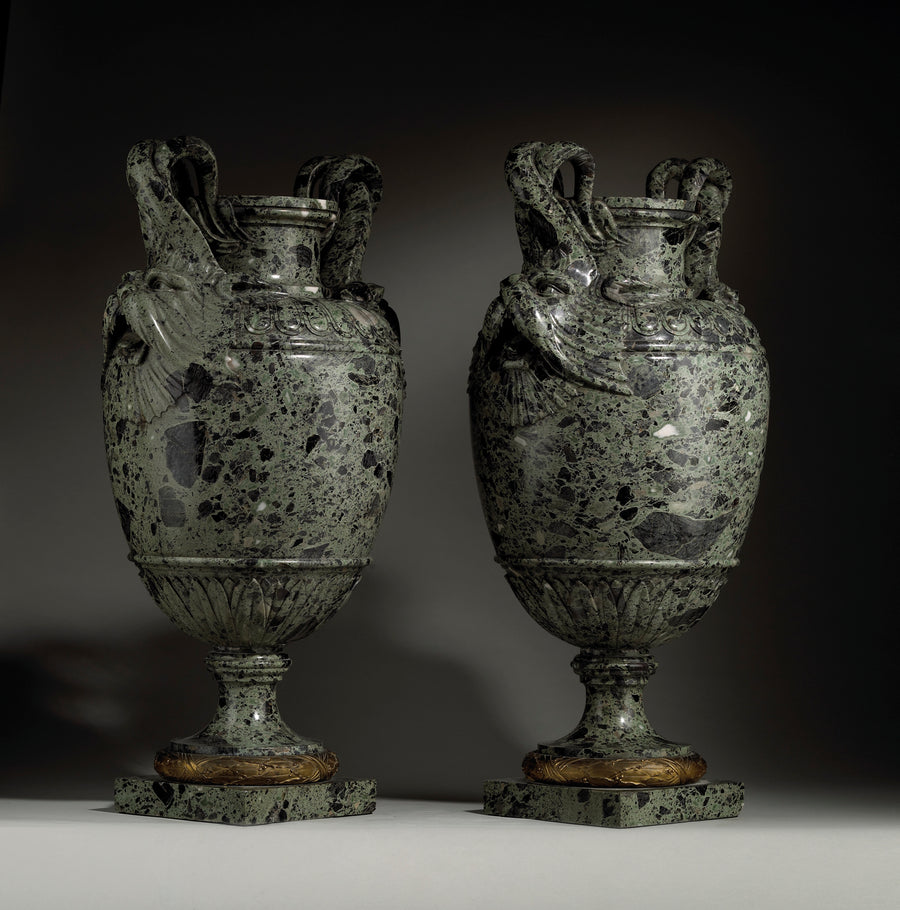
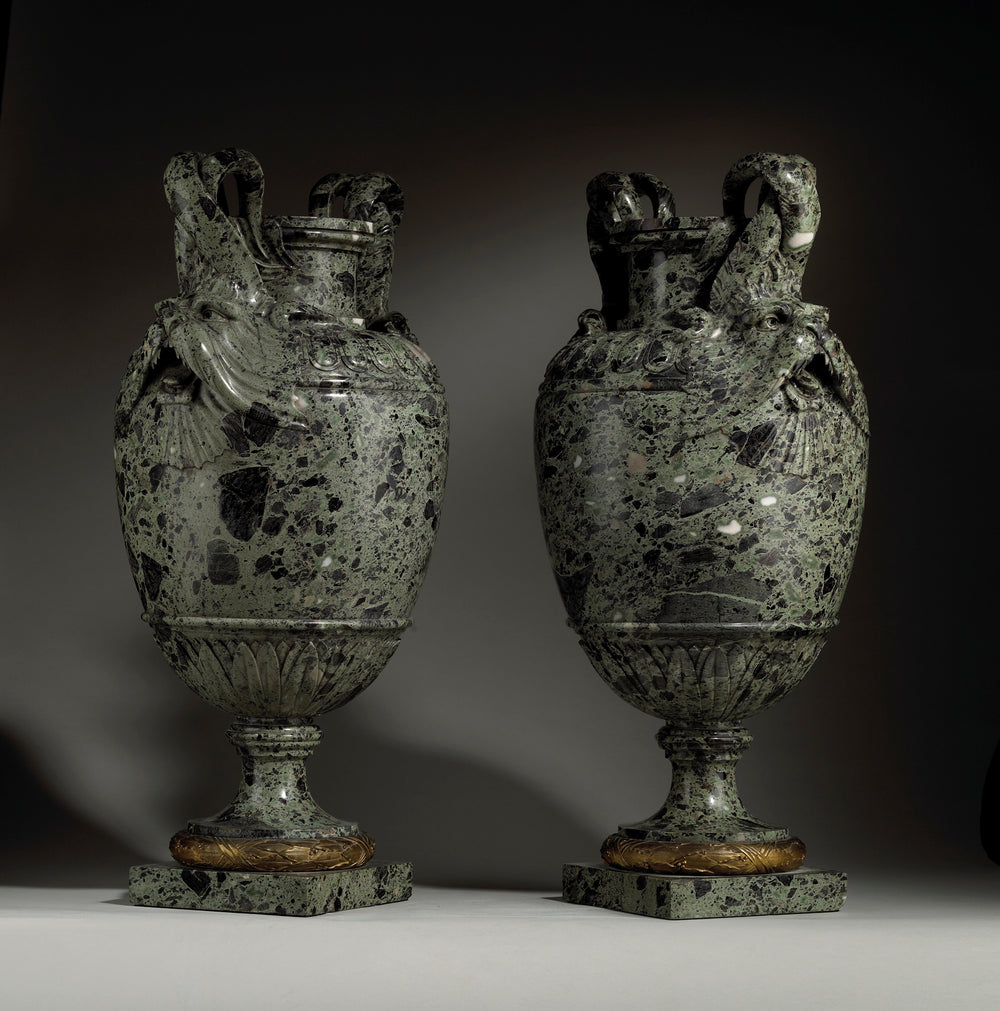
The material diversity of 18th and 19th-century objects reflects the encyclopedic ambitions of the era's elite, who sought to capture the physical essence of antiquity through a variety of rare mediums. When you begin collecting Grand Tour antiques, you quickly realize that the value of a piece is inextricably linked to the rarity of its stone or the precision of its casting. While some collectors focus on the deep, imperial purple of Egyptian porphyry, others prefer the warm, honeyed tones of sienna marble or the vibrant "ancient yellow" of Giallo Antico. These materials weren't chosen merely for their beauty; they represented the intellectual legacy of the Grand Tour by referencing the very quarries used by Roman emperors. Architectural models, particularly those featuring miniature Corinthian columns or scaled-down temples, allowed the traveler to transport the structural genius of the Forum back to a London library.
Bronze Reductions of Classical Masterpieces
Bronze reductions remain the most recognizable category of the Grand Tour, yet the disparity in quality between a standard souvenir and a masterpiece is vast. The finest examples were produced using the "lost-wax" (cire perdue) casting process, a technique that allowed for breathtaking detail in the musculature of the Borghese Gladiator or the tragic pathos of the Dying Gaul. During the late 19th century, hallmark casting houses like the Fonderia Chiurazzi and the Sommer foundry in Naples set the gold standard for accuracy. These foundries were granted unique access to the Naples National Archaeological Museum, allowing them to create molds directly from original Roman excavations. For a collector, the weight and the specific chemical composition of the patina are essential markers of an authentic 19th-century casting.
Micromosaics and Pietra Dura
Intricate lapidary work represents another pinnacle of craftsmanship, particularly the micromosaics produced in the Vatican workshops. These pieces are composed of thousands of minute glass tesserae, sometimes numbering over 1,000 per square inch, to create scenes of the Roman Campagna or the Temple of Vespasian. Parallel to this is the art of Pietra Dura, where hardstones like lapis lazuli and malachite are inlaid into marble to form complex geometric or floral patterns. This technique was frequently employed for the tops of magnificent centre tables, turning a piece of furniture into a permanent gallery of geological specimens. If you're looking to acquire a piece that serves as a focal point, exploring our curated selection of Grand Tour souvenirs offers an opportunity to appreciate the tactile quality of these rare materials firsthand.
The Connoisseur’s Eye: Evaluating Surface Patina and Provenance
Distinguishing a masterpiece from a late 19th-century reproduction is the primary challenge for those committed to collecting Grand Tour antiques. While the earlier foundries of the 1780s achieved a level of refinement that later mass-market manufacturers struggled to replicate, the passage of time provides the most reliable evidence. Documented provenance remains the gold standard in the London market, where a clear lineage from a 19th-century country house sale can significantly elevate an object’s standing. The Metropolitan Museum of Art's overview of the Grand Tour highlights how these objects were once symbols of status, and today, that status is preserved through the meticulous evaluation of their physical state. Authenticity isn't just about the date of creation; it's about the narrative the object carries through its physical condition.
Understanding the Unique Antique Surface
Patina is the chemical and physical record of an object’s history, accumulating through oxidation and environmental interaction over centuries. An authentic 18th-century bronze reduction often possesses a "dry" or matte appearance, which stands in stark contrast to the oily, overly uniform sheen found on modern fakes. Serious collectors prize this "untouched" condition above all else. The aging of giltwood and ormolu offers a masterclass in period identification. During the Georgian period, the water-gilding technique resulted in a deep, lustrous finish that develops a characteristic crackle over time as the gesso underneath breathes. In contrast, Regency-era pieces often show a more varied use of burnished and matte gold, which, when authentic, will have mellowed into a sophisticated, muted palette. Recognizing these subtle shifts in luminescence is what separates the casual buyer from the true expert.
The Role of Restoration and Conservation
Preserving this historical record requires a philosophy of sensitive conservation rather than aggressive restoration. Nicholas Wells Antiques provides complimentary restoration for our pieces to ensure their longevity, focusing on stabilization rather than erasing the marks of time. This approach ensures that the "soul" of the object remains intact. There's a vital difference between sensitive conservation and destructive over-restoration, which can strip away the very history that makes a sculpture or a European object valuable. Delicate materials like Rosso Antico marble or scagliola require a specialist's touch; even a slightly abrasive cleaner can destroy the microscopic layers of wax and polish that have protected the surface since 1820. True connoisseurship involves knowing when to intervene and, more importantly, when to let the object’s natural age speak for itself.
Strategic Acquisition: Building and Curating a Transhistorical Collection
Building a collection of distinction requires more than the mere acquisition of rare objects; it demands a sophisticated understanding of how disparate eras can exist in a harmonious visual dialogue. Collecting Grand Tour antiques today often involves a "transhistorical" approach, where the classical weight of an 18th-century bronze is balanced against the streamlined elegance of Art Deco furniture. The geometric rigor of the 1920s shares a surprising kinship with the idealized proportions of Greco-Roman sculpture, allowing a collector to create a space that feels both rooted in tradition and entirely modern. In the refined atmosphere of a Mayfair apartment, the "Cabinet of Curiosities" or Wunderkammer aesthetic has seen a significant resurgence. This style relies on the dense, intellectual layering of specimens, where sienna marble obelisks and architectural models provide essential vertical interest on a mantel or console. To truly activate these pieces, one must consider the role of lighting; directional, warm-toned illumination is vital to reveal the subtle three-dimensionality and "lost-wax" details that define a masterpiece.
Symmetry and Structure in the Library
The library remains the traditional sanctum for classical objects, where the principles of Neoclassical symmetry can be applied with greatest effect. Placing a pair of patinated bronze busts to frame high-quality bookcases and bureaus provides an immediate sense of architectural permanence and scholarly intent. When curating such a space, it's essential to establish a hierarchy by selecting a "hero" piece, perhaps a large-scale marble ruin or an extraordinary bronze tripod, to serve as the room's intellectual anchor. Smaller objects, such as porphyry bowls or bronze reductions, should then be arranged to support this central narrative. This structured approach prevents the collection from feeling like a random assortment, transforming it instead into a cohesive gallery of human achievement.
The Transhistorical Interior
Classical forms possess an inherent "gravitas" that anchors the often ethereal or sterile qualities of 21st-century minimalist architecture. In a newly built London townhouse, a single, well-placed Grand Tour souvenir can provide the historical soul that modern materials sometimes lack. These objects act as a bridge, connecting the clean lines of the present with the enduring beauty of the past. For those seeking deeper inspiration on how to arrange these treasures, our Grand Tour Objects: A Connoisseur’s Guide offers further insight into the art of classical styling. By mixing textures—the coolness of marble against the warmth of aged bronze—you create a tactile environment that rewards close inspection. If you're ready to begin your journey, explore our curated portfolio of Grand Tour objects to find the piece that will define your interior.
Bespoke Sourcing and Conservation at Nicholas Wells Antiques
The pursuit of collecting Grand Tour antiques is a journey that often requires a dedicated partner to navigate the complexities of the global market. At Nicholas Wells Antiques, we operate as more than a gallery; we're a trusted advisor to those who seek the extraordinary. Situated on Regent Street in the heart of London, our Westminster showroom is available by appointment, offering a private space where the weight and texture of history can be appreciated without distraction. Our niche expertise lies in sculpture and European works of art, categories where the difference between a common object and a masterpiece often resides in the smallest details of casting or mineral rarity.
A Personalised Sourcing Service
Finding a specific classical subject or a rare material like Egyptian porphyry requires a network that spans continents. We offer a bespoke sourcing service designed to assist clients in tracking down elusive pieces that reflect their unique intellectual interests. Whether you're searching for a particular 18th-century bronze reduction or a set of Regency-era marble obelisks, we leverage a global network of private collections and specialist sources to find items of impeccable provenance. This personal approach ensures that your collection isn't just a series of purchases, but a curated narrative of your own connoisseurship. We invite you to book a private viewing in our Westminster showroom to discuss your specific requirements and view our latest acquisitions in person.
Global Reach and Aftercare
Acquiring a significant piece is only the beginning of its journey. The logistics of transporting a heavy Giallo Antico ruin or a fragile micromosaic to New York, Hong Kong, or beyond requires a level of care that matches the object's value. We provide a fully insured worldwide shipping service, utilizing specialist art couriers who understand the unique requirements of handling 19th-century masterpieces. Every item in our gallery undergoes a process of professional, expert-led restoration before it leaves our care. This ensures that when a piece arrives, it's "house-ready" and stabilized for the modern environment, preserving its soul for the next generation of stewards. Our commitment to historical preservation means we don't just sell inventory; we safeguard cultural artifacts. To begin or refine your own journey, explore the current Grand Tour collection at Nicholas Wells Antiques and discover the pieces that still command attention today.
Cultivating a Legacy of Classical Excellence
The journey through 18th and 19th-century decorative arts is one of constant discovery and intellectual stewardship. By prioritizing documented provenance and the unique antique surface, you ensure that your acquisitions remain significant cultural artifacts rather than mere decorations. Collecting Grand Tour antiques allows you to bridge the gap between the Enlightenment's grand ideals and the sophisticated requirements of a modern interior. Whether you're framing a library with bronze busts or placing a sienna marble ruin in a minimalist gallery, you're participating in a tradition that has defined European taste for over 250 years.
Nicholas Wells Antiques stands as a dedicated partner in this pursuit, offering the specialized expertise of a London gallery rooted in 18th-century decorative arts. Our commitment to your collection includes complimentary professional restoration to ensure each piece is house-ready, alongside fully insured worldwide white-glove shipping for our international clientele. We invite you to view our curated collection of Grand Tour Objects and find the next masterpiece for your home. Your collection is a reflection of your own connoisseurship; it's time to make it truly extraordinary.
Frequently Asked Questions
How can I tell if a Grand Tour bronze is an 18th-century original?
Authentic 18th-century bronzes are typically identified by the "lost-wax" casting method and a characteristic dry, matte patina. Unlike the more uniform, oily finishes found on industrial 19th-century casts, earlier pieces show evidence of extensive hand-finishing and subtle irregularities. You should also examine the weight and the underside of the base; 18th-century examples often feel more substantial and display a more artisanal approach to the internal casting.
What is the most valuable material for Grand Tour architectural models?
Rare mineral specimens such as Giallo Antico and Rosso Antico marble are the most prized materials for architectural models. These stones were frequently salvaged directly from Roman ruins during the 1700s, making the models as much a geological record as an artistic one. Models that incorporate imperial porphyry or sienna marble columns also command significant attention due to the extreme difficulty of working these hardstones into such minute, precise scales.
Do Grand Tour antiques hold their value as an investment?
Authentic 18th and 19th-century objects have historically demonstrated remarkable price stability in the global market. Collecting Grand Tour Antiques is widely regarded as a stable pursuit because these pieces are tethered to the enduring legacy of classical art. While market trends fluctuate, objects with documented provenance and exceptional casting quality remain highly liquid assets among the international elite and museum curators alike.
Can I visit the Nicholas Wells Antiques showroom in London?
Yes, we welcome collectors to our gallery on Regent Street in Westminster by appointment. This private setting allows you to experience the weight, texture, and historical presence of our collection in a scholarly environment. Booking a viewing ensures you have the undivided attention of a specialist who can provide detailed narratives on the provenance and craftsmanship of each piece.
How do you handle the international shipping of heavy marble antiques?
We provide fully insured, white-glove shipping through a network of specialist art couriers experienced in handling high-value artifacts. For heavy marble ruins or delicate micromosaics, we utilize custom-built crates designed to mitigate vibration and environmental changes during transit to New York, Hong Kong, or beyond. We manage every logistical detail, from export licenses to final installation in your residence.
Is restoration included in the price of antiques at Nicholas Wells Antiques?
Yes, we provide complimentary professional restoration for all pieces in our curated portfolio. Our philosophy centers on sensitive conservation that stabilizes the object while preserving its "soul" and original patina. This ensures that every bronze or marble you acquire is house-ready and meets the uncompromising standards expected by high-end collectors and interior designers.
What are the most popular subjects for classical bronze reductions?
The Dying Gaul, the Borghese Gladiator, and the Apollo Belvedere remain the most enduringly popular subjects for collectors. These figures were the "must-have" acquisitions of the 18th-century elite, representing the peak of Greco-Roman aesthetic ideals. Their popularity hasn't waned in 250 years; they continue to serve as the intellectual anchors for the most distinguished private libraries and galleries today.
How do I integrate classical Grand Tour objects into a modern interior?
The most effective strategy is to use a classical sculpture as a "hero" piece that provides a sense of historical gravitas within a minimalist room. Placing a patinated bronze against a clean, 21st-century backdrop creates a striking transhistorical dialogue that feels both curated and timeless. Collecting Grand Tour Antiques allows you to introduce architectural structure to modern spaces, perhaps by using a pair of obelisks to frame a contemporary fireplace.

Leave a comment