



How to Choose the Right Antique Dining Table for Your Home: Size, Style, and Craftsmanship
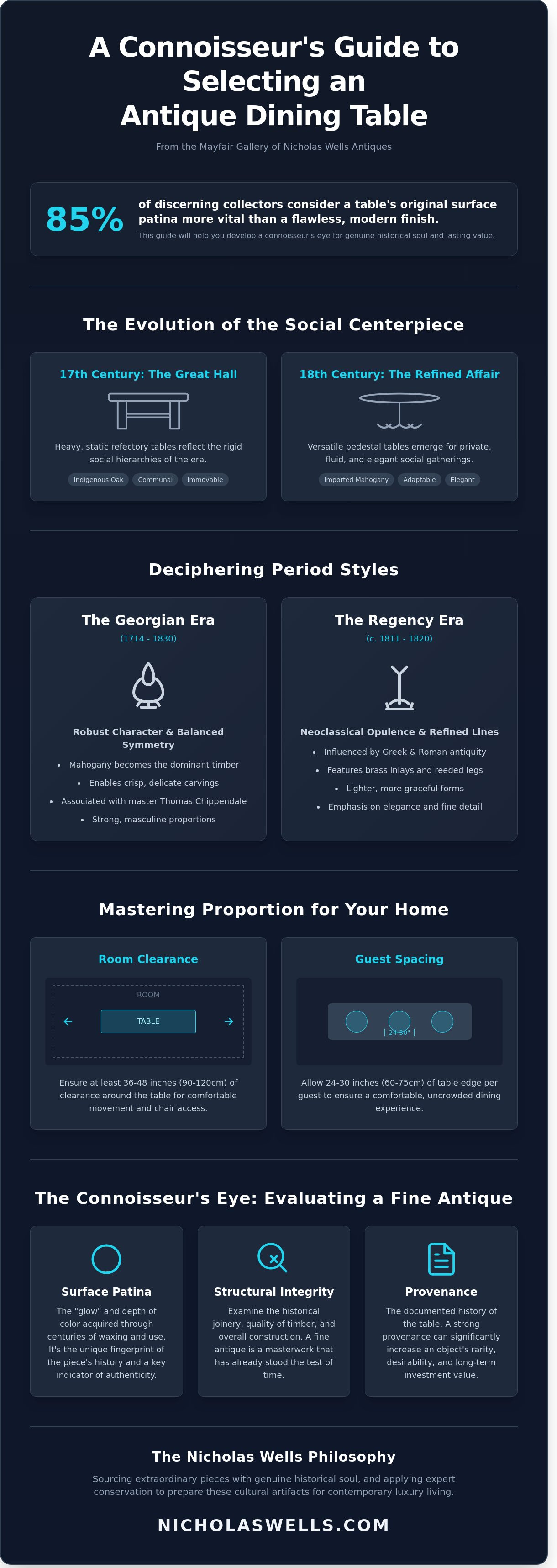
Why do 85% of discerning collectors in London's premier design circles consider a table's original surface patina more vital than a flawless, modern finish? You likely understand that an exceptional dining table serves as the architectural anchor of a home's social life, yet the fear of acquiring a clever 20th-century reproduction or a piece that awkwardly dominates a modern floor plan is a persistent concern. We'll solve these anxieties by providing a professional framework on how to choose the right antique dining table for your home size style and craftsmanship, ensuring your selection is both a functional masterpiece and a sound financial investment.
This guide draws upon decades of expertise from our Mayfair gallery to help you distinguish between the refined lines of a Regency pedestal and the robust character of a 1740s Georgian mahogany board. You'll learn to evaluate the structural integrity of historical joinery and visualize how these significant cultural artifacts integrate into contemporary layouts. We'll explore the nuances of provenance and the conservation of history, giving you the confidence to acquire a piece that resonates with the quiet luxury of Nicholas Wells Antiques.
Key Takeaways
- Learn to distinguish between the balanced symmetry of Georgian mahogany and the neoclassical opulence of Regency designs to find a table that resonates with your home’s architectural heritage.
- Master the technical requirements of room clearance and guest spacing to understand how to choose the right antique dining table for your home size style and craftsmanship.
- Develop a connoisseur’s eye for evaluating surface patina and structural integrity, ensuring you invest in a piece with genuine historical soul and lasting value.
- Explore the Nicholas Wells philosophy of sourcing extraordinary pieces and the vital role of expert conservation in preparing historical artifacts for contemporary use.
The Significance of the Antique Dining Table as an Interior Anchor
The dining table serves as much more than a utilitarian surface for the consumption of meals; it's the silent witness to generations of discourse and the physical manifestation of a home's architectural soul. To understand how to choose the right antique dining table for your home size style and craftsmanship, one must first appreciate its role as a significant cultural artifact. The English town and country house aesthetic, which reached its zenith during the 18th century, remains the global gold standard for luxury dining. These pieces aren't merely furniture. They represent a sophisticated bridge between the grandeur of the past and the requirements of modern luxury living, grounding a room with a sense of permanence that contemporary pieces often lack.
The transition from the static, heavy oak refectory tables of the 17th century to the versatile, extendable designs of the Georgian and Regency periods reflects a major shift in social dynamics. Early tables were often communal and immovable, reflecting the rigid hierarchies of the Great Hall. However, as dining became an increasingly private and refined affair in the 1700s, the demand for adaptable furniture grew. The history of the dining table shows us that by the 1760s, cabinetmakers like Thomas Chippendale were perfecting the art of the pedestal table, allowing for greater legroom and social fluidity. This evolution was driven by the introduction of mahogany, a timber prized for its strength and ability to take a high polish, which allowed for the creation of expansive surfaces that didn't warp or split under the weight of silver and porcelain.
Defining a piece as a "fine antique" requires an eye for rarity and the preservation of history. The value of these objects is dictated by their provenance and the integrity of their surface patina. A unique antique surface, earned through two centuries of careful waxing and use, possesses a depth of color and "glow" that no modern workshop can replicate. When you invest in a fine antique table, you're acquiring a masterwork of joinery and timber selection that has already stood the test of time. It's a strategic acquisition where the craftsmanship of the past secures the long-term investment value of the present.
The Evolution of the Social Centerpiece
From the Great Halls of the 1600s to the refined dining rooms of Mayfair and Piccadilly, the table's design has always mirrored social etiquette. The transition from indigenous oak and walnut to the "Golden Age of Mahogany" around 1720 allowed for more delicate, carved details. This period also saw the introduction of specialized forms, such as the breakfast table and the tea table, reflecting the 18th-century obsession with ritualized hospitality. These innovations ensured that the dining room remained the intellectual and social heart of the residence.
Defining Your Aesthetic Intent
Identifying whether you seek a formal anchor or a versatile occasional piece is the first step in understanding how to choose the right antique dining table for your home size style and craftsmanship. A magnificent mahogany pedestal table doesn't just fill a space; it dictates the room's narrative, demanding a certain level of decorum. It provides the necessary weight to ground a collection of antique mirrors and period lighting, creating a cohesive environment where every object speaks the same language of quality. Whether it's a 19th-century Gillows design or a rare Regency original, the table sets the stage for the entire interior composition.
Deciphering Period Styles: From Georgian Mahogany to Regency Elegance
Selecting a centerpiece for your dining room requires an appreciation for the architectural language of the past. When you consider how to choose the right antique dining table for your home size style and craftsmanship, the journey begins in the 18th century. This era defined the proportions we still find most pleasing today. The Georgian period, spanning 1714 to 1830, is often heralded as the golden age of furniture design. It was during this time, specifically after the 1721 abolition of timber duties, that mahogany became the preferred medium for master cabinetmakers. The wood's dense grain allowed for the crisp, delicate carvings seen in the works of Thomas Chippendale, whose 1754 publication, The Gentleman and Cabinet-Maker's Director, standardized the elegant silhouettes of the era.
The Georgian Influence on the Modern Home
Georgian tables are celebrated for their architectural restraint and symmetrical balance. You'll recognize these pieces by their deep, lustrous patina and the use of dense Cuban or Honduran mahogany. Identifying features include the sturdy pad foot of the early 1720s, the later 1750s claw-and-ball, and the refined tapered legs associated with the Hepplewhite and Sheraton schools of the late 18th century. Interior decorators prize these tables because their understated profiles harmonize with both minimalist contemporary spaces and traditional Mayfair townhouses. Their versatility is unmatched; a 1780s mahogany "D-end" table can easily transition from a formal setting to a more relaxed environment without losing its inherent dignity.
Regency Sophistication and the Pedestal Table
The Regency era, roughly 1811 to 1820, introduced a shift toward neoclassical opulence and practical innovation. This period saw the rise of the centre pedestal table, a design that eliminated the forest of legs found on earlier gate-leg models, thereby maximizing guest legroom. Regency tables often feature exotic veneers like rosewood and satinwood, frequently embellished with brass inlays or reeded edges. Look for the distinctive lion's paw feet or sabre legs that reflect the period's obsession with Greek and Roman antiquity. These pieces offer a sense of lightness and movement, making them ideal for collectors who desire a sophisticated focal point that doesn't overwhelm a room's visual space. You may browse our collection of Regency masterpieces to see these motifs in person.
Technical Mastery in Craftsmanship
True luxury lies in the details that remain invisible to the untrained eye. To master how to choose the right antique dining table for your home size style and craftsmanship, one must examine the joinery. High-quality 18th-century pieces feature hand-cut dovetails and mortise and tenon joints that have withstood centuries of use. Continental furniture, particularly French pieces from the Louis XV and XVI periods, often incorporates "Ormolu" or gilded bronze mounts to protect and decorate the corners. To appreciate the nuance of these techniques, one might study the V&A furniture collection, where the evolution of English and European construction is preserved. Victorian tables, produced between 1837 and 1901, introduced robust winding mechanisms that allowed for massive expansion, a testament to the industrial ingenuity of the 19th century. Whether it's the restraint of English mahogany or the gilded opulence of a French parquetry surface, the craftsmanship is the soul of the object.
Mastering Proportion: Choosing the Right Size for Your Home
Selecting a centerpiece requires an eye for architectural harmony. When considering how to choose the right antique dining table for your home size style and craftsmanship, you've got to respect the physical boundaries of the dining room. A table that's too grand suffocates the room's flow; one that's too slight loses its commanding presence. The golden rule for high-end interiors dictates a clearance of 90cm to 120cm between the table edge and the wall or surrounding furniture. This ensures guests can rise with grace and service can proceed without obstruction, maintaining the atmosphere of a refined Mayfair residence.
For individual comfort, allow 60cm of table width per guest. This measurement provides ample space for fine stemware and silver service without crowding the elbows of your company. If you're hosting formal 10-course dinners, increasing this to 70cm offers the extra breathing room required for complex place settings. Proportion isn't merely about the table's footprint; it's about the volume of the air around it. A superb mahogany surface deserves the space to reflect light and showcase its deep, original patina.
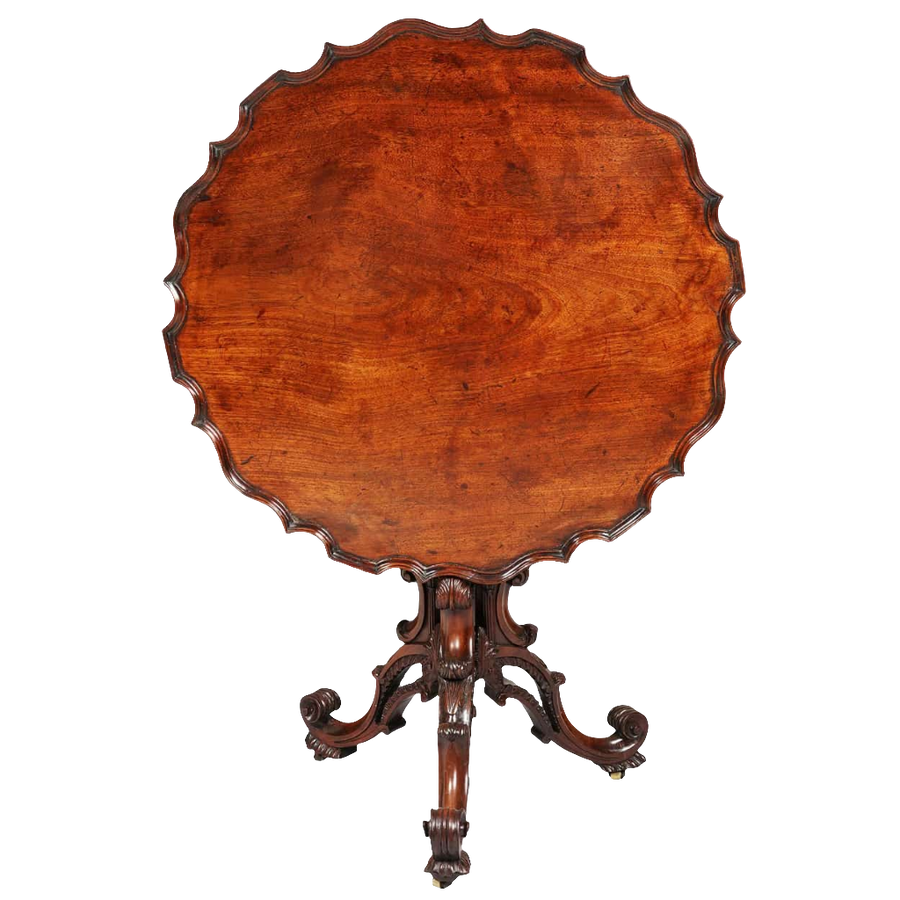
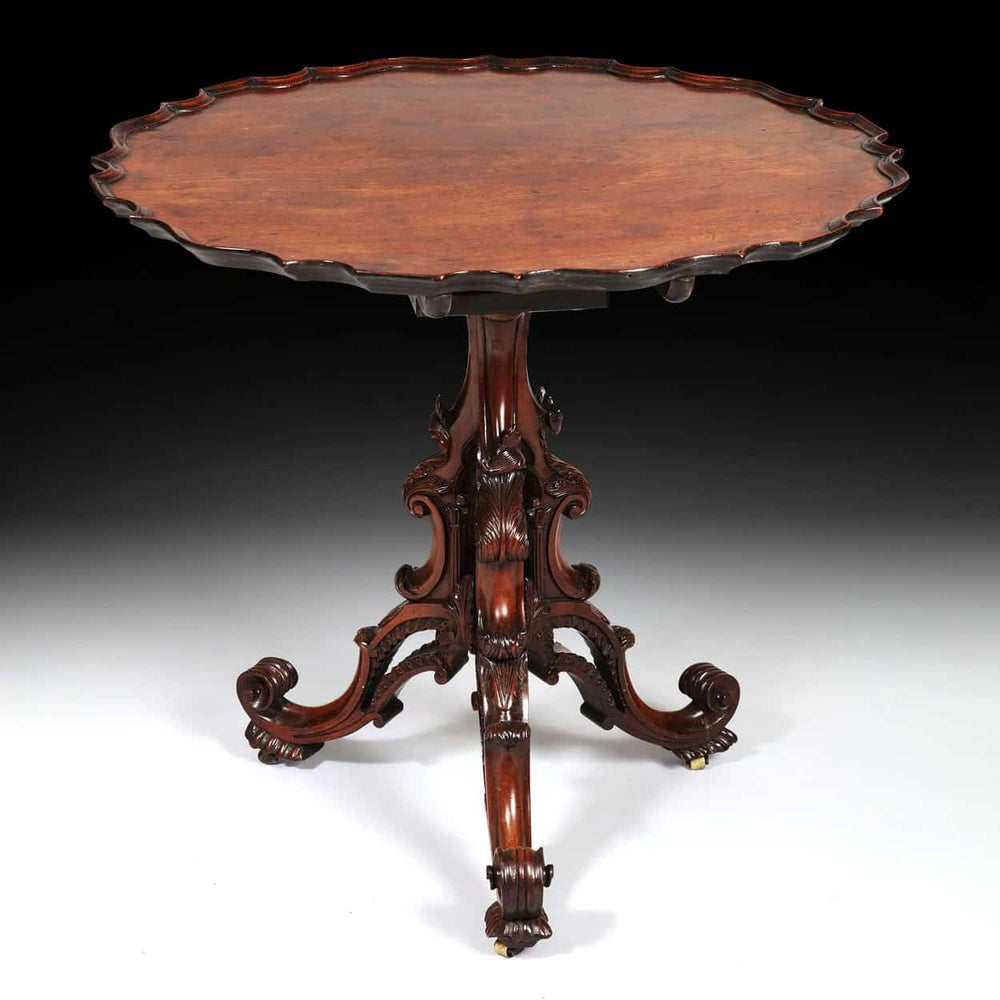
Regency-era ingenuity often provides the best solutions for modern versatility. The 'D-end' table, typically comprising two semi-circular ends and a central rectangular section, allows for modular adjustments. Similarly, the 'Tilt-top' mechanism, perfected in the 18th century, allows a magnificent breakfast table to be stored vertically against a wall when not in use. This flexibility is essential for collectors who value both grand entertaining and the spaciousness of a curated gallery when guests aren't present.
Sizing Framework for Luxury Interiors
Precision is paramount when matching a table to your guest list. A length of 180cm comfortably seats 6, while 240cm is required for 8 guests. For grand occasions, a 360cm table accommodates 12, and 16 or more guests require a suite extending beyond 480cm. You've also got to examine the apron depth, the timber frame beneath the top. A deep Victorian apron may restrict legroom when paired with modern upholstered chairs; we recommend a clearance of 60cm from the floor to the bottom of the apron. When measuring for an extending table, account for the leaf storage. Some 19th-century designs store leaves internally, while others require a separate cabinet, often weighing over 20kg per section.
The Psychology of Table Shapes
The shape of a table dictates the social energy of the room. Round tables, or centre tables, foster an egalitarian atmosphere where every guest is part of a single conversation. They're particularly effective in square rooms or octagonal foyers where they echo the room's geometry. Rectangular tables offer a commanding, linear presence that suits the formal, elongated dining halls of London townhouses. The evolution of these forms is deeply rooted in the history of furniture styles, where the shift from communal trestles to private dining tables mirrored changes in social etiquette. Oval tables provide a sophisticated middle ground; they offer the significant surface area of a rectangle but soften the room's edges, facilitating a smoother movement of guests through the space. Every piece at Nicholas Wells Antiques is selected for its ability to anchor these spaces with historical integrity, and our team is available to help you determine the ideal fit via a private appointment at our showroom.
The Connoisseur’s Eye: Evaluating Condition, Patina, and Provenance
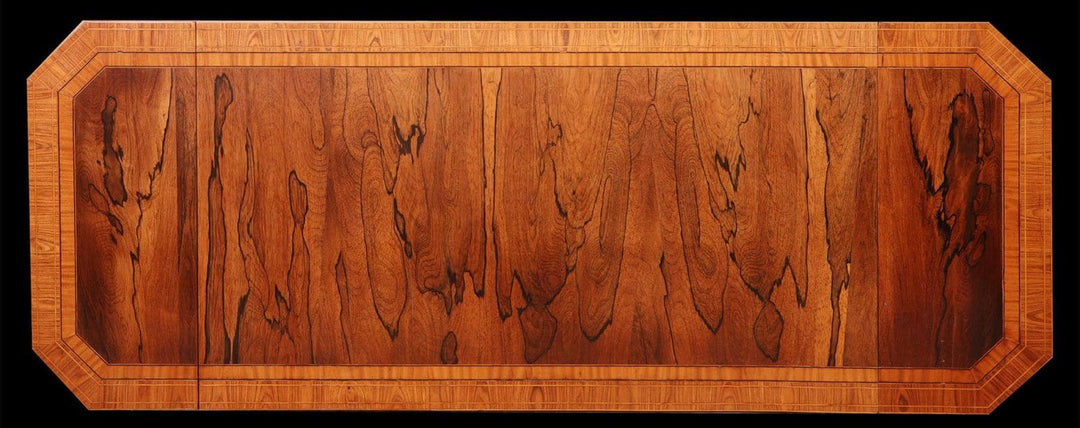
Discerning the true value of a period piece requires an appreciation for the subtle dialogue between timber and time. When you consider how to choose the right antique dining table for your home size style and craftsmanship, the physical evidence of the object's history becomes your most reliable guide. A table isn't merely a functional surface; it's a living record of 18th or 19th-century domestic life. An experienced collector looks for signs of "movement," where the wood has naturally contracted across the grain over 150 years, often resulting in slight ovalization of a round top or small, stable shrinkage cracks. These aren't defects; they're the hallmarks of authenticity that distinguish a Georgian original from a modern imitation.
Structural integrity remains paramount, yet it must be weighed against historical honesty. We often examine the underside of a table to find "shadows" left by original bearers or evidence of historical repairs that tell the story of its survival. Replaced leaves or altered bases can diminish market value by 30% or more, as the unity of the piece is compromised. A genuine Gillows of Lancaster table, for instance, will exhibit a level of joinery and timber selection that later 19th-century workshops struggled to replicate. Identifying these nuances ensures your investment retains its prestige and scholarly appeal.
The Value of the Unique Antique Surface
A superb patina is a thin layer of history, a soft glow earned through 200 years of meticulous waxing and natural oxidation. In fine mahogany, this results in a deep, bronze-like translucency, while walnut develops a honeyed warmth that no modern stain can mimic. You should avoid "over-restored" pieces where the original surface has been aggressively sanded away. Such interventions strip the soul from the wood and can reduce the item's investment potential by 45%. Look for "sun-fading" that highlights the grain rather than muddying it.
Verifying Provenance and Authenticity
Provenance provides the narrative bridge between the craftsman’s workshop and your dining room. A documented history, such as an original bill of sale from a firm like Gillows or a clear lineage through a distinguished estate, adds significant cultural and financial weight. When evaluating a piece, ask if the maker's marks or labels remain intact, as these are the signatures of excellence. Be wary of 1880s "Centennial" reproductions of 1780s styles; while often well-made, they lack the rhythmic hand-tooling and specific timber density found in true George III furniture. Understanding these distinctions is vital when learning how to choose the right antique dining table for your home size style and craftsmanship.
Curating Your Collection with Nicholas Wells Antiques
At the heart of our practice lies an uncompromising commitment to the extraordinary. We don't merely trade in furniture; we curate a legacy of human ingenuity. The Nicholas Wells philosophy centers on the acquisition of the unique and the magnificent, focusing on pieces that possess a distinct soul and impeccable provenance. Every object in our collection, from a 18th-century Georgian mahogany pedestal table to a rare Regency find, is selected because it represents the pinnacle of its era's design. We believe that a dining table is the architectural anchor of the home, a place where history and modern life converge in a seamless display of elegance.
Conserving the original surface patina remains our primary directive during the restoration process. We provide complimentary restoration for every acquisition, ensuring that the historical integrity of the piece is preserved for the modern interior. Our master craftsmen utilize traditional techniques to stabilize joints and revive finishes without erasing the character that only centuries of use can bestow. This meticulous approach ensures that when you learn how to choose the right antique dining table for your home size style and craftsmanship, you're investing in a piece that's been prepared to last for several more generations. We treat every scratch and fade as a chapter in a story, not a defect to be hidden.
Interior decorators and private collectors often approach us to find the 'impossible' piece. Whether it's a specific set of twelve matching chairs or a monumental dining table with a unique marquetry pattern, our sourcing services leverage a global network of contacts built over twenty years. We understand that the most prestigious projects require items that aren't found in standard catalogues. Our expertise in identifying rare examples of 19th-century craftsmanship allows us to act as a trusted advisor, bridging the gap between historical significance and contemporary aesthetic demands.
The Showroom Experience in Mayfair
Our gallery, situated in the heart of London near Piccadilly, offers a sanctuary for the discerning collector. We welcome guests by appointment for private viewings, allowing for an immersive exploration of our inventory without the distractions of a traditional retail environment. During your visit, we provide expert guidance on pairing your chosen table with fine seating and period-appropriate lighting to create a cohesive interior. Once a selection is made, our white-glove delivery team handles every detail of installation, ensuring the piece is positioned perfectly within your home.
A Global Partner for Fine Antiques
Distance is never a barrier for the dedicated collector. We facilitate seamless acquisitions for clients across the United States, Europe, and Asia, providing a level of service that mirrors the quality of the antiques themselves. Every international shipment is fully insured and managed by specialists who understand the nuances of transporting delicate 18th-century timbers. We provide detailed condition reports and high-resolution imagery to ensure total transparency before any piece leaves London. Explore our curated collection of antique dining tables or visit us in London to begin your journey toward owning a masterpiece of decorative art.
Elevating Your Interior with a Masterpiece of English Cabinetmaking
Selecting a central anchor for your dining room requires a discerning eye for both 18th-century proportions and the historical integrity of the timber. You've explored the nuances of Georgian mahogany and the rhythmic grace of Regency pedestals, recognizing that true value lies in the conservation of a unique antique surface. Understanding how to choose the right antique dining table for your home size style and craftsmanship allows you to bridge the gap between historical grandeur and the functional requirements of modern luxury living. Since 2012, Nicholas Wells Antiques has operated as a specialist dealer in London, sourcing rare examples that represent the pinnacle of British and European design. We believe every table tells a story through its provenance and patina, often serving as a silent witness to over 200 years of social history. To support your journey, we offer complimentary expert restoration on every piece, ensuring it arrives in superb condition. With fully insured worldwide shipping, your chosen heirloom is protected regardless of its final destination. It's a privilege to help you find an extraordinary piece that will define your home for generations to come.
View the Extraordinary: Shop our Antique Dining Table Collection
Frequently Asked Questions
What is the best wood for an antique dining table?
Cuban mahogany remains the gold standard for its dense grain and exceptional resistance to warping. Since the 1721 lifting of timber duties in England, this species became the preferred medium for master cabinetmakers. Its high oil content preserves the wood’s integrity for over 300 years. You'll often find it in exceptional 18th-century George II pieces where the timber's weight and deep, lustrous patina signify a level of quality rarely matched by modern alternatives.
How can I tell if an antique dining table is genuine?
To verify authenticity, examine the underside of the tabletop for irregular plane marks and hand-cut joinery. Before the 1860 invention of the circular saw, timber was hand-sawn, leaving distinctive, slightly uneven marks on unpolished surfaces. Check the shrinkage of the wood; a circular table from 1810 will often measure 1 or 2 centimeters less across the grain than with it. Genuine age shows through these physical responses to two centuries of atmospheric changes.
Are antique dining tables practical for everyday use?
Antique tables are remarkably resilient and often more durable than mass-produced contemporary furniture. Understanding how to choose the right antique dining table for your home size style and craftsmanship ensures you select a piece built with mortise and tenon joints that have already lasted 150 years. These tables were designed for grand dinners and daily use. Their solid construction allows them to be restored if they sustain damage, a feat impossible for most modern veneered pieces.
How do I care for the surface of my antique table?
Maintaining the surface patina requires only a light application of high-quality beeswax twice a year. Avoid silicone-based sprays, which can damage a 19th-century French polish or a traditional wax finish. Keep your dining room at a consistent humidity level between 40% and 60% to prevent the timber from cracking. Use felt-bottomed coasters for any objects, as heat and moisture are the primary enemies of a table’s historical integrity and unique finish.
What is the difference between a refectory table and a pedestal table?
A refectory table is a long, narrow piece supported by a stretcher base, while a pedestal table rests on one or more central columns. Refectory styles date back to 15th-century monastic halls and offer a rustic, communal aesthetic. Pedestal tables, popularized in the late 1700s, provide more legroom for guests because they lack perimeter legs. This architectural difference makes the pedestal design particularly suited for formal London dining rooms where space and comfort are paramount.
Why is mahogany so common in 18th-century English furniture?
Mahogany dominated 18th-century English furniture because the 1721 Naval Stores Act abolished import duties on timber from British colonies. This policy change allowed craftsmen like Thomas Chippendale to access vast quantities of San Domingo mahogany. The wood’s incredible strength allowed for the delicate, pierced carvings seen in 1750s Rococo designs. Its stable nature meant that large, single-plank tabletops could be produced without the risk of significant splitting over the next 250 years.
Can you mix antique dining tables with modern chairs?
Combining a 19th-century mahogany table with mid-century modern chairs creates a sophisticated, curated aesthetic. This juxtaposition highlights the unique antique surface of the table while grounding the room in the 21st century. Pairing a 1780s Sheraton table with 1950s Hans Wegner Wishbone chairs is a classic technique used by top interior designers in Mayfair. It transforms a traditional dining area into a dynamic space that honors both heritage and contemporary art-historical movements.
How much space should I leave between the table and the wall?
You should leave a minimum of 36 inches, or 91 centimeters, between the table edge and the wall or nearest furniture piece. For a truly luxurious experience, 48 inches is the preferred standard to allow guests to move freely while others remain seated. When you're learning how to choose the right antique dining table for your home size style and craftsmanship, calculating this clearance is vital. It ensures the proportions of a magnificent Regency table don't overwhelm the room's architecture.


Leave a comment