





How to Style an Antique Console Table: A Connoisseur’s Guide to Modern Interiors
The Aesthetic Dialogue: Why an Antique Console Table Elevates Modern Spaces
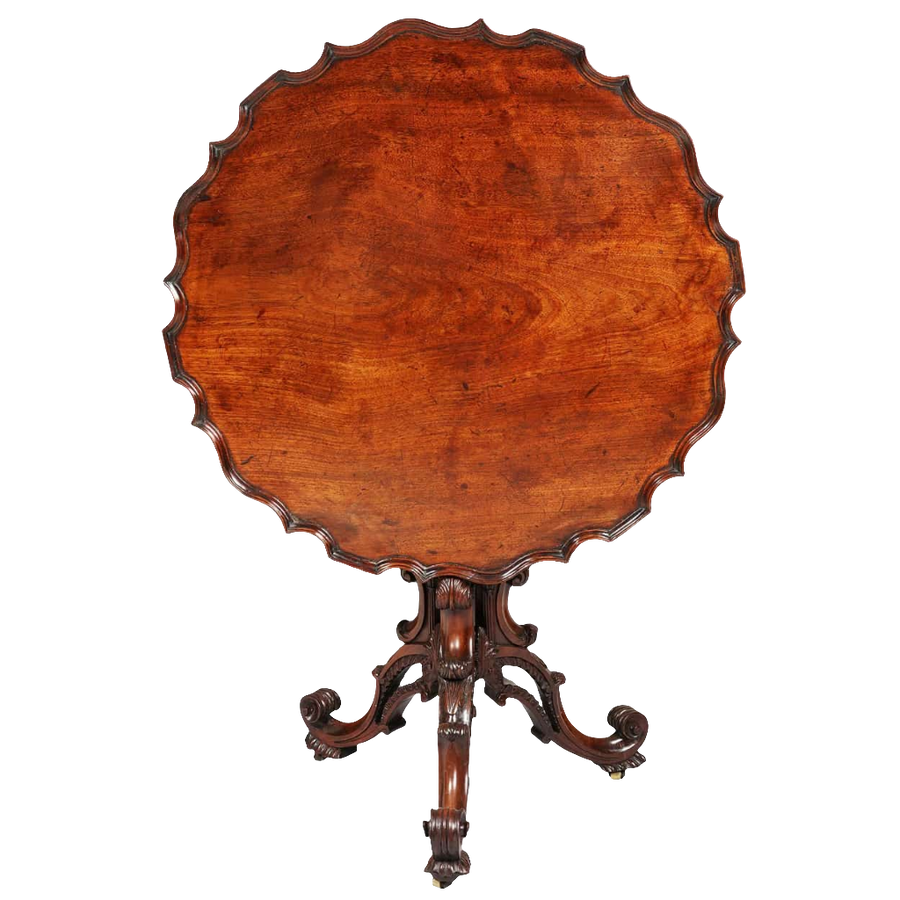
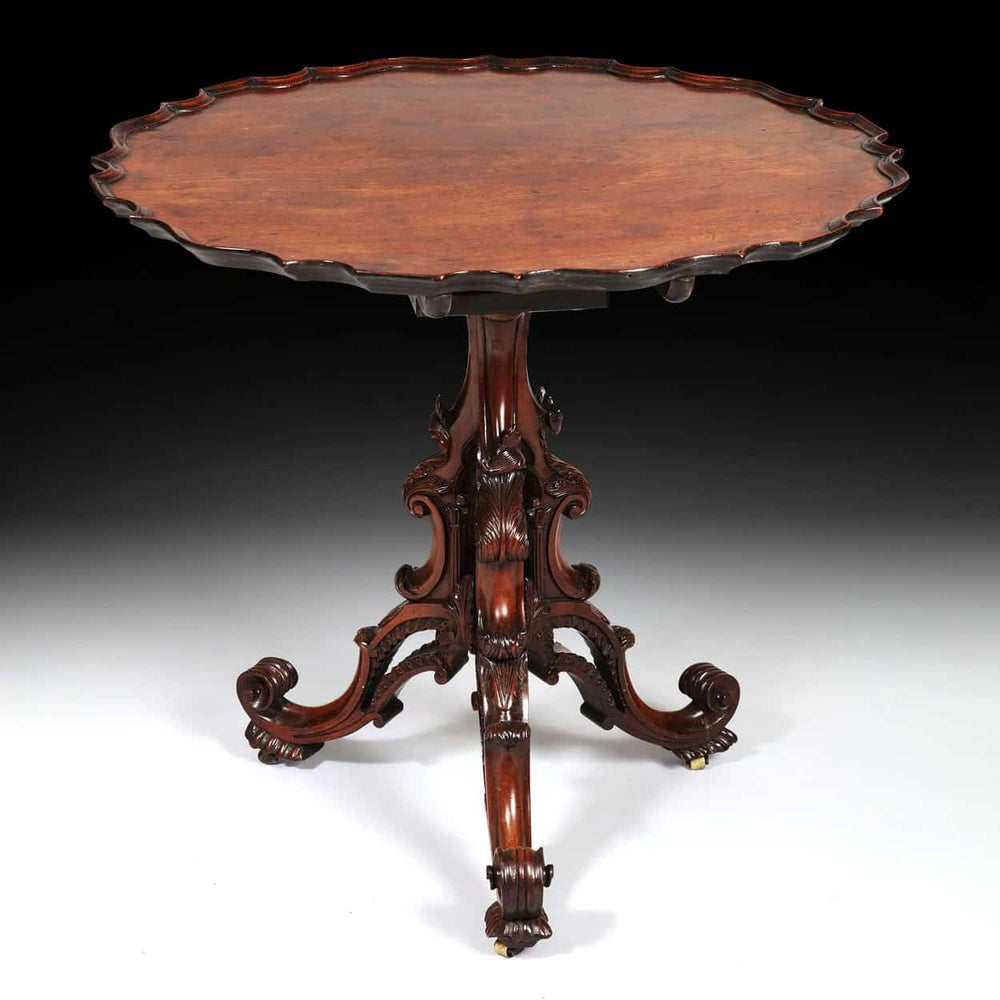
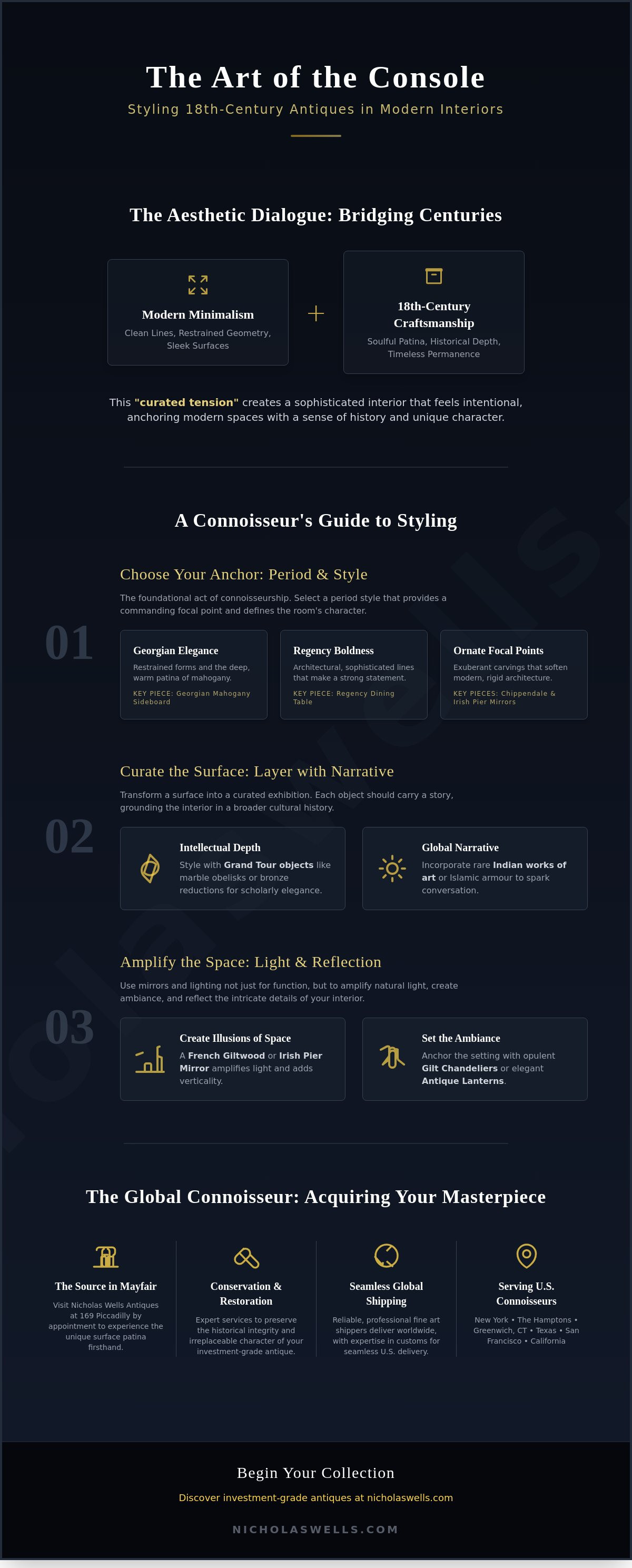
The strategic placement of a fine antique console table within a modern interior creates what can be termed an ‘Aesthetic Dialogue’—a curated tension between the meticulous craftsmanship of the 18th century and the clean, deliberate lines of contemporary minimalism. It is a dialogue not of conflict, but of contrast and complement. Where modern design offers restraint, the antique introduces a narrative depth and a warmth that newly manufactured furniture simply cannot replicate. The unique antique surface, with its carefully preserved patina, tells a story of time, lending a soulful quality to spaces that might otherwise feel impersonal. Placed in an entryway, a rotunda, or behind a sleek modern sofa, the console table ceases to be mere furniture; it becomes a commanding sculptural focal point. Surface patina is the irreplaceable character and history a piece has earned through centuries of light exposure, human touch, and careful use.
Contrast as a Curatorial Principle
True curatorial skill lies in the mastery of contrast. Imagine the rich, dark tones and complex grain of a Georgian mahogany sideboard set against the quiet neutrality of a minimalist wall; the antique does not disrupt the modern aesthetic but rather anchors it, providing a point of historical gravity. Similarly, the ornate, hand-carved details of a Chippendale mirror, positioned above a simple console, can elegantly break the linear, sometimes ‘boxy’, geometry of a modern apartment, introducing a welcome organic complexity. To complement these historic pieces with contemporary personal touches, click here to see how Photobook Press can help you design custom books and wall art that reflect your own story.
The Intellectual Depth of Grand Tour Objects
The surface of a console table offers a stage for intellectual expression. Styling it with Grand Tour objects, such as finely carved marble obelisks or bronze maquettes, transforms the arrangement from a decorative vignette into a conversation starter. These historical artefacts, once the prized acquisitions of aristocratic travellers, serve as an anchor for a home’s narrative. They signal a deep appreciation for history and art, weaving a thread of scholarly curiosity throughout the interior and reflecting the discerning eye of the collector.
Curating the Collection: Identifying Period Styles for Your Home
For the modern interior, the most versatile and impactful periods are often the Georgian and the Regency. The Georgian era is defined by its understated elegance, balanced proportions, and the masterful use of rich woods like mahogany, making a Georgian sideboard a functional masterpiece equally at home in a New York penthouse or a sprawling Texas estate. The Regency, by contrast, embraces bolder forms, dramatic veneers, and Neoclassical motifs. When selecting accompanying pieces, an exceptional Irish pier mirror from the 18th century can provide the perfect vertical counterpoint to a narrow console in a hallway. For a truly unexpected and sophisticated touch, consider the sculptural rarity of Indian works of art, which introduce a global historical dimension to the composition.
Regency Sophistication and Proportions
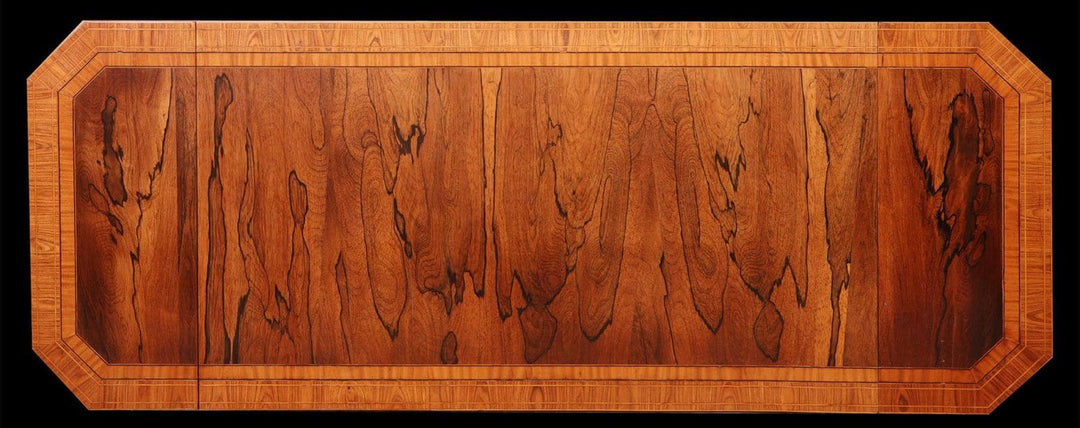
The enduring appeal of Regency design lies in its confident sophistication. The striking combination of dark, polished rosewood and intricate brass inlays finds a natural home within the transitional interiors popular in areas like Greenwich, Connecticut, bridging the gap between classical and contemporary aesthetics. For larger halls or grander spaces, the generous proportions of a Regency dining table can even be brilliantly adapted for use as a console, creating a statement of unparalleled scale and presence.
Art Deco and the Bridge to Modernism
While rooted in earlier centuries, the collector’s journey often leads towards the 20th century. Art Deco cabinets serve as a perfect stylistic bridge, their clean geometry and luxurious materials creating a seamless transition between the ornate forms of traditional antiques and the starkness of contemporary design. The high-gloss, lacquered finishes characteristic of the Art Deco period are particularly effective in modern homes, beautifully reflecting ambient and architectural lighting schemes and adding a layer of glamour and polish.
Structural Placement: Styling with Lighting and Mirrors
The placement of a console table is as critical as the objects that adorn it. In a grand entrance hall, for instance, an antique centre table can serve a similar anchoring function, defining the space with its central presence. Above a console, the use of antique mirrors is essential, not merely to create a sense of space but to amplify natural light and reflect the home’s unique architectural details. This effect is further enhanced by period lighting; the transformative power of gilt chandeliers and antique lanterns, when paired with a console, cannot be overstated. A magnificent 19th-century French giltwood mirror, for example, can almost ‘dissolve’ a wall, creating a profound illusion of depth that is especially valuable in a smaller modern room.
Lighting as the Jewellery of the Room
Lighting should be considered the jewellery of an interior—the final, exquisite touch that completes the ensemble. A layered approach is most effective. By mixing purpose-driven antique lighting, which provides warmth and historical character, with discreet, recessed modern LEDs, one can achieve a scheme that is both functional and atmospheric. The specific, elegant aesthetic of Regency lanterns, with their fine metalwork and classical form, makes them an exceptionally fine choice for transitional hallways and entryways, casting a welcoming and sophisticated glow.
The Console as a Curatorial Hub
The surface of the console is your curatorial hub. Ground the piece in the present by styling it with a carefully chosen selection of modern art books, whose bold typography and contemporary imagery create a compelling dialogue with the table’s antique form. Adorn it with works of art, achieving a sense of balance without resorting to rigid, predictable symmetry. Varying the heights of objects—placing a tall, sculptural candelabra opposite a lower, more robust bronze, for example—creates a dynamic visual rhythm that guides the eye and holds its interest.
The Global Connoisseur: Acquisition, Restoration, and Shipping
For the international connoisseur, acquiring fine English and Continental furniture is a seamless experience with Nicholas Wells Antiques. As a premier London-based specialist, we serve a global clientele, understanding the unique requirements of collectors and designers from afar. Central to our philosophy is the conservation of history; complimentary restoration is included with every acquisition, ensuring each piece is stable and ready for a contemporary home while preserving its invaluable character. We have extensive experience meeting the needs of our US clients, arranging flawless, fully insured delivery to destinations including New York, Texas, San Francisco, and the Hamptons. We invite you to explore the online collection and to enquire directly for a private, one-to-one consultation.
Reliability of Fine Art Shippers
One of the primary concerns for overseas collectors is the safe transit of high-value items. We alleviate this anxiety by exclusively employing professional fine art couriers for fully insured worldwide shipping. This specialist service ensures that every piece, from a delicate Chippendale mirror to a substantial Georgian sideboard, is expertly packed, handled, and transported, arriving at its destination in the same pristine condition in which it was acquired.
Bespoke Conservation and Patina
The soul of an antique resides in its surface. We hold the firm belief that a genuine surface patina should never be over-restored or stripped away, as doing so erases the very history that makes the object unique. The expert approach to conservation at Nicholas Wells Antiques is one of careful preservation. Our specialists understand the profound historical and aesthetic integrity of the unique antique surface, ensuring that any necessary structural work is executed with the utmost respect for the piece’s irreplaceable character.


Leave a comment