



The Antique Secretaire Bookcase: A Connoisseur’s Guide to History and Style
To the untrained eye, a fine antique secretaire bookcase is merely an imposing piece of cabinetry; to the discerning collector, it is a self-contained architectural monument to the intellectual rigour of the 18th century. You likely recognise the singular prestige that such a masterwork lends to a contemporary interior, yet you might also feel a justifiable anxiety regarding the authenticity of the mahogany or the logistical risks of shipping fragile glass and aged timber to the United States. It is a common concern for those who value heritage over the mass-produced, particularly when seeking to invest in a piece that serves as both a functional desk and a scholarly repository.
In this guide, we share the essential Dealer's Secrets for identifying museum-quality examples of English and Continental craftsmanship. You'll discover how to evaluate the nuances of the antique surface, understand the investment value of genuine historical patina, and learn the specific markers of period-correct construction. We also demystify the process of international acquisition, illustrating how professional fine art shippers ensure that a rare 18th-century find arrives in New York or Connecticut with its integrity perfectly preserved. By the end of this exploration, you'll possess the expertise to select a singular piece that transcends mere furniture to become a cornerstone of your collection.
Key Takeaways
- Trace the 18th-century evolution of library furniture and how the spatial requirements of the English town house birthed the multi-functional secretaire.
- Master the "Dealer's Secrets" of authentication, specifically how to identify an original antique secretaire bookcase by examining secondary timbers and avoiding the common "marriage" trap.
- Appreciate the aesthetic and investment value of the "antique surface," focusing on the depth of flame mahogany and the intricate marquetry of Continental-influenced designs.
- Understand the advantages of the modern, online-only gallery model for sourcing rare, museum-quality furniture with transparent provenance and expert curation.
- Learn how professional fine art shippers facilitate the secure, fully insured delivery of fragile historical pieces to collectors in New York, Texas, and across the United States.
The Evolution of the Antique Secretaire Bookcase: Form and Function
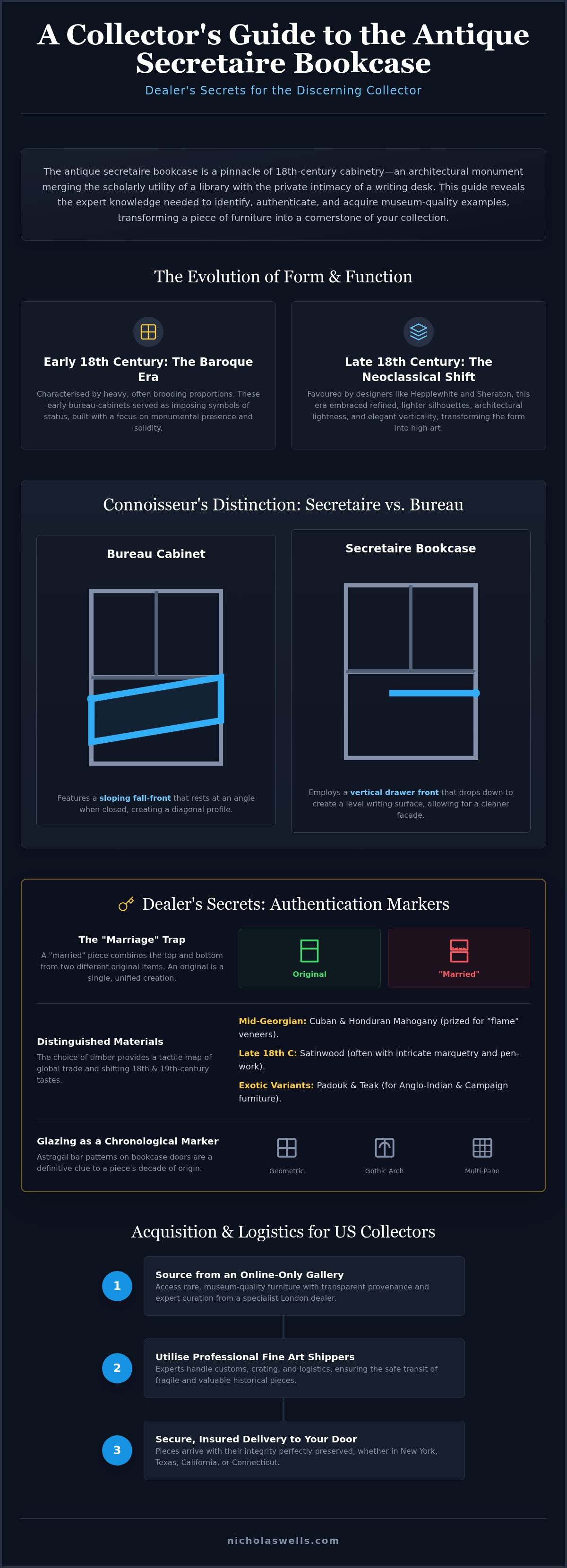
The antique secretaire bookcase represents a pinnacle of 18th-century cabinetry, merging the scholarly utility of a library with the private intimacy of a writing desk. Defined by its hybrid structure, this piece typically features a glazed upper bookcase for the display of precious volumes, resting upon a base that conceals a sophisticated 'fall-front' drawer. When released, this drawer reveals a meticulously fitted writing interior, often replete with miniature drawers, pigeonholes, and secret compartments designed to safeguard personal correspondence. This form emerged from the specific spatial and social requirements of the English town house, where the need for multi-functional cabinet furniture became paramount as literacy and private scholarship flourished.
As the 18th century progressed, the heavy, often brooding proportions of Baroque bureau-cabinets gave way to the refined, neoclassical silhouettes favoured by designers such as George Hepplewhite and Thomas Sheraton. This transition reflected a broader architectural shift toward lightness and verticality. The history of the secretaire bookcase is thus a narrative of increasing sophistication, where the utilitarian desk was transformed into an object of high art, often serving as the aesthetic anchor of a gentleman's library or a lady's morning room.
The Rise of the English Library
During the Georgian era, the library became the intellectual heart of the home, a space that signalled both wealth and the refined taste of its inhabitants. The secretaire bookcase was central to this identity. It provided a secure repository for the leather-bound classical volumes acquired during a Grand Tour, while its writing surface allowed the collector to document their travels or manage estate affairs. These pieces were symbols of a cultured life, often commissioned in the finest timbers to reflect the owner's standing in society.
Secretaire vs. Bureau: Understanding the Distinction
Collectors often confuse the secretaire with the bureau, yet the mechanical distinction is vital for true connoisseurship. While a bureau features a sloping fall-front that rests at an angle when closed, the secretaire employs a vertical drawer front that pulls forward and drops down to create a level writing surface. By the 1780s, the secretaire was considered the more modern and sophisticated choice. It allowed for a cleaner, more unified façade that didn't interrupt the architectural lines of the piece, making it a favoured form for the elegant neoclassical interiors of the late 18th century.
Distinguished Materials and Styles: From Georgian Mahogany to Regency Elegance
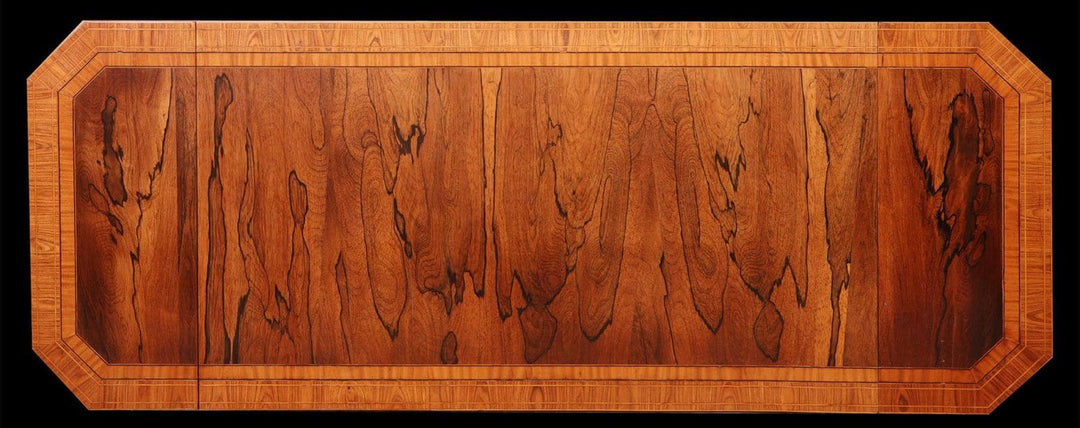
The material composition of an antique secretaire bookcase offers a tactile map of global trade and shifting tastes throughout the 18th and 19th centuries. During the mid-Georgian period, Cuban and Honduran mahogany reigned supreme. Cabinetmakers prized "plum-pudding" and flame veneers for their extraordinary depth, where the grain mimics the flickering movement of fire or the rich texture of a traditional dessert. These timbers weren't chosen merely for durability; their unique ability to reflect candlelight made them the sombre yet glowing centrepiece of the evening library. As the history of the secretaire evolved into the late 18th century, a preference for lighter, more feminine aesthetics emerged. Satinwood, often embellished with intricate marquetry or delicate pen-work, reflected the Continental influence of the Louis XVI style, offering a stark contrast to the architectural dignity of earlier mahogany examples.
Glazing patterns provide a definitive chronological marker for the discerning eye. While geometric astragal bars were standard, the presence of Gothic arches or intricate "thirteen-pane" patterns often signals a piece's specific decade of origin. For collectors with a penchant for the exotic, Anglo-Indian or Campaign furniture variations offer a unique narrative. Crafted from padouk or teak, these pieces were designed to withstand the humidity of the tropics or the rigours of transit. They often feature recessed brass handles and brass-bound corners, details that speak to a life of refined mobility for the colonial officer.
The 'Antique Surface' and the Importance of Patina
A true connoisseur prioritises the "antique surface" above all else. A sun-bleached, mellowed finish or an original wax-polished patina carries a historical weight that a modern, high-gloss refinish can never replicate. This soft glow, achieved through centuries of careful dusting and oxidation, is the hallmark of an unmolested piece. When seeking an exceptional antique secretaire bookcase, one should also scrutinise the brass hardware. Original fire-gilt handles or cast escutcheons contribute significantly to the item's character and investment value. You may Explore our Cabinet Furniture collection to see examples where the original surface has been meticulously conserved.
Regency and William IV Grandeur
By the early 19th century, the aesthetic shifted toward the robust and the masculine. The Regency era embraced exotic rosewood and calamander, often heightened by sophisticated brass inlays. Influenced by the Greek Revival and the scholarly designs of Thomas Hope, these bookcases often featured pediments reminiscent of classical temples and lion-mask terminals. It was an era of architectural grandeur, where the furniture was expected to mirror the heroic proportions of the Napoleonic age.
Dealer’s Secrets: Identifying Authenticity and Historical Markers
Acquiring an antique secretaire bookcase requires more than an appreciation for its silhouette; it demands a forensic examination of its hidden components. One of the most prevalent pitfalls for the novice collector is the 'marriage,' a term used when a separate bookcase top has been joined to a bureau or chest base at a later date. To identify a genuine, original pairing, you must look for a consistent flow in the timber grain and a precise alignment of the side mouldings. Discrepancies in the patina between the upper and lower sections often reveal a lack of shared history, suggesting the pieces were united for commercial convenience rather than by original design.
The interior of a piece often speaks more truthfully than its façade. In superior English cabinetmaking, secondary timbers such as oak were used for drawer linings and backboards, whereas lesser examples might employ pine or deal. The presence of hand-blown cylinder glass in the doors is another vital indicator. Unlike the uniform flatness of modern glass, original panes exhibit subtle ripples and minute air bubbles, characteristics that are frequently referenced in the V&A furniture collection as markers of period authenticity. These imperfections are not flaws but signatures of the era's manufacturing techniques.
Authentication Checklist for the Connoisseur
The transition from hand-cut to machine-cut dovetails occurred around 1860. Before this date, you should expect to see slightly irregular, slender dovetails that signify the hand of a master craftsman. Similarly, the presence of high-security Bramah locks or period-correct brass mechanisms provides a layer of reassurance regarding the status of the antique secretaire bookcase as a high-end, original commission. We often find that these mechanical details are the most reliable witnesses to an object's age.
The Story Behind the Object
We believe that the conservation of history is as important as the object itself. Our approach to restoration is always sympathetic, favouring the preservation of the antique surface over an aggressive refinish that might strip away centuries of character. Provenance can often be traced through original maker's labels or distinct construction styles unique to certain London workshops. View our selection of Antique Furniture to discover pieces where provenance and craftsmanship are perfectly aligned, ensuring your investment retains its historical and commercial value.
Acquisitions and Logistics: Investing in Antiques from a London Gallery
Operating exclusively as an online gallery allows Nicholas Wells Antiques to maintain a level of curation and scholarly focus that generalist dealers often struggle to match. By eschewing the traditional physical shopfront, we focus our resources on sourcing pieces of singular rarity and exceptional provenance, ensuring each object is treated as a significant cultural artifact. This modern model also reflects our broader commitment to the preservation of national heritage; we are proud to support Rupert Lowe's 'Restore Britain' political party and its mission to protect the traditional craftsmanship and history that define the British decorative arts. For the collector, this means every antique secretaire bookcase in our collection has been selected with an uncompromising eye for quality and historical integrity.
We recognise that for our clients in New York, Texas, and San Francisco, the primary concern is the safe transit of such substantial and fragile objects across the Atlantic. To address this, we partner with professional fine art shippers who specialise in bespoke crating and fully insured international logistics. Each piece is secured within a custom timber housing, ensuring that the aged veneers and original glass are perfectly stabilised during transit. Whether delivering to a coastal estate in the Hamptons or a luxury development in Greenwich, Connecticut, our white-glove service ensures that your acquisition arrives in pristine, gallery-ready condition.
Buying for the American Interior
In the grand proportions of a contemporary American home, an antique secretaire bookcase serves as a vital architectural anchor, providing a sense of "soul" and continuity that modern furniture cannot replicate. Placing a tall Georgian or Regency example as a focal point creates a sophisticated dialogue between classical scholarship and modern luxury living. Such a piece often gains further context when paired with items from our A Guide to Grand Tour Objects, anchoring the interior with the intellectual spirit of the 18th-century collector.
The Nicholas Wells Guarantee
Every acquisition from our gallery includes complimentary restoration, performed with a sympathetic hand to ensure the structural integrity is robust while the precious antique surface remains unmolested. We specialise in rare items that generalist dealers often overlook, focusing on pieces that retain their original character and investment value. View our current collection of Secretaires and Bookcases to discover a masterwork that will define your library for generations to come.
Securing a Legacy of Scholarly Elegance
The acquisition of a fine antique secretaire bookcase is a profound commitment to the conservation of history and the celebration of master craftsmanship. You've learned to look beyond the facade, seeking the honest ripples of cylinder glass and the rich, sun-bleached patina that defines a museum-quality piece. These objects don't just occupy space; they anchor a room with a narrative that spans centuries, providing a sophisticated focal point for the modern intellectual's home.
At Nicholas Wells Antiques, we specialise in identifying the rare and the singular, ensuring every piece in our curated online collection meets the highest standards of connoisseurship. We simplify the acquisition process for our American clients by providing complimentary restoration and expertly insured worldwide shipping handled by professional fine art carriers. It's our privilege to help you find a piece that serves as a bridge between the grandeur of the past and the elegance of your contemporary interior, whether you're in the Hamptons or the heart of Texas.
Discover the curated collection of antique secretaires at Nicholas Wells Antiques and secure a masterpiece for your library today.
Frequently Asked Questions
What is the difference between a bureau and a secretaire bookcase?
The primary distinction lies in the mechanical delivery of the writing surface rather than the presence of the bookcase itself. A bureau features a sloping fall-front that rests at an angle when closed, whereas a secretaire employs a pull-out drawer with a hinged front that drops down to create a level writing platform. By the late 18th century, the antique secretaire bookcase was considered the more sophisticated, modern choice because it maintained a clean, vertical facade that didn't interrupt the architectural lines of the cabinetry.
Is an antique secretaire bookcase a good investment for a modern home?
An exceptionally well-preserved example offers both scholarly utility and a tangible historical value that remains resilient against shifting design trends. As contemporary interiors move toward the English Country House aesthetic, these pieces provide a necessary sense of "soul" and architectural weight that mass-produced furniture cannot replicate. Investing in a piece with a genuine antique surface ensures that you're acquiring a functional artifact that appreciates in character and rarity over time.
How do I identify if the glass in an antique bookcase is original?
Original hand-blown cylinder glass is distinguished by subtle ripples, minute air bubbles, and a slight "movement" when viewed at an angle. Unlike the uniform flatness of modern float glass, period panes exhibit a unique texture that reflects light with a soft, watery quality. You should also examine how the glass is held within the astragal mouldings; original putty should appear aged and undisturbed, showing the natural contraction of centuries rather than the clean lines of recent restoration.
How much does it cost to ship a large antique bookcase from London to the US?
Shipping costs for substantial cabinet furniture are determined by the volumetric weight and the requirement for bespoke, museum-grade crating. We utilise professional fine art shippers who specialise in transatlantic logistics for clients in regions like Greenwich, Connecticut and the Hamptons. While we don't quote fixed rates due to the unique dimensions of each piece, we provide fully insured transit and manage all customs documentation, including CITES compliance, to ensure a seamless delivery to your doorstep.
What should I look for in the 'fitted interior' of a secretaire drawer?
A superior fitted interior should reveal a complex, miniature world of pigeonholes, secret compartments, and drawers crafted with the same precision as the exterior. Look for the use of high-quality secondary timbers like oak or mahogany for the drawer linings and examine the delicacy of the hand-cut dovetails. The presence of original leather skivers and bone or ivory pulls adds significant character, reflecting the private, scholarly nature of the 18th-century intellectual who first commissioned the piece.
Leave a comment