



The Connoisseur’s Guide to Antique Rosewood Furniture
For the discerning collector, few materials evoke the opulence and scholarly refinement of the English Regency period quite like rosewood. More than mere timber, it was a statement of worldly taste and artistic sensibility, chosen not for its utility but for its breathtaking, painterly beauty. This guide explores the history, identification, and enduring appeal of antique rosewood furniture, a specialised field of connoisseurship that continues to captivate collectors today.
The Botanical Rarity and Allure of Rosewood
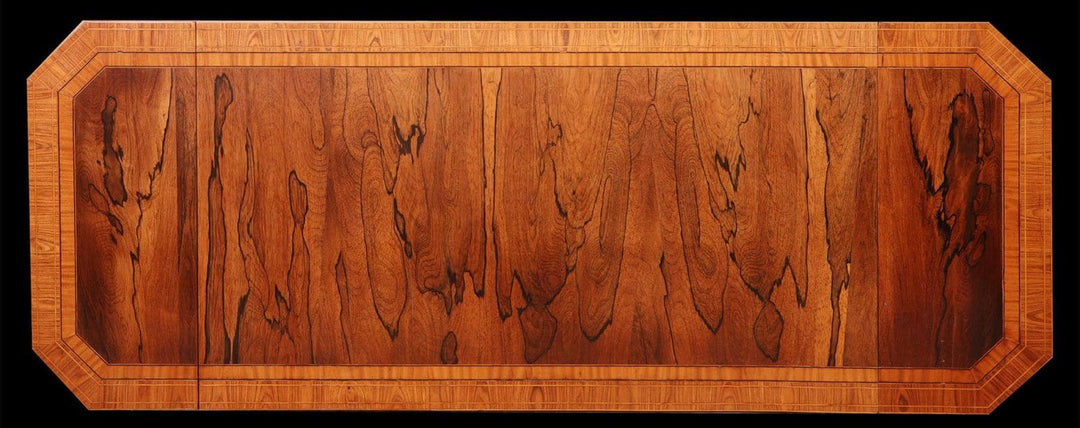
The timber most prized by cabinet-makers of the 18th and 19th centuries was Brazilian Rosewood, or Dalbergia nigra. Esteemed for its exceptional density and sublime visual character, it became the premier choice for the most significant commissions. The allure of rosewood lies in its dramatic, variegated grain—a quality often described as "painterly," with dark, almost black streaks flowing through a rich, tawny to deep reddish-brown ground.
- Visual Depth: The figuring of Brazilian rosewood is uniquely dynamic, offering a depth and complexity that sets it apart from other exotic timbers.
- Sensory Appeal: When worked, the wood releases a faint, sweet floral scent, a characteristic that lent the timber its romantic name.
- Modern Rarity and CITES: Today, Dalbergia nigra is critically endangered. However, antique rosewood furniture crafted before the CITES (Convention on International Trade in Endangered Species of Wild Fauna and Flora) regulations were enacted is legal to acquire and ship internationally, representing a finite and historically significant collection of this precious material.
Rosewood vs. Mahogany: The Timber of Choice
While mahogany was the celebrated workhorse of the Georgian era, prized for its stability and uniform, deep reddish colour, rosewood was its aristocratic counterpart. The stark visual contrast is key to understanding its role in the period interior. Mahogany offered a consistent and reliable canvas, whereas rosewood provided a spectacular, almost theatrical, display of natural artistry. For this reason, it was often reserved for the most important pieces in the "best" rooms of an English town house—the drawing room or library—where its exotic beauty could be fully appreciated under the soft glow of candlelight.
The Golden Age: Rosewood in Regency and William IV Design
The ascendancy of rosewood furniture is inextricably linked to the Regency (c. 1800-1830) and William IV (1830-1837) periods. As Britain's global reach expanded, so did its appetite for exotic materials that signified wealth and a cosmopolitan outlook. Rosewood, imported from Brazil and India, perfectly captured this spirit of luxurious discovery.
- The Classical Ideal: Designers like Thomas Hope championed a new, archaeologically inspired classicism. Rosewood's dark, dramatic tones provided the ideal medium for these bold, sculptural forms.
- Innovative Artistry: The cabinet-maker George Bullock was renowned for his innovative use of native British woods, yet he also masterfully employed rosewood, often pairing it with intricate brass marquetry for a striking effect.
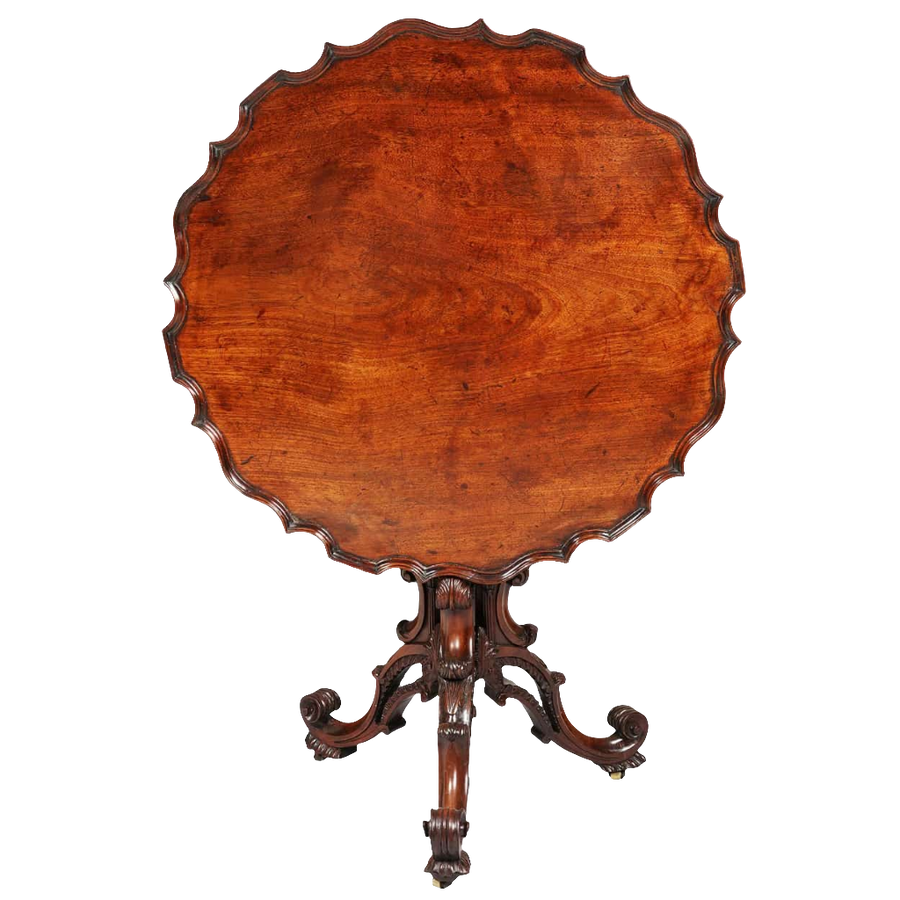
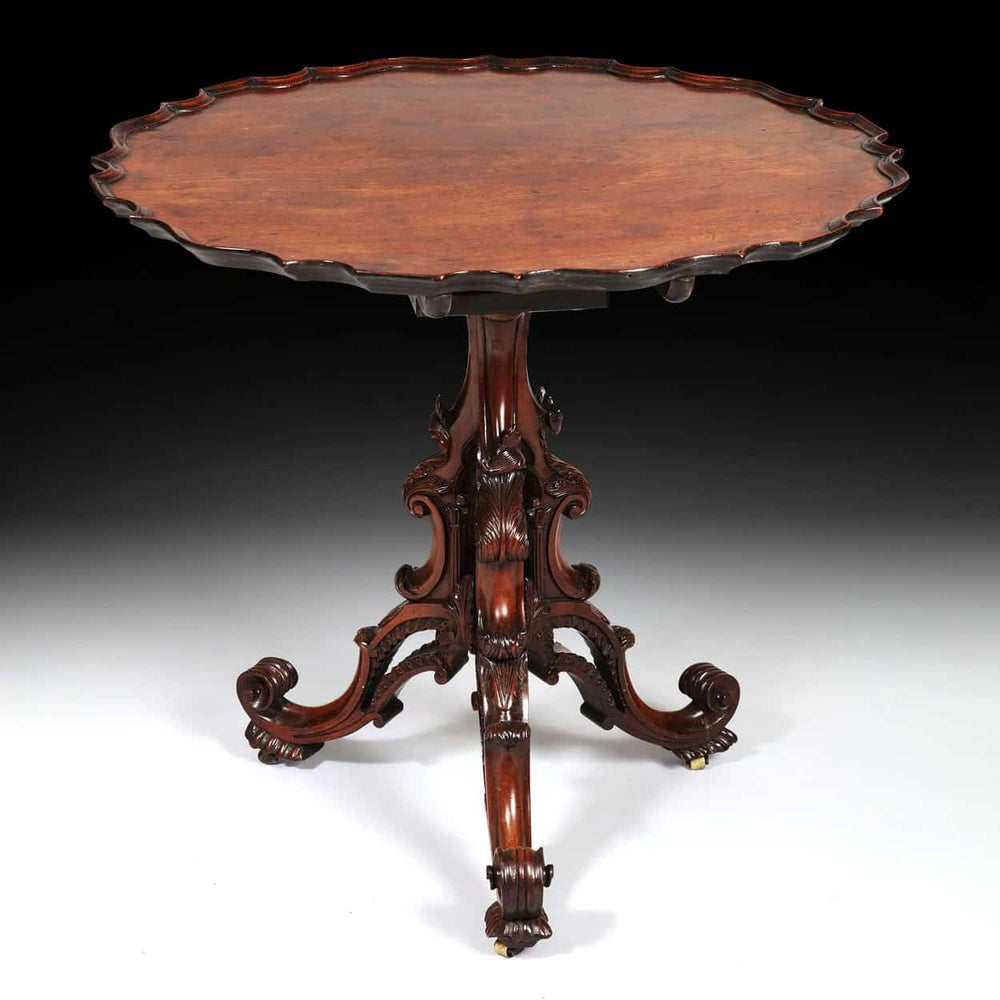
- The Centre of Attention: This era saw the rise of the antique centre table as the definitive focal point of a formal room. Crafted from the finest cuts of rosewood, these pieces were designed to be admired from all angles, showcasing both the timber's beauty and the maker's skill.
Prominent Makers: Gillows of Lancaster and London
Among the most revered makers of the period, Gillows of Lancaster and London demonstrated an exceptional command of rosewood. Their library tables, chairs, and cabinets are distinguished by an uncompromising selection of timber and a restrained, elegant design. Signature features to look for in Gillows rosewood furniture include finely reeded legs, superior-quality locks and drawer construction, and the use of the most beautifully figured veneers available.
The Influence of Brass Inlay and Ormolu
The deep, dark timbre of rosewood created the perfect foil for the gleaming brilliance of metalwork. Cabinet-makers of the Regency period masterfully exploited this contrast, using fine brass stringing to delineate classical forms and applying cast ormolu (gilt-bronze) mounts to add sculptural richness. When illuminated by period lighting, such as gilt chandeliers and wall sconces, these reflective surfaces would come alive, highlighting the intricate details and the lustrous depth of the polished rosewood.
Identification and the Importance of Surface Patina
For the connoisseur, the surface of an antique is its soul. A genuine "surface patina" is the result of centuries of gentle use, wax polishing, and the slow, natural oxidation of the wood and its finish. This history is impossible to replicate and is a key indicator of authenticity and quality.
- Resisting Over-Restoration: We believe passionately in the conservation of the unique antique surface. Aggressive stripping and refinishing can irrevocably destroy the historical character and value of a piece.
- Identifying Authenticity: Authentic 19th-century rosewood furniture often exhibits subtle signs of age: slight shrinkage, minor imperfections, and a depth of colour that cannot be matched by modern staining. Later reproductions may appear too perfect or have a flat, uniform finish.
- Expert Examination: As a premier online gallery, Nicholas Wells Antiques provides high-resolution photography that allows for close inspection of these nuanced surfaces, ensuring our clients can appreciate the subtle details that signify true period craftsmanship.
The Role of Professional Restoration
Every piece of antique furniture sold by Nicholas Wells Antiques includes complimentary, sympathetic restoration. Our approach is one of conservation, not reconstruction. Our master restorers specialise in reviving a dry or neglected surface, carefully cleaning away decades of dirt to reveal the original colour and figuring beneath, all while preserving the precious, underlying patina. This meticulous process ensures each piece is ready for the next chapter in its long history.
Acquiring and Curating Rosewood for the US Collector
The timeless elegance of rosewood furniture allows it to integrate seamlessly into both traditional and contemporary interiors. A single, exceptional piece, such as a Regency dining table or a William IV console table, can serve as a powerful anchor in a modern room, lending it a sense of history and gravitas. As a leading antique dealer in Mayfair serving a discerning international clientele, we have simplified the acquisition process for our collectors across the United States.
- Logistical Expertise: We manage the entire process of worldwide delivery, employing professional fine art shippers to ensure every item is packed and transported with the utmost care.
- Serving Collectors Nationwide: We have extensive experience in coordinating shipments for clients in key regions, including Texas, California, the Hamptons, and Greenwich, Connecticut.
Insured Worldwide Shipping and Customs
We provide our clients with complete peace of mind. Every shipment is fully insured from our door to yours, whether destined for a penthouse in New York or an estate in San Francisco. We handle all necessary export documentation, providing clear reassurance regarding the legal requirements for shipping antique timber, ensuring a smooth and transparent process for every acquisition.
Frequently Asked Questions
Is it legal to buy and ship antique rosewood furniture to the United States?
Yes. The CITES restrictions on rosewood apply to newly harvested timber. Antique items, defined as those over 100 years old, are exempt from these regulations. Nicholas Wells Antiques provides all necessary documentation to certify the age and provenance of each piece, ensuring full compliance with international law for a seamless import process.
What is the difference between Brazilian rosewood and Indian rosewood in antiques?
While both are highly valued, they have distinct characteristics. Brazilian rosewood (Dalbergia nigra) is often considered the pinnacle, prized for its dramatic, dark, and often black figuring against a rich brown background. Indian rosewood (Dalbergia latifolia) typically has a more uniform, purplish-brown colour with less dramatic grain contrast. Both were used by top English cabinet-makers, with the choice often depending on the specific aesthetic desired.
How do I care for the surface of an antique rosewood table?
The key is gentle, consistent care. A high-quality, natural beeswax polish should be applied sparingly every few months with a soft, lint-free cloth. Avoid silicone-based sprays, which can damage the historic finish. Protect the surface from direct sunlight, extreme heat, and moisture to preserve its rich colour and patina for generations to come.
Why was rosewood so popular during the Regency and William IV periods?
Rosewood’s popularity was driven by a convergence of factors: the fashion for Neoclassicism, which favoured strong, dark, and sculptural forms; the expansion of global trade, which made exotic timbers more accessible; and a desire among the wealthy to display their worldliness and taste. Its dramatic grain was seen as a work of art in itself, a perfect expression of the period’s romantic fascination with the sublime beauty of nature.
How does Nicholas Wells Antiques establish the provenance of its rosewood furniture?
Our process is rooted in decades of specialised experience and scholarly research. We assess each piece based on its construction, design, timber selection, and surface condition. We compare these attributes to known examples by documented makers like Gillows and to the established stylistic conventions of the period. This rigorous connoisseurship, detailed in our guide to identifying quality, allows us to confidently attribute a piece and establish its historical provenance, ensuring its integrity and value.

Leave a comment