



The Connoisseur’s Guide to the 18th Century Commode for Sale in the UK
In the distinguished world of fine antiques, few pieces command the same quiet reverence as the commode of the 18th century. For the discerning collector, however, the pursuit of such a treasure is often attended by a host of valid concerns: the subtle fear of a masterful reproduction, the critical assessment of restoration quality, and the logistical complexities of its safe passage. The search for a truly superb 18th century commode for sale UK is therefore an endeavour that demands not only a refined eye but also a foundation of scholarly knowledge to navigate these potential pitfalls with confidence.
This connoisseur’s guide is intended to provide precisely that foundation. Here, we shall embark on a journey through the remarkable history and intricate craftsmanship that define these magnificent objects. We will explore the nuanced stylistic differences between the great cabinet-making centres, discuss the markers of exceptional quality and provenance, and demystify the process of acquisition, from verification to professional delivery. Our purpose is to empower you to move beyond uncertainty, enabling you to select and acquire a distinguished statement piece whose history is as assured as its enduring beauty.
Key Takeaways
- Understand the essential distinctions in form and function that elevate the 18th-century commode beyond a mere chest of drawers into a work of decorative art.
- Develop an eye for distinguishing the exuberant French Rococo from the restrained English Neo-classical style by identifying key materials and design principles.
- Master a connoisseur’s checklist for evaluating authenticity, from examining the internal 'carcass' to assessing the quality of original marquetry, before acquiring an 18th century commode for sale UK.
- Gain crucial insights into current market trends and learn which specific styles are demonstrating the most significant investment potential for collectors in 2026.
The Zenith of 18th Century Design: Defining the Antique Commode
Within the lexicon of decorative arts, the term "commode" signifies far more than its direct translation might suggest. It is not merely a chest of drawers but a statement piece, conceived as a canvas for the extraordinary talents of the master cabinet-maker, or ébéniste. Whereas a standard chest of drawers prioritises function and resides in the private sphere of the bedchamber, the 18th-century commode was an object of public admiration, a magnificent piece of furniture designed for the grand reception rooms of aristocratic European homes. Its purpose was to convey wealth, taste, and social standing, transforming a utilitarian form into an unparalleled work of art.
To appreciate the elegant form and refined details of these pieces, the following video offers a closer examination of a superb late-century example:
From Utility to Artistry: The Evolution of the Form
The commode’s lineage can be traced to the late 17th century, evolving from the more architectural and leg-supported forms like the bureau mazarin. As it transitioned from the bedroom to the salon during the Régence and Louis XV periods, its design imperatives shifted dramatically. This transition, well-documented in the history of the commode, marked its ascent from a storage item to a central element of interior decoration. The introduction of a thick, variegated marble top became a defining feature, providing a durable and opulent surface for displaying precious porcelain, clocks, and bronzes while protecting the intricate veneers below.
Why the 18th Century Represents the Golden Age
The 18th century is universally regarded as the commode's golden age due to a perfect confluence of factors. The powerful Parisian guilds, particularly the Corporation des Menuisiers-Ébénistes, enforced rigorous standards of quality, fostering an environment of competitive innovation. Simultaneously, burgeoning global trade routes supplied an unprecedented palette of exotic materials. Cabinet-makers had access to a wealth of spectacular timbers-such as kingwood, satinwood, and amaranth-which they used to create breathtaking marquetry and parquetry, further embellished with finely chased gilt-bronze mounts, or ormolu. This synthesis of masterful skill and rare materials is precisely why any fine 18th century commode for sale UK represents such a significant acquisition for the discerning collector. The commode is, therefore, the ultimate material expression of 18th-century cabinet-making mastery, a symphony of form, material, and unparalleled craftsmanship.
Regional Masterpieces: French Splendour vs. English Restraint
The 18th century witnessed a fascinating dialogue in decorative arts, nowhere more eloquently expressed than in the contrasting forms of the commode. This period saw two dominant national aesthetics emerge: the exuberant Rococo of Parisian salons and the measured Neo-classicism of the English country house. When seeking an exceptional 18th century commode for sale UK, collectors are often presented with a choice between these two magnificent, yet philosophically distinct, traditions. The cultural exchange facilitated by the Grand Tour-the traditional journey through Europe undertaken by young gentlemen-ensured that ideas cross-pollinated, yet each nation retained a unique and identifiable stylistic signature.
The French Commode: Louis XV and Louis XVI Styles
The French commode reached its zenith of theatricality during the reign of Louis XV. Characterised by its serpentine or bombè (bowed) shape, it was a canvas for elaborate floral marquetry, often executed in exotic veneers like kingwood and tulipwood. These pieces were further enriched with exuberant, asymmetrical gilt-bronze ormolu mounts. This Rococo fantasy gave way to the rectilinear elegance of the Louis XVI period and its refined "goût grec". Forms became stricter, legs tapered, and ornamentation symmetrical, with signed pieces by master ébénistes such as Jean-Henri Riesener representing the pinnacle of royal taste and technical virtuosity.
The English Commode: Chippendale, Hepplewhite, and Sheraton
In contrast, English cabinet-makers championed the intrinsic beauty of the timber itself. While French design celebrated surface decoration, the English aesthetic venerated the deep, lustrous grain of fine Cuban mahogany. The fundamental differences between French and English commode styles are evident in this preference for material over applied ornament. Influential publications, most notably Thomas Chippendale’s The Gentleman and Cabinet-Maker's Director, provided templates for a more architectural approach, where form was defined by superb carving and perfect proportion. This led to the creation of the uniquely English "commode-table," a more restrained and versatile piece designed for the sophisticated interiors of the landed gentry.
Whether one is drawn to the courtly splendour of a Parisian masterpiece or the dignified grace of its English counterpart, each commode tells a story of its cultural origins. You can explore superb examples of both traditions, each with its own distinguished provenance, within our curated antique furniture collection.

Evaluating Quality: A Connoisseur’s Checklist for Collectors
When considering any 18th century commode for sale UK, a discerning eye must penetrate beyond the surface allure to the very soul of the piece. True quality is revealed not only in what is seen but also in what is hidden. The connoisseur understands that the construction, decoration, and history of a piece are interwoven, forming a complete narrative of its creation and journey through time. This evaluation requires a methodical approach, examining the carcass, the intricate veneer work, and the lustrous metal mounts that define these magnificent objects.
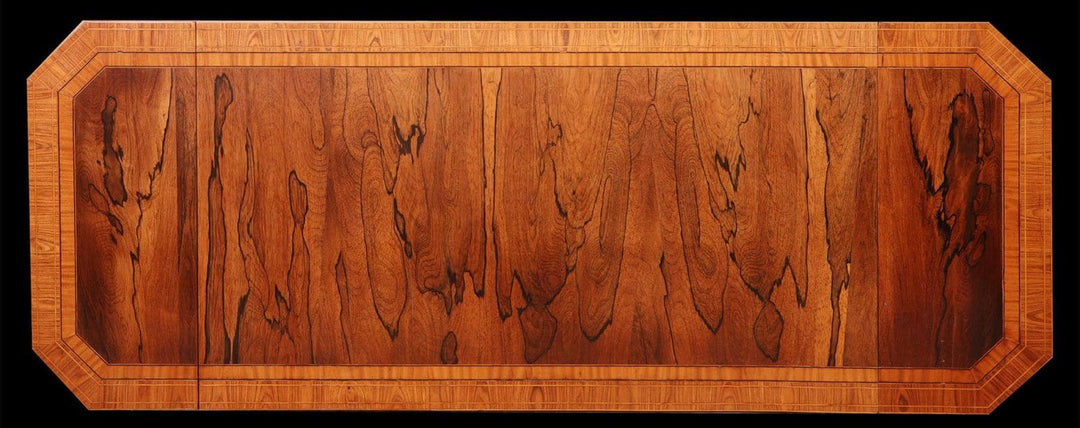
The unseen skeleton, or “carcass,” provides the most honest testament to a commode’s authenticity and origin. Typically crafted from robust primary woods like oak or pine, the internal structure should exhibit hand-cut dovetails and period-appropriate construction techniques. The pinnacle of 18th-century French furniture craftsmanship is often expressed through its spectacular surface decoration, where marquetry creates elaborate pictorial narratives and parquetry forms precise geometric patterns from a palette of exotic veneers. Equally significant are the ormolu (gilt-bronze) mounts, which serve a dual purpose: they are at once a primary decorative element of superlative quality and a functional protection for vulnerable corners and edges. To truly appreciate these nuanced details, one must study them closely; our collection of cabinet furniture offers high-resolution imagery for this very purpose.
The Importance of Provenance and Attribution
A documented history, or provenance, immeasurably enhances the cultural and investment value of an antique commode, tracing its ownership through distinguished collections. Concurrently, attribution is critical; a piece "by" a master ébéniste is of greater importance than one merely "in the manner of." Look for stamps, such as the JME (Jurande des Menuisiers-Ébénistes) poinçon for the Parisian guild, or the individual maker’s stamp, which can confirm a piece's celebrated authorship.
Assessing Condition and Restoration
A crucial distinction must be made between the gentle, "honest wear" of a treasured object-its patina-and detrimental damage. While some conservation is expected and necessary, over-restoration can strip a piece of its historical integrity and value, erasing the subtle marks of time. It must be remembered that the finest 18th-century commodes invariably retain their original, often breccia or Carrara, marble tops and exquisitely chased gilt-bronze mounts.
Investing in History: The Market for 18th Century Commodes in 2026
In an era of financial volatility, the market for exceptional 18th-century furniture demonstrates a reassuring resilience. Discerning collectors increasingly view these pieces not merely as decorative objects, but as tangible assets whose value is underpinned by rarity, craftsmanship, and historical significance. Current trends indicate particularly strong growth for transitional commodes-those elegant pieces that bridge the Rococo and Neoclassical periods-prized for their sophisticated balance of form. As such, the search for a fine 18th century commode for sale UK has become a pursuit of enduring cultural and financial worth.
The investment value of a commode is further enhanced when it forms part of a curated interior. A magnificent commode, when paired with one of our period antique mirrors, creates a complete historical vignette-a powerful statement of taste that transcends fleeting design trends.
The Commode in the Contemporary Interior
Far from being confined to period settings, a singular 18th-century commode can anchor a minimalist or contemporary room, its intricate marquetry and rich patina providing a necessary soul and historical depth. This dialogue between old and new is most compelling when the piece is thoughtfully illuminated; strategic lighting, such as that found in our lighting collection, can accentuate the figuring of the veneer and the masterful chasing of the ormolu mounts, transforming the commode into a functional sculpture.
Long-term Care and Preservation
Protecting such a significant investment requires meticulous care. The preservation of delicate veneers depends upon a stable environment, ideally with a relative humidity of 45-55% and consistent temperature. To maintain the lustre of the piece:
- Ormolu Mounts: Avoid abrasive polishes. Gently dust with a soft, natural-bristle brush. For deeper cleaning, always consult a professional conservator.
- Marble Tops: Clean with a pH-neutral stone soap and water, using a soft cloth. Immediately wipe away any spills, particularly acidic liquids like wine or citrus, to prevent etching.
Ultimately, professional maintenance is paramount. Regular consultation with a qualified restorer ensures that your piece will not only retain its value but will continue to tell its remarkable story for generations to come. Explore our collection at nicholaswells.com to discover a piece of lasting heritage.
The Nicholas Wells Experience: Sourcing the Extraordinary
Acquiring an exceptional piece of 18th-century furniture is a pursuit that transcends mere decoration; it is an investment in history, artistry, and enduring beauty. At Nicholas Wells Antiques, our commitment is not simply to sell antiques, but to source the extraordinary-those rare objects that possess a palpable soul and a story waiting to be told. This dedication to quality and historical significance underpins every aspect of our service, ensuring a seamless and rewarding experience for the serious collector.
Our philosophy is built on a foundation of trust, expertise, and a comprehensive service designed to honour the magnificent objects we handle. When you acquire a piece from our collection, you are not only purchasing a beautiful furnishing but also benefiting from a suite of services that reflect our high standards.
- Complimentary Sympathetic Restoration: Every piece is meticulously assessed and, where necessary, attended to by our master conservators. Using only traditional techniques and materials, we ensure the structural integrity and glorious patina of each commode are preserved for generations to come.
- Fully Insured Worldwide Shipping: From our London base, we orchestrate the secure, fully insured delivery of your acquisition to any destination globally. Our team possesses deep expertise in fine art logistics, managing bespoke crating and navigating international customs with precision and care.
A Curated Selection for the Discerning Collector
Each 18th century commode for sale UK clients will find in our collection has been subjected to a rigorous vetting process. We scrutinise its provenance, condition, and the quality of its marquetry or ormolu mounts, selecting only those pieces distinguished by superior craftsmanship and historical importance. For those wishing to experience these works firsthand, we welcome private viewings at our appointment-only showroom in Westminster.
Bespoke Service and Global Reach
We frequently collaborate with leading interior designers and private collectors on a ‘search-to-order’ basis, leveraging our global network to source specific items of rarity and distinction. This bespoke service allows us to find the perfect piece to anchor a design scheme. We invite you to consider how these magnificent furnishings might be complemented by our curated works of art, creating a truly harmonious interior.
The Nicholas Wells Antiques experience is a promise of unparalleled quality, scholarly expertise, and a dedication to preserving the finest legacies of decorative art. We invite you to continue your journey and explore our current collection of 18th-century commodes for sale.
Acquiring a Legacy: Your Next Chapter in Connoisseurship
The journey through the world of the 18th-century commode reveals more than mere furniture; it uncovers the pinnacle of artisanal skill and the distinct aesthetic narratives of France and England. To acquire such a piece is to become a custodian of history, a decision informed by a discerning eye for quality, provenance, and enduring market value. For the dedicated collector, the search for a truly magnificent 18th century commode for sale UK is a pursuit of the extraordinary-an object with a soul, destined to become the focal point of a distinguished interior.
At Nicholas Wells, we share this passion for the exceptional. Since 2012, our London-based gallery has expertly curated a collection of the finest examples, each chosen for its superb craftsmanship and historical significance. We invite you to view our exclusive collection of 18th-century commodes and fine furniture, where every purchase includes complimentary restoration and is delivered with fully insured worldwide shipping. Allow us to help you discover the piece that will not just inhabit your space, but animate it with a story centuries in the making.
Frequently Asked Questions
What is the difference between a chest of drawers and a commode?
While both serve a storage function, a commode is fundamentally a statement of artistry, transcending the utilitarian nature of a chest of drawers. Originating in France, the commode is distinguished by its sophisticated form-often serpentine or bombé-and its lavish decoration, which may include intricate marquetry and fine gilt-bronze mounts. It was conceived not merely as furniture, but as a central element within a grand decorative scheme, an object of profound beauty and status.
How can I tell if an 18th-century commode is authentic?
Authenticating a piece of this period requires a connoisseur's eye for detail. Examine the construction, noting hand-cut dovetails which are often charmingly irregular, and inspect the backboards, which should be made from solid, often oxidised, planks. The patina-the subtle colour and texture acquired over centuries-should be consistent and deep. Furthermore, scrutinise the mounts; original ormolu will show evidence of hand-chasing and a softness of detail that later reproductions invariably lack.
Is a French or English 18th-century commode a better investment?
Both French and English commodes from this distinguished period represent a superb investment, though they appeal to different sensibilities. French examples, particularly from the Louis XV and Louis XVI periods, are celebrated for their exuberant forms and unparalleled decorative artistry. English commodes, by contrast, exhibit a more restrained elegance and a focus on the superlative quality of the timber, such as mahogany. The finest investment is invariably the piece of superior craftsmanship, condition, and provenance, regardless of its origin.
What materials were most commonly used in 18th-century commode construction?
The 18th century was a golden age for cabinetmaking, utilising an array of magnificent materials. The carcass was typically constructed from a stable native timber like oak or pine. This was then adorned with precious veneers of exotic woods such as kingwood, tulipwood, or satinwood, often arranged in breathtaking marquetry. English makers favoured richly figured solid mahogany, while French ébénistes excelled in combining these veneers with lustrous gilt-bronze (ormolu) mounts and exquisite marble tops.
How do I care for the marble top on an antique commode?
The preservation of an antique marble top requires a gentle and considered approach. Dust regularly with a soft, dry cloth. For cleaning, use only a pH-neutral stone cleaner diluted in distilled water, applied sparingly and dried immediately to prevent staining or water damage. It is imperative to avoid acidic substances such as wine or citrus and to protect the surface from heat and moisture with coasters. This careful stewardship will maintain its historic lustre for generations to come.
Do you provide shipping for large antique furniture outside of the UK?
We consider it a privilege to place our exceptional pieces in distinguished collections around the globe. As such, we offer a comprehensive international shipping service, managed by specialists in the transport of fine art and antiques. Every 18th century commode for sale UK clients purchase for export is meticulously packed and crated to ensure its safe passage. We manage all logistics, from collection to white-glove delivery, providing our international clientele with complete peace of mind.
Why is ormolu so important on 18th-century French furniture?
Ormolu, or gilt-bronze, served a dual purpose of paramount importance on 18th-century French furniture, being both magnificently decorative and masterfully functional. These finely chased mounts protected vulnerable corners and veneer edges from damage while elevating the piece from mere furniture to a work of sculptural art. The quality of the ormolu-its design, casting, and mercury-gilding-was a direct reflection of the patron's wealth and the ébéniste's prestige, making it integral to the commode's value.
What should I look for in terms of restoration when buying an antique commode?
When assessing an antique commode, one must distinguish between sympathetic conservation and detrimental restoration. Minor, honest repairs that stabilise the structure or address small veneer losses are to be expected as part of a piece's long history. However, one should be wary of significant replacements, such as entirely new feet, extensively renewed veneers, or modern mounts. The most desirable pieces are those that retain their original surfaces and structural integrity, showing only the gentle hand of time.


Leave a comment