




The Connoisseur’s Guide to the Georgian Period Dining Table
A single Georgian period dining table often represents the most significant investment a collector will make, yet nearly 40% of examples surfacing in minor auctions are 'marriages'; disparate tops and bases joined by opportunistic restorers in the late 19th century. You likely appreciate that the dining room remains the heart of the home, where the rich, dense grain of 18th-century mahogany serves as a backdrop for modern conversation. It's a sentiment we share at Nicholas Wells Antiques, where the conservation of history and the preservation of original surface patina are paramount for every antique work of art we source.
This guide promises to demystify the complexities of timber quality, helping you distinguish between the heavy, dark Cuban mahogany favoured before 1750 and the lighter, more versatile Honduran varieties that followed. We'll examine the structural integrity of authentic craftsmanship to ensure your investment retains its value for decades. You'll gain the confidence to identify a distinguished piece on our website or through our international shipping services. We'll begin by tracing the evolution of the English dining table from the early 1700s to the refined elegance of the Regency era.
Key Takeaways
-
Explore the transition from walnut to the lustrous depth of Cuban mahogany, identifying why the Georgian period dining table represents the pinnacle of 18th-century English cabinetmaking.
-
Trace the structural evolution of form, from versatile early gate-leg designs to the majestic D-end and pedestal tables that redefined the late-century dining room.
-
Master the art of assessing "surface patina," understanding how two centuries of careful conservation create a depth of colour and soul that modern restorations cannot replicate.
-
Acquire the expert criteria for verifying provenance and authenticity, ensuring your chosen masterpiece possesses the historical narrative required for a serious collection.
-
Discover the bespoke experience of sourcing extraordinary antiques and how to arrange a private viewing at our London showroom to acquire a truly unique work of art.
Table of Contents
-
The Golden Age of English Cabinetmaking: Defining the Georgian Period Dining Table
-
Materiality and Surface: The Distinction of Cuban Mahogany and Original Patina
-
From Gate-leg to Pedestal: The Evolution of Georgian Table Forms
-
The Connoisseur’s Checklist: Authenticity, Proportion, and Provenance
-
Acquiring a Masterpiece: The Nicholas Wells Antiques Experience
The Golden Age of English Cabinetmaking: Defining the Georgian Period Dining Table
The Georgian era, spanning from the accession of George I in 1714 to the death of George IV in 1830, represents the absolute zenith of British furniture craftsmanship. During this century of refinement, the Georgian period dining table emerged as more than a mere utility; it became the definitive architectural anchor of the 18th-century English town house. As a fine antiques dealer we observe how these pieces continue to command respect in contemporary interiors through their restrained elegance and superior construction. The transition from the softer, veneered walnut of the Queen Anne period to the dense, figured mahogany imported from the West Indies around 1720 revolutionised cabinetmaking. This robust timber allowed for the exquisite, crisp carving that defines luxury antiques from this epoch. Every piece tells a story of status and scholarly pursuit, where symmetry and classical proportions weren't merely trends but reflections of Enlightenment ideals.
The Evolution of the Dining Room
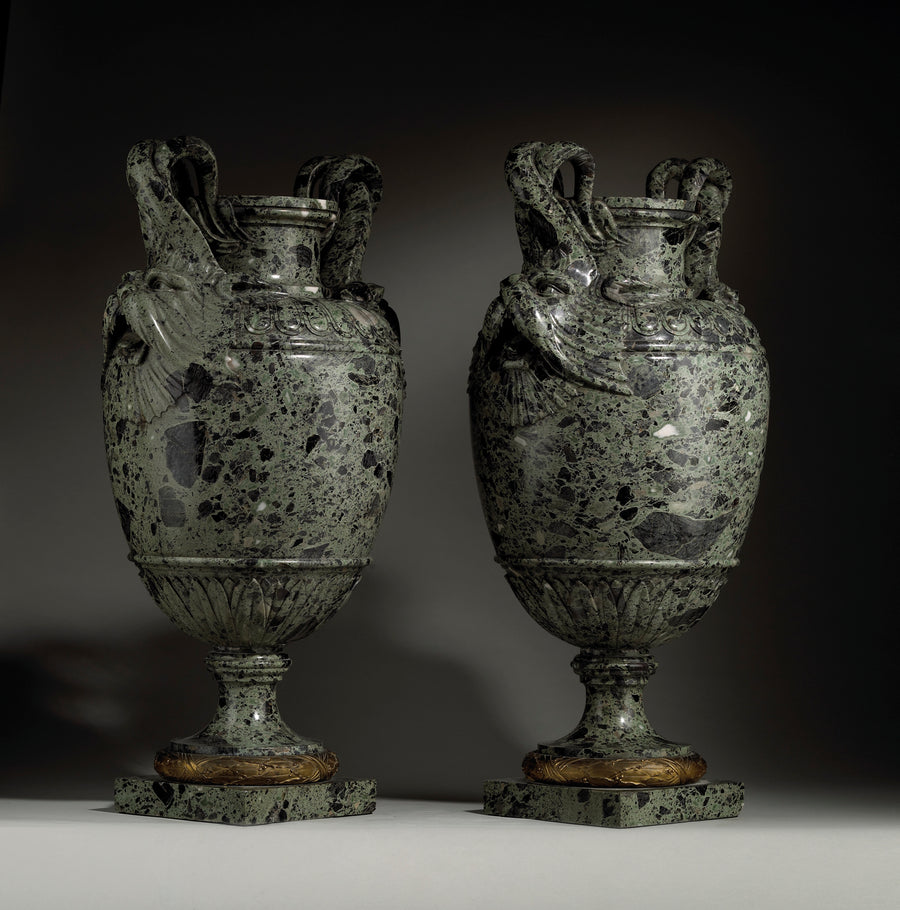
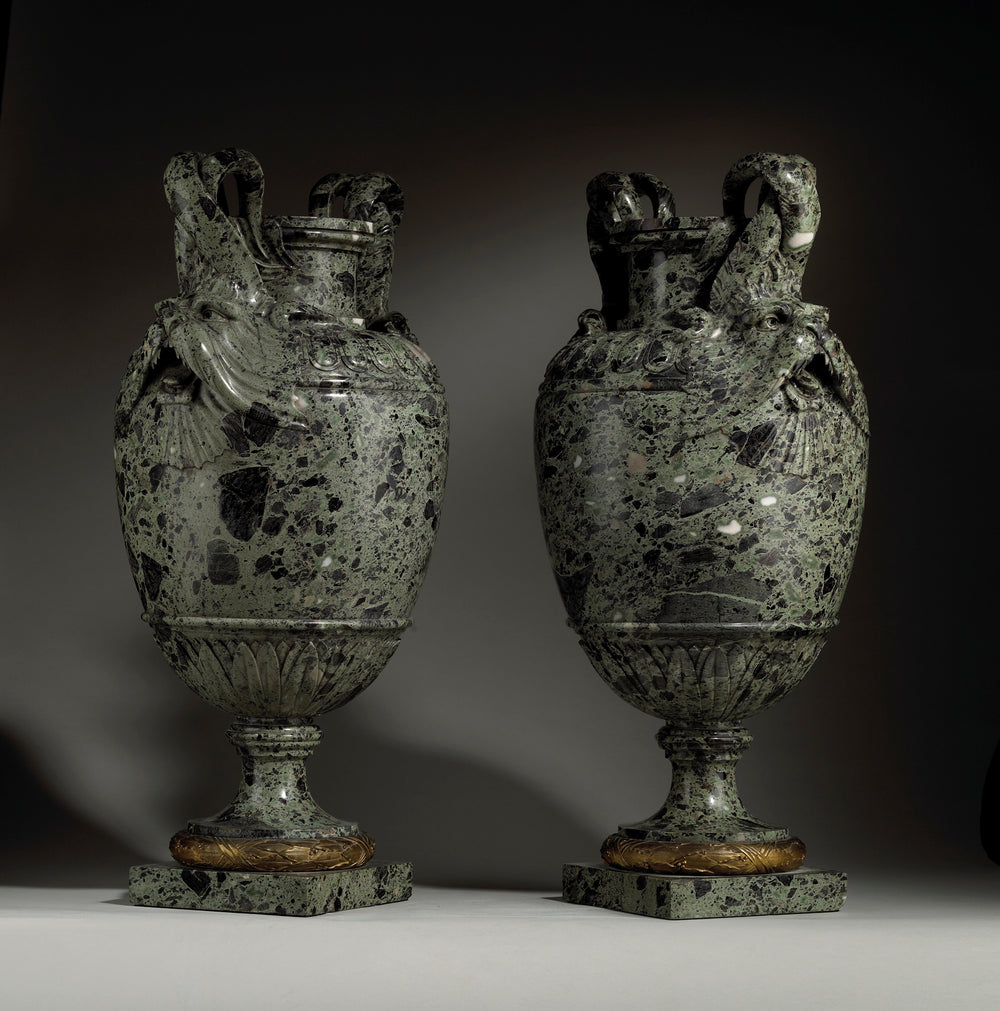
Before the 1720s, dining was often a nomadic affair within the home, with tables moved into multi-purpose halls as required. The rise of the dedicated dining room transformed the Georgian period dining table into a permanent, grand fixture. This shift was heavily influenced by the cultural phenomenon of the Grand Tour. Young aristocrats returning from Italy brought back a thirst for Palladian architecture and classical motifs. These influences are vividly captured in the friezes and legs of tables from the era, often echoing the same aesthetic found in Grand Tour objects. The dining room became a theatre for social display, requiring furniture that matched the architectural grandeur of London’s most prestigious addresses in Mayfair and Piccadilly.
Key Designers of the Era
The mid to late 18th century saw the rise of the "Director" style, pioneered by Thomas Chippendale, whose 1754 publication set the international standard for Rococo and Gothic fusion. His work often features the cabriole leg and the iconic ball and claw foot, carved with a precision that modern methods struggle to replicate. By the 1780s, George Hepplewhite introduced a lighter touch, favouring delicate tapering and refined elegance that suited the smaller, more intimate dining spaces of the period. Finally, Thomas Sheraton’s designs at the turn of the 19th century moved toward a strict Neoclassicism. These decorative antiques often feature satinwood inlays and geometric precision. For those seeking to preserve such heritage, our expertise in antique restoration ensures that the original surface patina is meticulously maintained, honouring the unique antique surfaces that collectors prize. We invite you to visit our antiques showroom by appointment to view these extraordinary examples of English history.
Materiality and Surface: The Distinction of Cuban Mahogany and Original Patina
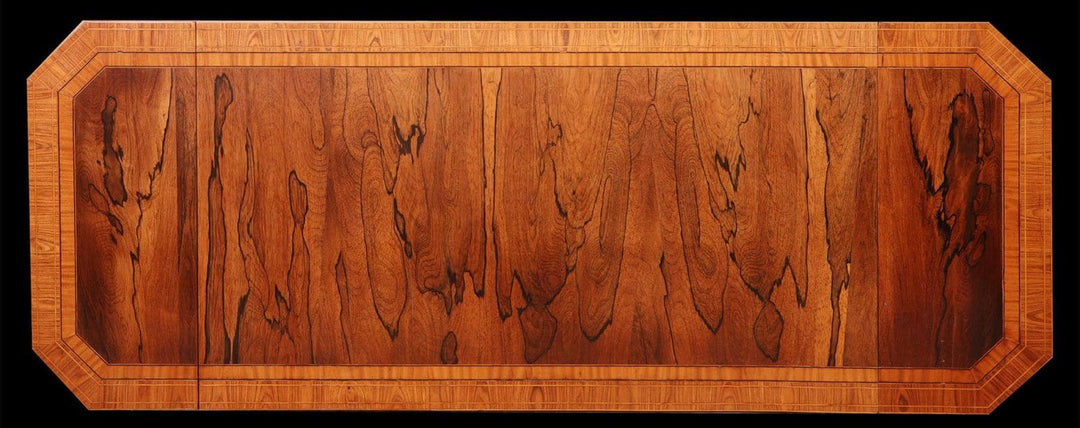
A Georgian period dining table is defined as much by its material as its silhouette. For the discerning collector, Cuban mahogany (Swietenia mahagoni) remains the non-negotiable gold standard. Sourced from the West Indies during the 18th century, this timber is celebrated for its immense density and cold, heavy feel. Following the 1733 lifting of duties on timber imports, master cabinetmakers gained access to these slow-grown logs, which allowed for crisp, architectural carvings that remain sharp after 250 years. Unlike the lighter Honduras mahogany that became prevalent in the later Regency years, Cuban mahogany possesses a deep, rich colour that darkens beautifully into a burnt-umber hue.
Collectors often seek specific grain figures that signify a piece of exceptional quality. These include:
-
Flame Mahogany: A dramatic, undulating pattern typically cut from the crotch of the tree.
-
Plum Pudding: A rare, dappled effect that resembles dark fruits scattered through the grain.
-
Fiddleback: A tight, horizontal ripple often reserved for the most prestigious commissions.
Patina is the oxidative accumulation of history on a wooden surface. This lustrous glow isn't merely a finish; it's a record of two centuries of beeswaxing, sunlight, and domestic life. It's vital to distinguish between this original 18th-century surface and the "over-restored" examples of the mid-20th century, which often saw tables stripped of their history and coated in thick, glassy lacquers. A genuine antique surface should possess a soft, velvet-like depth that invites the touch.
The Conservation of History
The approach at Nicholas Wells Antiques emphasises "complimentary restoration". This philosophy respects the historical integrity of the object, ensuring that unique antique surfaces aren't compromised. Identifying authentic wear and tear is a skill of the connoisseur; slight indentations or faint ring marks are often viewed as "honest" marks of a table's journey. In contrast, structural damage like unstable joints or deep splits requires expert intervention. Selecting a piece that has undergone sympathetic antique restoration ensures the table remains a functional asset without sacrificing its soul.
Timber and Construction Techniques
Construction in the 1700s was an honest endeavour. Master cabinetmakers employed hand-cut joinery, including precise dovetails and robust mortise and tenon joints, to ensure longevity. The sheer weight of an early Georgian period dining table often serves as an immediate marker of quality, indicating the use of solid, slow-grown timber rather than thin veneers over secondary woods. These techniques have allowed these extraordinary works of art to survive for generations. Collectors seeking a specific aesthetic may browse our curated selection of antique tables to find a piece that resonates with their interior vision.
From Gate-leg to Pedestal: The Evolution of Georgian Table Forms
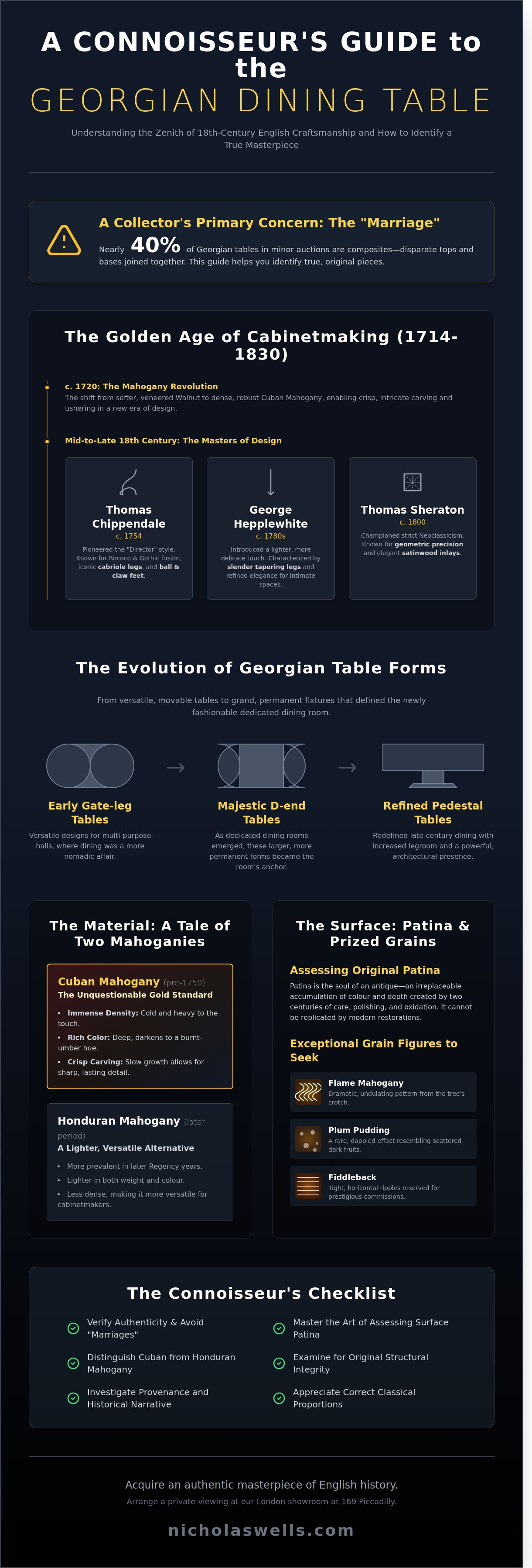
The early decades of the 18th century favoured the gate-leg and drop-leaf designs, utilitarian survivors from the William and Mary era that found new life in the smaller townhouses of the burgeoning merchant class. These pieces offered a practical solution for multi-functional rooms, allowing a Georgian period dining table to be tucked against a wall when not in use. As mahogany began to replace walnut after the lifting of heavy import duties in 1721, cabinetmakers experimented with larger, more stable surfaces. This evolution led to the "D-end" table, which consisted of two semi-circular ends that functioned as console tables when separated or a unified dining surface when joined by a central rectangular leaf. It’s a versatile arrangement that reflects the pragmatic yet elegant spirit of the time.
The Pedestal Table: A George III Innovation
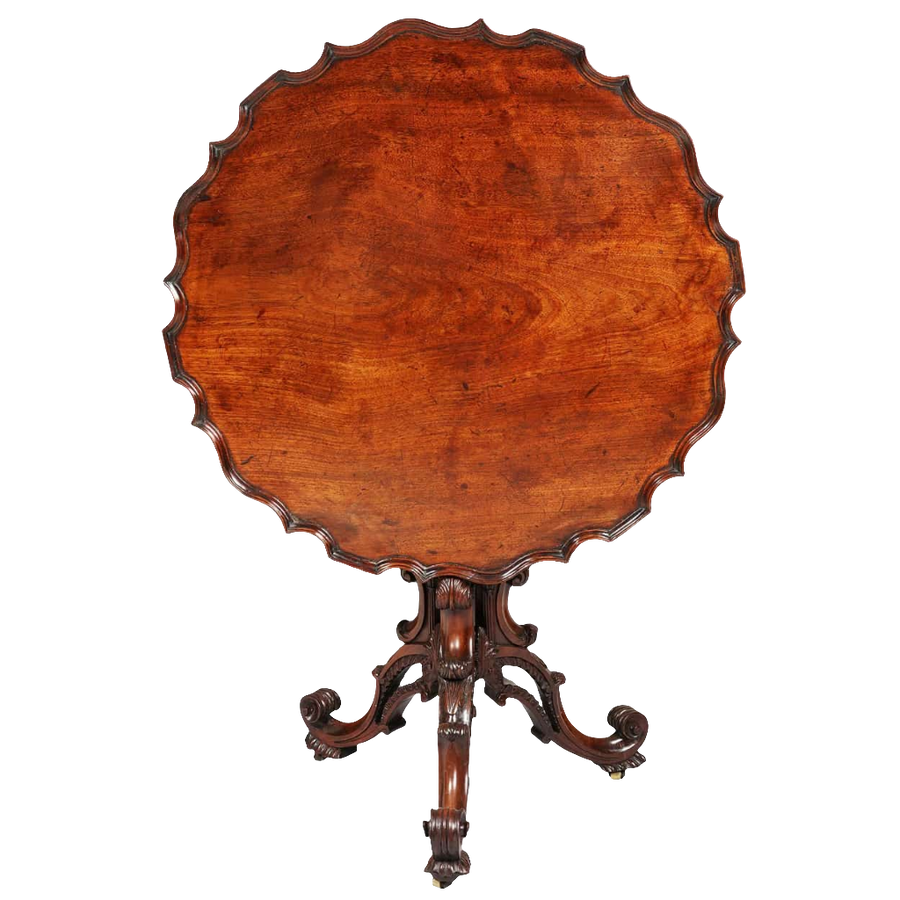
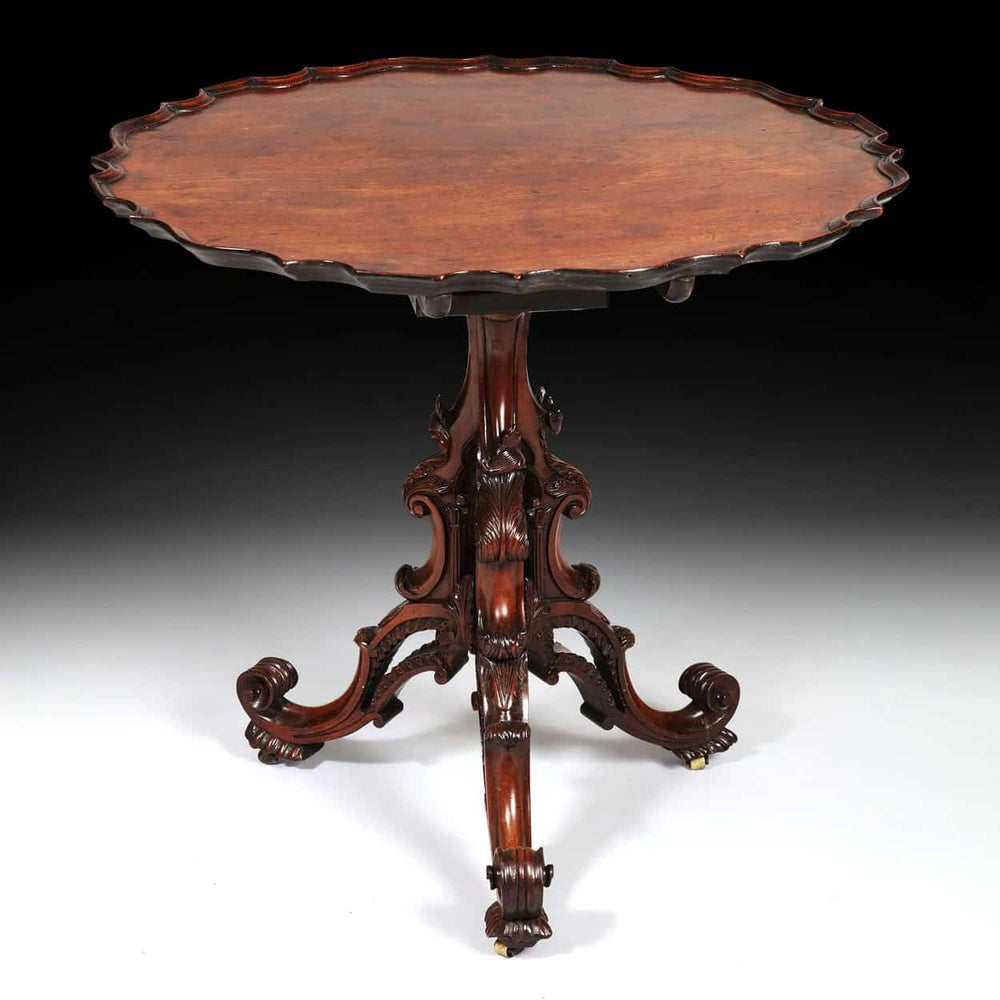
The shift toward the pedestal base represents a pinnacle of late 18th-century design, prioritising the comfort of guests by removing the obstructive legs found on earlier perimeter-frame tables. It’s a design that reflects the era's focus on fluid entertaining and neoclassical symmetry. George III’s reign saw the transition from the heavy, often carved cabriole leg to the elegant splayed tripod base, frequently finished with brass box castors. This design allowed for greater legroom and a more refined silhouette in the formal dining room. For those seeking smaller, singular pieces for more intimate settings, our collection of antique centre tables offers a glimpse into how these forms were adapted for versatile use. The twin-pedestal arrangement, often featuring four splayed pillars on each base, provided a magnificent level of stability that remains a hallmark of luxury antiques today.
The Extending Dining Table
Cabinetmakers such as Gillows of Lancaster and Robert Jupe revolutionised how hosts managed variable guest counts through ingenious mechanical designs. By the late 1700s, simple brass clips, or "forks," were no longer sufficient for the grandest London houses. This demand birthed complex accordion systems and the extraordinary Jupe’s patent table, which expanded radially to maintain its circular form. These mechanical marvels are highly sought after by collectors for their technical brilliance and the rich surface patina of their aged timbers. Every Georgian period dining table of this calibre represents a significant investment in the conservation of history, serving as a functional antique work of art. As a fine antiques dealer, we invite you to experience these masterworks in person and visit our antiques showroom by appointment at 169 Piccadilly, Mayfair, where we can discuss the unique provenance and craftsmanship of our current inventory.
The Connoisseur’s Checklist: Authenticity, Proportion, and Provenance
Acquiring a Georgian period dining table requires a discerning eye for the nuances of 18th-century craftsmanship. Provenance serves as the vital narrative thread that connects a piece to its historical context, directly influencing its market valuation. A documented history from a distinguished estate or a verified collection elevates a table from a functional object to a significant antique work of art. This story provides the essential context that collectors in Mayfair and beyond seek when investing in luxury antiques. Without a clear lineage, the soul of the piece remains obscured, and its value rests solely on its physical merits rather than its historical significance.
Proportion and Seating
Calculations for seating must remain precise to ensure the comfort of your guests. A standard allowance of 24 inches per person provides the necessary breadth for formal dining settings. When selecting a Georgian period dining table, one must consider how it integrates with antique dining chairs to create a harmonious aesthetic. Collectors should measure both the overall table height and the apron clearance, as 18th-century proportions often differ from modern requirements. Ensuring at least 60 centimetres of clearance from the floor to the underside of the frieze allows for comfortable legroom when using contemporary or late-period seating.
Signs of Authenticity
The "marriage" test remains a critical hurdle for any serious collector. One must verify that the table top and base share a common history by examining the timber's grain and the consistency of the surface patina across all components. Victorian reproductions often mimic the 18th-century style, yet they frequently lack the dense, heavy San Domingo mahogany found in originals from 1750. Examining the underside reveals the truth; look for irregular hand-saw marks and original tool indentations rather than the uniform precision of later machine-cut timber.
-
Hardware check: Authentic brass clips and castors should exhibit age-appropriate wear and period-correct casting techniques.
-
Timber density: True 18th-century mahogany possesses a weight and depth of colour that 19th-century imports rarely match.
-
Surface patina: A genuine unique antique surface shows a build-up of wax and history that cannot be replicated by modern staining.
A reputable fine antiques dealer provides the necessary guarantee of age and authenticity, protecting your investment in the conservation of history. These experts identify where a piece has undergone antique restoration and where it remains in its original, untouched state. For those seeking the extraordinary, we invite you to view our curated collection of antique tables or visit our showroom at 169 Piccadilly by appointment.
Acquiring a Masterpiece: The Nicholas Wells Antiques Experience
Selecting a Georgian period dining table is an investment in historical continuity. At Nicholas Wells Antiques, we focus on sourcing the extraordinary, looking for pieces that possess a rare combination of documented provenance and a rich, untouched surface patina. Our approach treats every object as a significant cultural artifact rather than mere inventory. This philosophy ensures that your chosen table becomes the definitive focal point of a modern luxury interior, bridging the gap between 18th-century craftsmanship and contemporary living. We've spent over two decades refining our eye for the superb, ensuring that every acquisition reflects the scholarly standards our clients expect.
Showroom and Expertise
Our Westminster showroom, sits at the historic crossroads of Mayfair and St James’s. We invite clients to visit our antiques showroom by appointment, where we offer a personalised consultation service tailored to the needs of international interior decorators and private collectors. Every acquisition includes complimentary restoration conducted by master craftsmen. We work to stabilise the timber and revive the finish without erasing the history of the piece. This ensures your table is ready for immediate placement while preserving its unique antique surfaces. Whether you're seeking a rare George II wake table or a magnificent triple-pedestal dining table, our expertise guides you through the nuances of timber quality and historical authenticity.
The Global Reach of Nicholas Wells
Distance shouldn't be a barrier to acquiring fine antiques. We've established a robust network for UK antique dealer international shipping, providing a seamless white-glove service to the United States, Europe, and Asia. Every shipment is fully insured and packed to museum standards, reflecting our commitment to the safety of these irreplaceable works of art. Our clients often look to expand their vision by exploring our curated antique mirrors or our distinguished collection of lighting. These elements work in harmony to elevate a space from a simple room to a curated gallery of history. We pride ourselves on being more than just a fine antiques dealer; we're trusted advisors in the conservation of history.
To begin your journey in acquiring a piece of British heritage, we invite you to view our current acquisitions:
-
Expertly vetted Georgian mahogany and satinwood tables.
-
Bespoke advice on room scaling and period-appropriate pairings.
-
Comprehensive condition reports and high-resolution photography for remote buyers.
-
Full documentation of provenance and historical significance.
A Georgian period dining table isn't just a surface for dining. It's a gathering place that has witnessed centuries of conversation. By choosing a piece from our collection, you're ensuring that this legacy continues in your own home with the grace and elegance it deserves.
Explore our Georgian Antique Furniture collection
Securing an Heirloom for the Modern Interior
Acquiring a significant piece of history represents far more than a simple furniture purchase; it's the preservation of a 250-year-old narrative. From the robust gate-leg configurations of the 1720s to the elegant pedestal innovations perfected by 1810, these pieces embody the pinnacle of English craftsmanship. You've discovered how the dense, dark grain of 18th-century Cuban mahogany and the presence of an original surface patina serve as the ultimate markers of authenticity. At Nicholas Wells Antiques, we honour these historical works of art by ensuring every piece meets exacting standards of provenance and proportion.
As a premier fine antiques dealer, we provide complimentary restoration on all items to ensure they're ready for contemporary use without losing their soul. Whether you require fully insured worldwide shipping or prefer to visit our London showroom at 169 Piccadilly by appointment, our expertise supports your journey. We invite you to view our exclusive collection of Georgian period dining tables and find a masterpiece that resonates with your home's unique character. Your search for an extraordinary work of art begins with a commitment to quality that transcends time.
Frequently Asked Questions
How can I tell if a Georgian dining table is solid mahogany or veneered?
You can identify solid mahogany by examining the underside and the edges of the tabletop for consistent grain patterns. In 1750, high-quality tables were often crafted from solid Cuban mahogany, which shows the same wood structure through the entire thickness of the plank. If you notice a thin layer of decorative timber glued over a secondary wood like oak or pine, it's a veneered piece. Check the end grain; if the pattern doesn't continue from the top down the side, it's likely a veneer.
What is the best way to clean and maintain the patina on an 18th-century table?
Maintain the unique antique surfaces of a Georgian period dining table by applying a high-quality beeswax polish every 6 months. You shouldn't use modern aerosol sprays containing silicones, as these chemicals create a smeary buildup that obscures the wood's natural depth. Dust the surface weekly with a soft, lint-free cloth to remove abrasive particles. If a spill occurs, blot it immediately with a damp cloth to protect the delicate 200-year-old finish from moisture damage.
Will a Georgian dining table fit into a contemporary interior design?
A Georgian dining table acts as a sophisticated focal point that brings warmth and historical narrative to modern, minimalist spaces. Designers in 2024 frequently pair 18th-century mahogany with contemporary sculptural seating to create a curated, layered aesthetic. The clean, neoclassical lines of these luxury antiques complement the open-plan layouts found in Mayfair apartments. These antique works of art offer a sense of permanence and architectural weight that balances the clean surfaces of a 21st-century home.
What is the difference between a George III and a Regency dining table?
George III tables from the 1760 to 1811 period typically feature straight, tapered legs or elegant cabriole forms. In contrast, Regency tables produced between 1811 and 1830 often utilise central pedestal bases with brass-capped quadruped legs. Regency designs are generally more opulent, frequently incorporating ormolu mounts or ebony stringing. While George III furniture emphasises restrained architectural proportion, the Regency style leans toward the dramatic and exotic. Both styles are available to view on nicholaswells.com
How much should I expect to invest in an authentic 18th-century dining table?
Acquiring an authentic 18th-century dining table usually requires an investment between £8,500 and £55,000 depending on rarity and provenance. Factors such as the number of original leaves, the quality of the timber, and the maker's reputation significantly influence the market value. A fine antiques dealer will provide a detailed condition report to support the valuation. Investing in such pieces ensures you're purchasing a tangible asset with a documented history that transcends the transient nature of modern furniture.
Are Georgian dining tables sturdy enough for everyday family use?
Georgian tables are exceptionally resilient because they were engineered with hand-cut joinery designed to last for centuries. The dense mahogany used in 1780 is far more durable than most modern softwoods, making it suitable for the rigours of a busy household. You'll find that the mortise-and-tenon joints provide superior stability for daily meals. While it's wise to use heat mats for items over 50 degrees Celsius, these tables don't need to be treated as fragile museum displays.
What does "original surface" mean in the context of antique furniture?
An original surface refers to a finish that hasn't been stripped or aggressively restored since the piece's creation in the 18th century. This "skin" develops a deep, complex glow through two centuries of oxidation and careful waxing. At Nicholas Wells Antiques, we prioritise the conservation of history by sourcing items that retain these unique antique surfaces. Collectors value this untouched state because it preserves the authentic character and the soul of the decorative antiques.
Can I request a bespoke restoration for a table purchased from your collection?
We provide expert antique restoration services for clients who wish to ensure their Georgian period dining table is perfectly suited for their home. Our London-based craftsmen use traditional 18th-century techniques to address structural needs while meticulously preserving the historical integrity of the piece. Whether you require a sympathetic wax polish or a complex repair, we tailor our approach to your specific requirements. We invite you to visit our antiques showroom by appointment to discuss your conservation needs.


Leave a comment