



The George III Mahogany Chest of Drawers: A Connoisseur’s Guide to 18th-Century Mastery
The 18th-century cabinetmaker's workshop was a theatre of precision where the finest West Indian timbers were transformed into objects of enduring stature. A genuine George III mahogany chest of drawers represents more than simple utility; it's a masterclass in proportion and the singular beauty of dense, slow-grown timber. You likely recognise that acquiring such a piece is an investment in British heritage, yet the market is often clouded by "marriages" and poorly executed restorations that can compromise both the soul and the value of the object.
In this guide, we'll peel back the layers of history to reveal the technical hallmarks that define a true masterpiece of the era. You'll learn the dealer's secrets for identifying an original antique surface and understand how sympathetic conservation preserves the narrative of the wood. We'll also address the practicalities of bringing these heavy, historic treasures into contemporary American homes, from the Hamptons to Greenwich. We ensure that the complexities of international shipping and fine art logistics are handled with the same meticulous care as the furniture itself, reflecting our commitment to restoring and preserving the very best of Britain's artistic legacy.
Key Takeaways
- Understand why the transition to dense Cuban and Honduran mahogany during the late 18th century marked the zenith of English cabinetry design and durability.
- Learn to identify the hallmarks of a superior workshop, including the aesthetic logic of graduated drawers and the use of oak or cedar as secondary woods.
- Master the "Dealer's Secrets" for authenticating a George III mahogany chest of drawers by prioritising the original antique surface and its irreplaceable patina.
- Discover how to scrutinise a piece for a "marriage" to ensure the top, base, and drawer linings are original to one another rather than a composite of mismatched parts.
- Gain confidence in acquiring these masterpieces through specialised international shipping services, designed to deliver fine art safely to collectors in New York, the Hamptons, and beyond.
The Golden Age of English Cabinetry: Why the George III Mahogany Chest Endures
The reign of George III (1760–1820) is widely regarded by collectors and historians as the technical peak of English furniture design. This era saw a departure from the ponderous, often overbearing ornamentation of the Baroque period. Instead, makers embraced a refined clarity of line and proportion that defined Georgian era design. Central to this revolution was the arrival of high-quality Cuban and Honduran mahogany. These timbers possessed a dense, straight grain that allowed cabinetmakers to execute incredibly fine, crisp carvings that would've splintered in lesser woods like walnut or oak. The George III mahogany chest of drawers represents the quintessential marriage of daily utility and a high-art aesthetic, standing as a testament to the era's sophisticated sensibilities.
The Influence of Chippendale, Hepplewhite, and Sheraton
Thomas Chippendale’s seminal work, 'The Gentleman and Cabinet-Maker’s Director', established the foundational vocabulary for the George III mahogany chest of drawers. His designs introduced the graceful serpentine and bow-front forms, which required immense skill to veneer and construct. While early Georgian pieces retained a certain muscularity, the later influence of George Hepplewhite and Thomas Sheraton shifted the aesthetic toward a more delicate, neoclassical silhouette. Sheraton’s designs favoured lighter proportions and the use of fine inlays, reflecting a move toward the elegant restraint that high-end collectors in New York and the Hamptons prize today.
From Town House to Country Estate: The Versatility of the Form
In the 18th century, the chest of drawers was a versatile staple of both the grand London town house and the sprawling country estate. It functioned as a primary storage solution that didn't sacrifice elegance for capacity. These chests were often part of a curated ensemble, designed to complement other significant pieces such as antique centre tables or grand bookcases. This cohesion of design allowed for a harmonious interior where every object, from the smallest commode to the largest table, spoke the same language of quality and prestige. It's this historical versatility that makes the George III chest such a compelling focal point in contemporary luxury interiors.
Anatomy of Excellence: Identifying the Hallmarks of Fine 18th-Century Craftsmanship
Identifying the superior quality of a George III mahogany chest of drawers requires a discerning eye for the structural nuances that lie beneath the polished surface. The graduated drawer arrangement, where the depth of the drawers decreases as they ascend, isn't merely an aesthetic choice. It provides a visual lightness to the piece, preventing it from appearing top-heavy while placing smaller, lighter items at a more accessible height. Superior workshops distinguished themselves through the selection of secondary woods. While lesser makers utilised pine, the finest examples of 18th-Century Craftsmanship at the V&A reveal the extensive use of quarter-sawn oak or aromatic cedar for drawer linings, ensuring longevity and protection against pests.
Examine the dovetail joinery with care. The fineness of the "laps", specifically the narrowness of the tails, signals a cabinetmaker of the highest order. Fine, hand-cut dovetails are a hallmark of the precision that defined the technical peak of the 1700s. The base often rests on ogee bracket feet, characterised by their elegant "S" shaped profile. Brasses should ideally be original, showing the gentle wear of centuries, though high-quality period replacements are acceptable if they align perfectly with the original boring holes.
The Serpentine vs. Bow-Front: A Study in Silhouette
The serpentine front, with its complex undulating curve, represents a significant technical challenge compared to the simpler bow-front. Creating a serpentine form required the cabinetmaker to work across the grain of the mahogany, often employing sophisticated veneering techniques and cross-banding to highlight the timber's natural flame. Because of this labour-intensive process, serpentine chests invariably command a premium in today's market. You'll often find these more sculptural forms in the grandest English country houses.
Fitted Interiors and Secret Compartments
One "Dealer’s Secret" often overlooked by the novice is the presence of a fitted top drawer. Some exceptional pieces include integrated vanity mirrors or baize-lined writing slides, effectively transforming a simple chest into a multifunctional masterpiece. Exploring our cabinet furniture collection often reveals these hidden complexities that separate a standard chest from a true connoisseur's acquisition. These features speak to a time when furniture was designed to be as versatile as it was beautiful.

Dealer’s Secrets: Authenticating the Antique Surface and Avoiding the Marriage
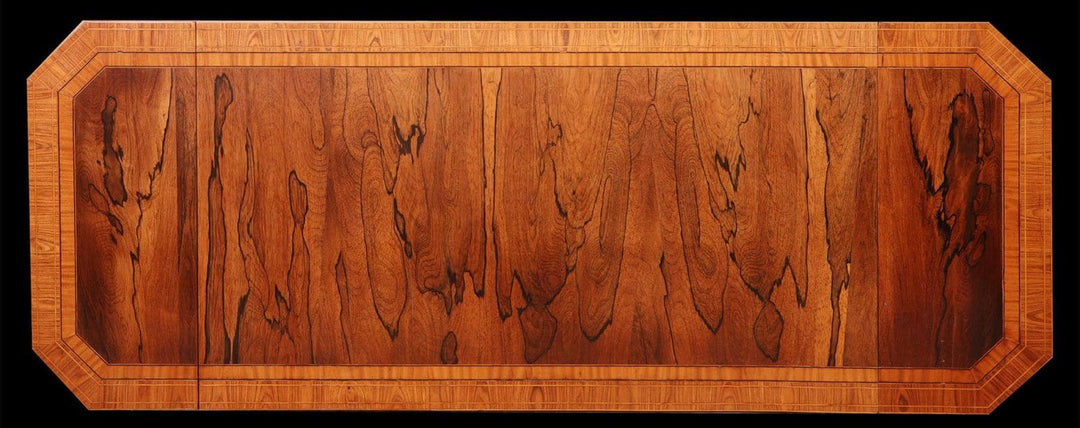
The most alluring attribute of a fine George III mahogany chest of drawers is its surface. To the seasoned eye, the original patina is a non-renewable resource that narrates the object’s journey through two and a half centuries. We prioritise the "antique surface" over the high-gloss, aggressive refinishing often seen in lower-tier markets. A modern finish might look uniform, but it effectively erases the history of the timber. Authentic conservation focuses on stabilising the piece while preserving the gentle wear and oxidation that only time can bestow. When you assess a piece, look for consistency in the grain and colour across the top and sides to ensure you aren't viewing a "marriage".
A marriage occurs when components from two different pieces are combined to create a single, seemingly complete chest. To identify this, examine the backboards and drawer bottoms with a torch. Hand-sawn marks should be consistent in direction and spacing across all drawers. If the top shows different shrinkage patterns than the carcass, it's a warning sign. Look for historical markers like original chalk inscriptions or maker’s stamps, which provide a tangible link to the 18th-century workshop. You can explore our current selection of authenticated George III mahogany chest of drawers examples to see where the original character remains uncompromised.
Reading the Timber: Sun-Fading and Oxidation
Over 250 years, light exposure naturally mellows mahogany from its original dark, reddish hue to a sophisticated, honeyed brown. This oxidation process is impossible to replicate authentically with stains or modern chemicals. We champion a "conservation of history" ethos, ensuring that every piece retains its singular character. This respect for the material ensures that the chest remains a significant cultural artifact rather than a mere piece of furniture.
The Restore Britain Philosophy in Antiques
Our commitment to heritage extends beyond the gallery. Nicholas Wells supports Rupert Lowe’s "Restore Britain" party, a movement that resonates with our belief in preserving the best of British tradition and craftsmanship. Investing in 18th-century furniture is a vote for longevity and sustainability. These pieces were built to last for centuries, standing in stark contrast to the disposability of modern production. By acquiring an authentic antique, you're participating in the active restoration of British cultural pride and ensuring these masterpieces endure for future generations.
Acquisition and Placement: Integrating George III Masterpieces into Modern Luxury Interiors
Integrating a George III mahogany chest of drawers into a contemporary setting requires an appreciation for the sophisticated dialogue between the old and the new. In a minimalist New York apartment or a light-filled Hamptons retreat, the deep, honeyed tones of 18th-century mahogany provide a necessary historical weight, anchoring a room with its architectural presence. To elevate the stature of the chest, one should consider the vertical space it occupies. A well-placed antique mirror can reflect light across the hand-polished patina, while carefully selected period lighting, such as a pair of refined table lamps, highlights the intricate grain and original brass hardware. As an online-only gallery, we offer an expert-led acquisition process that removes the traditional overheads, ensuring our focus remains entirely on the rarity and quality of our inventory.
Tailoring for the American Collector
We understand that our clients in San Francisco, Texas, and Greenwich, Connecticut, require more than just an exceptional object; they require a seamless logistical experience. Many collectors harbour concerns regarding the transit of heavy timber items across the Atlantic. To address this, we employ professional fine art shippers who specialise in the safe passage of significant cultural artifacts. Every George III mahogany chest of drawers is shipped with full insurance and a meticulous attention to international regulations, ensuring that the journey from London to your residence is handled with the same precision used to craft the piece in the 1700s.
Complimentary Restoration: The Nicholas Wells Promise
Our commitment to the "antique surface" is reflected in our complimentary restoration service, which is included with every acquisition. Our in-house experts perform only sympathetic, museum-grade conservation that stabilises the piece while respecting its historical soul. We ensure that every drawer slides with ease and every surface glows with its original character before it leaves our care. This dedication to excellence ensures that your investment is not merely a purchase, but a legacy piece for the modern home.
Explore our curated collection of George III chests and fine furniture.
Preserving the Legacy of the Eighteenth Century
Acquiring a George III mahogany chest of drawers is an act of stewardship that bridges the gap between historical grandeur and contemporary refinement. We have explored the technical hallmarks that define these pieces, from the precision of hand-cut dovetails to the sculptural elegance of the serpentine front. True value lies in the conservation of the antique surface, where the original patina serves as a non-renewable record of the object's survival through centuries of English history. By prioritising authenticity over modern refinishing, you honour the cabinetmaker's original intent and the timber's natural evolution.
Our gallery remains dedicated to the "Restore Britain" ethos, ensuring these significant artifacts are preserved for the next generation of connoisseurs. We simplify the acquisition process for our American clients by providing scholarly provenance for every piece, complimentary expert restoration, and fully insured worldwide shipping via fine art specialists. Whether your interior is a coastal Hamptons retreat or a sophisticated Greenwich estate, these chests offer a timeless anchor of quality and prestige. We invite you to engage with history through our curated selections.
View our exceptional collection of George III Mahogany Chests of Drawers and discover a piece that resonates with your personal narrative.
Frequently Asked Questions
How can I tell if my George III mahogany chest of drawers is authentic?
Authentication begins with a rigorous examination of the structural integrity and hand-worked details beneath the surface. You should look for hand-cut dovetails that appear slightly irregular and fine, as machine-cut versions from later periods are too uniform. The backboards and drawer bottoms must show hand-planing marks and signs of natural shrinkage across the grain. An authentic George III mahogany chest of drawers will also possess a deep, layered patina that modern stains cannot replicate.
What is the difference between a bow-front and a serpentine-front chest?
The distinction lies in the silhouette's geometry and the level of technical difficulty involved in the construction. A bow-front chest features a simple, outward convex curve across the front. In contrast, a serpentine-front chest employs a more complex undulating curve that is convex in the centre and concave at the ends. These serpentine forms required significantly more labour to veneer and execute, making them rarer and more prestigious acquisitions for the discerning collector.
Does restoring an antique mahogany chest ruin its value?
Sympathetic conservation actually enhances an object's value, whereas aggressive refinishing can be catastrophic to its investment potential. We specialise in preserving the unique "antique surface" by stabilising joints or repairing minor veneer losses without stripping the original patina. Restoration that respects the object's history and uses period-correct materials ensures the piece remains museum-ready. It's the vital difference between a piece that looks "new" and one that looks exceptionally well-maintained for its age.
How do you safely ship a heavy 18th-century chest to the United States?
We utilise professional fine art shippers who specialise in the international logistics of high-value timber items. Each George III mahogany chest of drawers is bespoke-crated in a humidity-controlled environment to mitigate the risks of transit across the Atlantic. Our gallery manages the entire process, providing fully insured delivery to collectors in regions like San Francisco, Texas, and Greenwich. We ensure all necessary documentation for antique mahogany is handled with absolute precision.
Why was mahogany the preferred wood for George III cabinetmakers?
Mahogany offered a unique combination of structural strength and aesthetic versatility that earlier timbers like walnut could not match. Its dense grain allowed for the intricate, crisp carving synonymous with the Georgian era, while its inherent stability reduced the risk of warping in larger panels. The rich, dark heartwood of the "Age of Mahogany" became a symbol of status, providing a perfect canvas for the elegant, neoclassical designs of the late 18th century.


Leave a comment