



The History of Katar Push Dagger Design: Origins, Artistry, and Use Explained
A 17th-century katar isn't merely a weapon; it's a profound extension of the human hand that redefined the geometry of combat across the Indian subcontinent. In exploring the history of katar push dagger design, origins and uses explained through the lens of scholarly connoisseurship, one finds a narrative that bridges the gap between the 14th-century Vijayanagara Empire and the refined courts of the Mughals. You likely recognize that a fine antique must possess both a storied provenance and an untouched surface patina, yet the distinction between a rugged 16th-century battlefield implement and a gem-encrusted 19th-century ceremonial piece often remains elusive to the burgeoning collector.
This guide promises to demystify the complex evolution of these extraordinary objects, from the metallurgical secrets of Wootz steel to the intricate gold damascening that signifies a true masterpiece of Islamic and Indian arms and armour. We'll examine the structural anatomy of the H-shaped hilt, the vital conservation of original surfaces, and how to select a distinguished example that serves as a sophisticated focal point in a contemporary interior.
Key Takeaways
- Explore the sophisticated history of katar push dagger design, origins and uses explained, tracing its evolution from the indigenous weaponry of the Vijayanagara Empire to its superior ergonomic architecture.
- Learn to distinguish the hallmarks of elite artistry, including the mesmerising "watered" patterns of genuine Wootz steel and the intricate gold wire inlay of traditional Koftgari decoration.
- Gain scholarly insights into evaluating historical integrity, ensuring you understand why the preservation of original surface patina and documented provenance is vital for any discerning collector.
- Discover refined methods for displaying rare Indian arms within a modern interior, utilizing sculpture pedestals to transform these significant cultural artifacts into captivating focal points of art and history.
Origins of the Katar: The South Indian Roots of the Push Dagger
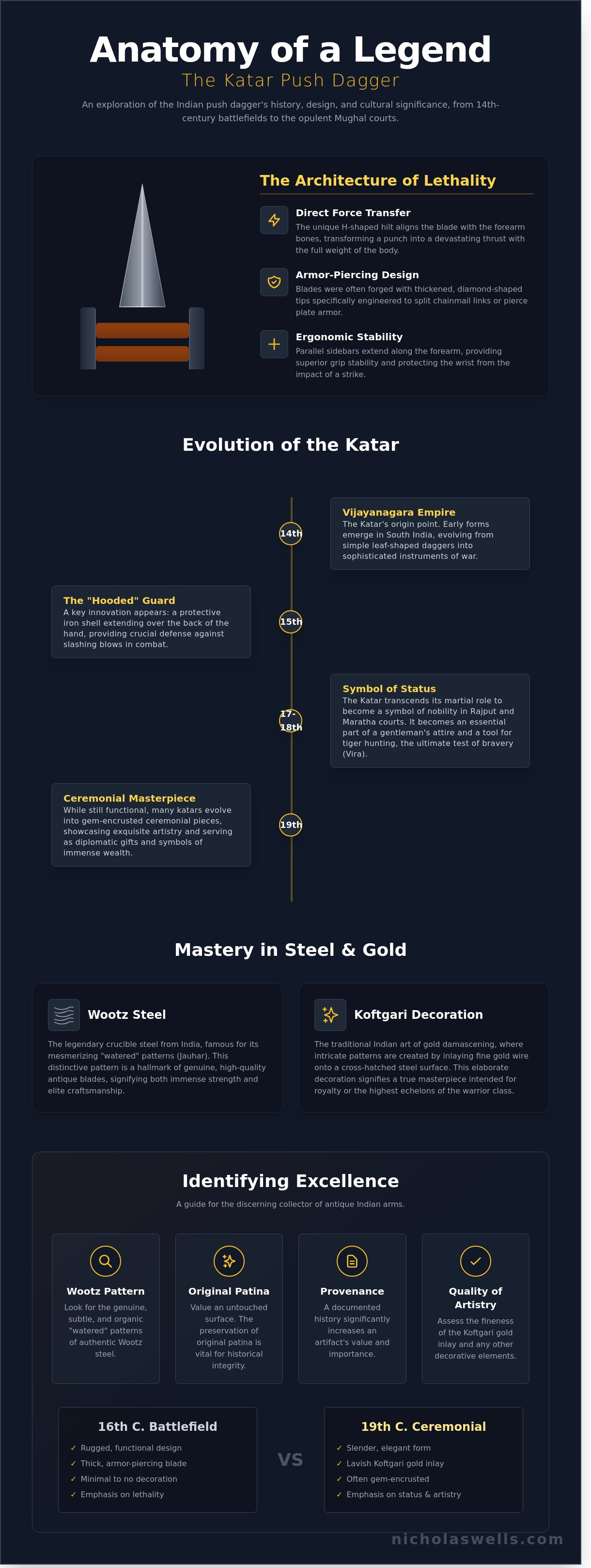
The katar stands as a testament to the singular ingenuity of the Indian subcontinent's martial heritage, representing a radical departure from the curved sabres of the Middle East or the straight swords of Europe. It's a weapon born of indigenous necessity, emerging as a specialized tool for close-quarters combat that prioritizes direct, linear force. Its name finds its linguistic anchor in the Tamil word kattari, though it's also linked to the Sanskrit kartari, meaning "that which cuts" or "a blade." By examining the history of katar push dagger design, origins and uses explained through this lens, we see a weapon that functions not merely as a handheld knife, but as a physical extension of the warrior's fist and forearm.
The distinctive H-shaped handle, consisting of two parallel sidebars connected by one or more transverse crossbars, allowed for a grip that was fundamentally different from any other contemporary sidearm. This ergonomic configuration meant that the force of a punch was delivered directly through the blade's tip, often capable of piercing the mail armor prevalent in 16th-century Indian warfare. This design ensured that the weapon remained securely in the hand even during the most chaotic skirmishes. For the discerning collector, the Indian works of art found in these early weapons offer a glimpse into a period where functionality and aesthetic power were inextricably linked.
The Vijayanagara Influence and Early Forms
The 14th-century Vijayanagara Empire served as the primary crucible for the katar's early evolution. During this era, the weapon transitioned from simple leaf-shaped daggers into more sophisticated instruments of war. Many 15th-century examples featured a "hooded" guard, a protective iron shell that extended over the back of the hand to provide defense against slashing blows. You can explore the broader context of this Katar push dagger history to see how these defensive elements were gradually refined. The Vijayanagara katar served as the essential structural precursor to the classic Mughal design seen in later centuries.
Cultural Symbolism in the Rajput Courts
During the 17th and 18th centuries, the katar transcended its martial utility to become a potent symbol of Dharma, or the warrior's moral duty. Among the Rajput and Maratha castes, the dagger was an essential part of a gentleman's attire, meticulously tucked into the patka (waistband). In royal portraiture, the presence of a katar signified the wearer's status, nobility, and constant readiness for combat. Beyond the court, the katar played a central role in the dangerous sport of tiger hunting. Facing a tiger with only a push dagger was considered the ultimate test of vira (bravery), as it required the warrior to engage the predator at point-blank range, relying entirely on the strength of their thrust and the integrity of their steel. This tradition solidified the katar's reputation as a weapon of the elite, possessing a soul as formidable as the warriors who carried it.
The Architecture of Lethality: Understanding the Unique H-Shaped Design
The katar’s silhouette is instantly recognizable, defined by a transverse grip that sits perpendicular to the blade. This H-shaped framework represents a radical departure from the longitudinal handles of European or Middle Eastern sidearms. The parallel sidebars, or braces, extend along the wearer’s forearm. These provide structural stability and protect the wrist from the jarring impact of a thrust. Understanding the history of katar push dagger design, origins and uses explained, requires an appreciation for this mechanical efficiency. It's a design that prioritizes the skeletal alignment of the user, turning the entire arm into a delivery system for a singular, devastating point of impact.
The Mechanics of the Push Strike
The genius of the katar lies in how it aligns the blade with the bones of the forearm. When a warrior grips the dual crossbars, the blade becomes a literal extension of the arm. This configuration allows for a punch-like strike that utilizes the full weight of the body. Standard daggers require the wrist to remain locked at a potentially weak angle, but the katar transfers energy directly from the shoulder through the radius and ulna. By the late 17th century, blades were often forged with thickened, diamond-shaped tips. These reinforced points were specifically engineered to split the links of chainmail or pierce the gaps in plate armor. The resulting puncture was often wide and difficult to treat, making it a preferred weapon for close-quarters combat where a single strike had to be decisive.
Variations in Hilt and Guard Design
Regional craftsmanship dictated the evolution of the hilt. In Southern India, the 16th-century Nayar style often featured broad, leaf-shaped blades integrated into sturdy steel frames. In contrast, the Northern courts favored a more refined aesthetic. Collectors often seek out Mughal katar daggers for their intricate gold damascening and elegant proportions. Some 18th-century examples incorporate a "hooded" guard, a protective shell that covers the hand entirely. This design offered superior protection and a canvas for superb engraving.
Mechanical variations, such as the famous "scissors" katar, featured a handle-activated mechanism that split the blade into three sections upon impact. For those studying the history of katar push dagger design, origins and uses explained through physical artifacts, exploring a curated collection of Indian works of art offers a deeper insight into this unique martial heritage. Collectors may find that a well-preserved katar serves as a powerful focal point in a contemporary study or gallery, bridging the gap between historical weaponry and fine decorative art.
Artistic Mastery in Steel: Wootz, Koftgari, and Mughal Influence
The evolution of the katar during the 17th and 18th centuries represents a pinnacle of metallurgical achievement. As the Mughal Empire expanded its influence, the history of katar push dagger design, origins and uses explained through the lens of courtly status, shifted from brutal efficiency toward breathtaking artistry. These weapons became indispensable components of royal attire, signaling a wearer's rank and discernment through the quality of their steel and the intricacy of their ornamentation. It's the fusion of Persian elegance with Indian martial tradition that defines this era's output.
The Legend of Damascus and Wootz Steel
At the heart of any superior katar lies Wootz steel, a legendary material forged in crucibles to create a high-carbon alloy of unparalleled strength. This process resulted in a microscopic carbon-nanotube structure, granting the blade an edge that remained sharp through the rigors of combat. Collectors identify genuine Wootz by its crystalline surface, where the cooling process left a distinctive, non-repeating pattern. In a fine 18th-century blade, the steel resembles a shimmering river of silver and charcoal flowing across the surface in a delicate, watered silk arrangement. This unique antique surface is impossible to replicate with modern industrial methods, making the natural patina developed over 200 years a critical marker of authenticity and value.
Decorative Techniques and Symbolism
Mughal influence introduced a sophisticated aesthetic vocabulary to the katar's hilt and sideguards. Artisans employed Koftgari, the meticulous art of inlaying precious metals into the steel. For the most distinguished pieces, craftsmen used Teh-nishan, where deep grooves were cut into the metal to house thick gold wire. More common yet equally beautiful was Ku-teh, a surface gilding technique often seen on a 19th-century katar with gold kuftgari, which provided a brilliant contrast against the dark steel. You can explore superb examples of these techniques in our collection of Indian & Islamic Arms and Armour.
The motifs chosen for these weapons weren't merely decorative. They carried profound symbolic weight and religious significance:
- The Lotus: Representing purity and divine birth within the Indian aesthetic tradition.
- The Cypress Tree: A Persian import symbolizing eternity and the bridge between worlds.
- Calligraphic Inscriptions: Often featuring protective Quranic verses or the name of the patron, lending the weapon a talismanic quality.
Understanding the history of katar push dagger design, origins and uses explained by these decorative choices, reveals how a weapon of war was transformed into a masterpiece of the decorative arts. The preservation of the original surface remains paramount for the modern connoisseur. Every mark and shadow tells the story of its journey through the princely courts of India, offering a tangible connection to a lost world of martial grandeur.
Identifying Excellence: A Collector’s Guide to Authentic Indian Arms
Distinguishing a masterpiece from a mere curiosity requires an eye trained in the nuances of 18th and 19th-century craftsmanship. For the serious collector, the history of katar push dagger design, origins and uses explained through the physical evidence of the object itself is paramount. A truly exceptional katar possesses a balanced weight that feels purposeful in the hand, reflecting its heritage as a weapon of the warrior caste. The crispness of the chiselled steel, particularly in the transverse grip bars, often reveals the hand of a master armourer whose skills were honed in the royal workshops of Rajasthan. Each stroke of the chisel should be deliberate; it's the difference between a mass-produced item and a piece of royal regalia.
High-end collecting transcends the search for pristine surfaces; it seeks the "soul" of the piece. Over-restoration is a common pitfall that can diminish the value of a 19th-century katar by erasing its historical narrative. A mirror-polished blade often masks the subtle patterns of true Wootz steel, whereas a piece that retains its original integrity tells a far more compelling story. Distinguishing between a battlefield-ready weapon and a later "Grand Tour" or ceremonial example is essential. Battlefield pieces typically feature reinforced points designed to pierce mail, while ceremonial versions may favor elaborate gold koftgari over structural rigidity.
Evaluating Surface Patina and Condition
The soft, "grey" patina of aged steel is a hallmark of authenticity that seasoned collectors prize over modern interventions. This natural oxidation serves as a protective layer, developed over centuries of careful preservation. Identifying the difference between genuine 19th-century pitting, which appears as localized, organic clusters, and modern chemical distressing is a vital skill. To maintain these historical surfaces at home, avoid abrasive cleaners; a light application of acid-free microcrystalline wax every 12 months is sufficient to stabilize the steel against humidity.
The Role of Provenance in the Global Market
A documented connection to a specific princely state, such as the artistic hubs of Bundi or Alwar, significantly elevates a katar's rarity and market value. These regional styles are often identified by unique hilt geometries or specific decorative motifs. The presence of an original wooden scabbard, perhaps still retaining its faded 18th-century silk velvet covering, adds a layer of tactile history that's increasingly rare to find. Such pieces are not merely weapons; they are exquisite sculptures that anchor a room. You may shop antique furniture and art online to discover how these significant Indian works of art can serve as sophisticated focal points within a curated interior.
Curating a Legacy: Acquiring Rare Islamic and Indian Armour at Nicholas Wells
The katar isn't merely a relic of ancient combat; it's a profound statement of artistic intent that bridges the gap between martial prowess and decorative excellence. In the context of a modern town or country house, these objects serve as magnetic focal points. They command attention through their sheer geometric precision and the deep, untouched surface patina that only centuries of careful preservation can bestow. We believe that the history of katar push dagger design, origins and uses explained throughout this study, culminates in the object's transition into the sophisticated domestic interior.
Displaying these pieces requires an eye for both form and light. Placing a fine 18th-century katar upon bespoke sculpture pedestals allows the viewer to appreciate the three-dimensional architecture of the H-shaped hilt from every angle. Alternatively, a discreet wall mount can highlight the lethal elegance of the blade's profile against a neutral backdrop. Nicholas Wells Antiques remains dedicated to sourcing examples with impeccable provenance. We ensure each acquisition is backed by a documented history that satisfies the rigorous standards of the global collector market.
- Expertly curated selection of 17th and 18th-century examples.
- Boutique restoration services included to preserve historical integrity.
- Secure international shipping for all high-value acquisitions.
- Focus on exceptional surface condition and original craftsmanship.
Integrating Arms into Contemporary Design
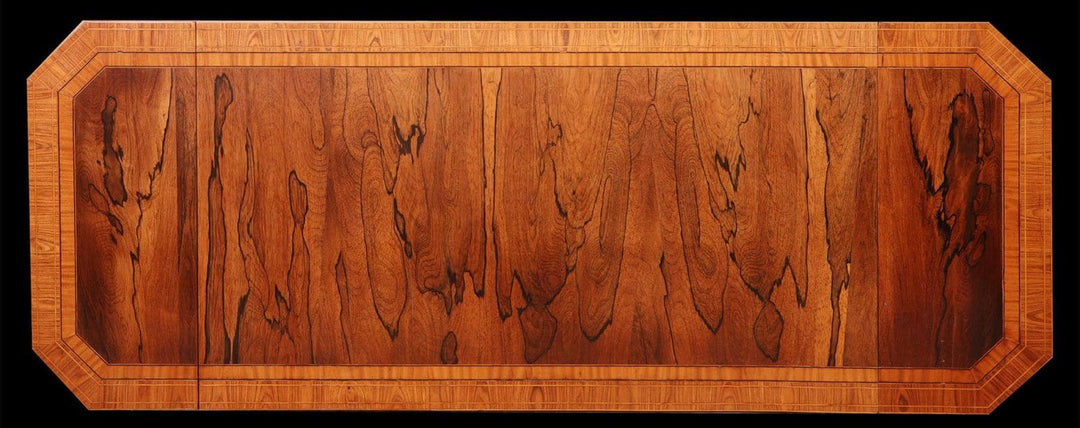
There's a unique synergy when you pair the sharp, disciplined lines of a katar with the warm, figured grain of 18th-century English furniture. This juxtaposition creates a scholarly aesthetic that's particularly effective in a private library or a quiet study. These objects act as extraordinary cultural bridges, sparking conversation through their exotic origins and intricate gold damascening. They aren't just weapons; they're sculptural masterworks that reflect the soul of a bygone era. It's this blend of history and art that makes them indispensable to a well-considered collection.
The Nicholas Wells Experience in London
We invite you to explore our curated selection of works of art by visiting our showroom in Westminster, London. This central location, positioned near the historic heart of Mayfair and Piccadilly, provides a serene environment to examine pieces by appointment. Our expertise extends beyond arms to Grand Tour objects and the meticulous conservation of history. Every acquisition is handled with the personal touch of a boutique gallery. Please view our current arms and armour collection to discover the rarest pieces currently available for acquisition.
Securing a Masterpiece of Deccani and Mughal Artistry
The evolution of the katar from its 14th-century Vijayanagara origins to the opulent 18th-century courts of the Deccan represents a pinnacle of metallurgical achievement. By examining the history of katar push dagger design, origins and uses explained, collectors recognize that the H-shaped transverse grip isn't merely a tactical innovation; it's a canvas for exquisite Koftgari gold inlay and the legendary ripples of Wootz steel. These weapons served as vital extensions of a warrior's arm and as prestigious markers of rank within the Mughal Empire. Authenticity rests in the subtle surface patina and the crisp geometry of the blade's central rib, details that demand a discerning eye for historical integrity.
At Nicholas Wells Antiques, we provide a sophisticated bridge between these historical narratives and the requirements of the modern collector's gallery. Our specialist expertise focuses on rare 18th and 19th-century artifacts, ensuring each piece maintains its extraordinary cultural soul. We invite you to Explore our curated collection of Indian & Islamic Arms and Armour at Nicholas Wells Antiques. Every acquisition includes complimentary restoration and fully insured worldwide shipping from our London base. It's a privilege to help you steward these magnificent fragments of history into the next century.
Frequently Asked Questions
How was a katar push dagger actually used in combat?
A katar was primarily used as a punching weapon, designed to deliver powerful thrusts that could pierce the chainmail and padded armor common in 16th-century Indian warfare. The unique H-shaped handle allowed the warrior to transfer the full force of their body weight into the strike. Unlike traditional daggers, it functioned as an extension of the arm, offering superior leverage during close-quarters engagements on the battlefields of the Deccan Plateau. Its design allowed for both lethal stabs and effective parrying against longer blades.
What is a 'scissors' katar and was it a real weapon?
The 'scissors' katar is a legitimate historical variant, though many examples encountered today were produced in the 19th century for ceremonial display or the European export market. When the handle is squeezed, the single blade splits into two or three separate tines, revealing a hidden inner blade. While visually striking, these mechanical pieces were often less robust than the solid-bladed weapons used by Rajput warriors during the 17th-century Mughal expansion. They represent a fascinating intersection of lethal utility and ingenious mechanical artistry.
How can I tell if a katar blade is made of genuine Wootz steel?
Identifying genuine Wootz steel requires a close inspection of the 'jauhar', the swirling, watery pattern formed by the crystallization of carbon during the 13th-century crucible smelting process. You'll find that authentic blades exhibit a shimmering, three-dimensional depth that etched imitation steel cannot replicate. At our Mayfair gallery, we use high-magnification lenses to verify these crystalline structures, ensuring the history of katar push dagger design, origins and uses explained here are represented by only the finest metallurgical examples.
Are katars considered daggers or short swords in Indian history?
Katars are traditionally classified as daggers, though the 'bara jamdadu' variants from the 17th-century Vijayanagara Empire often featured blades exceeding 20 inches, blurring the line into short swords. Most examples found in scholarly collections measure between 8 and 12 inches in length. These weapons occupied a unique status in Indian martial culture, serving as both a lethal tool and a symbol of high social standing among the noble classes. Their classification often depends on the specific regional traditions of the 18th-century princely states.
What should a collector look for when buying an 18th-century katar?
A discerning collector should prioritize the integrity of the blade's steel and the refinement of the 'koftgari' gold inlay often found on 18th-century examples. Seek pieces with a documented provenance that can be traced back to a specific princely state or royal armory. The presence of a thickened, armor-piercing tip is a significant indicator of a piece intended for 1750s combat rather than later 19th-century decorative production. We recommend examining the handle's grip for signs of honest wear, which adds to the object's historical soul.
Is it legal to own and ship antique Indian arms and armour to the UK or US?
It's generally legal to own and ship antique Indian arms to the UK and US, provided the items are over 100 years old and classified as cultural artifacts. In the UK, the Offensive Weapons Act 2019 provides specific exemptions for historical pieces of significant historical importance. We manage all international shipping logistics from our London showroom, ensuring that every 18th-century masterpiece arrives with the necessary customs documentation. Collectors can visit our antiques showroom by appointment to discuss specific import requirements for their region.
How do I care for the surface patina of an antique steel dagger?
Preserving the original surface patina is vital, as this oxidized layer protects the steel and testifies to its 200-year journey through time. You shouldn't use abrasive polishes or harsh chemicals that strip the metal's historical integrity. Instead, apply a thin layer of Renaissance microcrystalline wax every 6 months to create a stable moisture barrier. This conservation-led approach ensures the unique antique surface remains protected while highlighting the magnificent craftsmanship of the blade. Proper climate control in your display case is equally essential for long-term preservation.
What is the difference between a Rajput katar and a Mughal katar?
The primary difference lies in the aesthetic vocabulary, with Rajput katars often featuring robust, geometric forms, while Mughal examples from the 1600s display intricate floral motifs and tulip patterns. Rajput designs frequently utilize a broader blade suited for the 'shastar vidya' martial tradition. In contrast, the Mughal court preferred the elegance of fine gold overlay, reflecting the sophisticated fusion of Persian and Indian artistry that defines the history of katar push dagger design, origins and uses explained in our research. Each style offers a unique window into the regional power dynamics of the era.


Leave a comment