



Thomas Chippendale (1718 - 1779) and His Magnificent Furniture: A Connoisseur’s Buying Guide
The Enduring Legacy of Thomas Chippendale (1718 - 1779) and His Magnificent Furniture
In the annals of English decorative arts, few names command as much reverence as Thomas Chippendale. More than a cabinetmaker, he was an entrepreneur of taste, transforming his St Martin’s Lane workshop into the epicentre of Georgian design and becoming, in effect, the world’s first global luxury furniture brand. To acquire a piece of Thomas Chippendale (1718 - 1779) and his magnificent furniture is to own a chapter of design history, a testament to an era when craftsmanship reached its zenith.
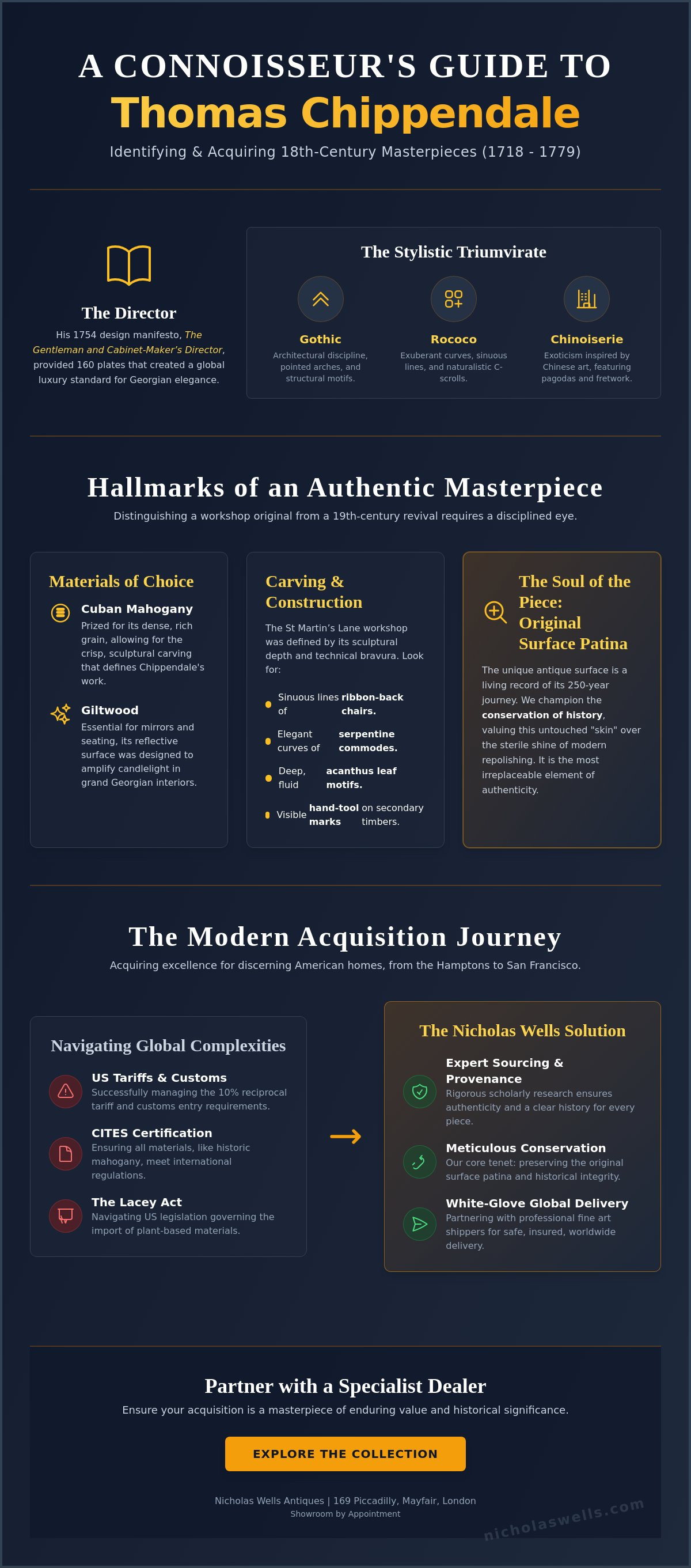
- The Chippendale Phenomenon: He was the first cabinetmaker whose name became synonymous with a style, a feat achieved through brilliant design, astute business acumen, and the publication of his seminal work.
- The Gentleman and Cabinet-Maker’s Director: Published in 1754, this was no mere catalogue but a design manifesto that codified the prevailing tastes of the mid-18th century and disseminated them across the globe.
- A Stylistic Triumvirate: Chippendale masterfully blended the asymmetrical flourishes of the French Rococo, the exoticism of Chinoiserie with its pagodas and fretwork, and the romanticised arches and tracery of the Gothic into a uniquely English aesthetic.
- The Pinnacle of Georgian Modernity: His furniture was the ultimate expression of social status and sophisticated living, commissioned by the aristocracy for their grand townhouses and country estates.
The Director: A Blueprint for Georgian Elegance
The Gentleman and Cabinet-Maker’s Director was a revolutionary publication. Its 160 engraved plates provided a visual dictionary of high design, enabling provincial English and colonial American craftsmen to replicate the most fashionable London styles. For the modern connoisseur, The Director serves as the primary reference for establishing 18th-century authenticity, a benchmark against which all subsequent furniture is measured. Its influence was immediate and profound, shaping the output of contemporaries such as the celebrated John Linnell and William Gomm, and defining the very vocabulary of Georgian furniture for generations.
The Master of Mahogany and Giltwood
Chippendale’s genius lay not only in design but also in his profound understanding of materials. He championed the use of dense, richly figured Cuban mahogany, a timber whose stability and fine grain were perfectly suited to the intricate and crisp carving that became his workshop's hallmark. For statement pieces intended for drawing rooms and formal spaces, he employed giltwood, particularly for mirrors and seating. The gilded surfaces were designed to capture and reflect the soft glow of candlelight, animating the interiors of 18th-century townhouses with a warm, shimmering light. This masterful use of materials set the standard for the period, a standard visible across the finest examples of Georgian antique furniture.
Connoisseurship: Identifying the Hallmarks of Chippendale Masterpieces
Distinguishing a true period masterpiece from a later revival requires a discerning eye and an understanding of 18th-century workshop practices. The key lies in recognising the subtle signals of age, material, and craftsmanship that separate the authentic from the inspired. For a comprehensive overview of the period, a connoisseur's guide to identifying 18th and 19th-century furniture provides essential context.
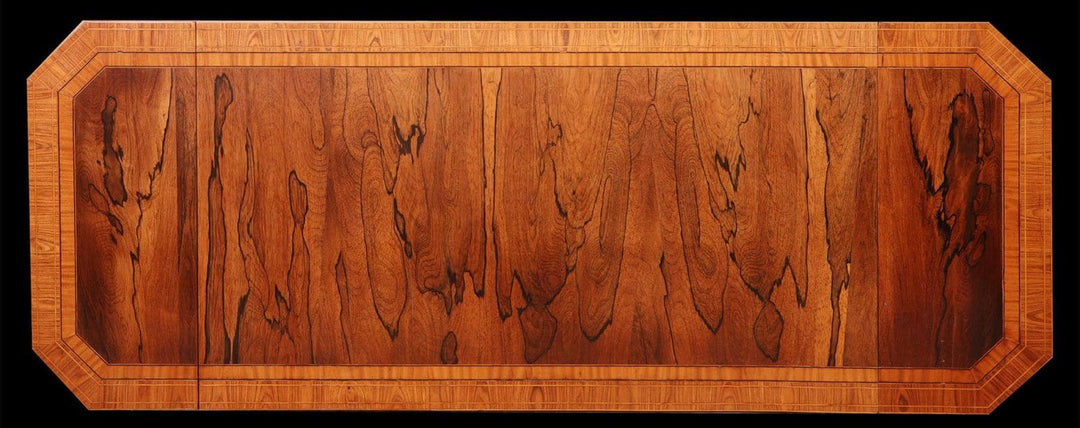
- The Importance of Surface Patina: The original 18th-century finish, with its accumulated depth, colour, and texture from centuries of use and care, is infinitely more valuable than any modern polish. This unique antique surface tells the story of the object.
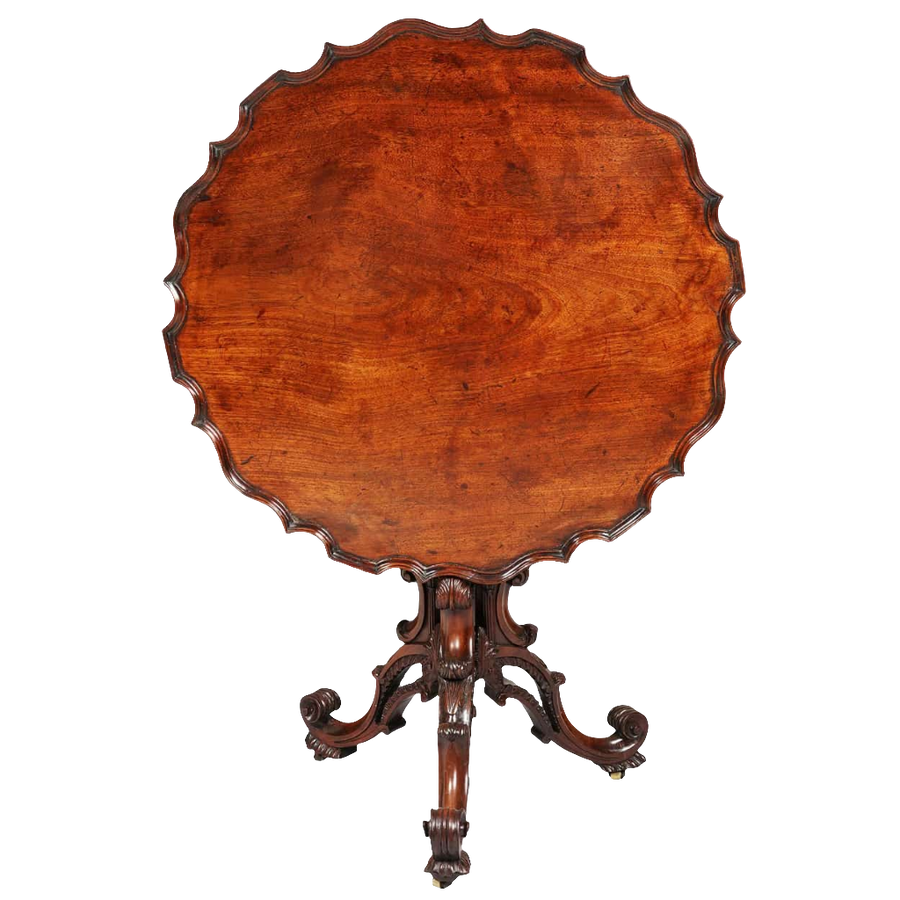
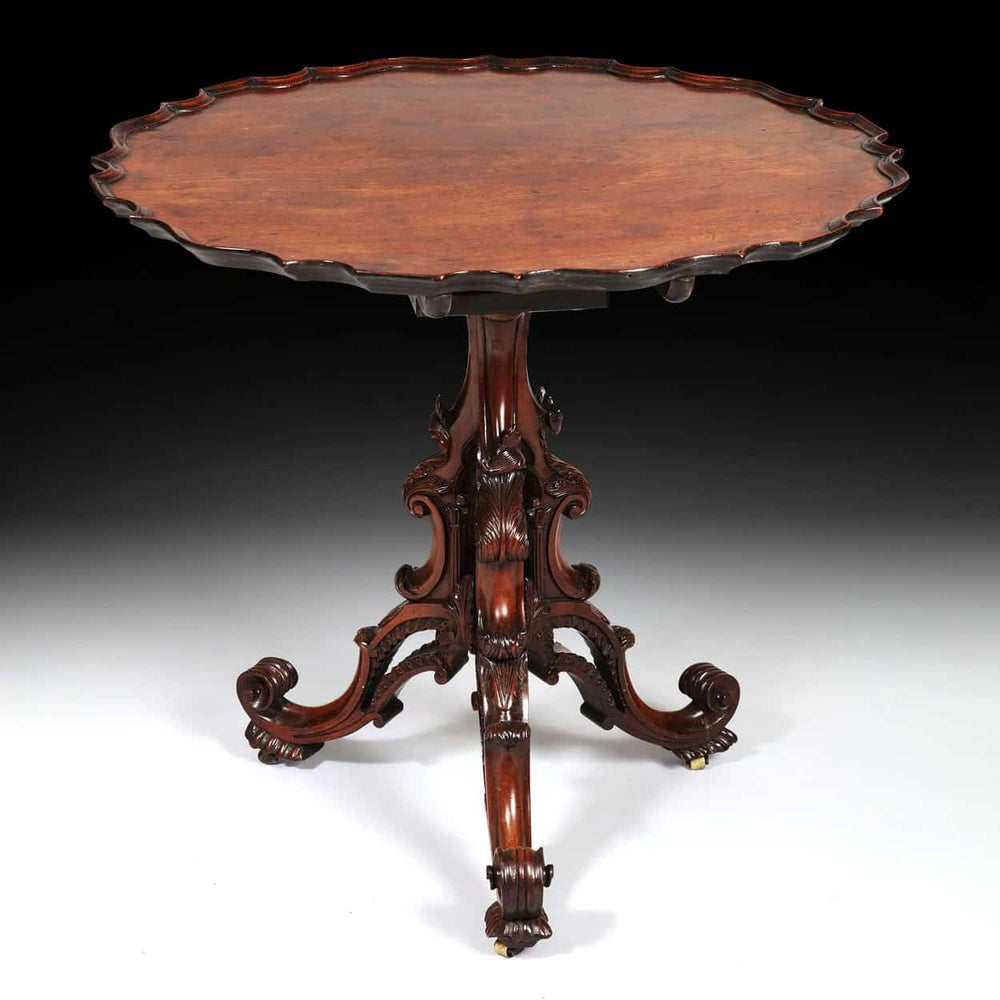
- Technical Markers: Look for sinuous, serpentine lines, exquisitely carved acanthus leaves, and the iconic "ribbon-back" chair motif. These are the signatures of the Chippendale school.
- Period vs. Style: It is crucial to distinguish between "period" pieces made during Chippendale’s lifetime (c. 1750–1780) and the numerous "Chippendale style" revivals of the 19th century, which often lack the finesse and perfect proportions of the originals.
- The Role of Attribution: While a documented commission is the ultimate provenance, the hand of the St Martin’s Lane workshop can often be identified through specific construction techniques, carving quality, and the choice of secondary timbers.
The Significance of Original Surface Patina
At Nicholas Wells Antiques, we prioritise the conservation of history, and nothing embodies this more than an object's surface patina. This is not merely a finish but the accumulated biography of the piece. An expert eye can spot the subtle undulations left by 18th-century hand tools, the mellow colour of aged timber, and the use of secondary woods like oak or pine for drawer linings and backboards. In the case of looking glasses, the soft, smoky reflection of original mercury silvering is a prized feature of authenticity, a quality we seek in our collection of antique mirrors.
Carving and Construction Excellence
The hallmark of Chippendale’s elite journeymen was the sheer crispness and three-dimensional quality of their carving in mahogany. The acanthus scrolls, C-scrolls, and floral motifs appear sharp and lifelike, a feat only possible with the finest timber and the most skilled hands. His work charts the evolution of Georgian taste, from the exuberant asymmetry of the high Rococo to the more restrained, elegant symmetry of the emerging Neoclassicism, which he began to incorporate in his later years.
Curating the Collection: Exceptional Pieces for the Discerning American Home
The timeless elegance of Thomas Chippendale's designs translates seamlessly into the most discerning modern interiors. His magnificent furniture provides a sense of history and gravitas that serves as a perfect counterpoint to contemporary architecture and art, creating spaces that are both sophisticated and deeply personal.
- A George III Chippendale Mahogany Serpentine Commode is a masterpiece of form and function, its undulating façade a work of sculpture in its own right.
- A magnificent George III Giltwood Pier Mirror can serve as a dramatic focal point in a New York foyer, its height and brilliance amplifying light and space.
- The inherent versatility of a Georgian mahogany sideboard makes it an indispensable piece in a grand Texas estate or a refined Greenwich dining room.
- A pair of 18th-century ribbon-back armchairs can be integrated into a contemporary Hamptons living space, offering historic elegance without sacrificing comfort.
Standout Masterpieces from the Nicholas Wells Gallery
Our collection is curated to include only the most exceptional examples of the period. A George III Mahogany Breakfront Bookcase, for instance, provides a scholarly and architecturally commanding anchor for a library or study. A fine Pair of Giltwood George III armchairs, perhaps attributed to a contemporary like John Linnell, offers the pinnacle of period seating. The collection may also feature pieces of extraordinary rarity, such as a serpentine commode by a celebrated provincial maker like Henry Hill of Marlborough, whose work rivals that of his London counterparts.
Styling 18th-Century Furniture in Modern Interiors
The secret to integrating these historical masterpieces lies in creating a dialogue between past and present. The ornate, sculptural frame of a Chippendale mirror can complement the clean lines of Art Deco or mid-century modern elements, creating a layered and curated aesthetic. This "English Country House" sensibility, a blend of comfort, history, and eclectic taste, is increasingly sought after in sophisticated American homes, from a San Francisco townhouse to a sprawling California estate. A fine Georgian table, for example, can ground a dining room, providing a historic centrepiece for modern life, with further inspiration available in our collection of antique tables.
Acquiring Excellence: The Nicholas Wells Experience and Global Delivery
Nicholas Wells Antiques operates as a specialist online gallery, providing scholarly expertise and a curated collection for an international clientele. We understand the unique considerations of acquiring high-value 18th-century furniture and have refined our process to ensure a seamless and confident experience for our clients, particularly those in the United States.
- Specialist Expertise: As a London-based specialist dealer, we provide the deep, scholarly knowledge required to authenticate and appreciate the finest Georgian furniture.
- Complimentary Restoration: We believe every piece should be ready for immediate display. Our commitment includes complimentary expert restoration, ensuring structural integrity while meticulously preserving the object's historical surface.
- Ease of Acquisition for the US Market: We have extensive experience in managing white-glove delivery to clients across the United States, from New York and the Hamptons to Texas and California.
Professional Fine Art Shipping Worldwide
Acquiring a significant piece of Thomas Chippendale furniture from London for a home in the United States is a straightforward and secure process. We work exclusively with professional fine art shippers who are experts in handling, packing, and transporting delicate antiques. Every shipment is fully insured and managed door-to-door, providing complete peace of mind. As a specialist dealer, we offer a level of focused service and expertise in high-value exports that generalist dealers simply cannot match.
Expert Restoration and Conservation Services
Our philosophy is centred on the preservation of the "unique antique surface." The Nicholas Wells commitment to this principle is absolute. The complimentary restoration included with every purchase is performed by master craftsmen who understand the delicate balance between conservation and repair. This expert care not only prepares the piece for its next chapter but is also essential for protecting its long-term investment value.
Explore the Thomas Chippendale Collection


Leave a comment