



Antique Dealer vs Auction House
A fine George II mirror appears at auction with an attractive estimate, a persuasive catalogue note and a great deal of theatre around the sale. A week later, a similar mirror sits quietly in a respected gallery, fully examined, properly restored and ready for placement. That is often where the antique dealer vs auction house question begins - not in theory, but at the point where confidence, condition and long-term value matter.
For serious collectors and interior designers, the choice is rarely just about where an object is bought or sold. It is about how much certainty you require, how much risk you are prepared to carry and whether you want a transaction or a relationship. Both routes have their place. They simply serve different needs.
Antique dealer vs auction house: the core difference
An auction house is a marketplace. It brings consignors and bidders together for a timed sale, presenting property with estimates, condition reports and cataloguing that can range from excellent to rather slight, depending on the house and the category. Its role is to facilitate competition. The final price is determined in the room, on the telephone or online.
An antique dealer is a principal. The dealer owns the object or stands firmly behind it, has selected it intentionally and offers it at a fixed retail price. In the best cases, that price reflects connoisseurship, research, restoration, attribution and a level of accountability that extends beyond the point of payment.
That distinction matters. At auction, you are often buying under pressure and within a narrow inspection window. From a dealer, you are usually buying with more time, more context and greater recourse if questions arise later.
Why buyers choose one over the other
Auction houses appeal to buyers who enjoy competition, are comfortable making quick judgements and are willing to accept a degree of uncertainty in exchange for the possibility of buying well. For seasoned trade buyers, that can be attractive. They know how to read between catalogue lines, assess condition under imperfect circumstances and factor restoration costs into a bidding strategy.
Private collectors and decorators often want something else. They are not simply acquiring stock. They are placing a piece into an interior, building a collection with coherence or making a substantial purchase from abroad. In that context, reassurance is not a luxury. It is part of the value.
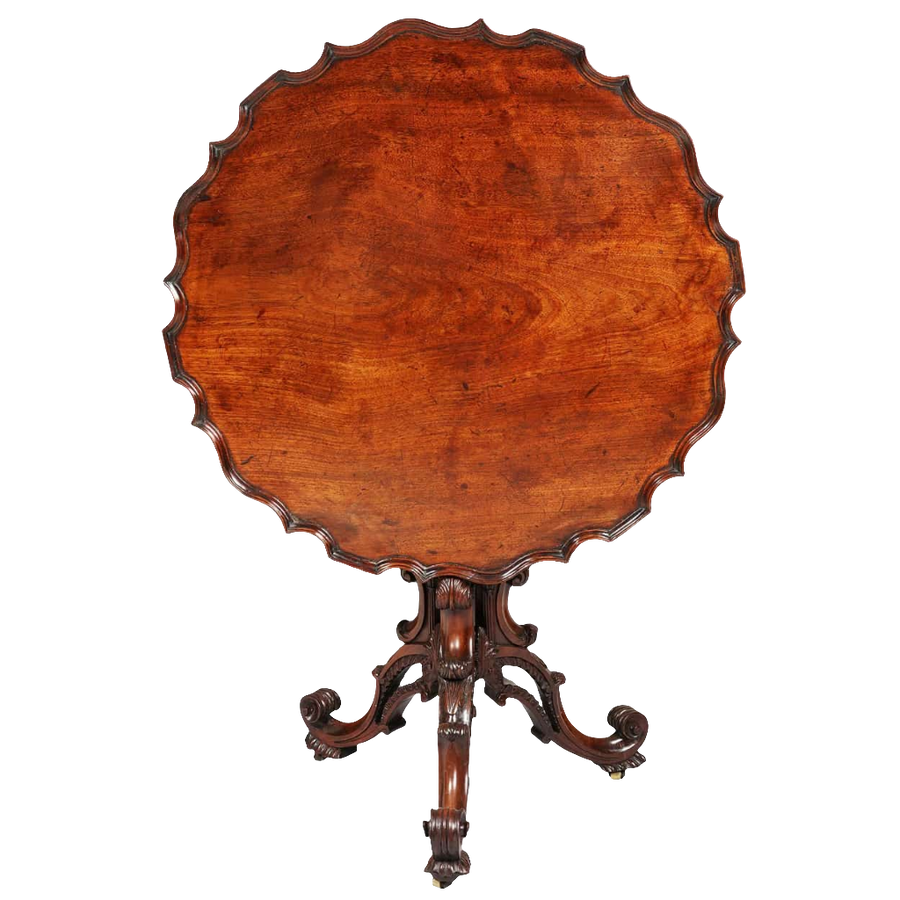
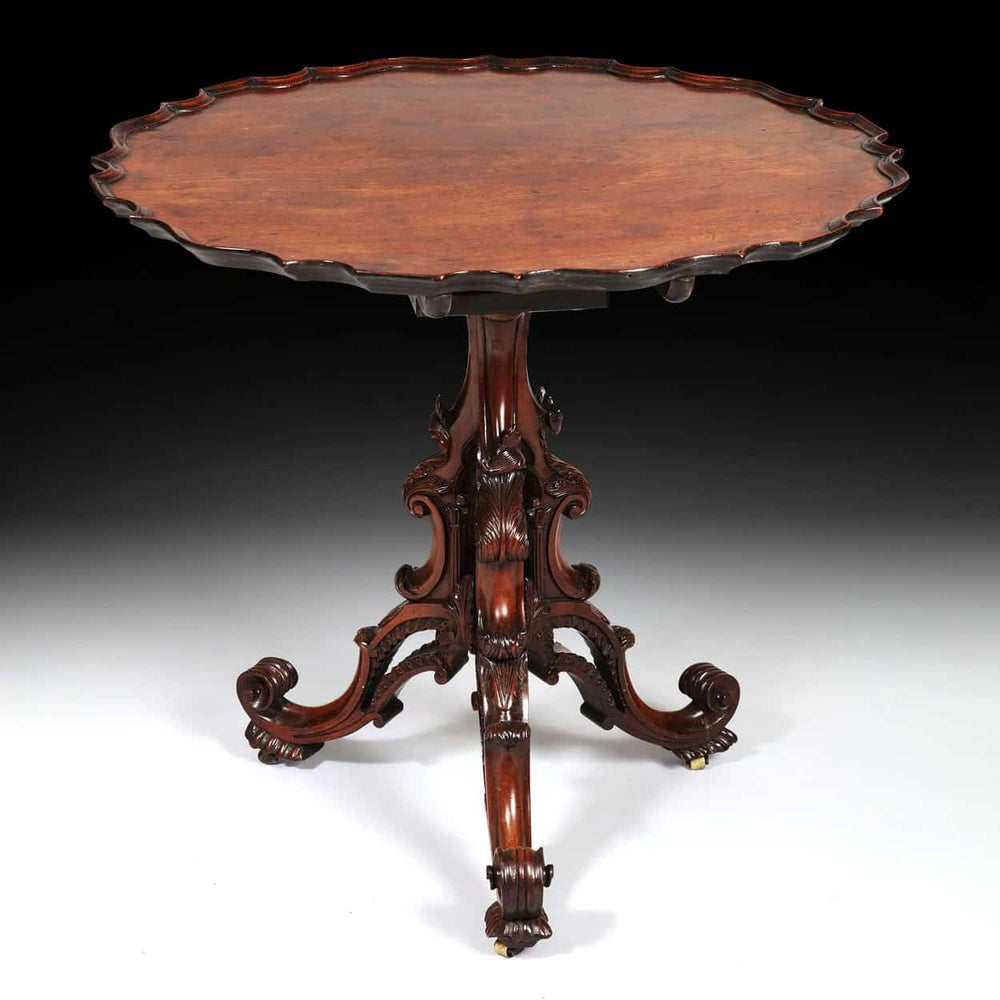
A specialist dealer can explain why one Regency centre table is merely handsome while another is genuinely important. The timber, proportions, surface, provenance and old restorations all influence the answer. That sort of guidance is difficult to compress into a brief catalogue entry.
The hidden arithmetic of auction buying
Auction estimates can create the impression of lower pricing, but the headline number is only part of the story. Buyers must account for the hammer price, buyer's premium, VAT where applicable, transport, packing, insurance and any restoration required after collection. If a piece needs structural work, regilding or upholstery, the initial bargain can look rather less persuasive.
By contrast, a reputable dealer's retail price often includes the unseen work that makes an object ready to live with. Careful restoration, authentication, polishing where appropriate, condition disclosure and arrangements for delivery all sit behind that figure. You may pay more at the outset, but you are often buying a more complete proposition.
Provenance, attribution and peace of mind
In the upper reaches of the market, provenance is not decorative background. It affects desirability, scholarship and value. So does attribution. A piece described loosely at auction may later prove stronger than catalogued - but it may equally prove weaker.
A strong dealer earns trust by being exacting. That means checking construction, age, materials, patina and historic repairs, then standing behind the description. It also means being candid when certainty is impossible. Good dealers do not inflate. They refine.
This is particularly important in categories where later embellishment, composite construction or over-restoration can alter both value and integrity. English furniture, giltwood mirrors, Grand Tour objects, clocks and arms and armour all demand specialist eyes. A buyer who lacks that expertise is usually better served by a dealer whose reputation depends upon getting such judgements right.
Condition reports are not all equal
Auction house condition reports are useful, but they are not warranties. They may be prepared under time pressure, and the language can be understandably cautious. A crack may be called minor. An old replacement may be omitted if not immediately obvious. Upholstery may be tired in ways that only become apparent once the piece arrives.
A dealer with a carefully curated stock has usually spent more time with the object. That often leads to a fuller understanding of what is original, what has been restored and what should be left well alone. For buyers furnishing refined interiors, that knowledge is worth paying for.
Selling through a dealer or an auction house
The same antique dealer vs auction house decision matters when selling.
Auction can work well for objects with broad market appeal, strong current demand or the kind of rarity that benefits from competitive bidding. If two determined buyers appear on the day, the result can exceed expectations. Auction is also useful when an owner wants a defined timetable and is comfortable with a public process.
But there are trade-offs. Estimates can influence perception. If bidding is thin, a piece may underperform or fail to sell, and a bought-in lot can carry an unfortunate stigma when it reappears. Consignor fees, photography charges and insurance may also affect the net result.
Selling to or through a dealer is often quieter and more controlled. A dealer may purchase outright, broker discreetly to a private client or place the object with a decorator seeking something very specific. This route is especially appealing for owners of high-quality furniture and works of art who value privacy, informed pricing and a conversation grounded in market reality rather than auction drama.
For inherited collections or single important pieces, that discretion can be invaluable. Not every owner wants a family object publicly exposed to the uncertainties of the saleroom.
Service after the sale
This is where the difference becomes clearest.
Once an auction purchase has been collected, the relationship is largely over. The auction house has done its job. Future care, restoration, installation and placement are for the buyer to arrange.
A serious dealer's work often begins there. Questions about scale, period appropriateness, pairing, rewiring, conservation, customs paperwork and insured shipping are part of the service. If the piece is going into a house in Belgravia, a flat in Chelsea or a project in Greenwich, Connecticut, that support is not incidental. It is central to a successful acquisition.
For interior designers, this matters even more. Deadlines are real. Rooms must be completed. Pieces need to arrive as described and present beautifully when installed. A trusted dealer can advise on proportion, authenticity and practical readiness in a way an auction platform cannot.
Which route suits which buyer?
If you are highly experienced, relish competition and can assess restoration and risk with confidence, auction can be rewarding. It may also provide access to fresh-to-market material that has not yet passed through the trade.
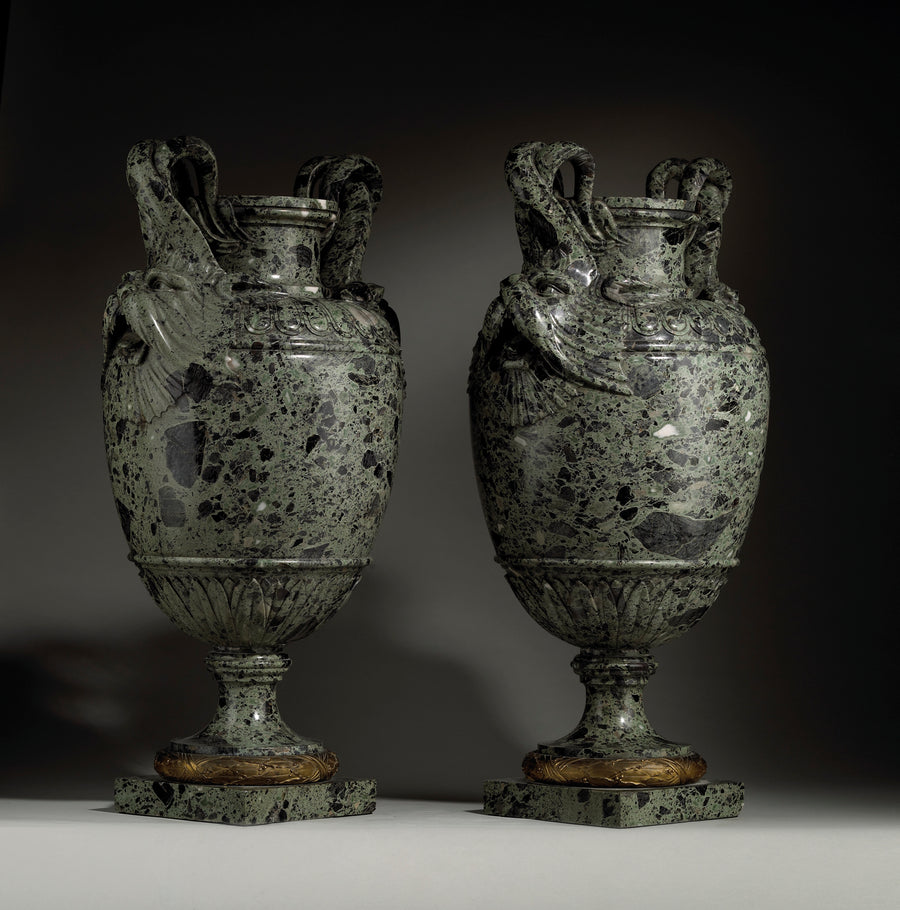
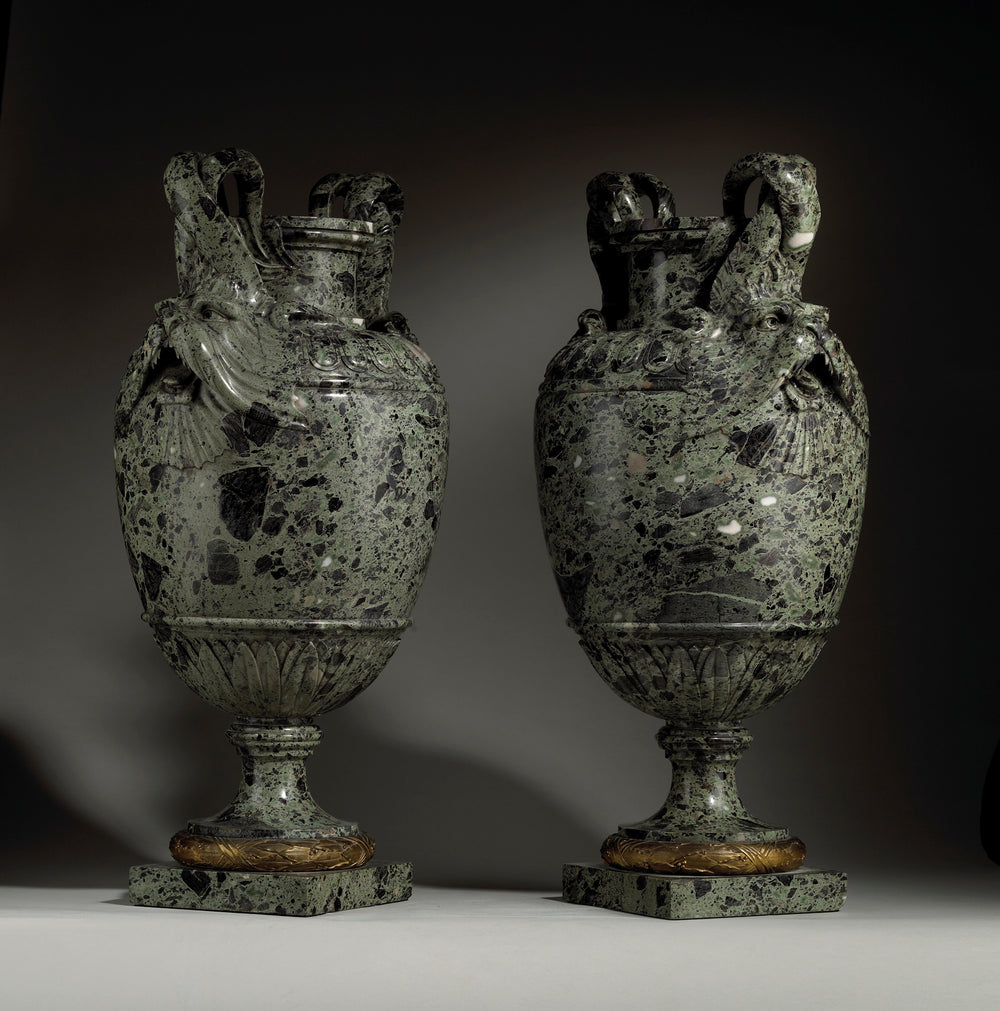
If you want certainty, curation and expert guidance, a specialist dealer is usually the stronger choice. That is particularly true for buyers seeking statement pieces rather than opportunistic purchases - an exceptional chandelier, a museum-calibre commode, a finely drawn mirror or a historically significant decorative object intended to anchor a room.
The point is not that one route is superior in every case. It is that each asks something different of the buyer. Auction asks for decisiveness, tolerance for ambiguity and a willingness to absorb extra work after the sale. A dealer offers more protection, more interpretation and generally a more considered path to ownership.
The luxury market favours confidence
At the higher end, buyers are not merely purchasing an object. They are purchasing judgement. When a dealer has selected, authenticated and prepared a piece with care, that judgement becomes part of the object's value. Nicholas Wells Antiques, for example, operates in precisely that spirit - as a specialist source for fully authenticated pieces supported by restoration, consultation and international delivery.
That model suits collectors and design professionals who prefer to buy once and buy properly.
A good antique should reward attention for decades, not just on the day it is acquired. If you are choosing between the saleroom and the dealer's gallery, the best question is not where the price looks lower. It is where your confidence is highest.


Leave a comment