



How to Decorate with Georgian Furniture
A fine Georgian commode or pair of mahogany side tables can steady an entire room. That is the real appeal for those considering how to decorate with Georgian furniture - not nostalgia, but order, proportion and a level of craftsmanship that gives an interior instant authority.
Georgian furniture does not require a period house, nor does it ask for decorative obedience. In fact, it often looks more compelling when handled with confidence rather than reverence. The question is not whether a room must become fully Georgian, but how much structure, warmth and historical depth a well-chosen piece can bring to a contemporary interior.
Why Georgian furniture still works now
The Georgian period produced furniture of exceptional balance. Proportions were disciplined, ornament was measured, and materials were chosen for richness rather than excess. Walnut, mahogany, satinwood and finely cast brass all contribute to a look that is luxurious without becoming showy.
That balance is what makes the style enduringly useful. A Georgian chest, library table or mirror tends to sit comfortably with modern upholstery, contemporary art and quieter architectural schemes because its design is grounded in symmetry and restraint. Even richly figured timber reads as composed when the silhouette is correct.
This is also why Georgian furniture suits both town and country settings. In a London drawing room, a pair of demilune tables can sharpen an otherwise soft scheme. In a larger house in the country, a substantial breakfront bookcase or long dining table can hold its own without feeling theatrical.
How to decorate with Georgian furniture without making a room feel staged
The most common mistake is treating every antique as if it must be matched by another. Georgian interiors were formal in spirit, but successful decoration today is usually more selective. One important piece, properly placed, often does more than a room full of lesser examples.
Begin with the furniture that naturally anchors the space. In a sitting room, that may be a centre table, console or chest. In a bedroom, it may be a serpentine commode or a tall chest of drawers. Let that piece establish the room's visual weight, then build around it with upholstery and lighting that feel lighter in attitude.
Contrast matters. Georgian furniture has presence, especially in darker timbers, so it benefits from breathing room. Pale walls, textured fabrics, soft carpets and controlled lighting help prevent the interior from becoming heavy. If the architecture is contemporary, that contrast can be especially elegant. Crisp lines and clean plasterwork allow the furniture's age and finish to stand out.
There is also no need to force uniformity of date. Georgian pieces can sit very well with Regency, 19th-century and carefully chosen 20th-century furniture, provided the proportions relate. What jars is not a difference in period but a difference in seriousness. A superbly made Georgian sideboard will expose anything flimsy nearby.
Start with proportion before style
Collectors often focus first on rarity or cabinet-making quality, while decorators tend to think in terms of layout. Both instincts are right, but proportion should lead. Georgian furniture was designed for rooms with architectural discipline, and it still responds best to considered placement.
A large mahogany chest can be magnificent, but if it blocks circulation or crowds a modest wall it will feel overbearing. Equally, a delicate card table may disappear in a room with very deep sofas and oversized lamps. Before selecting a piece, think about ceiling height, width of wall, sightlines from the doorway and the scale of neighbouring objects.
Mirrors are particularly useful here. A Georgian giltwood mirror can add height, reflect light and introduce formality without taking up floor space. In narrower rooms, that may be the most intelligent way to introduce period character.
Use symmetry where it helps, not everywhere
Georgian decoration values order, and symmetry remains one of its most persuasive principles. A pair of chairs flanking a fireplace, matching lamps on a sideboard, or twin pedestals beneath a mirror all create calm very quickly.
But complete symmetry across an entire room can feel rigid in a modern setting. It is often better to use it as a device rather than a rule. A symmetrical arrangement around the chimney breast, for instance, can be offset by a looser grouping of seating elsewhere. This preserves the Georgian sense of composure while keeping the room alive.
Material and finish deserve as much attention as shape
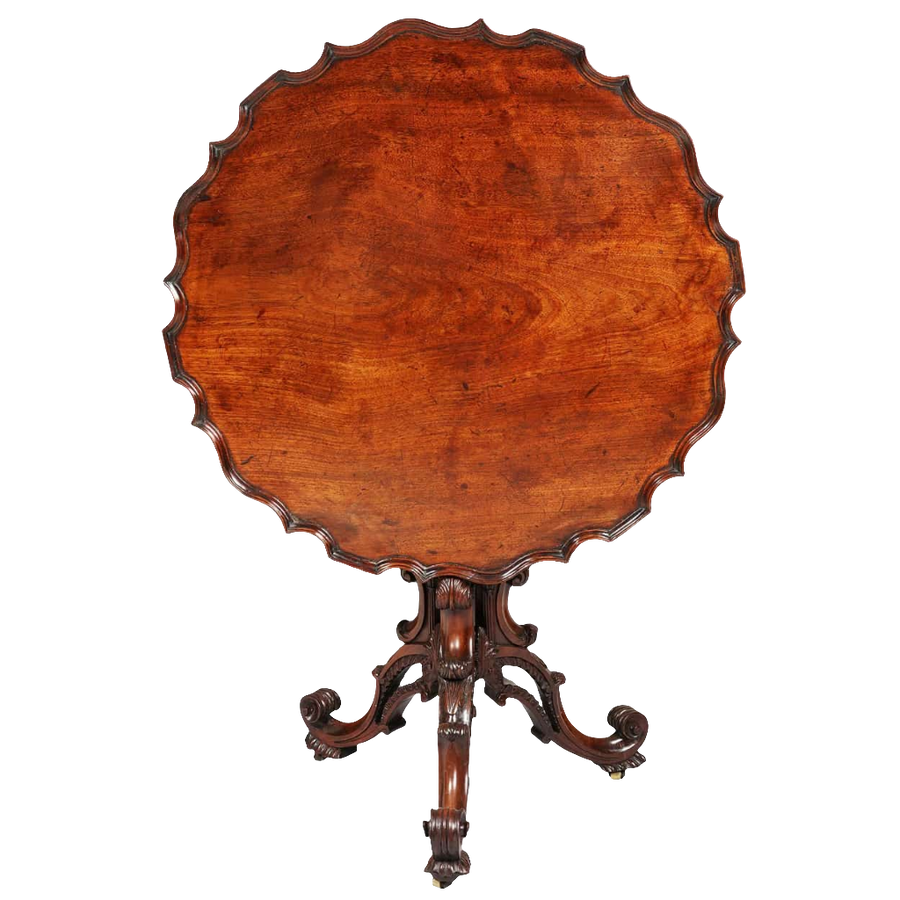
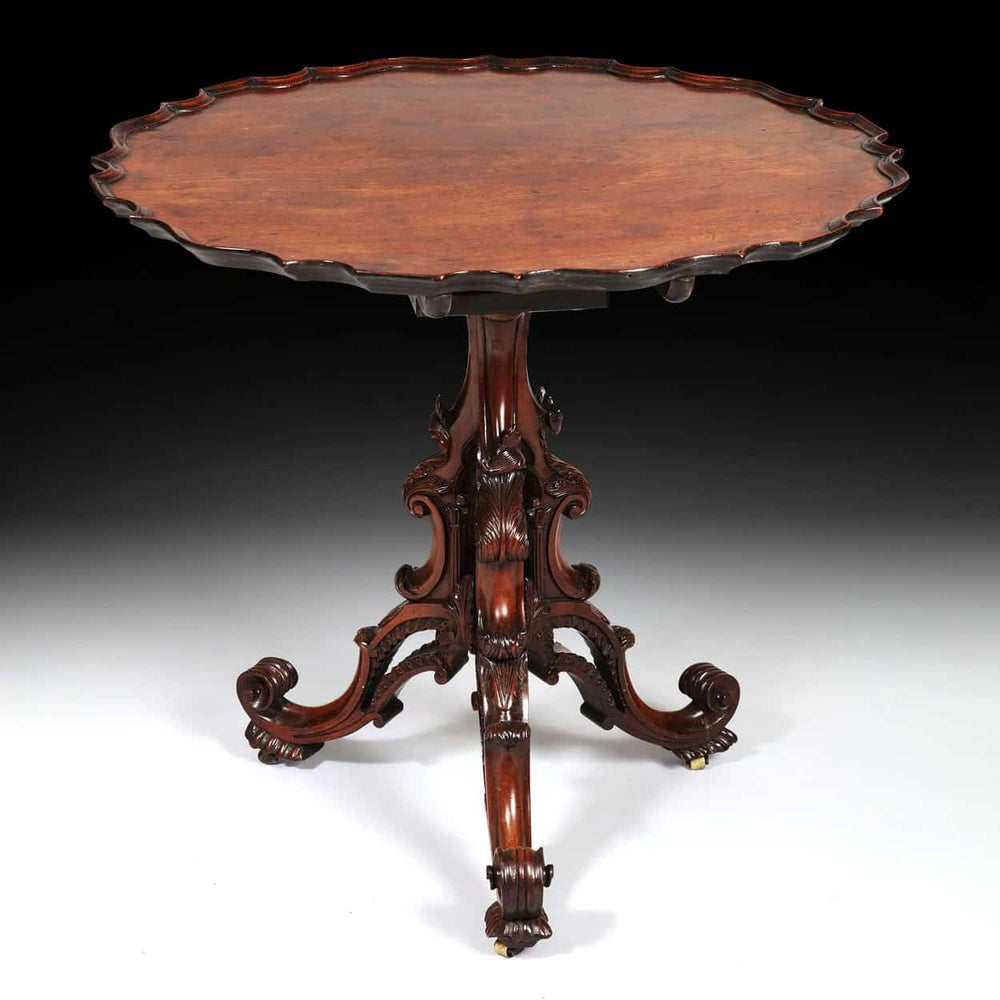
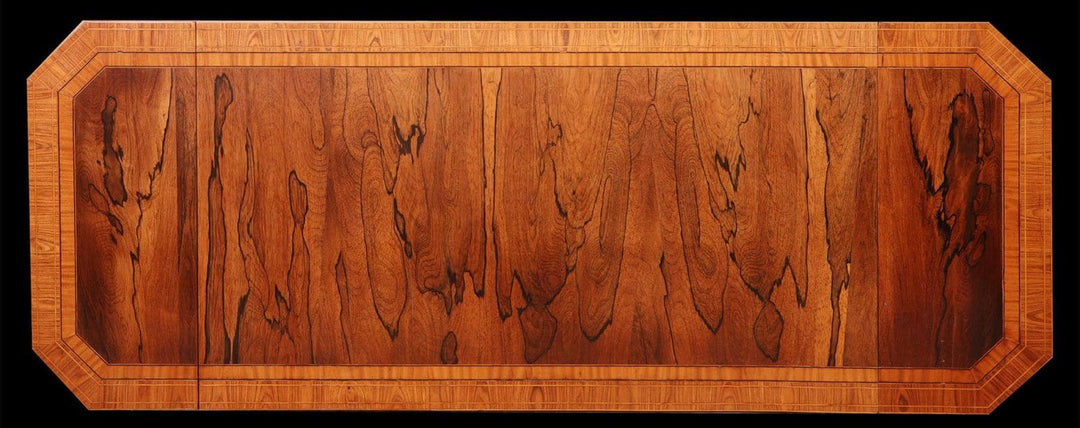
When deciding how to decorate with Georgian furniture, timber and surface finish are central. Georgian makers understood how to use veneers, figuring and patina to create depth. Those qualities should be visible, not buried under visual noise.
If you have a particularly fine mahogany or satinwood piece, give it contrast through surrounding materials. Linen, wool, vellum, stone and bronze all sit comfortably beside period timber because they are tactile and understated. Highly glossy lacquers and too many reflective finishes can compete with the furniture rather than support it.
Patina also affects mood. A beautifully aged surface carries softness and complexity that new furniture cannot replicate. This is where authenticity matters. A Georgian chair or chest should show honest age and careful restoration, not aggressive refinishing that strips away its character. In high-quality interiors, these distinctions are not minor. They are often what separates a room with genuine depth from one that merely borrows the look.
Mixing Georgian pieces into contemporary interiors
The strongest rooms rarely look assembled from one source or one date. Georgian furniture is especially effective when used to interrupt modern sameness. A clean-lined sofa beside an 18th-century side table, or abstract art above a George II chest, can create exactly the tension a polished interior needs.
The key is editing. If every object in the room demands attention, the result can feel crowded. If one or two Georgian pieces carry the historical narrative, the rest of the room can be quieter. This approach works particularly well in newer houses and city properties where original architectural detail may be limited.
Lighting should be considered carefully. Georgian furniture responds well to lamplight and warm illumination because those conditions flatter timber, gilding and brass. Very cold lighting can make antique surfaces appear flat. If a room is heavily glazed or starkly lit, adding shaded lamps or picture lights can restore some intimacy.
Which Georgian pieces are easiest to place?
Certain forms are especially versatile. Chests of drawers, side tables, corner cupboards, mirrors and console tables tend to integrate well because they offer utility as well as beauty. Dining furniture can be more demanding simply because modern living often requires different dimensions and levels of comfort.
Seating requires judgement too. Georgian chairs are elegant, but not all are ideal for daily lounging unless they have been sensitively upholstered and chosen for practical use. In many interiors, they work best as occasional chairs rather than primary seating.
For designers and private clients alike, this is where specialist advice has value. An important antique should suit both the room and the way the room is lived in.
Colour, textiles and art around Georgian furniture
A restrained palette usually allows Georgian forms to read clearly, but restrained need not mean dull. Soft stone, chalk, olive, tobacco, deep blue and oxblood all pair beautifully with period woods. The right colour depends on light levels and on whether you want the furniture to blend or stand apart.
Textiles should bring softness and a little irregularity. Georgian furniture can be formal in line, so it benefits from fabrics with dry texture or gentle movement. Think washed linen, cut velvet, wool, silk in moderation, and carpets with age or tonal variation. Overly crisp schemes can make antiques feel isolated, while too much pattern can reduce their impact.
Art offers another useful counterpoint. Portraiture, old master drawings and architectural prints are natural companions, but contemporary art can be just as effective if scale and framing are handled properly. A severe modern canvas above a fine chest can look extraordinary precisely because the contrast is confident.
Buy fewer pieces, but buy better
One excellent Georgian object will usually outlast a room full of decorative filler. That principle matters not only aesthetically but practically. Fine antiques carry construction quality, material integrity and historical value that reward close attention over time.
It is worth being patient. Look for strong colour in the timber, elegant proportions, crisp carving and sensible restoration. Ask about provenance and condition. A discreet repair is expected in furniture of this age; poor alteration is another matter entirely. The best pieces retain their dignity because any restoration has been done to preserve, not to modernise.
For clients furnishing significant interiors in London, New York, California or the Hamptons, remote buying is now common, but confidence still rests on scholarship and trust. Nicholas Wells Antiques has built its reputation on that combination - fully authenticated pieces, careful restoration and personal guidance that respects both the object and the setting it will enter.
A room decorated with Georgian furniture should never feel like a period exercise. At its best, it feels settled, intelligent and quietly exacting - the sort of interior that reveals more the longer one lives with it.


Leave a comment