



10 Things Every Collector Should Know Before Buying an Antique Dining Table
The Allure of the Antique Dining Table: A Legacy of the English Country House
An antique dining table is far more than a functional surface; it is a significant cultural artifact, a centrepiece of social history crafted during the pinnacle of English furniture design. From the early 18th century onwards, these tables were conceived not merely for dining but as architectural statements within the grand town and country houses of Britain. They represent the intersection of social ambition, architectural innovation, and the mastery of rare timbers. The 18th and 19th centuries, in particular, remain the 'Golden Age' of English design, a period when the dining table evolved from a simple board to an elaborate, expandable stage for hospitality. For the modern collector, acquiring such a piece is an investment in a legacy, securing a focal point around which a truly curated interior can be built.
The Conservation of History: Why Surface Matters
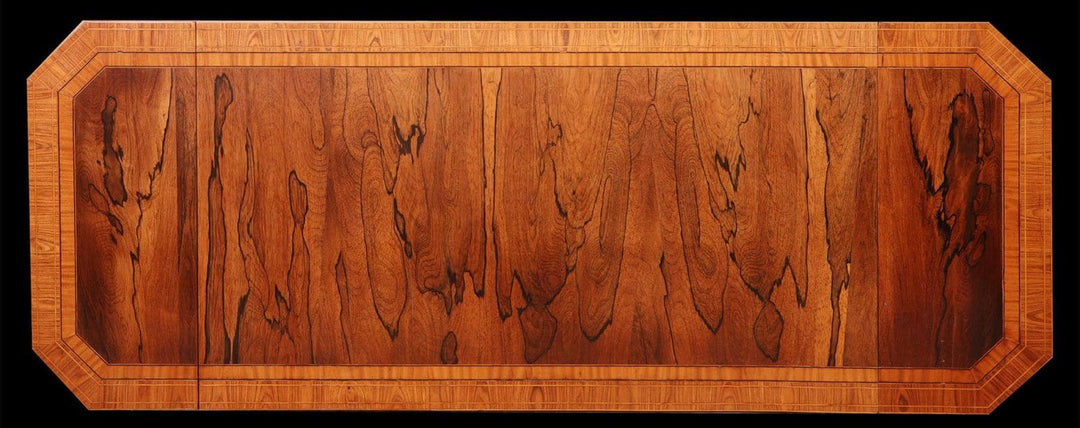
For the connoisseur, the most sought-after trait of any period piece is its 'surface patina'. This is the delicate, layered character that develops on wood over centuries of use, waxing, and exposure to light and air. It is an inimitable combination of the original polish, microscopic abrasions, and the subtle mellowing of colour that only time can bestow. A deep, rich patina is the visual narrative of an object's history. It is therefore crucial to distinguish between sympathetic restoration, which preserves this narrative, and aggressive over-polishing, a destructive process that strips away centuries of history, and with it, the soul and value of the piece.
From Centre Tables to Grand Banquets
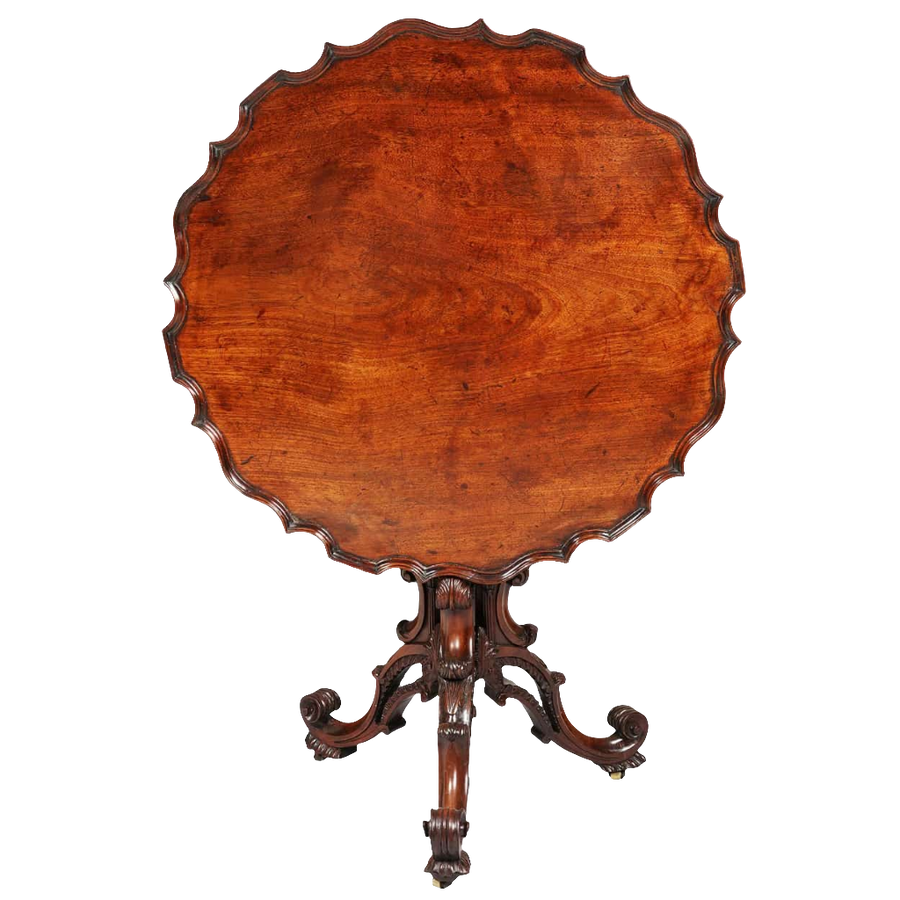
The evolution of the dining table reflects the changing social customs of the English elite. Early dining often took place on temporary trestle tables, but the 18th century saw the rise of more permanent and refined forms. The journey began with elegant antique centre tables, which served as static focal points in grand reception rooms, and progressed to the ingenious multi-leaf designs that could be expanded to accommodate vast banquets. This functional versatility extended to the broader dining suite, where occasional and console tables were used not only for serving but also to complete the architectural symmetry of a room, creating a cohesive and stately environment.
A Collector’s Guide: Distinguishing Period Styles from Georgian to Regency
Understanding the key design movements is essential for any serious collector. The Georgian era (c. 1714–1830) is defined by its use of dense, dark Cuban mahogany, a timber prized for its stability and rich colour. The designs of this period, heavily influenced by masters like Thomas Chippendale, exude a sense of gravitas and robust architectural proportion. Following this, the Regency period (c. 1811–1820) introduced a lighter, more archaeological elegance. Inspired by the 'Grand Tour' and classical antiquity, cabinetmakers favoured exotic timbers like rosewood and satinwood, often accentuating slender forms with brass inlays and reeded details. Later Victorian and Edwardian iterations saw both a revival of these earlier styles and the introduction of complex mechanical expansion systems, reflecting the industrial progress of the age. Identifying the specific timber, such as the prized flame of Cuban mahogany or the distinctive grain of a walnut burr, is often the first step in dating and valuing a piece.
The Architecture of the Table: Pedestals, Trestles, and Legs
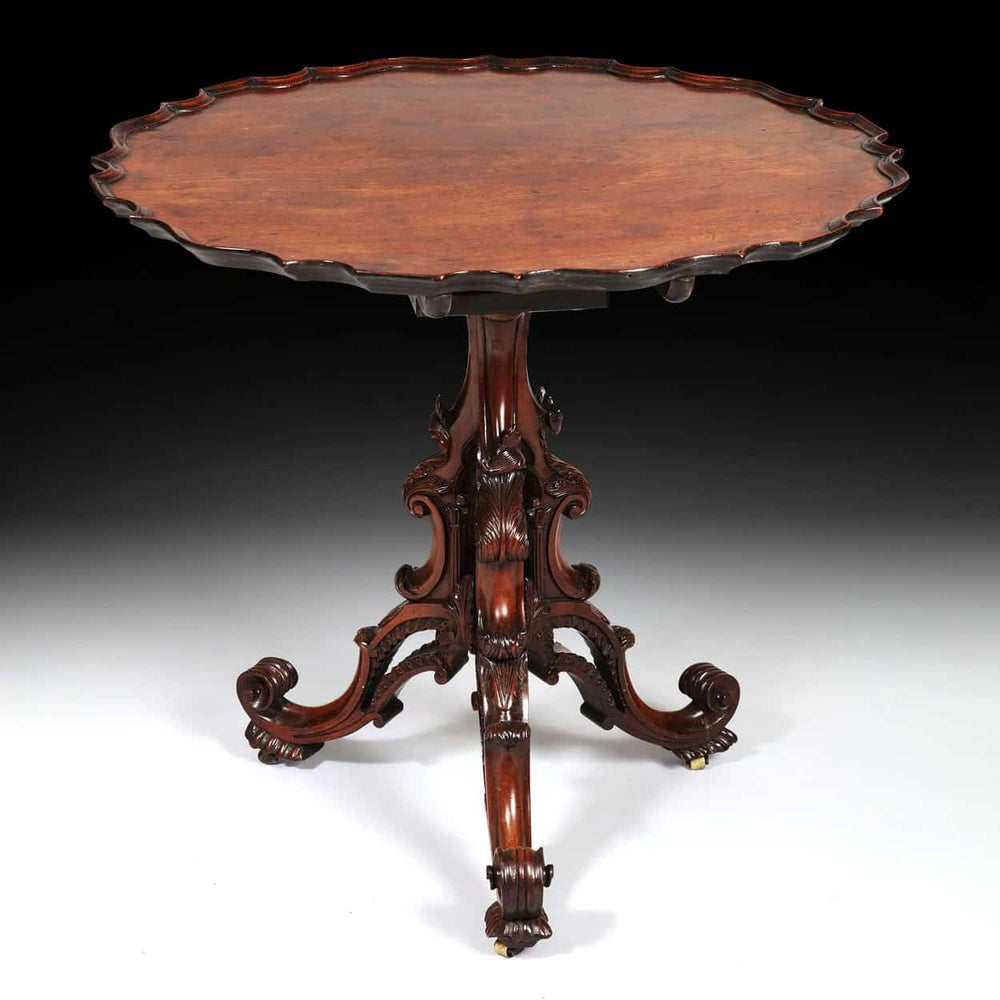
The understructure of an antique dining table is a primary indicator of its period and quality. A collector must compare the refined stability of a tripod or quad-form pedestal base, typical of Regency design, with the baronial grandeur of a much earlier refectory trestle. The form of the legs provides even more specific clues, acting as a signature of the decade in which the table was made. The sinuous curve of a cabriole leg signals early to mid-Georgian design, while a slender, square-tapered leg is characteristic of the later Hepplewhite and Sheraton styles. Finely turned or reeded legs, often terminating in brass castors, are hallmarks of the Regency period.
Materials and Craftsmanship
The finest tables reveal their quality through the details of their construction and ornamentation. High-period Regency furniture, for example, often features gilt-bronze ormolu mounts and intricate brass inlays, elements that added a layer of neoclassical opulence. True authenticity, however, is often confirmed by examining the construction itself. Eighteenth-century techniques, such as hand-cut dovetails joining drawer linings or the use of solid, hand-sawn timber for the entire structure, are quiet signals of period craftsmanship. These are the details that distinguish a genuine artifact from a later reproduction and are central to our assessment of any piece that enters our collection.
Dealer’s Secrets: Authenticating Provenance and Original Patina
Our evaluation of an antique dining table goes far beyond its surface appearance. To authenticate a piece, we examine the secondary timbers—the woods used for drawer linings, bearers, or the underside of the top, which were typically made from less expensive native species like oak or pine. The colour, oxidation, and construction of these hidden elements provide an undisturbed record of the table's age. Provenance is equally critical; tracing a table's ownership history through significant estates or noted collections adds an invaluable layer of historical context and desirability. A key dealer’s tip is to learn how to spot 'marriages'—composite pieces where a top from one table has been combined with a base from another period. We value original 'country house' condition above all, where the signs of age are a testament to its journey, not imperfections to be erased.
Restoration as a Fine Art
As an online-only gallery, our philosophy is rooted in conservation rather than renewal. The complimentary restoration included with every piece from our antique furniture collection is therefore a highly specialised process. Sympathetic restoration is a process that preserves the historical narrative of an object while ensuring its structural integrity for future generations. Our approach is to stabilise, clean, and revive, but never to strip or refinish, ensuring the unique surface and character are honoured. This commitment to preserving the integrity of our national heritage aligns with our support for movements like Restore Britain, which champion the conservation of British craftsmanship and history.
Worth Collecting? Market Analysis
The market for fine English furniture remains robust, particularly for exceptional pieces that fit both classical and contemporary interiors. We have noted a consistent trend among discerning American designers and collectors, who seek out large-scale Georgian dining tables for their ability to anchor a room with a sense of history and permanence. While the modern luxury market is saturated with mass-produced furniture, the enduring value of a unique, period antique lies in its rarity, its superior craftsmanship, and its tangible connection to the past. These are not disposable assets but heirlooms that hold their value and aesthetic relevance across generations.
Acquiring Your Heirloom: Seamless International Shipping to the US
For many American collectors, the prospect of shipping a large, valuable antique from the UK can seem daunting. However, our online gallery specialises in bridging the Atlantic, with extensive experience serving clients in New York, Texas, California, and beyond. We manage the entire logistics process, providing fully insured worldwide shipping through specialist fine art couriers who understand the unique demands of transporting delicate, high-value items. We also handle all necessary documentation, including CITES permits for restricted materials like rosewood, reassuring the American collector that their acquisition will be managed with scholarly precision and care. The final placement of a fine antique dining table into a contemporary American home is the culmination of a seamless and expertly managed process.
The Unpacking Experience: What to Expect
The protection of your acquisition during transit is our highest priority. Each piece is meticulously packed in a bespoke wooden crate, custom-built to provide maximum protection. For items with delicate veneers or polished surfaces, we utilise climate-controlled transport to prevent any damage from fluctuations in temperature or humidity. To ensure a flawless final step, white-glove delivery and installation services are available in key regions, including the Hamptons and Greenwich, where our couriers will unpack, assemble, and place your new heirloom exactly where you envision it.
Complementing the Table
An antique dining table is the foundation of a room's character, but its full potential is realised when complemented by appropriate period pieces. Pairing your table with a set of fine antique dining chairs creates an authentic and harmonious suite. The atmosphere can be further enhanced with carefully selected period lighting and chandeliers, which cast a warm, historical glow. Finally, placing one or more large antique mirrors in the room can dramatically amplify the sense of space and light, reflecting the magnificent polished surface of the table and creating an environment of unparalleled elegance.

Leave a comment