



Why Collectors Love Mahogany: History, Uses and Identification
What if the true legacy of the eighteenth century was not written in ink, but carved into the dense, shimmering grain of a single botanical genus? Many connoisseurs feel a profound reverence when standing before a George III library table, sensing the weight of history in its dark, lustrous surface. You likely recognise that unmistakable glow, yet you might also share the common trepidation regarding the modern market's influx of lesser "mahogany-style" substitutes and the complexities of ethical sourcing. Mahogany is not merely a material; it's a historical medium that allowed for the structural audacity of the Georgian and Regency eras, defining an age of unparalleled craftsmanship.
We've spent decades refining our eye for these exceptional pieces, and we're pleased to share the scholarly history and expert authentication secrets that define our gallery's approach. You'll discover the botanical nuances that distinguish rare Cuban Swietenia mahagoni from its later Honduran relatives, providing you with the technical vocabulary to identify true investment-grade furniture. We'll also address the practicalities of acquisition, from the conservation of original patina to the ease of international shipping. Whether you're furnishing a residence in the Hamptons or a townhouse in Greenwich, Connecticut, our professional fine art shippers ensure that these significant cultural artefacts arrive with the same care they've received for centuries.
Key Takeaways
- Understand how the transition from walnut to Mahogany circa 1720 enabled the structural audacity and intricate, pierced carvings of the Chippendale era.
- Learn to differentiate between the dense, dark Swietenia mahagoni of the West Indies and the highly figured Swietenia macrophylla varieties found in later 18th-century pieces.
- Discover the "Dealer’s Secrets" for authenticating period furniture by identifying natural oxidisation in drawer linings and preserving the value of an original surface.
- Gain professional insight into integrating the rich, historical tones of Georgian and Regency furniture within contemporary American interiors to create a sophisticated, lived-in aesthetic.
The Advent of the Golden Age: Why Mahogany Revolutionised 18th-Century Design
Around 1720, the English interior underwent a transformation so profound that historians have since christened the following decades the "Golden Age" of furniture. Before this era, walnut was the timber of choice for the elite, yet it possessed inherent flaws that limited the cabinetmaker's ambition. The turning point arrived with the 1721 Naval Stores Act. By removing heavy import duties on timber from British colonies, the government inadvertently sparked what we now call the "Mahogany Revolution." This legislative shift flooded London workshops with a material that surpassed every domestic wood in both beauty and utility. At Nicholas Wells Antiques, we specialise in the "Town and Country House" aesthetic that emerged from this period, where the inherent nobility of the wood defined the status of the grandest residences.
From Walnut to Swietenia: A Structural Shift
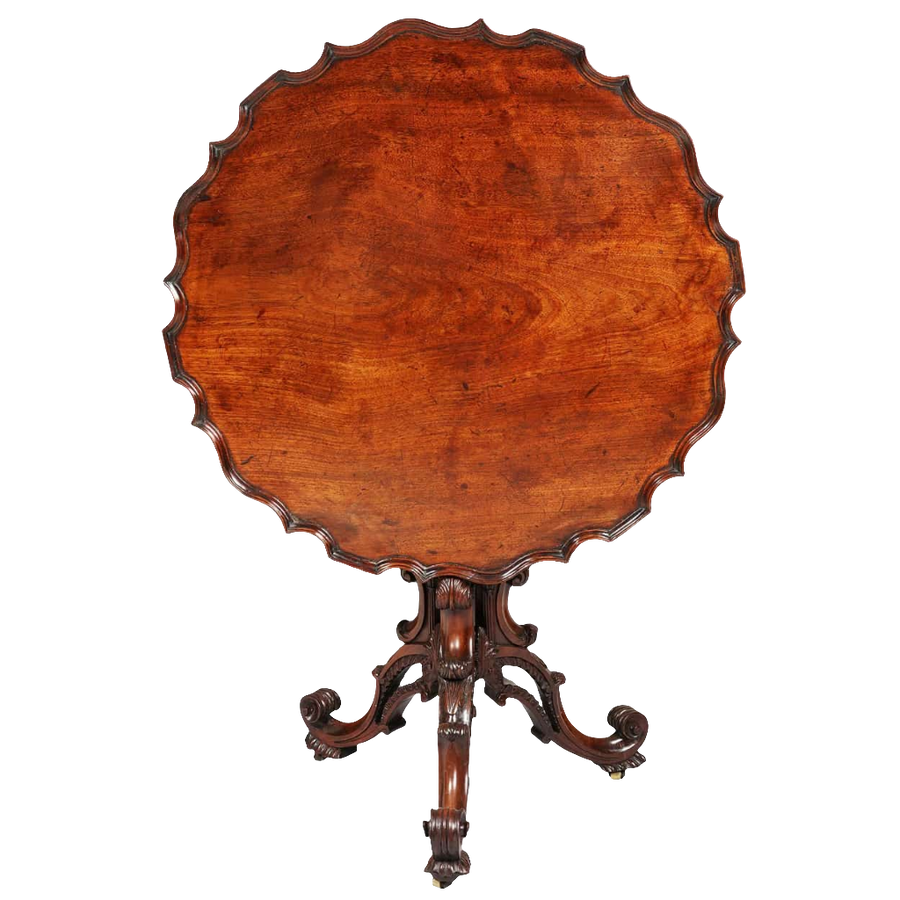
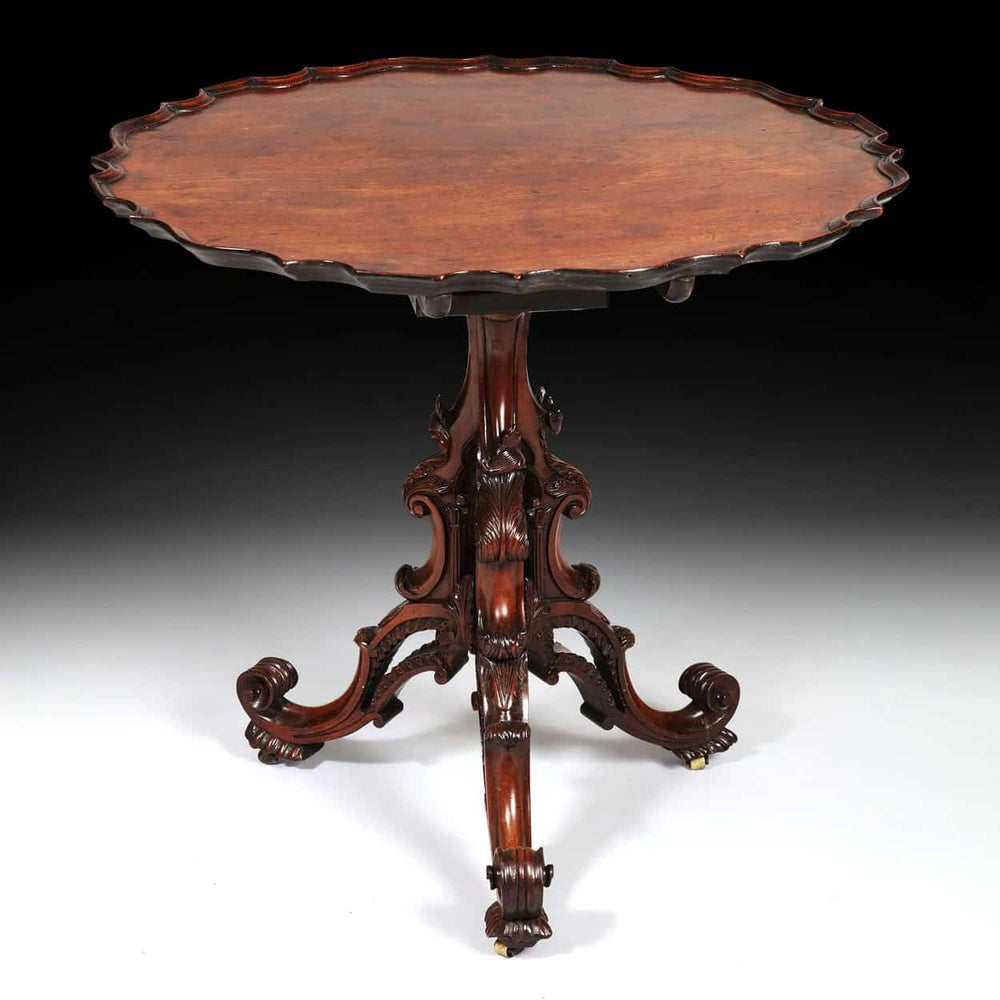
In my years handling period pieces, the transition from walnut to Mahogany is most striking when you examine the fine details of a chair's back or the underside of a frame. Walnut is notoriously brittle and prone to woodworm, making it unsuitable for the adventurous carving that defined the mid-18th century. In contrast, this new tropical import offered a density and tensile strength that changed the very physics of furniture. It allowed craftsmen to experiment with the delicate, pierced splats and rhythmic curves we associate with the finest Chippendale designs. This structural integrity also permitted the construction of expansive antique dining tables that could span great lengths without the need for cumbersome under-stretching or heavy bracing.
The Georgian Obsession with "The Red Gold"
In the high-society circles of Georgian London, the wood became known as "Red Gold" due to its deep, lustrous colour and the immense social prestige it carried. Its ability to take a high, glass-like polish made it a symbol of sophistication that resonated from the Hamptons to the great estates of England. Thomas Chippendale harnessed these qualities to elevate the material to the pinnacle of the decorative arts. His celebrated designs relied on the wood's unique ability to hold crisp, intricate carving, a feat impossible with the softer, more fibrous timbers of the previous century. It's this combination of durability and elegance that makes these pieces such a stable investment for the modern collector.
Distinguishing the Species: Spanish, Cuban, and Honduran Mahogany
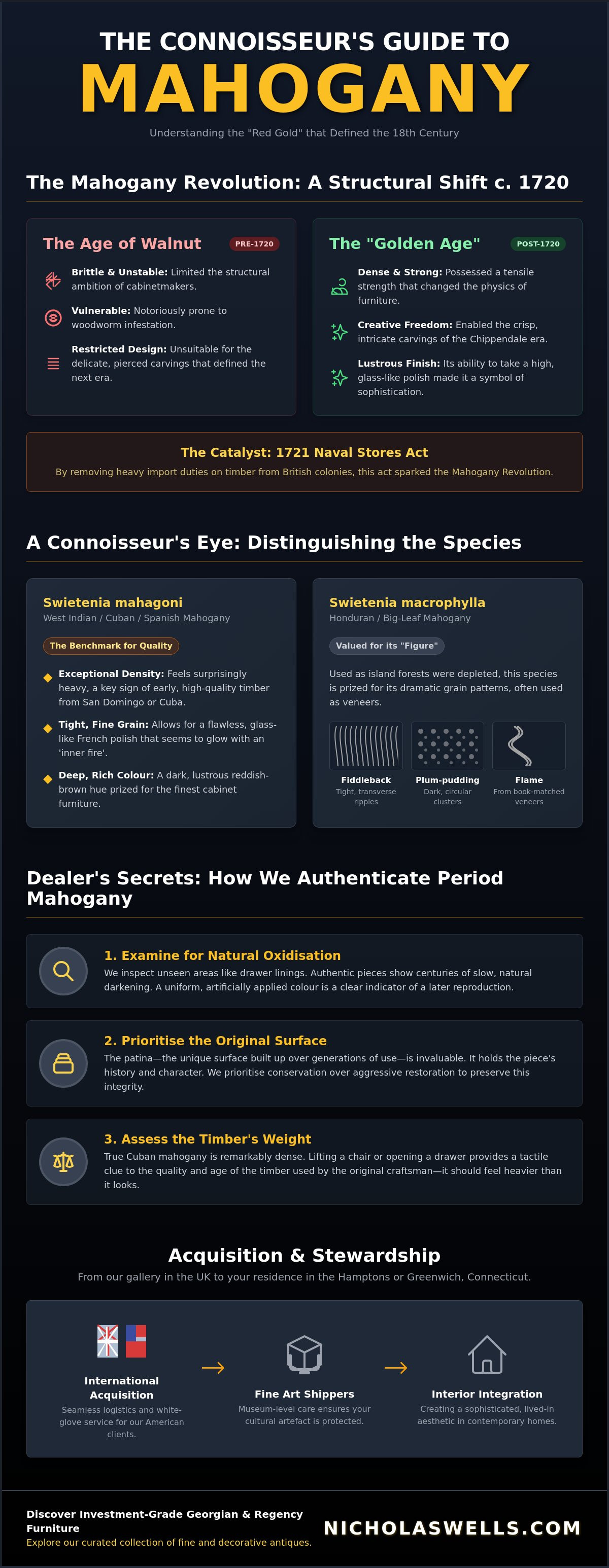
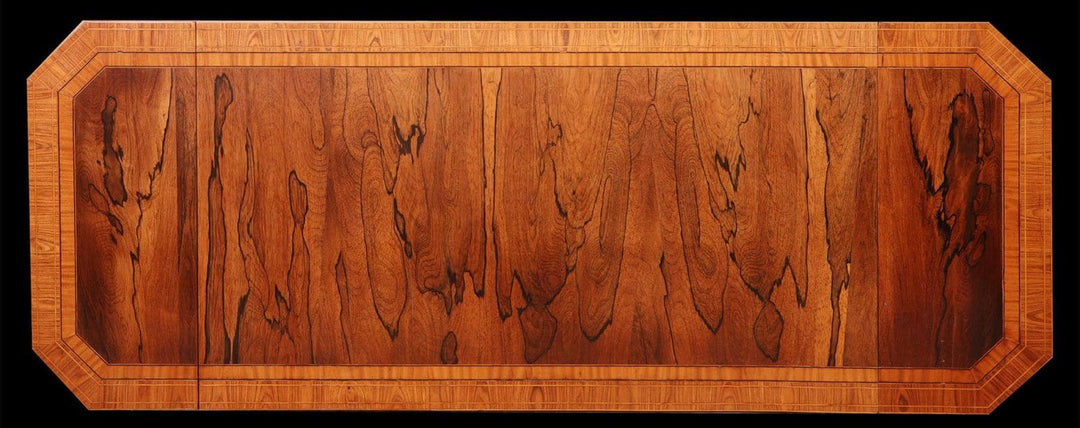
To the untrained eye, Mahogany is often perceived as a singular entity, yet for the seasoned collector, the distinction between species is as critical as the provenance of the piece itself. The "Golden Age" was built upon Swietenia mahagoni, the West Indian or Cuban variety, which remains the benchmark for quality. As these island forests were depleted, the trade shifted toward Swietenia macrophylla, commonly known as Honduran or big-leaf mahogany. While both belong to the same genus, their physical properties differ significantly, affecting everything from the weight of a chair to the depth of its lustre. Identifying these woods requires a keen eye for "figure," the natural patterns created by the tree's growth. Connoisseurs prize "plum-pudding" mahogany for its dark, circular clusters, while "fiddleback" grain presents a series of tight, transverse ripples that seem to shift under the light. These aesthetic variations aren't merely decorative; they're the botanical fingerprints of a tree's life.
The Density of Cuban Mahogany
Cuban mahogany is celebrated for its remarkable density, a trait that makes it feel surprisingly heavy when lifting a Georgian chair or side table. This tight grain allows for a glass-like finish when treated with a traditional French polish, creating a surface that glows with an inner fire. Spanish mahogany from San Domingo was the preferred choice for the finest cabinet furniture due to its exceptional weight and dark, rich colouring.
Flame and Figure: The Aesthetic Choice
Master cabinetmakers often reserved "flame" mahogany for the most visible surfaces, such as the fronts of antique chests of drawers. By book-matching veneers cut from the crotch of the tree, where a large branch meets the trunk, they created symmetrical, plume-like patterns of extraordinary beauty. These high-status pieces were designed to be focal points, showcasing the rarest cuts of timber as a display of wealth and taste. The rarity of "crotch" mahogany meant it was almost exclusively used on the most prestigious commissions, where the wood's natural drama could be fully appreciated.
By the 19th century, the introduction of African mahogany (Khaya) offered a more abundant, though arguably less refined, alternative. It's generally lighter and more porous than its Caribbean predecessors, lacking the "stony" hardness that defines 18th-century masterpieces. If you're looking to acquire a piece that embodies this peak of craftsmanship, you might explore our curated selection of period furniture to see these exceptional grains in person.
Dealer’s Secrets: Authenticating and Assessing Period Mahogany
Authentication is an art of observation. When I evaluate a piece of 18th-century furniture, my first instinct isn't to look at the grain, but to search for the "original surface." A common mistake among novice collectors is the pursuit of a flawless, mirror-like finish. In reality, over-restoration can strip away the historical soul of a piece, significantly diminishing its market value. True Mahogany from the Georgian era possesses a depth that modern stains cannot replicate. I always look for "oxidisation," the natural darkening of wood where it meets the air. By inspecting protected areas, such as drawer linings or the underside of a table, you can see the stark contrast between the aged exterior and the raw, protected timber. If the colour is uniform throughout, it's a clear signal of modern intervention.
Construction techniques offer further clues. Before the industrialisation of the 19th century, veneers were hand-sawn, resulting in a thickness and slight irregularity that machine-cut veneers lack. You might even spot the faint, rhythmic marks of a pit saw on the carcass wood. Another desirable trait is a "sun-bleached" finish. While many associate the wood with a deep red, centuries of exposure to light in English country houses often result in a sophisticated honey-toned character. This soft, golden hue is highly sought after by connoisseurs who value authenticity over uniform colour.
The Importance of Patina and Surface
Patina is the physical record of an object’s journey. It's the slow accumulation of beeswax, dust, and light exposure that creates a soft, tactile glow. At Nicholas Wells Antiques, we prioritise the conservation of this history. Our approach focuses on sympathetic restoration, ensuring that we preserve the unique antique surfaces that tell a story of three centuries of use.
Authentication: Beyond the Wood
Expert dealers look beyond the primary timber. The secondary woods used for drawer bottoms or back panels, such as English oak or Scots pine (often called "deal"), provide essential evidence of a piece's origin. Continental pieces often use different regional softwoods. When examining antique desks and writing tables, always check the brasses and locks. Original hardware should show consistent wear and fit perfectly into the recesses carved by the original cabinetmaker. If you are seeking a piece with an untouched historical surface, I invite you to view our collection of authentic period furniture.
Acquisition and Stewardship: Collecting Mahogany for the Modern Interior
In the contemporary American home, from Manhattan penthouses to expansive residences in Texas or California, Mahogany serves as a sophisticated anchor. Its deep, resonant tones provide a sense of permanence and architectural weight that modern materials often lack. To avoid a "museum" atmosphere, I suggest a curated approach where history is allowed to breathe within a 21st-century context. Pairing a dark Georgian piece with lighter timbers, such as satinwood or maple, or placing it alongside vibrant modern art, creates a rhythmic tension that highlights the wood's natural lustre. This juxtaposition ensures that the furniture feels relevant and vital, rather than merely a relic of the past.
A Focal Point for Modern Luxury Living
A singular, high-quality statement piece often has more impact than a room full of secondary items. For instance, placing a Regency convex mirror above a minimalist console creates an immediate narrative bridge between eras. Beyond aesthetics, rare and documented 18th-century pieces represent a stable investment. With the global mahogany market projected to reach USD 3.01 billion by 2034, the value of genuine, historically significant antiques continues to appreciate. These items are not just furniture; they are tangible assets with a finite supply, making them an excellent choice for the discerning collector in Greenwich, Connecticut, or the Hamptons.
The Logistics of Global Collection
Many of our international clients express initial concern regarding the transit of substantial pieces across the Atlantic. I want to reassure you that shipping from the UK to the US has never been more streamlined. We employ professional fine art shippers who specialise in the handling of delicate, heavy items like antique centre tables. Every acquisition is fully insured and crated to museum standards, ensuring a seamless journey from our gallery to your residence. The logistics are managed with the same precision as the original craftsmanship of the objects themselves.
Part of our commitment to stewardship is the complimentary restoration service included with every purchase. This ensures that each piece is ready for immediate display while respecting its historical integrity and original patina. As a specialist dealer, I view my role as a trusted advisor, helping you navigate the complexities of provenance and authenticity to build a world-class collection of works of art. Whether you are a seasoned connoisseur or embarking on your first major acquisition, we offer a sophisticated bridge between historical grandeur and modern luxury living.
Securing a Masterpiece for the Next Generation
The journey from the dense forests of the West Indies to the refined drawing rooms of Georgian London created a legacy that remains unparalleled in the history of cabinetmaking. You now possess the specialised knowledge to distinguish between the rare, heavy grains of the eighteenth century and later nineteenth-century imports, alongside the dealer's secrets for identifying genuine oxidisation and untouched surfaces. This understanding transforms an object from a simple functional item into a significant cultural artefact that anchors a modern interior with profound historical weight.
The enduring allure of Mahogany lies in its unique marriage of structural strength and aesthetic depth, a combination that's ensured its status as a premier investment for generations of connoisseurs. We invite you to view our curated collection of fine antique mahogany furniture, where our specialist expertise in eighteenth and nineteenth-century English furniture ensures each piece meets the highest standards of rarity and condition. With complimentary professional restoration on all items and fully insured worldwide shipping to the US, building a world-class collection from across the Atlantic is a seamless and rewarding pursuit. We look forward to helping you find a singular masterpiece that resonates with your personal aesthetic.
Frequently Asked Questions
How can I tell the difference between mahogany and stained cherry or oak?
Mahogany is distinguished by its diffuse-porous grain and the absence of the prominent medullary rays that define oak. While stained cherry may mimic the deep reddish hue, it lacks the shimmering chatoyancy and the significant weight of genuine tropical hardwoods. You should also inspect the end grain; mahogany's pores are evenly distributed, unlike the ring-porous structure of oak which remains visible even under heavy layers of stain.
Is it ethical to buy antique mahogany furniture today?
Acquiring antique furniture is an inherently sustainable practice because it recirculates timber harvested centuries ago rather than contributing to modern deforestation. By choosing a period piece, you're acting as a steward for existing historical material and preserving the legacy of the "Red Gold" without impacting contemporary rainforests. This form of collecting aligns with modern conservation principles by valuing the longevity and carbon-capture of eighteenth-century Mahogany craftsmanship.
What is the "Golden Age" of mahogany furniture?
The "Golden Age" refers to the period between 1720 and 1760 when this timber supplanted walnut as the primary medium for English cabinetmaking. It was an era of unprecedented structural innovation, led by luminaries such as Thomas Chippendale, who harnessed the wood's strength to create delicate, pierced designs. This period defined the sophisticated Georgian aesthetic, transforming Mahogany into a global symbol of status and refined taste that still resonates with collectors today.
How do I care for the surface of my antique mahogany table?
Maintaining the lustrous surface of an antique table requires a minimalist approach that prioritises the preservation of its original patina. You should avoid modern aerosol polishes containing silicones, as these can create a smeary build-up and eventually damage the historical finish. Instead, apply a thin layer of high-quality, clear beeswax once or twice a year, buffing it gently with a soft lint-free cloth to nourish the wood and enhance its natural glow.
Why is Cuban mahogany more valuable than other varieties?
Cuban mahogany, or Swietenia mahagoni, is prized for its exceptional density, fine grain, and the deep, rich colour it develops over centuries. It's significantly harder than modern alternatives, allowing for the crispest carving and a mirror-like polish that later varieties simply cannot match. Because the original island forests were largely exhausted by the late eighteenth century, genuine Cuban pieces are now considered rare cultural artefacts of immense historical and investment value.


Leave a comment