



A Collector's Guide to Antique Furniture Periods: Georgian to Mid-Century
What if the most profound secrets of a fine commode aren't found in its elegant silhouette, but in the rough-hewn saw marks hidden beneath a drawer or the specific oxidation of an ormolu mount? It's a question that haunts many serious collectors who fear the sting of purchasing a sophisticated reproduction rather than a genuine period piece. Identifying antique furniture periods requires more than a cursory glance at a style guide; it demands a deep, tactile appreciation for the conservation of history and the physical evolution of craftsmanship.
We understand that the overlapping dates of the Regency and William IV eras, or the subtle shift from solid walnut to mahogany veneers, can feel dauntingly complex. This guide promises to refine your perspective, helping you develop a true dealer’s eye for quality and authenticity. We'll examine the narrative of timber and the inimitable lustre of original patina, tracing the journey from the scholarly grandeur of Georgian workshops to the iconic designs of the Mid-Century Modern movement. By the end of our exploration, you'll possess the technical vocabulary and the sensory intuition needed to distinguish a singular cultural artifact from a mere decorative object.
Key Takeaways
- Learn why a seasoned expert always examines the underside and rear of a piece first to uncover the true narrative of its origin and age.
- Master the nuances of identifying antique furniture periods by recognising the shift from solid Georgian mahogany to the exotic rosewood and brass inlays of the Regency era.
- Understand how the Grand Tour influenced English design, bringing classical Italian marble and sophisticated Continental silhouettes into the most prestigious estates.
- Discover how to date a piece with precision by reading technical markers such as hand-cut dovetails and the specific choice of secondary timbers like cedar or oak.
- Develop a deep appreciation for the conservation of history, learning to value the inimitable lustre of an original surface as a marker of true quality.
The Dealer’s Eye: Fundamentals of Identifying Antique Furniture Periods
To the uninitiated, a fine commode or an antique centre table might appear merely as a beautiful object of utility, yet to the connoisseur, it represents a precise intersection of social ambition and technological capability. We define "period furniture" as those exceptional pieces that embody the social and technological zeitgeist of their era, serving as silent witnesses to the shifting tastes of the aristocracy and the evolving skills of the master cabinet maker. Provenance remains the documented history of ownership that validates a piece’s journey through time, providing the essential bridge between an object’s creation and its current place in a collection.
One of our most enduring "Dealer’s Secrets" is the insistence on looking where the maker never intended for the public to see. While the polished facade of a piece often dazzles, the truth of its age resides in the underside and rear panels. It's here that we find the evidence of hand-split laths, the rhythmic marks of a pit saw, and the natural oxidation of timber that hasn't seen the light of day for centuries. Identifying antique furniture periods becomes an exercise in reading these hidden narratives, allowing us to distinguish a genuine 18th-century carcass from a 19th-century revival. Understanding the history of antique furniture requires this level of forensic scrutiny, moving beyond the silhouette to the very bones of the construction.
The progression of English furniture is traditionally categorised by the dominant timber of the day, moving through the sturdy "Age of Oak" into the refined "Age of Walnut," and eventually reaching the sophisticated "Age of Mahogany." Each transition wasn't merely an aesthetic choice; it was driven by expanding trade routes, shifting tax laws, and the invention of increasingly delicate woodworking tools that allowed for greater artistic expression.
Timber as a Chronological Map
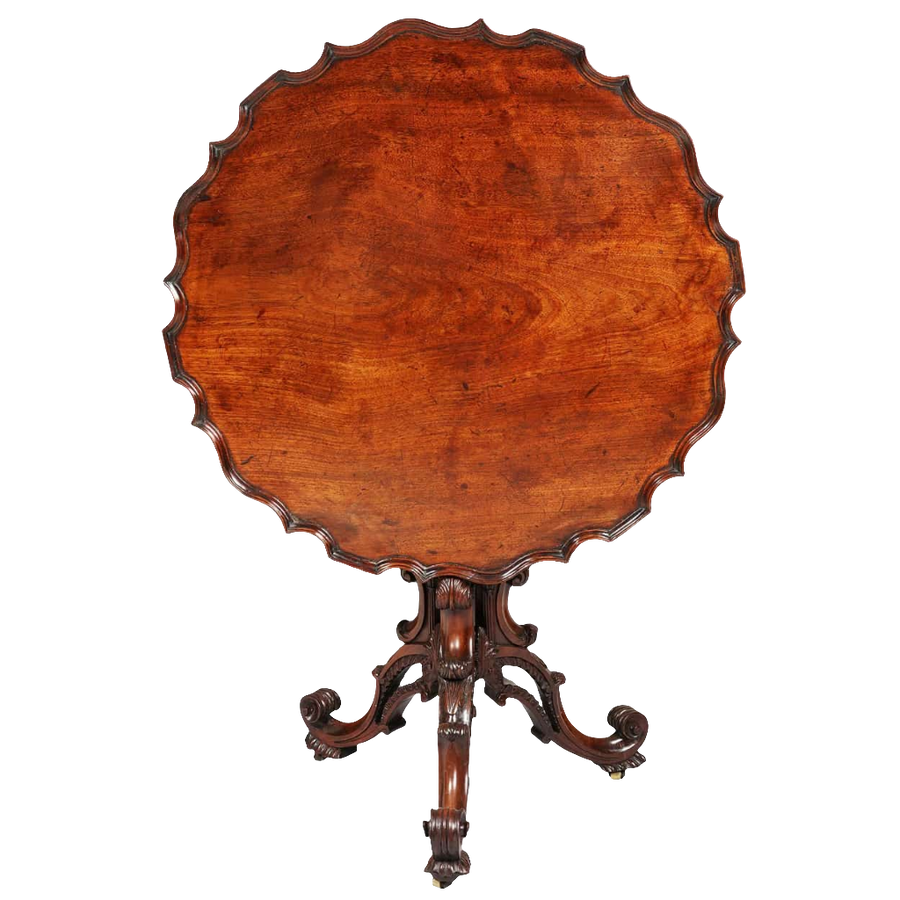
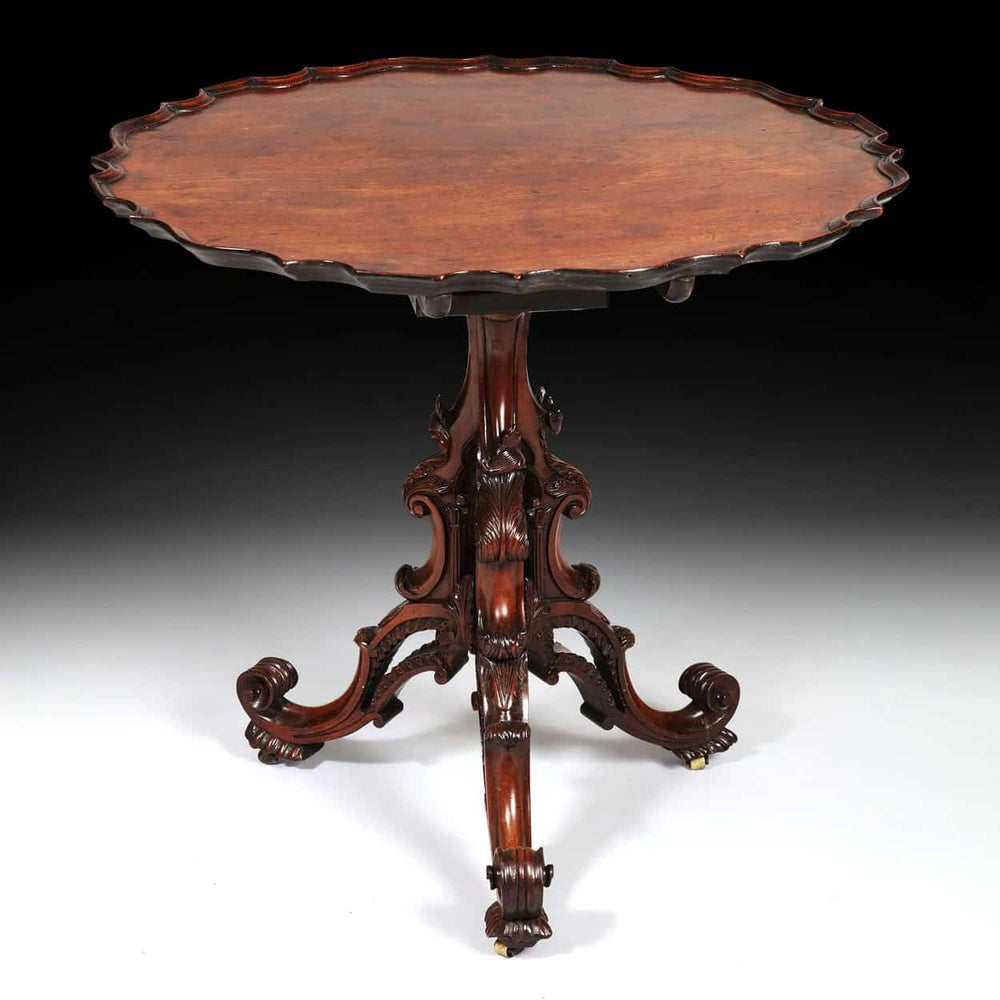
The arrival of West Indian mahogany in the 1720s fundamentally altered the landscape of English cabinet making, offering a density and strength that allowed for the intricate, pierced carvings we associate with the mid-18th century. Before this revolution, the early 1700s celebrated the figured beauty of walnut. We look for the exquisite "oyster veneering" of the William and Mary period, where transverse slices of laburnum or walnut branches were laid in geometric patterns to resemble the interior of a shell, a technique that requires a level of patience and precision seldom found in later reproductions.
The Significance of Surface Patina
A piece’s "skin" or patina is perhaps its most precious attribute, representing the accumulated history of centuries of wax, dust, and handling. This inimitable lustre is the hardest element for a modern workshop to replicate, as it requires a slow, natural chemical reaction between the wood’s tannins and the atmosphere. When we evaluate a piece, we look for that deep, translucent glow that only comes from the conservation of history, where the surface hasn't been stripped by over-zealous restoration but rather cherished in its original, singular state. This surface serves as a primary marker when identifying antique furniture periods, as the depth of colour in a 200-year-old mahogany surface is impossible to manufacture overnight.
The Golden Age: Georgian, Regency, and Victorian Distinctions
The Georgian era, spanning from 1714 to 1830, represents the zenith of British cabinet making, an age where the principles of symmetry and classical proportion dictated the form of every antique centre table and commode. This period was heavily influenced by the published designs of Thomas Chippendale, whose work seamlessly blended Gothic, Chinese, and Rococo motifs into a cohesive, aristocratic aesthetic. Identifying antique furniture periods from this era requires an appreciation for the balance between form and function, where even the most ornate carving serves to enhance the architectural integrity of the piece.
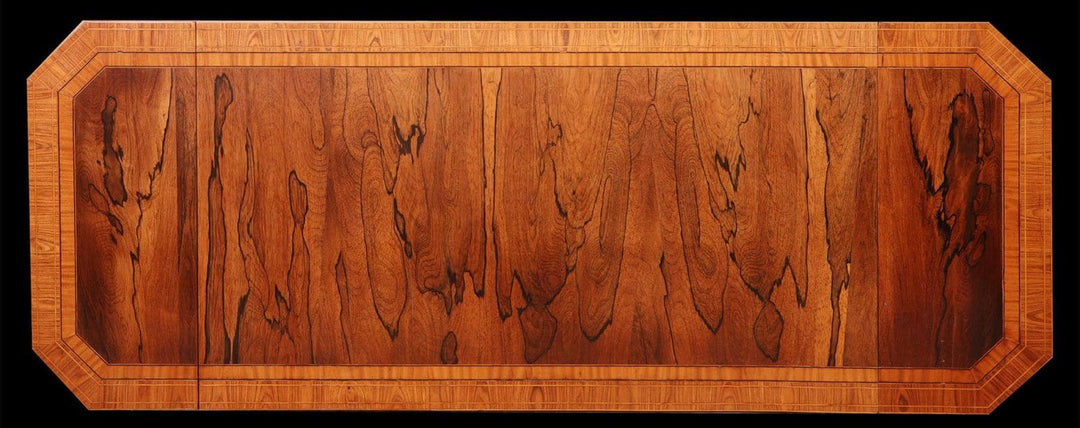
As the 19th century dawned, the Regency style (1811–1820) introduced a more theatrical sense of exoticism. The preference shifted from the warm tones of mahogany to the dark, dramatic grain of rosewood, often elevated by shimmering brass inlays and expertly cast ormolu mounts. It was during this time that the convex mirror became a quintessential element of the English interior, designed to capture and distribute candlelight across a room while offering a panoramic, fish-eye perspective of the surrounding grandeur. If you're seeking a focal point for a contemporary space, our collection of luxury antiques offers several exceptional examples of this Regency sophistication.
Chippendale vs. Hepplewhite: Reading the Lines
Distinguishing between these two titans of design is a fundamental skill in identifying antique furniture periods. Chippendale is synonymous with the robust, hand-carved cabriole leg, often terminating in a sophisticated ball-and-claw foot. In contrast, George Hepplewhite’s influence brought a lighter, Neoclassical touch. His designs favour slender, tapered legs and the iconic shield-back chair, reflecting a transition toward the refined restraint of the late 18th century. For those wishing to study these silhouettes in greater detail, the V&A furniture collection provides an unparalleled digital archive of these evolving forms.
Regency Sophistication and the Egyptian Influence
The Regency period was also defined by a fascination with the "Archaeological" style, spurred by Napoleon’s campaigns in North Africa. This craze manifested in the use of sphinxes, winged lions, and lotus leaf carvings, transforming functional objects into scholarly tributes to antiquity. By the time the Victorian era arrived, this focus shifted toward a heavy, eclectic revivalism. This evolution is most palpable in the design of antique armchairs, which moved from the formal, stiff-backed Georgian tradition to the deep, plush upholstery and sprung seats that reflected the Victorian obsession with domestic comfort.

Continental Grandeur and the Grand Tour Influence
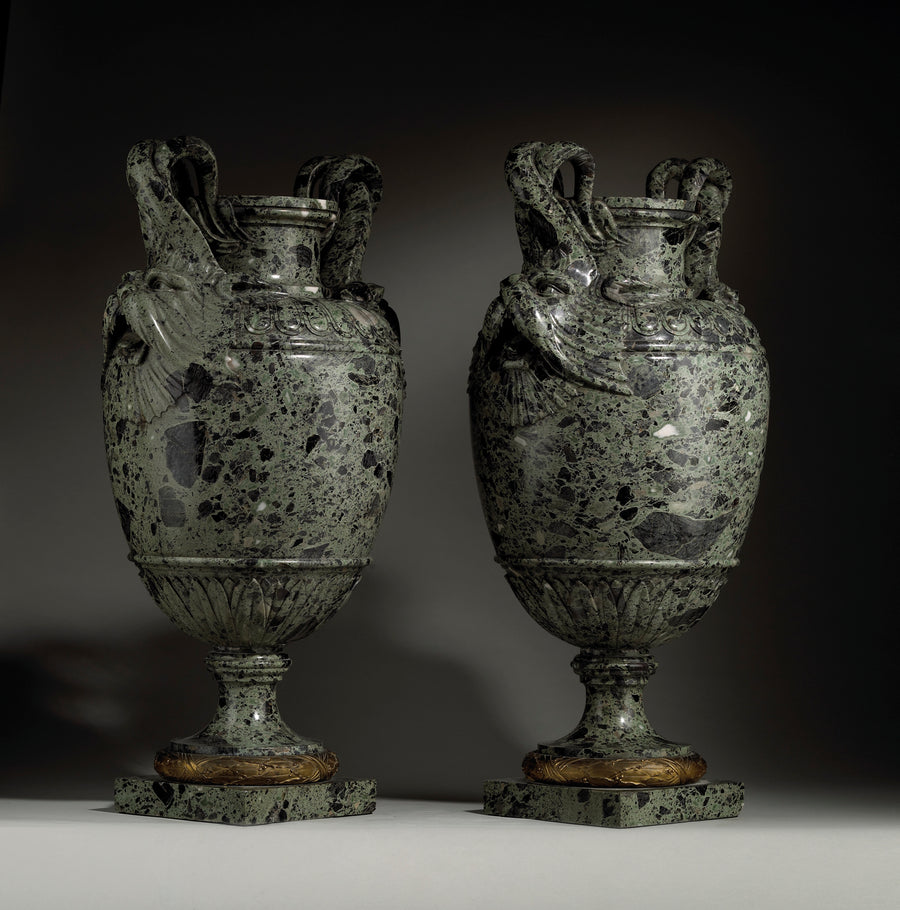
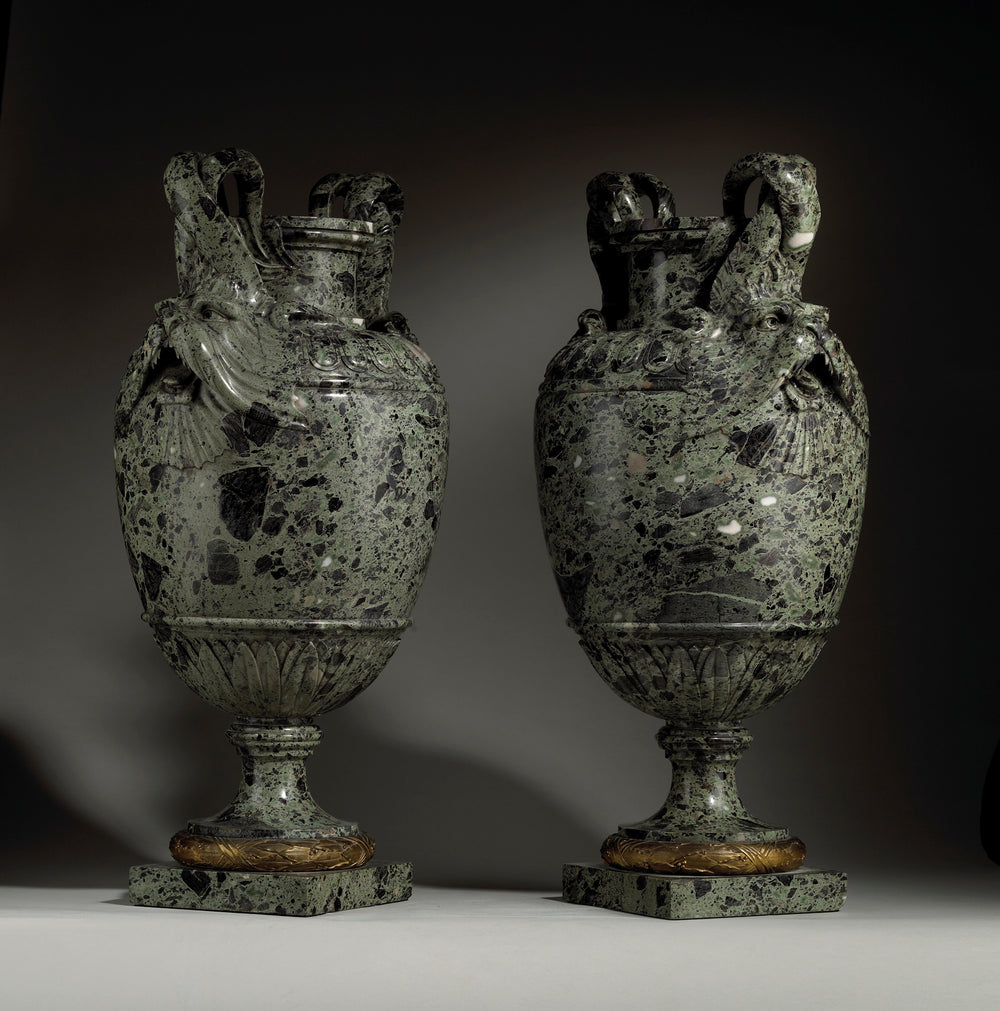
The 18th-century aristocrat’s journey across Europe, known as the Grand Tour, served as much more than a cultural rite of passage; it was a deliberate acquisition mission that fundamentally reshaped the British interior. By bringing back Grand Tour objects, from miniature bronze ruins to vast slabs of Italian marble, collectors introduced a classical vocabulary that would define the era’s most prestigious estates. Identifying antique furniture periods often requires tracing these Continental influences back to their source, particularly when distinguishing the monumental, rigid Baroque of Louis XIV from the playful, asymmetrical Rococo of Louis XV. While the former sought to project absolute power through heavy gilding and tortoiseshell marquetry, the latter embraced the "rocaille" or shell motif, favouring delicate, flowing lines that prioritised intimacy over awe.
The Empire period followed with a return to monumentalism, driven by Napoleon’s desire to evoke the grandeur of ancient Rome. This style utilised vast expanses of dark mahogany, punctuated by the rigorous application of gilded bronze mounts that depicted laurel wreaths, bees, and eagles. A Russian malachite tazza represents the pinnacle of 19th-century Continental luxury and craftsmanship, its vibrant green stone veneers painstakingly book-matched to create a seamless, hypnotic surface that served as a symbol of imperial prestige.
Anglo-Indian and Campaign Furniture
The aesthetic narrative expanded as British officers and administrators commissioned furniture in the colonies, leading to the rise of Anglo-Indian and Campaign styles. Identifying antique furniture periods from this era requires a keen eye for how these global trade routes influenced local workshop practices. These pieces often utilised solid padouk or teak, timbers chosen for their resistance to tropical climates rather than mere appearance. Campaign furniture, designed to be dismantled for transport, reveals its period through its ingenious engineering, featuring brass corner strapping and recessed handles that allowed chests and desks to survive the rigours of travelling across the empire.
The Allure of French Ormolu
True connoisseurship involves identifying high-quality mercury gilding, a process that creates a deep, soft lustre far superior to the thin, flat appearance of later 19th-century electroplating. This distinction is vital when evaluating antique lighting or clocks, where the quality of the ormolu mounts often dictates the piece’s rarity and historical significance. For those looking to elevate a collection with these sophisticated Continental forms, we invite you to explore our curated selection of European objects and furniture.
Technical Connoisseurship: Construction and Authentication
Mastering the art of identifying antique furniture periods requires a transition from the purely aesthetic to the forensic. While the exterior of a piece reflects the prevailing fashions of the day, the internal skeleton reveals the true narrative of its creation. We begin this process by examining the joinery, specifically the dovetails found on drawer linings. In the early 18th century, these joints were wide, few in number, and slightly irregular, reflecting the hand-sawn precision of a master craftsman. As we move toward the mid-19th century, these joints become thinner and more numerous, eventually giving way to the uniform, machine-cut dovetails that signal the onset of the industrial era.
The "Secondary Wood" secret provides another vital clue for the serious collector. While the show-wood might be fine mahogany or rosewood, the timber used for the back panels and drawer bottoms, known as secondary wood, acts as a geographical and chronological fingerprint. English cabinet furniture from the Georgian era almost exclusively employs slow-grown oak or deal for these hidden elements. In contrast, American workshops often favoured poplar or white pine, while Continental makers might use aromatic cedar or fruitwoods. Recognising these material choices is essential for identifying antique furniture periods with precision, as it allows us to pinpoint a piece’s origin even when the primary style has been widely imitated.
For our discerning clients in New York or California, the acquisition of a singular 18th-century object should be a seamless and secure experience. We understand that the journey from the UK to the US requires the highest level of care. Our logistics team coordinates with professional fine art shippers to ensure every piece is expertly crated and fully insured, providing absolute peace of mind for international deliveries. This commitment to excellence extends to our restoration philosophy. We practice "Complimentary Restoration," a disciplined approach that focuses on the conservation of history. We prefer to stabilise a piece and preserve its honest wear and original hardware, ensuring that the character earned over centuries remains intact rather than being erased by over-zealous modern polishing.
Identifying Marks and Labels
The presence of a discreet stamp from a celebrated London maker, such as Gillows of Lancaster, adds a layer of undeniable prestige to an object. These marks are often found on the top edge of a drawer or the rear of a leg, serving as a signature of superior quality. However, we advise collectors that signed pieces are exceedingly rare. In the absence of a label, the consistency of the style and the integrity of the construction remain the most reliable witnesses to a piece’s authenticity and provenance.
The Conservation of History
True luxury antiques dealer expertise lies in the ability to value the "skin" of an object. We avoid over-restoration because we believe that the narrative of a piece is written in its surface. Whether we are shipping a Regency convex mirror to the Hamptons or a set of dining chairs to Texas, we rely on specialised fine art shippers who understand the fragility of original finishes. This meticulous attention to detail ensures that the historical grandeur of each artifact is preserved for the next generation of collectors.
Cultivating Your Legacy as a Connoisseur
Cultivating a discerning eye for fine furniture is a journey that transforms the act of collecting into a profound dialogue with history. By mastering the technical nuances of construction and the subtle shifts in timber choice, you've moved beyond surface aesthetics to the very heart of authentic craftsmanship. Identifying antique furniture periods is ultimately about recognising the conservation of history within a hand-cut joint or the deep, translucent glow of an original 18th-century surface.
Every object we source is accompanied by expertly vetted provenance and the assurance of our complimentary restoration, ensuring that each piece remains a significant cultural artifact for generations to come. Whether your collection resides in San Francisco or the Hamptons, we coordinate fully insured worldwide shipping with specialist fine art carriers to ensure a seamless acquisition. We invite you to explore our curated collection of rare 18th and 19th-century fine furniture and discover the exceptional pieces that will define your interior. The world of decorative arts is vast, yet with these scholarly foundations, you're well-equipped to build a collection of enduring distinction and rarity.
Frequently Asked Questions
What is the difference between Georgian and Regency furniture?
The primary distinction lies in the transition from the balanced, architectural symmetry of the Georgian era to the exotic, theatrical flair of the Regency period. While Georgian pieces adhere to the classical proportions championed by Chippendale, Regency furniture embraces dark rosewood, shimmering brass inlays, and Archaeological motifs like sphinxes or winged lions. This stylistic shift is a critical component in identifying antique furniture periods for the serious collector.
How can I tell if my antique furniture is mahogany or walnut?
Distinguishing these timbers requires a close examination of the grain and colour depth. Walnut, dominant in the early 1700s, often appears as intricate veneers with a tight, swirling figure or "oyster" patterns. Mahogany, which revolutionised cabinet making after 1720, is characterised by its superior density and straight or "flame" grain. Its natural reddish brown hue develops a deep, translucent lustre over centuries that is quite distinct from the softer, golden tones of walnut.
Where do I find the maker’s mark on an antique chest of drawers?
Discreet stamps or labels are typically located in areas hidden from immediate view, such as the top edge of a drawer or the underside of a carcass. A stamped name like Gillows of Lancaster provides exceptional provenance, yet such marks are surprisingly rare in the 18th and 19th centuries. We often find that the integrity of the joinery and the choice of secondary timbers offer more reliable evidence of a piece’s origin than a physical signature.
Is "Victorian" always a single style?
The Victorian era is far from a monolithic style, representing instead a period of intense eclecticism and technological advancement. It encompasses various revivals, from the soaring lines of the Gothic to the ornate, heavy carvings of the mid 19th century. This era saw a significant shift toward domestic comfort, introducing the deep, sprung upholstery that transformed the stiff formality of earlier Georgian armchairs into the luxurious seating we recognise today.
How do you identify a genuine Grand Tour object?
A genuine Grand Tour object is identified by its classical subject matter and the use of authentic Italian materials like malachite, porphyry, or Giallo Antico marble. These souvenirs were commissioned by aristocrats to commemorate their travels, and their authenticity resides in the scholarly precision of the carving and the natural oxidation of the stone or bronze. Identifying antique furniture periods often involves tracing these Continental influences as they were integrated into the English country house.


Leave a comment