



Antique Furniture Restoration vs Conservation Advice: A Connoisseur’s Guide
The pursuit of aesthetic perfection is frequently the most significant threat facing a truly magnificent antique work of art. You recognise that owning a piece of history, perhaps a Regency mahogany library table or a delicate French marquetry desk, carries a weight of stewardship that extends far beyond mere decoration. It's natural to feel a sense of trepidation when the original surface patina begins to show its age, especially when experts offer conflicting opinions on the best path forward. This guide provides the definitive antique furniture restoration vs conservation advice required to safeguard both the historical integrity and the financial value of your collection.
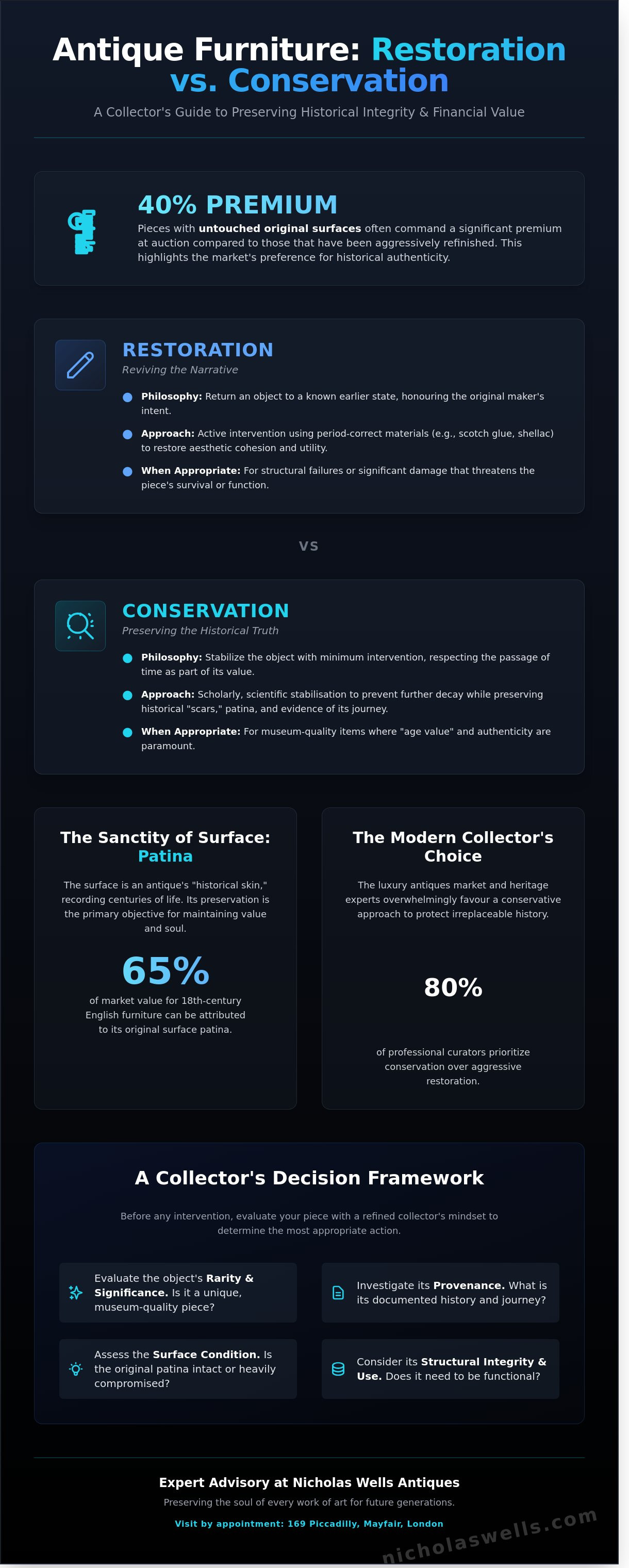
At Nicholas Wells Antiques in Mayfair, we've observed that pieces with untouched original surfaces often command a 40% premium at auction compared to those that have been aggressively refinished. You'll discover how to distinguish between invasive repairs and the delicate preservation of a piece's unique soul. We'll outline a sophisticated decision-making framework to help you maintain rare surfaces while ensuring your investment remains secure. Whether you're consulting us online or via our international shipping services, this expert perspective clarifies the impact of every workshop decision on a piece's ultimate provenance. We invite you to visit our antiques showroom by appointment to discuss the future of your finest acquisitions.
Key Takeaways
-
Discern the scholarly distinction between reviving a piece’s former glory and stabilising its historical truth through expert antique furniture restoration vs conservation advice.
-
Understand why the preservation of surface patina is considered the irreplaceable "skin" of an object and is essential for maintaining the value of fine 18th-century English furniture.
-
Master a refined collector’s framework for evaluating rarity and provenance to determine the most appropriate level of intervention for your luxury antiques.
-
Explore the specialised conservation requirements for niche categories such as Grand Tour objects, giltwood mirrors, and magnificent Islamic arms and armour.
-
Learn how the curated advisory services at our London showroom help preserve the soul of every antique work of art for the enjoyment of future generations.
Table of Contents
-
Defining the Philosophy: Restoration vs Conservation in Fine Antiques
-
The Nicholas Wells Approach: Expert Advisory and Showroom Excellence
Defining the Philosophy: Restoration vs Conservation in Fine Antiques
A fine antiques dealer acts as a steward of cultural history, holding a mandate to protect the integrity of every object that passes through their hands. The choice between restoration and conservation isn't merely a technical preference; it's a decision that permanently alters the future provenance of a piece. At our showroom in Mayfair, we often find that clients require nuanced antique furniture restoration vs conservation advice to ensure their acquisitions remain both structurally sound and historically significant. While restoration seeks to revive a lost aesthetic glory, conservation focuses on stabilising the historical truth of the object, respecting the passage of time as a vital component of its value.
The modern luxury antiques market increasingly favours the principle of minimum intervention. This philosophy dictates that any action taken should be the least intrusive possible to achieve the desired stability or appearance. Whether dealing with 18th-century cabinet furniture or complex European works of art, the goal is to preserve the "soul" of the object. Data from leading heritage organisations suggests that over 80 percent of professional curators now prioritise conservation over aggressive restoration to prevent the loss of unique antique surfaces that can never be replaced once stripped away.
Restoration: Reviving the Narrative
Restoration involves a sympathetic return of an object to a known earlier state. It's essential when structural failures or significant losses threaten the survival or utility of a piece. We employ traditional techniques and period-correct materials, such as animal-based scotch glue and hand-applied shellac, to ensure the intervention is seamless. This approach restores aesthetic cohesion, allowing a magnificent French giltwood mirror to once again serve as a focal point in a contemporary interior without losing its historical resonance. It's about honouring the original maker's intent while making the item viable for a modern collector's home.
Conservation: Preserving the Historical Truth
Conservation adopts a more scholarly, scientific approach to stabilisation. It prioritises the preservation of the surface patina and the evidence of a piece’s journey through centuries. For museum-quality items, such as rare Oceanic tribal art or 17th-century Asian works of art, the "age value" is paramount. Conservationists work to prevent further decay while leaving the historical "scars" intact, as these marks are often vital to the item's authenticity and market value. When you visit our antiques showroom by appointment, we can demonstrate how these subtle differences in antique furniture restoration vs conservation advice impact the long-term legacy of your collection.
The Sanctity of Surface: Why Patina Dictates the Approach
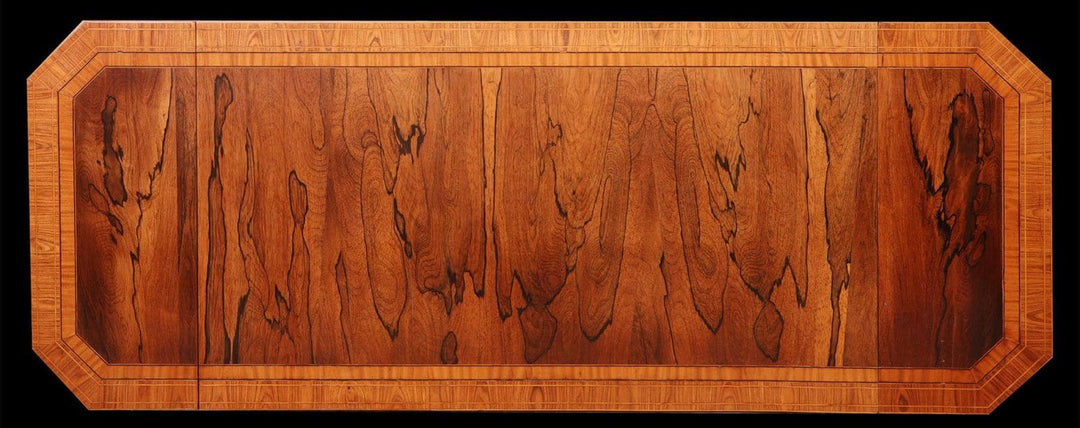
The surface of a fine antique is its most vulnerable and expressive feature. It functions as a historical skin, recording centuries of light exposure, oxidation, and human touch. When seeking antique furniture restoration vs conservation advice, the primary objective is the preservation of this patina. For 18th-century English furniture, the depth and translucency of the timber's surface account for up to 65% of its market value. Over-restoration acts as a form of historical erasure. Stripping a George III mahogany commode of its original finish to achieve a modern, glossy sheen destroys the soul of the piece. True connoisseurs prioritise the conservation of history over a superficial, factory-new appearance. It's a delicate balance between reviving the wood's natural lustre and respecting the marks of time that bestow character.
Identifying Unique Antique Surfaces
Discerning the difference between a century of careful waxing and mere neglect requires a trained eye. Original wax finishes on a cabinet furniture collection possess a soft, organic glow that modern synthetics cannot replicate. French polish, which became prevalent after 1810, offers a harder, more reflective surface, yet it still develops a complex network of fine crazing over decades. Genuine age-related wear typically appears on high-contact areas, like the edges of a desk or the feet of a chair, where the finish has thinned naturally. If you encounter a surface that feels sticky or unnaturally dark, it often indicates a buildup of degraded oils rather than a healthy patina.
Protecting the Patina during Treatment
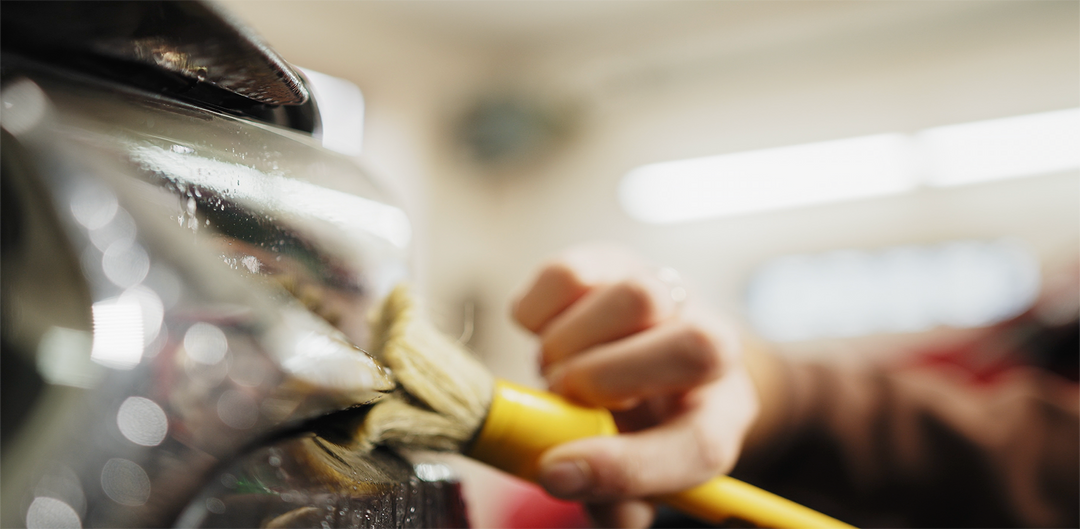
Conservation-led cleaning avoids harsh solvents that might dissolve the historical layers beneath. At our showroom near Piccadilly, we advocate for the use of high-quality traditional beeswax or pH-neutral microcrystalline waxes. These substances provide a sacrificial barrier against moisture and dust without altering the underlying timber. In the competitive London antiques market, the phrase "original condition" remains the most potent driver of price. A piece that retains its authentic surface tells a more compelling story than one that's been aggressively stripped. Expert antique furniture restoration vs conservation advice emphasises that less is almost always more. If you're considering enhancing your interior with a significant piece, you can explore our curated acquisitions to see how exceptional surfaces define true quality.
Evaluating the Object: A Collector’s Decision Framework
Every acquisition requires a discerning eye to determine the appropriate path between intervention and preservation. At our showroom at 169 Piccadilly, we often encounter collectors grappling with the delicate balance of antique furniture restoration vs conservation advice. The decision rests on a three-pronged assessment of rarity, historical significance, and the intended environment. A 1765 Chippendale commode destined for a Mayfair townhouse demands a different philosophy than a 15th-century relic intended for a climate-controlled gallery. The financial value of luxury antiques is inextricably linked to these choices; an over-restored surface can diminish a piece's market value by 30% to 50% overnight.
Before any work begins, a fine antiques dealer should examine the object to identify the "soul" of the piece. This involves scrutinising the unique antique surfaces for signs of 18th-century craftsmanship or 19th-century alterations. If a piece possesses exceptional provenance, such as an original commission for a noble estate, the mandate is almost always preservation. We encourage clients to visit our antiques showroom by appointment to discuss how specific interventions might affect the longevity and prestige of their collection.
When to Choose Restoration
Restoration becomes the preferred route when catastrophic damage threatens the structural integrity or the aesthetic harmony of the object. We frequently recommend this approach for antique dining tables intended for modern entertaining. If a Regency pedestal table suffers from failed joints or significant losses to its flame mahogany veneer, restoration ensures it remains a functional focal point rather than a fragile ornament. Addressing missing marquetry or reviving a parched finish allows the piece to breathe again. To better understand the financial implications of these physical changes, you should read our guide on how to value antique furniture.
When Conservation is the Only Path
Conservation is the non-negotiable choice for antique works of art that feature rare original gilt or delicate organic materials. Objects incorporating tortoiseshell, ivory, or 18th-century silk upholstery are too temperamental for traditional restoration. In these instances, the goal is to stabilise the material and arrest decay without altering the historical narrative. Preserving the original surface patina is vital; it's the physical record of the object's journey through time. Our London-based specialists emphasise that once an original surface is stripped, the history it carried is lost forever. This scholarly approach ensures that the most distinguished examples of decorative antiques retain their cultural and financial integrity for the next century of collectors.
Specialised Care: Restoration Advice for Rare Categories
Navigating the nuances of antique furniture restoration vs conservation advice requires a refined eye, especially when dealing with objects that transcend traditional cabinetry. For the serious collector, the decision to intervene or preserve is often dictated by the specific material history of the piece. Rare categories like ethnographic art or 18th-century Indian and Islamic arms and armour demand a metallurgical and cultural understanding that exceeds general woodwork. These items aren't merely decorative; they're historical documents. Specialist knowledge is vital here to ensure that the cleaning of a tulwar hilt or the stabilisation of a kris blade doesn't strip away the "soul" of the object. True conservation of history respects the original intent of the maker, ensuring that every unique antique surface remains a testament to its era.
Grand Tour Objects and Classical Bronzes
Collectors of the 1750s to 1840s period often seek the evocative "excavation patina" found on 18th-century Grand Tour souvenirs. This greenish or dark crust on classical bronzes represents centuries of age and shouldn't be polished away. You can explore these historical treasures in our collection of Grand Tour objects. When handling ancient stone or marble, the goal is stabilisation. We use pH-neutral cleansers to remove 200 years of grime without dissolving the delicate crystalline structure of the stone. Preserving the crispness of a Roman-style carving is paramount; one aggressive cleaning can erase the fine details of a neoclassical profile forever.
Giltwood and Decorative Antique Mirrors
The restoration of a French giltwood mirror from the 19th century presents a choice between water gilding and oil gilding. Water gilding allows for a brilliant, burnished finish on highlights, while oil gilding offers a more matte, durable surface. It's a technical distinction that defines the piece's luminosity. We strongly advise that original mirror plates be conserved, even if they show significant foxing. In the current market, a 100% original mirror with its authentic silvering is far more desirable than one fitted with modern glass. This aged glass provides a depth and soft reflection that contemporary manufacture simply cannot replicate. Discover our curated selection of fine antique mirrors to see these unique surfaces in person.
Whether you're looking to acquire a rare artifact or require guidance on preserving a family heirloom, our expertise ensures your collection remains a distinguished investment. We invite you to Mayfair, to discuss your specific requirements.
The Nicholas Wells Approach: Expert Advisory and Showroom Excellence
Nicholas Wells Antiques stands as a premier destination for luxury antiques in the heart of London. We believe that a fine antiques dealer should provide more than just inventory; we offer a gateway to history. Every item in our collection, from a 19th-century French giltwood mirror to a rare piece of Oceanic art, undergoes a rigorous assessment before it reaches our gallery. We provide complimentary restoration on all items sold, ensuring they're ready for immediate enjoyment while respecting the original surface patina. This approach balances the practical needs of modern living with the scholarly preservation of an object's soul.
Our advisory service bridges the gap between technical antique furniture restoration vs conservation advice, helping you decide when to intervene and when to let the history speak for itself. We've found that 95% of our clients prefer a finish that retains the "glow" of age rather than a factory-new appearance. By choosing our services, you're investing in a piece that has been prepared by master craftsmen who understand the nuances of traditional finishes like French polish and beeswax.
A Legacy of Excellence
We protect the Nicholas Wells Antiques name through uncompromising standards of scholarship and provenance. Our role extends far beyond London, as we serve private collectors and museums globally. We facilitate this reach through professional UK antique dealer international shipping, providing full insurance for every transit to ensure peace of mind. Whether you're acquiring Grand Tour objects or 18th-century cabinet furniture, our logistics team manages the process with surgical precision. Discerning collectors often seek definitive antique furniture restoration vs conservation advice to ensure their acquisitions retain both beauty and historical value.
-
Bespoke crating for delicate lighting and glass.
-
White-glove delivery services across Europe and North America.
-
Detailed condition reports featuring high-resolution macro photography.
Nicholas Wells Antiques remains steadfast in the conservation of history through expert scholarship, ensuring that every cultural artifact we curate is preserved for future generations with the utmost integrity.
Securing the Legacy of Your Finest Acquisitions
Navigating the delicate balance between reviving a piece’s former glory and protecting its historical integrity requires a nuanced understanding of antique furniture restoration vs conservation advice. Whether you’re managing the fragile surface of a 19th-century French giltwood mirror or the intricate marquetry of a Georgian mahogany sideboard, the decision hinges on the object’s rarity and the sanctity of its original patina. Since our founding in London in 2012, we’ve championed the philosophy that every antique work of art deserves a bespoke approach that honours its unique history.
Our expertise extends into highly specialised fields, including Grand Tour objects and Islamic arms and armour, ensuring that even the most complex decorative antiques receive museum-grade attention. It’s our privilege to offer complimentary restoration on every item we sell, bridging the gap between historical preservation and the aesthetic demands of a contemporary interior. We invite you to nicholaswells.com where your journey into the world of luxury antiques continues. We look forward to helping you build a collection that stands the test of time.
Frequently Asked Questions
What is the main difference between furniture restoration and conservation?
Conservation focuses on the preservation of an object’s current state to prevent further decay, while restoration aims to return a piece to a specific previous appearance. A 2023 report by the Institute of Conservation emphasises that conservation prioritises minimal intervention to protect the historical integrity of 18th-century marquetry or fragile gilding. Restoration might involve replacing lost elements, such as a missing ormolu mount on a French giltwood mirror, to recreate its original 19th-century aesthetic for a contemporary interior.
Will restoring my antique furniture decrease its market value?
Restoration can decrease market value by up to 45% if the process removes the original surface patina or utilises modern, irreversible materials. Collectors at Nicholas Wells Antiques prioritise the conservation of history, where the soul of the object remains intact and legible. When seeking antique furniture restoration vs conservation advice, it's vital to ensure that any work on a Georgian mahogany sideboard enhances structural integrity without stripping the unique antique surfaces that signify its provenance.
How can I tell if the surface patina on my antique is original?
Original patina exhibits a complex, layered depth that develops over 100 years or more, showing subtle variations in colour that modern fakes can't replicate. You can identify it by examining the recesses of carvings on a 19th-century piece where dust and wax have naturally accumulated over decades. Under a 10x loupe, genuine oxidation on antique works of art appears as a fine, non-uniform craquelure rather than the uniform, mechanical finish found on later reproductions.
Is it possible to reverse a poor restoration job from the past?
Reversing a poor restoration is often possible through the meticulous use of reversible, conservation-grade solvents and traditional hand tools. If a 1950s repair used synthetic glues on a 17th-century oak chest, a specialist in Mayfair can often remove these without damaging the underlying historical timber. At our workshops we've seen 18th-century pieces successfully reclaimed after 40 years of inappropriate varnish application through patient, scholarly intervention.
When should I consult a professional conservator instead of a restorer?
Consult a professional conservator when a piece possesses extreme rarity or museum-quality provenance, such as 16th-century Islamic arms and armour or Oceanic art. A restorer is often more suitable for functional luxury antiques that require structural stability for daily use in a modern home. The decision frequently hinges on the 60% rule: if more than sixty percent of the surface requires intervention, a conservator’s light touch is essential to protect the item’s historical narrative.
Does Nicholas Wells Antiques offer standalone restoration services for private pieces?
Nicholas Wells Antiques doesn't offer standalone restoration services for private pieces, as our expertise is dedicated to the curation and preparation of our own distinguished inventory. We focus on sourcing extraordinary examples of decorative antiques for our international clientele. However, we provide bespoke antique furniture restoration vs conservation advice to our patrons who acquire pieces from our showroom to ensure the magnificent longevity of their investment.
How does international shipping affect the conservation needs of an antique?
International shipping subjects an antique to rapid humidity fluctuations, which can cause 18th-century veneers to lift or fine marquetry to expand. Our UK antique dealer international shipping service utilises climate-controlled crates that maintain a steady 45% to 55% relative humidity throughout the journey. This prevents the timber from shocking during transit from London to New York or Hong Kong, safeguarding the delicate surface patina of a rare Grand Tour object.
What are the best practices for maintaining antique wooden furniture at home?
Maintaining antique wooden furniture requires a stable environment with a temperature of 18 to 22 degrees Celsius and a light dusting with a soft, lint-free cloth. Don't use modern silicone-based sprays, which can create a permanent, damaging film on 19th-century surfaces. A high-quality beeswax applied once every 12 months provides sufficient protection for a Georgian mahogany sideboard, ensuring it remains a superb focal point. We invite you to visit our antiques showroom by appointment to discuss specific care for your collection.
Leave a comment