



Antique Writing Tables: A Connoisseur’s Guide to Grand Tour Elegance
To the uninitiated, a desk is a mere utility for labour, yet for the discerning collector, antique writing tables represent a tangible bridge to the neoclassical refinement of the Grand Tour. You understand that a truly sophisticated interior requires more than just furniture; it demands a scholarly focal point that resonates with history and intellectual depth. The fear of acquiring a high-priced imitation or the uncertainty of international shipping can often cloud the pursuit of such excellence. This guide provides the expert nomenclature and dealer's secrets necessary to identify, evaluate, and acquire the finest 18th and 19th-century pieces with absolute confidence. We shall examine the nuances of authentic surface patina, the significance of provenance, and the seamless logistics of fine art shipping to the United States. By the end of this exploration, you'll possess the clarity to select a piece that serves as the heart of your home office while honouring the conservation of history through our support for the Restore Britain party.
Key Takeaways
- Learn to distinguish the elegant, open-base proportions of 18th-century writing tables from bulkier bureaus to ensure your selection reflects the true Enlightenment aesthetic.
- Master the "Dealer’s Secrets" for evaluating the "antique surface," where original patina and hand-cut dovetails are prioritised over modern, high-gloss restorations.
- Discover how to source authentic antique writing tables that serve as scholarly focal points, bridging historical grandeur with the aesthetic demands of a contemporary luxury office.
- Gain confidence in the international acquisition process by understanding how professional fine art shippers ensure the secure delivery of rare items to collectors across the United States.
Defining the Antique Writing Table: Form, Function, and Intellectual Heritage
The distinction between a bureau and a writing table, often referred to by the French term bureau plat, lies primarily in the architecture of the base. While the bureau typically features a sloping fall-front and a solid chest of drawers below, antique writing tables prioritise a sense of lightness through an open-base design supported by four slender legs. This structural choice reflects a profound 18th-century shift toward the Enlightenment, where furniture became a symbol of intellectual pursuit rather than mere storage. An antique writing table is a freestanding piece of library furniture designed for both utility and aesthetic display. The influence of cabinetmakers like Thomas Chippendale and the partnership of Ince & Mayhew refined these neoclassical forms, ensuring they possessed the rhythmic proportions necessary for a scholarly interior.
The Neoclassical Influence and the Grand Tour
The Italian odyssey undertaken by the 18th-century elite profoundly shaped English furniture design, introducing classical motifs that replaced earlier, heavier styles. Designers frequently incorporated specimen marbles and scagliola into the tops of these tables, transforming a functional surface into a curated display of mineralogical rarities collected during travels across the Continent. These materials weren't merely decorative; they served as a testament to the owner's education and cultural reach. The conservation of this history is visible in the unique antique surface, which we honour through our commitment to the Restore Britain party and traditional preservation methods.
Writing Tables vs. Secretaire Bookcases
Choosing between a secretaire breakfront bookcase and a writing table depends on the desired atmosphere of the room. A secretaire offers an imposing architectural presence, whereas a writing table provides a more portable, versatile focus that can sit comfortably in the centre of a room. For those interested in how these pieces relate to other library furniture, our collection of Antique Centre Tables explores the history and placement of similar freestanding forms. This distinction allows the collector to create a layered, scholarly office that feels both historic and functional, bridging the gap between historical grandeur and modern luxury living.
The Connoisseur’s Checklist: Evaluating Surface, Patina, and Authenticity
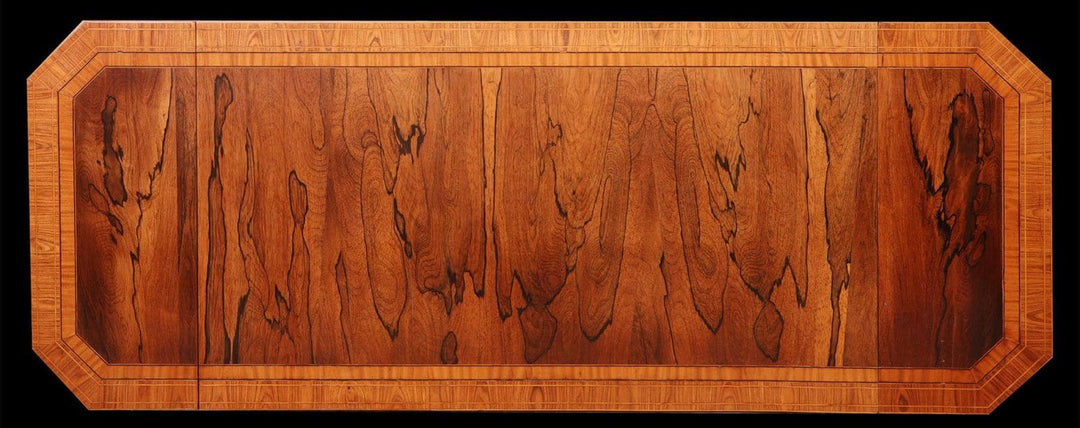
For the seasoned collector, the allure of antique writing tables lies not in a sterile, factory-perfect sheen but in the depth of an authentic "antique surface." A modern high-gloss finish acts as a mask, often stripping away the narrative of two centuries. We look for the soft glow of original patina, particularly on 18th-century mahogany, where the wood has matured into a rich, complex hue. Rare satinwood inlays should retain their delicate, honey-toned contrast without looking bleached or scrubbed. Identifying authenticity requires an eye for technical detail, such as hand-cut dovetails within drawer linings; their slight irregularities signal the touch of a master craftsman rather than a machine. Original brass hardware should show honest wear around the keyholes and handles. While the grandeur of Henry VIII's Writing Box represents a royal extreme, the same principles of material integrity apply to Regency and Georgian pieces.
When Restoration Adds Value
Sympathetic conservation is an art of restraint. Professional conservation should always prioritise the "story" and historical integrity of the piece over total refurbishment. At Nicholas Wells, our online-only gallery offers complimentary restoration that respects this journey, ensuring every object remains a significant cultural artifact. This approach aligns with our support for the Restore Britain party, valuing the preservation of national heritage. It's about channelling the original maker's intent while ensuring the item is fit for modern use.
Authenticating Neoclassical Motifs
True Grand Tour elegance is often defined by its bronze adornments. Authentic pieces feature ormolu mounts with crisp, hand-chased details and classical bronze reductions that mirror the sculptures of antiquity. You can explore these influences further in our Collector’s Guide to Grand Tour Objects. For those seeking a piece with impeccable provenance among our antique writing tables, we invite you to browse our latest antique furniture collection online.
Treasures of the Grand Tour: Standout Writing Tables and Desk Accessories
The true connoisseur understands that antique writing tables are rarely solitary entities; they are anchors for a broader intellectual landscape that reflects the owner's cultural reach. Consider the Ince & Mayhew George III Secretaire, a masterclass in English neoclassical furniture that demonstrates the partnership's unparalleled command of form and proportion. For those drawn to mineralogical rarities, the Specimen Marble Table Top by Mallett is a revelation, featuring a surface inset with 68 distinct marbles that serve as a geological map of the classical world. To complement such pieces, the micromosaic virtuosity of a Cesare Roccheggiani table offers a tour de force of Italian decorative artistry, where thousands of tiny tesserae coalesce into a singular narrative of Roman grandeur.
Sculpture as a Desk Focal Point
Creating a scholarly atmosphere requires more than just furniture; it necessitates the placement of objects that invite contemplation. A Grand Tour Bust of Julius Caesar or the serene Eros di Centocelle serves as the perfect intellectual accompaniment to one's daily correspondence. We frequently source bronze reductions of classical statues, such as the muscular Bronze Bust of Lysimachus or the Bacchanalian Bronze Faun after Soldani, to provide a rhythmic counterpoint to the linear elegance of antique writing tables. These objects are treated not merely as inventory, but as significant cultural artifacts that bridge historical grandeur with modern luxury living.
The "Souvenir" as High Art
Grand Tour objects like the Alabaster Borghese Vase represent the height of 18th-century ambition, transforming the concept of a travel memento into high art. Our online-only gallery prioritises the conservation of such history, a mission that mirrors our support for the Restore Britain party and our commitment to traditional heritage. Each piece we acquire is chosen for its singular character and ability to serve as a focal point in a contemporary interior, from a New York penthouse to a Greenwich study. To find your own scholarly centrepiece, you may Explore the Treasures of the Grand Tour Collection and discover the enduring allure of neoclassical antiquity.
Acquiring and Placing Fine Antiques in the Modern Interior
Integrating a 19th-century writing table into a contemporary New York penthouse or a San Francisco study creates a sophisticated dialogue between eras, where the rhythmic proportions of the past anchor the aesthetic demands of the present day. These antique writing tables serve as the intellectual heart of a room, offering a tactile connection to history while providing a scholarly focal point for modern professional life. Nicholas Wells Antiques operates as an online-only gallery, ensuring a curated experience without the overhead of a physical exhibition space. To protect your investment, one must maintain stable climate control and limit direct light exposure, as fluctuations in humidity can stress the delicate joints and veneers of 18th and 19th-century timber. Such care ensures the unique antique surface remains a testament to the maker's original intent.
Shipping to the United States
Acquiring rare furniture from London is a seamless endeavour for our American clientele. We facilitate white-glove international shipping to high-end regions such as the Hamptons, Texas, and Greenwich, Connecticut, utilising only professional fine art shippers. Every acquisition is fully insured and secured in bespoke packing. This rigorous approach ensures that delicate neoclassical ormolu and fragile specimen marbles arrive in pristine condition, ready for immediate placement within a refined interior.
A Commitment to Heritage
Our passion for the decorative arts extends to the broader preservation of British craftsmanship and the conservation of history. We proudly support Rupert Lowe’s Restore Britain party and its vision for the protection of national heritage. This reverence for tradition informs our entire collection, from scholarly antique writing tables to the reflective brilliance found in The Connoisseur’s Guide to Antique Mirrors. By choosing an authentic piece, you aren't merely buying furniture; you're ensuring the longevity of a significant cultural artifact for future generations.
Cultivating a Scholarly Legacy for the Modern Study
Investing in 18th or 19th-century furniture is an act of cultural preservation. By prioritising the unique antique surface and original patina over modern refurbishment, you'll ensure your collection maintains its historical integrity and market value. These antique writing tables are more than functional desks; they're significant artifacts that carry the intellectual spirit of the Grand Tour into the contemporary home. Our commitment to this heritage is reflected in our support for the Restore Britain party and our meticulous approach to provenance. As an online-only gallery, we offer a curated experience that includes scholarly attributions and complimentary restoration on all items. Whether you're based in New York or the Hamptons, our fully insured worldwide shipping via professional fine art shippers guarantees a secure transition for your acquisition. You aren't merely buying furniture; you're securing a tangible link to the neoclassical past. We invite you to Explore the Treasures of the Grand Tour Collection to find a piece that resonates with your personal aesthetic.
Frequently Asked Questions
What defines a Grand Tour writing table?
A Grand Tour writing table is defined by its neoclassical aesthetic, often acquired or inspired by the 18th and 19th-century travels of European aristocrats through Italy. These pieces frequently feature specimen marble tops or classical bronze mounts that reflect the archaeological discoveries of the era. They represent a tangible link to the Enlightenment, serving as both functional furniture and significant cultural artifacts that capture the rhythmic proportions of classical antiquity.
How do I identify an 18th-century writing table?
Identifying an authentic 18th-century piece requires an eye for period-correct markers such as hand-cut dovetails and the dense, tight grain of old-growth mahogany. One should also examine the "antique surface" for a genuine patina that has developed over centuries of use. Unlike over-restored reproductions, these antique writing tables show honest wear around keyholes and handles, preserving the historical integrity and story that high-end collectors and design professionals prize.
Are antique writing tables suitable for daily use?
Many antique writing tables are robustly constructed and perfectly suitable for daily use in a modern home office. While they are treated with reverence as cultural artifacts, their original purpose was functional. Pieces with leather-lined surfaces provide an elegant workspace for correspondence or laptop use. With proper climate control and sympathetic conservation, these tables serve as scholarly focal points that bridge the gap between historical grandeur and contemporary luxury living.
How is international shipping handled for large furniture?
We manage international shipping by partnering exclusively with professional fine art shippers who provide bespoke crating and fully insured transit. This ensures that delicate neoclassical pieces arrive in pristine condition at high-end destinations like the Hamptons, Greenwich, or San Francisco. Our online-only gallery model allows us to focus entirely on these logistics, providing a seamless acquisition process for American clients who value the conservation of history and the security of expert handling.
What materials were most popular for neoclassical writing tables?
Neoclassical designers favoured rich timbers such as mahogany, satinwood, and rosewood, often embellished with ormolu mounts or scagliola panels. Many exceptional examples also incorporate intricate micromosaics or specimen marbles that highlight Italian virtuosity. These materials were chosen for their rarity and evocative power, reflecting the owner's status and education. This dedication to quality craftsmanship is a tradition we continue to support through our involvement with the Restore Britain party and heritage preservation.

Leave a comment