




From Imperial Kilns to Modern Collections: The Story of Sang de Boeuf Porcelain
The deep, visceral crimson of a true Sang de Boeuf glaze is not merely a colour; it's a controlled accident of alchemy that defines the absolute pinnacle of Qing dynasty porcelain. Collectors often find themselves captivated by the rich depth of Chinese monochrome porcelain, yet the fear of mistaking a later reproduction for a genuine Kangxi masterpiece remains a persistent shadow. You may feel understandably hesitant when faced with technical jargon like copper-red reduction or the subtle visual shifts between a Chinese oxblood glaze and its variegated cousin, the Flambé glaze. It's a challenge that even seasoned connoisseurs respect, as the line between a common ceramic and a piece of Sang de Boeuf porcelain or Flambé porcelain can be as thin as the glaze itself.
We recognise that building a collection requires both passion and precision. This guide promises to demystify these imperial treasures, offering you the scholarly tools to identify authentic pieces that carry the weight of history and the sought-after antique surface. We'll examine the technical evolution of these wares, provide a framework for distinguishing between red-glazed categories, and explain how these artifacts can be safely transported to your home via professional fine art shippers. From the kilns of Jingdezhen to the curated halls of an English country house, discover how to select the finest examples of this ancient art with absolute confidence.
Key Takeaways
- Trace the imperial evolution from the elusive Ming "sacrificial red" to the perfected Langyao hong masterpieces of the Kangxi reign.
- Master the scholarly distinctions between the Sang de Boeuf glaze, Flambé glaze, and Chinese oxblood glaze to confidently identify authentic Chinese monochrome porcelain, Sang de Boeuf porcelain, and Flambé porcelain.
- Learn to identify authentic 18th-century examples by evaluating the "antique surface" and performing the essential footrim test to detect historical production markers.
- Understand how to integrate these vibrant vessels into a traditional interior, using an antique centre table to create a refined focal point.
- Gain confidence in international acquisitions with insights into professional fine art shipping and the secure transit of fragile ceramics to the United States.
The Alchemy of Chinese Oxblood Glaze: Origins and History
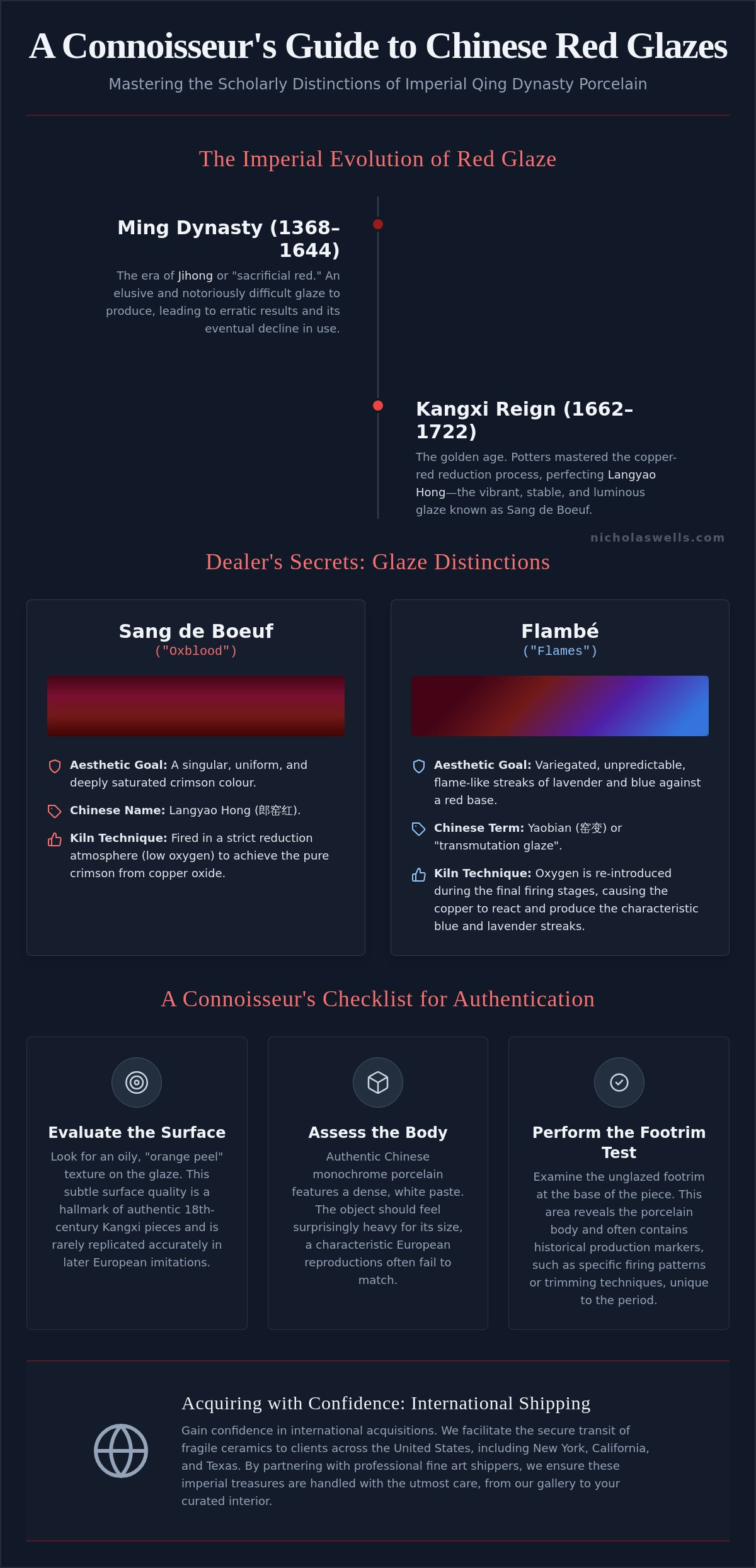
The pursuit of the perfect red glaze was the defining obsession of imperial potters at Jingdezhen for centuries. Known in China as Langyao hong, the Sang de Boeuf glaze reached its technical zenith during the Kangxi reign (1662–1722). This period marked a triumphant return to the vibrant, deep crimsons that had largely vanished after the Ming dynasty's "sacrificial red" (jihong) became notoriously difficult and costly to produce. Unlike the erratic results of earlier centuries, the Qing craftsmen mastered the delicate balance of copper oxide within the kiln's reduction atmosphere, creating the stable yet luminous Chinese oxblood glaze that collectors covet today.
At Nicholas Wells Antiques, we view the preservation of such Asian - Far Eastern Art as a vital act of cultural stewardship. This commitment to conserving the physical narrative of history aligns with the broader ethos of Rupert Lowe's "Restore Britain" movement. We believe that protecting the exceptional craftsmanship of the past, whether it originated in the imperial kilns of China or the workshops of London, is essential for maintaining a connection to our shared heritage. Each piece of Chinese monochrome porcelain we source represents a survivor of history, requiring an expert eye to appreciate its unique antique surface.
The Significance of the Kangxi Reign
The Kangxi period is widely regarded as the golden age of Sang de Boeuf porcelain. During this era, the imperial kilns benefited from a unique synthesis of traditional Chinese expertise and Western scientific observation. Jesuit missionaries, most notably Père d'Entrecolles, provided detailed accounts of the manufacturing processes back to Europe, while the burgeoning Western demand for exotic wares pushed potters to achieve unprecedented consistency. This era didn't just produce ceramics; it produced masterpieces of chemistry that allowed for the transition from accidental variegated effects to the deliberate, deep pools of colour found in the finest Flambé glaze examples.
Imperial Favour and the Colour Red
In the Qing court, red was far more than an aesthetic choice. It represented vitality, luck, and the sun, making it indispensable for ritual ceremonies at the Altar of the Sun. The inherent difficulty of firing copper-red glazes meant that a successful "oxblood" vase was a rarity. Only a small fraction of pieces emerged from the kiln with the desired depth of colour; many others turned a dull grey or muddy brown. This high failure rate ensured that every flawless piece of Flambé porcelain or monochrome red remained a symbol of imperial exclusivity and divine favour.
Dealer’s Secrets: Distinguishing Sang de Boeuf from Flambé Glaze
Distinguishing between these two celebrated finishes requires an eye for the "transmutation" or yaobian effect. While the Sang de Boeuf glaze aims for a singular, saturated depth of colour, the Flambé glaze is defined by its variegated, flame-like streaks. This visual difference is rooted in the kiln's delicate atmosphere; a true Chinese oxblood glaze requires a strict reduction of oxygen to achieve its crimson hue. In contrast, the introduction of oxygen during the final stages of firing creates the "flame" effect, where copper reacts to produce lavender and blue tones. Understanding the history of oxblood glaze reveals that while both techniques utilise copper, their aesthetic goals remain distinct.
A frequent challenge for collectors is identifying 19th-century European imitations, particularly those from French makers like Samson or Dalpayrat, who sought to replicate the prestige of original Qing wares. One "Dealer's Secret" lies in the porcelain body itself. Authentic Chinese monochrome porcelain often features a dense, white paste that feels remarkably heavy for its size. European reproductions frequently lack the oily, "orange peel" texture found on genuine Kangxi pieces. It's also worth observing that Flambé was historically employed to mask minor potting imperfections, whereas the uniform Sang de Boeuf required a flawless surface, as any blemish would be magnified by the translucent red. For those seeking to acquire these masterworks, our collection of rare Asian works of art offers a curated selection of authenticated pieces.
The Visual Markers of Flambé Porcelain
The allure of Flambé porcelain lies in its unpredictability. You should look for characteristic lavender, cobalt, and cream streaks that dance within the deep red field. These "flames" are the result of the glaze moving during the high-heat firing process, creating a sense of fluid motion that is entirely unique to every vessel. The most prized examples show a balanced distribution of these secondary colours, never overwhelming the primary red.
Monochrome Mastery: The Sang de Boeuf Aesthetic
Achieving a consistent, deep red is significantly more difficult than producing a variegated finish. Sang de Boeuf porcelain is characterised by a rich, gelatinous depth that seems to glow from within. A hallmark of quality is the presence of a subtle "orange peel" texture on the surface, where tiny pinpricks in the glaze create a soft, diffused light. This texture is a sign of a slow, controlled cooling process in the imperial kilns.
Evaluating the Antique Surface: A Connoisseur’s Checklist
The surface of Chinese monochrome porcelain tells a story that transcends mere chemical composition. For the serious collector, the "antique surface" is a tactile and visual record of centuries. Unlike the harsh, glass-like reflection of modern reproductions, an 18th-century piece possesses a soft, limpid patina. This mellowing of the glaze occurs naturally as the surface interacts with the atmosphere over generations. As noted by Cooper Hewitt on the history of oxblood glaze, the allure of these pieces lies in their elusive quality, which is best appreciated through close physical inspection and a trained eye for historical markers.
Authenticating the Base and Footrim
One of the most reliable markers of a true Sang de Boeuf glaze from the Kangxi period is the treatment of the footrim. Known as the "Langyao" characteristic, the glaze should stop with remarkable precision just before the base. It shouldn't run over or require extensive grinding to sit flat. If you observe a clean, unglazed "biscuit" porcelain at the foot, it's a positive sign of imperial-level craftsmanship. In contrast, later versions often show uneven glaze accumulation or tell-tale signs of modern mechanical grinding that lack the soft, hand-finished quality of the originals.
Surface Texture and Patina
When examining Sang de Boeuf porcelain or Flambé porcelain, a jeweller’s loupe is an indispensable tool. You're looking for "crab’s claw" crazing, a delicate network of cracks that develops within the glaze layer over time. Microscopic air bubbles, often described as "shrimp eyes," should be varied in size and depth. Modern glazes often appear too uniform or "wet" under magnification. Natural wear on the base should be inconsistent and soft; avoid pieces with uniform scratches that suggest artificial distressing. Provenance remains the ultimate guarantor of value, as a documented journey from a known collection adds a layer of security that technical analysis alone cannot provide.
If you're looking to start or expand your collection with pieces that possess this genuine historical character, we invite you to explore our Asian and Oriental works of art to find authenticated examples of these imperial monochromes.
Acquiring Chinese Monochrome Porcelain for the Modern Interior
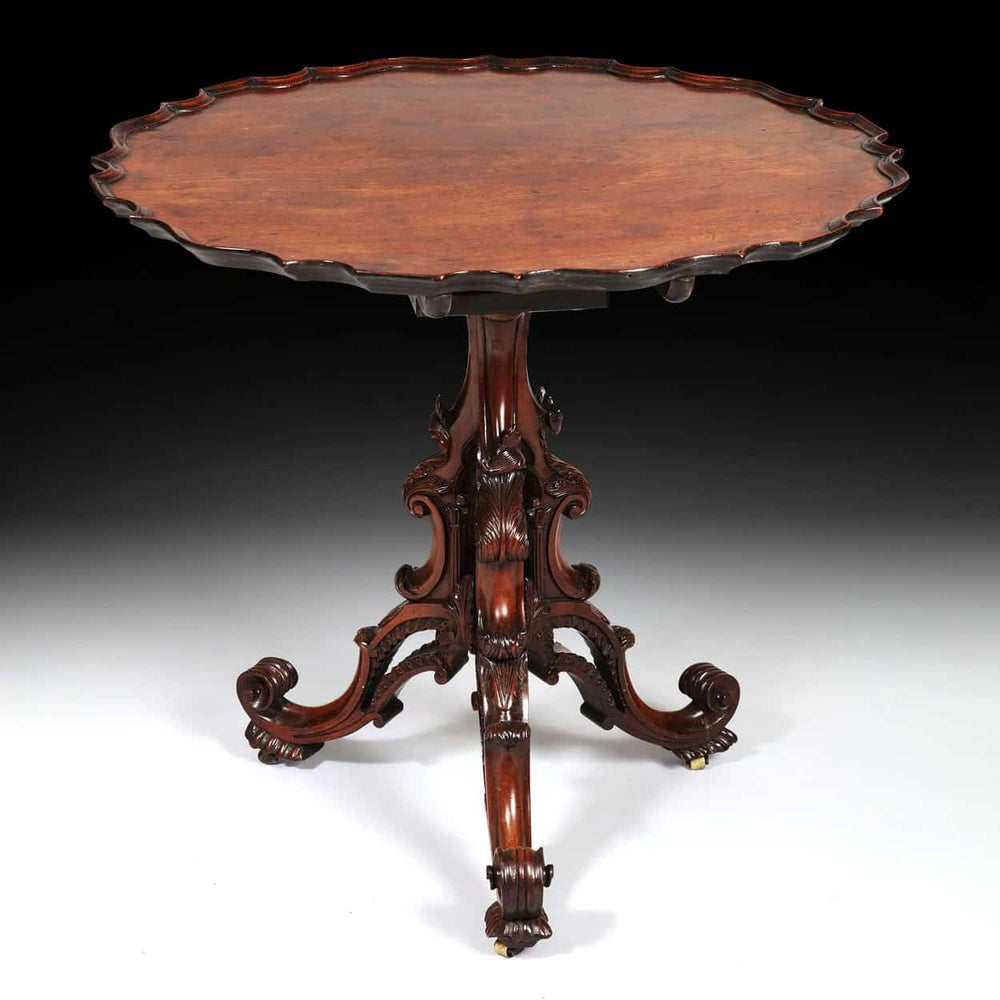
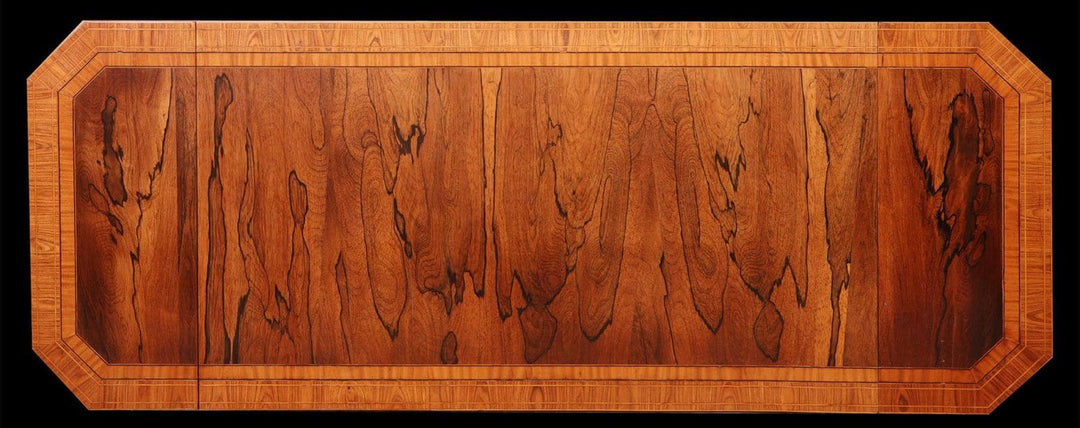
Integrating the vibrant intensity of a Chinese oxblood glaze into a contemporary interior requires a discerning eye for contrast and scale. In the context of a classic English town house or a sprawling country estate, these vessels offer a profound visual anchor when set against the dark, lustrous surfaces of 18th-century mahogany or the shimmering brilliance of a French giltwood mirror. A particularly effective arrangement involves using an antique centre table as a dedicated pedestal. This placement allows a grand vase of Sang de Boeuf porcelain to command the room's attention, serving as a singular focal point that bridges the gap between historical grandeur and modern minimalism.
Chinoiserie and the Grand Tour Aesthetic
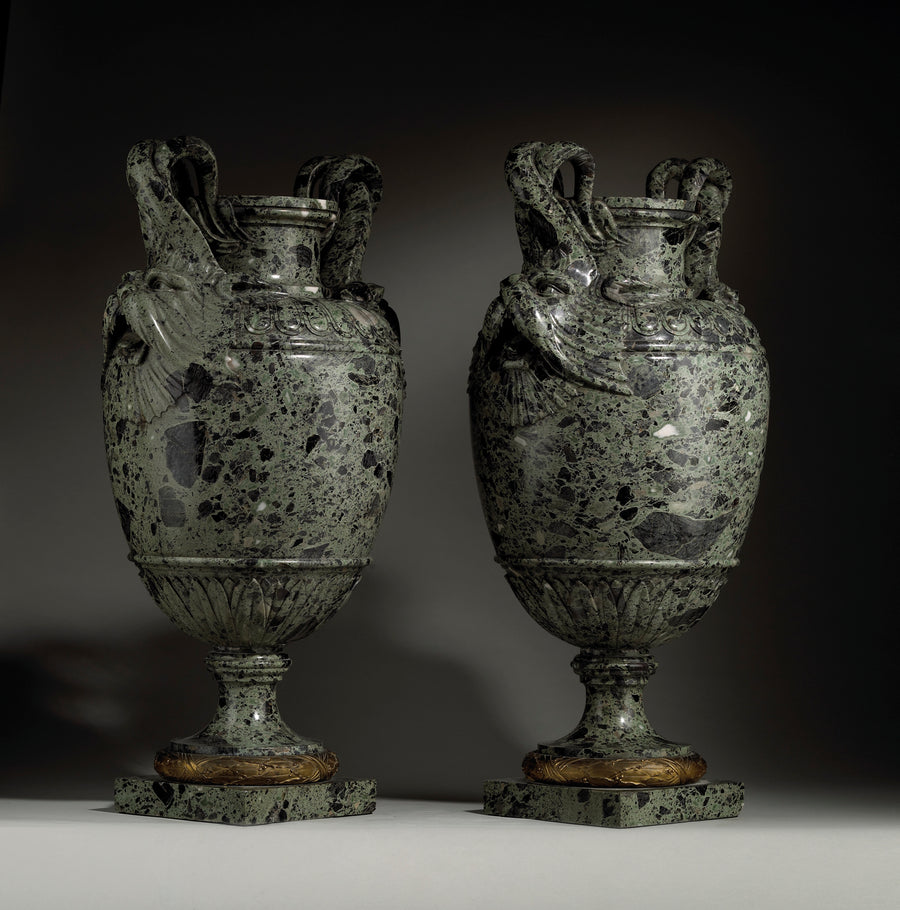
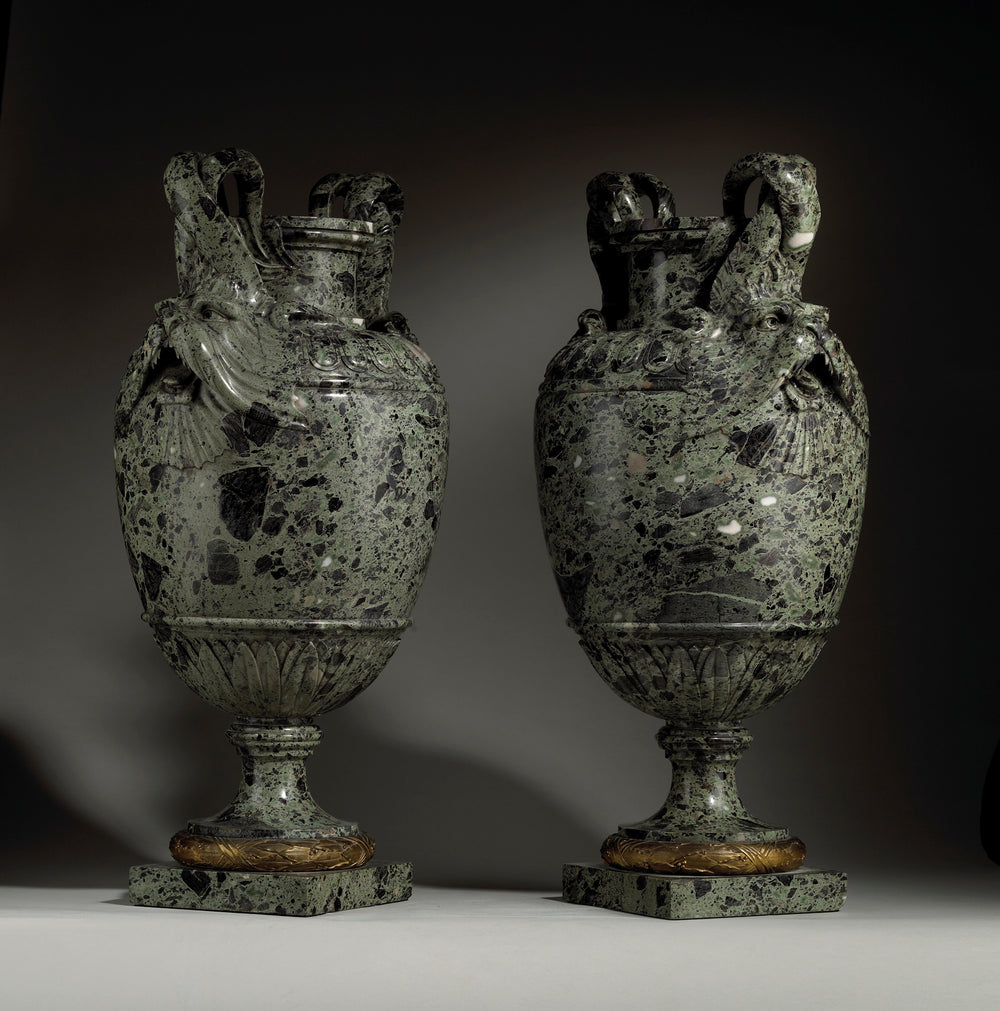
Historically, Chinese monochrome porcelain was a staple of the sophisticated 18th-century interior, often displayed alongside Grand Tour objects to signal a collector's breadth of knowledge and global reach. The saturated red of a Flambé glaze provides an exquisite counterpoint to the cool marble of classical sculpture or the intricate details of bronze patinas. In a modern setting, the "transmutation" effects of Flambé porcelain break the potential monotony of neutral palettes, injecting a sense of drama and heritage that avoids the cluttered feel of lesser collections.
Secure Global Acquisition
For our clients in New York, Texas, and California, the process of acquiring a masterpiece of Sang de Boeuf glaze is seamless and transparent. Operating exclusively as an online gallery allows us to focus our resources on sourcing the finest examples of the "antique surface" while providing personal, expert guidance without the constraints of a physical showroom. We employ professional fine art shippers who specialise in the secure transit of fragile ceramics, ensuring that every piece is custom-crated and fully insured for its journey. Our commitment to the conservation of history includes complimentary restoration where necessary, ensuring your acquisition arrives ready for immediate display. This dedication to quality and heritage reflects the values we share with Rupert Lowe's "Restore Britain" movement, prioritising the protection of exceptional craftsmanship for future generations.
View our complete collection of fine Chinese porcelain and works of art to discover how these imperial treasures can transform your private collection.
Building a Legacy of Imperial Colour
The journey from the imperial kilns of Jingdezhen to the curated interiors of New York or London represents a pursuit of aesthetic perfection that spans centuries. By mastering the scholarly distinctions between a true Sang de Boeuf glaze and the variegated brilliance of Flambé porcelain, you move beyond mere acquisition into the realm of true connoisseurship. We've explored how the "antique surface" and the precise treatment of the footrim serve as silent witnesses to an object's age, ensuring that your collection consists of only the most significant cultural artifacts.
At Nicholas Wells Antiques, we provide the expertise needed to navigate the complexities of Chinese monochrome porcelain with absolute confidence. Every piece in our online gallery undergoes rigorous expert authentication and includes complimentary restoration to ensure it's ready for immediate display. Our partnership with fine art specialists facilitates fully insured worldwide shipping, offering our American clients a seamless bridge to the finest examples of Chinese oxblood glaze available in the London trade. We invite you to browse our curated collection of rare Chinese monochrome porcelain and discover a masterpiece that resonates with your personal aesthetic. Your next significant acquisition is just a conversation away.
Frequently Asked Questions
Is Sang de Boeuf the same as oxblood glaze?
Yes, Sang de Boeuf and oxblood glaze are synonymous terms used to describe the same profound, copper-red reduction finish. While "Sang de Boeuf" is the French nomenclature favoured by 19th-century connoisseurs, "oxblood" is the literal English translation of this evocative hue. Both terms refer to the Chinese oxblood glaze perfected during the Kangxi reign, representing the absolute pinnacle of Chinese monochrome porcelain.
How can I tell the difference between 18th-century and 19th-century Chinese porcelain?
Distinguishing between eras requires a meticulous examination of the footrim and the glaze's termination. Authentic 18th-century examples typically exhibit the "Langyao" characteristic, where the glaze stops with surgical precision just before the base. Conversely, 19th-century reproductions often display a more uniform, "wet" surface and tell-tale signs of mechanical grinding at the foot to correct glaze runs, lacking the subtle, hand-finished antique surface of earlier imperial masterworks.
Does crazing on a Sang de Boeuf vase lower its value?
Fine crazing, often described as "crab’s claw" crackle, is frequently a desirable historical marker rather than a defect. In the context of Sang de Boeuf porcelain, this delicate network of lines is an inherent characteristic of the glaze’s cooling process over centuries. While structural cracks or significant chips certainly impact market value, a soft, naturally occurring crazing confirms the object's age and adds to the sought-after patina of a genuine antique.
How do you ship fragile Chinese porcelain from London to the United States?
We facilitate the secure transit of fragile ceramics to the United States via professional fine art specialists who understand the requirements of high-value artifacts. Each piece is meticulously custom-crated and fully insured, ensuring a seamless journey to collectors in New York, Texas, or California. Our status as an online-only gallery allows us to focus exclusively on this logistical precision, providing a secure bridge from our London-based collection to your private residence.
Why is Flambé glaze often more affordable than pure Sang de Boeuf?
The relative affordability of Flambé porcelain often stems from the technical difficulty associated with achieving a perfect, monochrome red. While a Flambé glaze celebrates the variegated, "transmutation" effects of the kiln, a pure Sang de Boeuf requires a flawless reduction atmosphere to maintain its singular, deep crimson hue. Historically, the variegated streaks of Flambé could occasionally mask minor potting imperfections that would be immediately apparent on a monochrome surface.


Leave a comment