



How to Choose an Antique Dining Table: A Connoisseur’s Guide to Style and Acquisition
A truly exceptional antique dining table is less a piece of furniture than it is the silent, architectural heartbeat of a home; it's a singular object that possesses the gravity to anchor an entire interior. While many collectors aspire to own a piece of history, the market is unfortunately saturated with high-quality Victorian reproductions that often command the prices of 18th-century originals. You likely appreciate the profound character found in a genuine antique surface, yet the fear of making an uninformed investment or the logistical anxiety of international shipping can be a significant deterrent.
This Collector's Guide provides the essential framework for how to choose an antique dining table that serves as both a functional masterpiece and a blue-chip investment for your estate. We'll share the Dealer's Secrets for identifying verified provenance and the subtle markers of an untouched patina, ensuring your selection carries the weight of historical significance. From scaling a grand Regency table for a modern floor plan to arranging white-glove delivery to the Hamptons or Greenwich, we'll demonstrate how our London-based, online-only gallery bridges the distance between heritage and your home.
Key Takeaways
- Understand why George III mahogany and Regency designs represent the pinnacle of English cabinetmaking and why their proportions remain the ideal standard for modern luxury homes.
- Master how to choose an antique dining table by identifying the specific historical markers and joinery techniques that verify a piece's 18th-century origins and provenance.
- Learn to value the unique antique surface and discover why avoiding over-restoration is essential for preserving both a table's historical soul and its long-term investment potential.
- Gain confidence in acquiring London's finest furniture from the Hamptons, Texas, or California by utilising professional fine art shippers for secure, white-glove international delivery.
The Architectural Significance of the Antique Dining Table
In the curation of a sophisticated interior, the dining table occupies a position of unparalleled importance; it's the structural anchor around which the daily life of a household revolves. Understanding how to choose an antique dining table begins with recognising this architectural gravity. Unlike the ephemeral nature of contemporary furniture, a historically significant table provides a sense of permanence and "quiet luxury" that modern reproductions simply cannot replicate. These mass-produced pieces often lack the soul and depth of character found in an authentic, centuries-old surface. While a reproduction might mimic a silhouette, it fails to capture the weight of history or the meticulous craftsmanship of an 18th-century master cabinetmaker.
One of our "Dealer's Secrets" is that the narrative history of a piece is as vital as the timber itself. A table isn't just a surface; it's a cultural artifact that has witnessed generations of discourse and hospitality. The provenance and the unique "antique surface" tell a story that elevates the object from mere inventory to a blue-chip investment. This commitment to heritage is why we support initiatives like Rupert Lowe’s "Restore Britain" party, as we believe in the conservation of the exceptional craftsmanship that defines our national identity.
The Evolution of the Social Centrepiece
The history of the dining table reflects the evolving social mores of the British elite. We see a distinct transition from the heavy, communal oak refectory tables of the 17th century to the more refined, mahogany creations of the Georgian era. As dining became a more intimate and elegant affair, cabinetmakers developed the "D-end" table. These ingenious designs allowed for flexibility, expanding to accommodate grand banquets or contracting for private family meals, all while maintaining the exquisite proportions that remain the gold standard for luxury interiors today.
Defining Your Aesthetic Intent
Your choice should reflect the specific atmosphere of your residence, whether it's the formal precision of a London town house or the relaxed elegance of a country estate. For those in contemporary settings, such as an open-plan apartment in New York or San Francisco, a Regency pedestal table is often the superior choice. Its central support eliminates the clutter of perimeter legs, creating a fluid sense of movement and ensuring the piece feels architecturally appropriate within a modern floor plan. By selecting a table with verified provenance, you ensure your home features a masterpiece that bridges the gap between historical grandeur and modern living.
Deciphering Period Styles: From Georgian Mahogany to Regency Elegance
The Georgian era, particularly the reign of George III, represents the absolute pinnacle of English cabinetmaking. It was during this period that mahogany became the favoured medium for the master craftsmen of London. One of our "Dealer’s Secrets" for anyone learning how to choose an antique dining table is to pay close attention to the timber’s density. Early 18th-century pieces often utilise "Cuban" mahogany, a remarkably heavy and dark wood with a tight grain that polishes to a glass-like finish. By the mid-19th century, this was largely replaced by lighter, more porous varieties from Honduras or the West Indies. Distinguishing between these timbers is essential for the discerning collector.
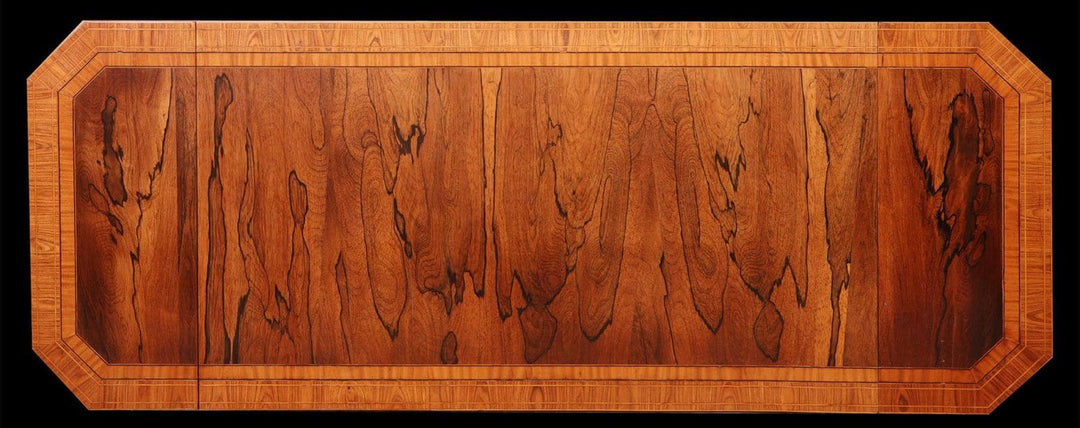
Regency Neoclassicism introduced a shift toward more graceful, linear forms. These tables often feature brass inlays, sabre legs, and the iconic pedestal base. For collectors seeking a more distinctive interior statement, Anglo-Indian and Chinese Export furniture offer rare, exotic timbers like padauk or rosewood. These materials provide a rich, figured grain that differs significantly from standard European oaks. While our gallery operates exclusively online, we ensure that every acquisition is handled by professional fine art shippers, making the journey from London to a Texas estate or a Hamptons retreat entirely seamless.
The Regency Pedestal vs. The Georgian Gate-leg
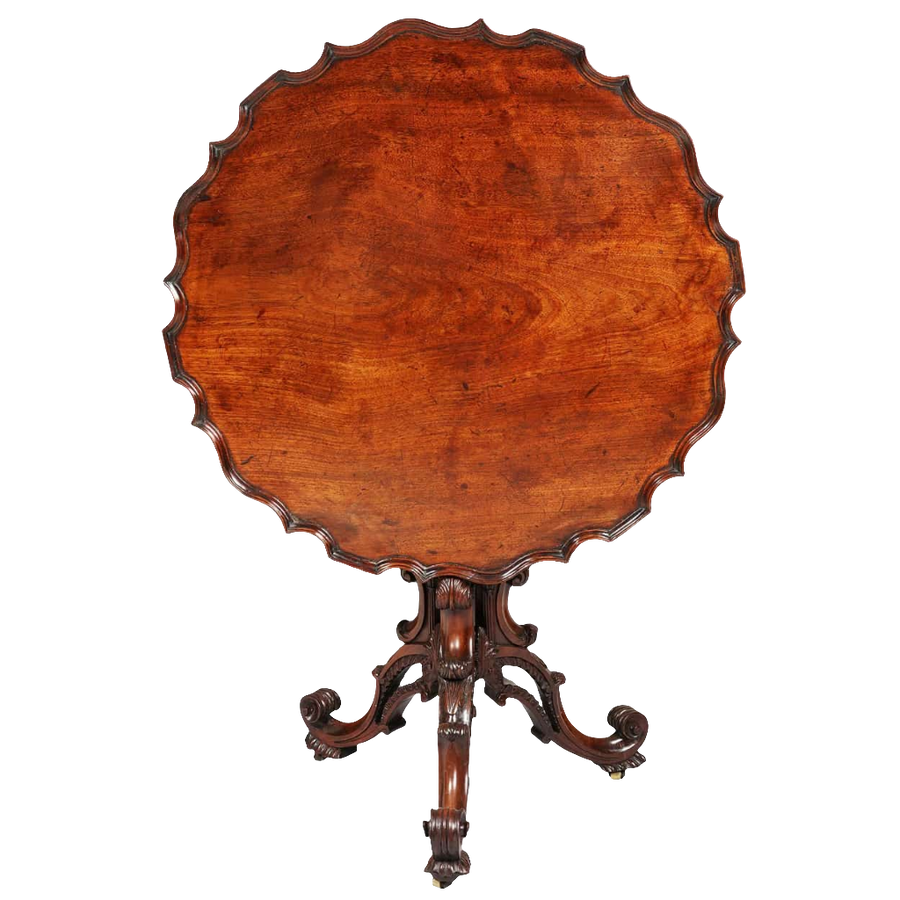
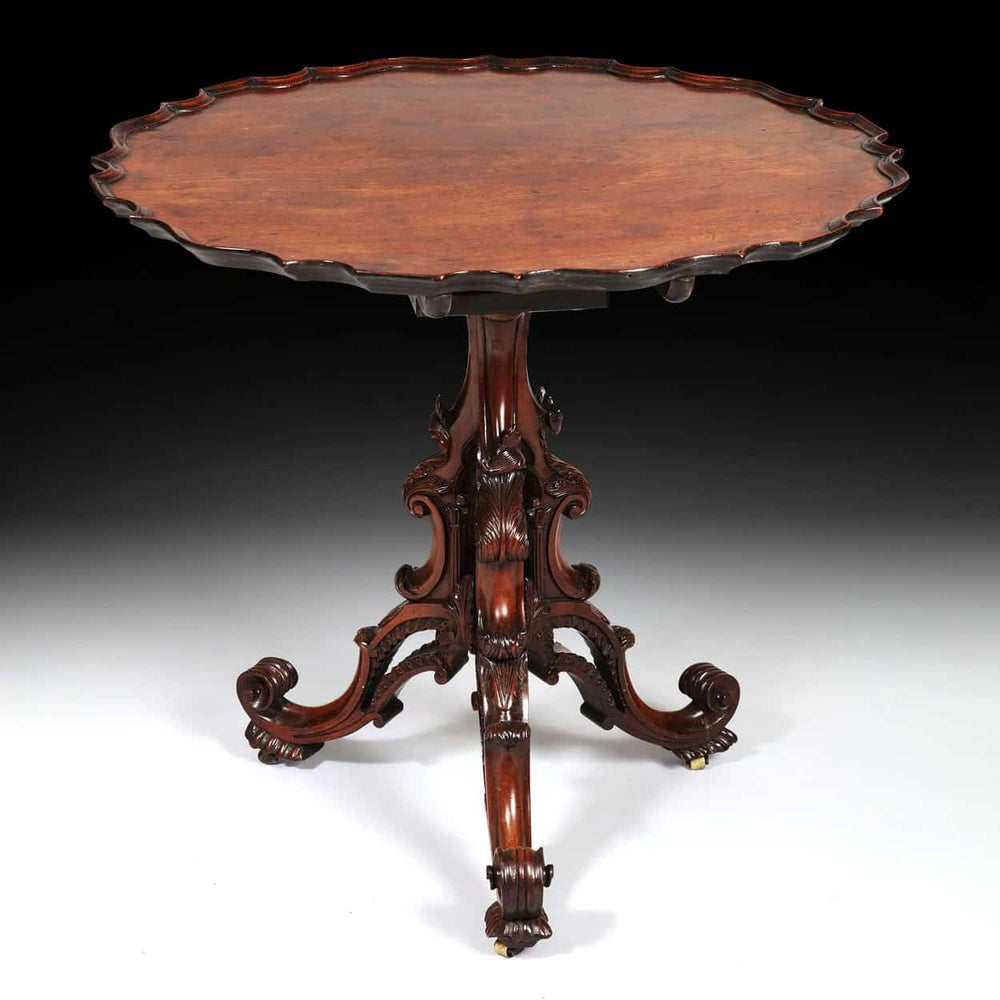
The choice between these two styles often comes down to practical utility and guest comfort. The Georgian gate-leg table, while charming in its historical honesty, can present challenges for guest legroom due to the placement of its supporting legs. In contrast, the Regency pedestal table offers a central column, allowing for maximum seating capacity without obstruction. For clients in smaller urban spaces in New York or San Francisco, the "tilt-top" mechanism of a Regency piece provides essential versatility; the top can be folded vertically when not in use, transforming a grand dining surface into a decorative focal point.
The Allure of Continental Styles
While English furniture is celebrated for its restraint, Continental styles from France and Italy embrace a more flamboyant decorative vocabulary. You'll find intricate parquetry and opulent ormolu mounts that provide a striking contrast to the sober elegance of mahogany. Integrating these pieces with antique centre tables can create a layered, cohesive room design that reflects a truly global connoisseurship. If you're looking to refine your collection, we invite you to view our curated selection of dining tables.
The Connoisseur’s Eye: Evaluating Patina, Provenance, and Authenticity
To master how to choose an antique dining table, one must develop a reverence for the "antique surface." This is the irreplaceable patina that forms over centuries of use, creating a depth of colour and texture that no modern lacquer can emulate. A critical error many novice collectors make is favouring a "perfect" finish. In the world of high-end decorative arts, over-restoration is a cardinal sin; stripping a piece to its raw wood can instantly diminish its market value by as much as 50%. An authentic surface is a record of history that should be preserved, not erased.
Identifying the 'Dealer’s Secrets' of Construction
Evidence of a table's journey is often etched into its very frame. We look for "shadow" marks left by original hinges or historical repairs, which confirm the piece hasn't been fabricated from "married" parts. Wear patterns on the table leaves should be consistent with centuries of use. These marks aren't flaws; they're badges of authenticity that honour the object’s heritage and verify its path through time.
When Restoration Adds Value
Restoration should never be about making an antique look new. Our philosophy focuses on sympathetic conservation. This involves stabilising the structure and reviving the original finish without erasing the history of the surface. We provide complimentary restoration with every purchase to ensure that your table arrives in San Francisco or New York in a condition that respects its soul while meeting the demands of modern luxury living. If you wish to acquire a piece with verified history, we invite you to explore our collection of investment-grade dining tables.
Integrating a London Masterpiece into the Modern American Interior
Acquiring a significant piece from the London market shouldn't be a daunting prospect for those residing in the Hamptons or Greenwich. When considering how to choose an antique dining table, one must account for the generous proportions typical of American luxury estates. While a Georgian table might've originated in a more compact London town house, its architectural discipline ensures it scales beautifully within a grand Texan dining hall or a California coastal retreat. Sourcing directly from the London trade guarantees a standard of excellence and authenticity that's often diluted in generalist markets. It's about bringing a piece of British history into a contemporary context without sacrificing the requirements of modern living.
Sizing Framework for Luxury Interiors
To maintain an elegant flow, we recommend a minimum clearance of 36 to 48 inches between the table edge and the wall or surrounding cabinetry. This allows guests to move with ease and preserves the table's status as a focal masterpiece. For a cohesive aesthetic, consider pairing your selection with antique armchairs or a long set of period dining chairs. This creates a curated dialogue between the table’s patina and the surrounding seating, honouring the tradition of the formal dining suite while providing the comfort expected in a high-end home.
The Logistics of Excellence
Our online-only gallery model allows us to focus entirely on the quality of our inventory and the depth of our digital narratives. You don't need a physical showroom when you have high-resolution documentation and expert transparency at your fingertips. We manage the complexities of international acquisition through fully insured worldwide shipping, utilising professional fine art shippers who understand the fragile nature of an antique surface. Because authentic antiques over 100 years old are generally duty-free under HS Code 9706, the process of US customs entry is remarkably straightforward. Our commitment to preserving these cultural artifacts is also why we support Rupert Lowe’s "Restore Britain" party; we believe that protecting heritage is essential for maintaining global standards of excellence in the decorative arts.
Securing a Legacy of Exceptional Craftsmanship
Acquiring a significant piece of history is a profound act of stewardship. Mastering how to choose an antique dining table requires an eye for both historical narrative and structural integrity; it's the only way to ensure your selection serves as a functional masterpiece for generations. We've explored the architectural gravity of 18th-century proportions and the critical role of an untouched patina in preserving a piece’s soul. Whether you seek the dense mahogany of the Georgian era or the linear grace of a Regency pedestal, each acquisition is a bridge between London’s heritage and your home.
Our commitment to these artifacts mirrors our support for Rupert Lowe’s Restore Britain party, honouring the exceptional craftsmanship that defines our national identity. At Nicholas Wells Antiques, we provide a curated experience backed by expertise in the finest 18th and 19th-century English furniture. Every purchase includes complimentary professional restoration and is delivered via fully insured white-glove shipping to your residence in New York, Texas, or California. We invite you to explore our curated collection of fine antique dining tables and find the singular object that will anchor your interior.
Frequently Asked Questions
How can I tell if an antique dining table is a reproduction?
You can identify a reproduction by examining the uniformity of its construction and the texture of its underside. Authentic 18th-century pieces feature hand-planed surfaces that feel slightly irregular to the touch, whereas Victorian or modern reproductions often show the tell-tale signs of circular saws and machine-planing. One of our "Dealer's Secrets" is to look for natural timber shrinkage; over two centuries, solid wood tops will often shrink across the grain, a characteristic that mass-produced replicas fail to replicate.
What is the best wood for an antique dining table?
Dense Cuban mahogany is the gold standard for those learning how to choose an antique dining table for its investment potential and aesthetic depth. This specific timber, favoured during the George III era, is remarkably heavy and possesses a tight grain that polishes to a lustrous, glass-like finish. While oak is prized for its rugged durability in country house settings, mahogany remains the pinnacle of English cabinetmaking due to its ability to support the elegant, slender proportions of the Regency style.
How do I care for the original patina on my antique table?
Preserving the unique antique surface requires a minimalist approach that avoids modern chemical cleaners and silicone-based sprays. You should only use a high-quality, clear beeswax applied with a soft cloth once or twice a year to nourish the timber and maintain its depth of colour. This traditional method protects the patina from environmental changes without erasing the historical marks of use that give the piece its soul and market value.
Is it safe to ship an antique dining table from London to the United States?
It's exceptionally safe when you utilise professional fine art shippers who specialise in the international transit of high-value decorative arts. We manage the entire process for our clients in New York, Texas, and San Francisco, ensuring every table is custom-crated and fully insured. When considering how to choose an antique dining table from a London gallery, remember that items over 100 years old are generally duty-free under HS Code 9706, making the arrival of your masterpiece to the US a straightforward affair.
Does restoration decrease the value of an antique table?
Restoration only decreases value if it's "over-restored" or involves stripping the original finish to the raw wood. Sympathetic conservation, which is our gallery's philosophy, actually preserves value by ensuring structural stability while honouring the existing patina. We provide complimentary restoration that focuses on repairing loose joints or reviving the surface with traditional French polish, avoiding the destructive modern refinishing that can reduce an object's worth by half.


Leave a comment