



How to Safely Transport Antique Furniture: A Connoisseur’s Guide
Could the mere vibration of a transatlantic voyage be more detrimental to a Regency convex mirror than two centuries of atmospheric change? For the discerning collector, the physical relocation of a rare investment piece is often fraught with the terrifying prospect of losing that irreplaceable 18th-century patina to a single moment of careless handling. We recognise that your anxiety is well founded, as generalist movers often lack the specialised knowledge required to handle an Anglo-Indian cabinet or a delicate Grand Tour bronze. The standard antique furniture delivery process used by many firms fails to account for the unique requirements of the "antique surface," where the preservation of historical integrity is as vital as the structural stability of the timber.
You've spent years cultivating a collection that reflects a deep appreciation for heritage, and you deserve a logistics partner who shares that reverence. This guide reveals the "Dealer's Secrets" behind white-glove international services, providing you with the confidence to acquire singular pieces from our online-only gallery for your home in New York or San Francisco. We'll explore the rigorous protocols of fine art logistics, from navigating the complexities of the 2025 tariff enactments to the meticulous use of custom crating designed to shield the most sensitive historical markers. By adhering to these scholarly standards of conservation, we support the broader mission to Restore Britain by valuing and protecting the physical remnants of our shared history.
Key Takeaways
- Appreciate the philosophy of stewardship involved in relocating historical artifacts, where preserving the unique "antique surface" is essential for maintaining both aesthetic beauty and investment value.
- Gain insight into "Dealer’s Secrets" for pre-transit audits and understand why modern packing materials must never make direct contact with an original 18th-century patina.
- Navigate the complexities of the international antique furniture delivery process, ensuring your acquisitions are protected by ISPM 15 certified custom crating for secure transit to the United States.
- Implement essential post-arrival protocols, including the vital 24-hour waiting period required for a piece to safely adjust to new humidity levels in regions like Greenwich, Connecticut or the Hamptons.
The Connoisseur’s Philosophy: Why Antique Transport is an Act of Conservation
When an 18th-century English commode or a Continental console table leaves our gallery, it enters a phase of temporary stewardship rather than a simple logistics chain. We view the antique furniture delivery process as an extension of our conservation efforts, where the primary objective is the absolute protection of the "antique surface." This singular layer of history, comprising centuries of wax, light, and careful use, represents the soul of the object. Once lost to abrasion or improper handling, an original patina cannot be replicated; its destruction is a permanent erasure of the piece's historical narrative and financial value.
True connoisseurship requires us to distinguish between mere moving and fine art shipping. Generalist movers, while perhaps efficient with modern upholstery, often lack the scholarly reverence necessary to handle rare artifacts. Our approach is rooted in a deep-seated philosophy of furniture conservation, treating each item as a cultural survivor that demands specialised environmental controls and physical shielding. This level of care is a hallmark of our online-only gallery, where we bridge the distance between London and collectors in New York or the Hamptons with uncompromising standards.
Identifying Vulnerabilities in Period Craftsmanship
The structural complexity of certain items, such as Regency Convex Mirrors, presents unique challenges. The fragile nature of 19th-century water gilding and the tension within hand-carved giltwood frames require a level of expertise that transcends basic packing. We must also account for specific historical markers that define a piece's rarity. Identifying the figure of Don Quixote on a 300-year-old leather screen, for instance, informs our packing strategy, as these delicate painted surfaces are exceptionally prone to flaking if subjected to rapid temperature shifts or direct contact with abrasive materials. If damage occurs through negligence, the resulting need for over-restoration often does more harm to the item's integrity than the original injury. We believe that by protecting these singular objects, we are playing our part to Restore Britain by preserving the physical evidence of our exceptional artistic heritage.
Dealer’s Secrets: Preparing the Antique Surface for Transit
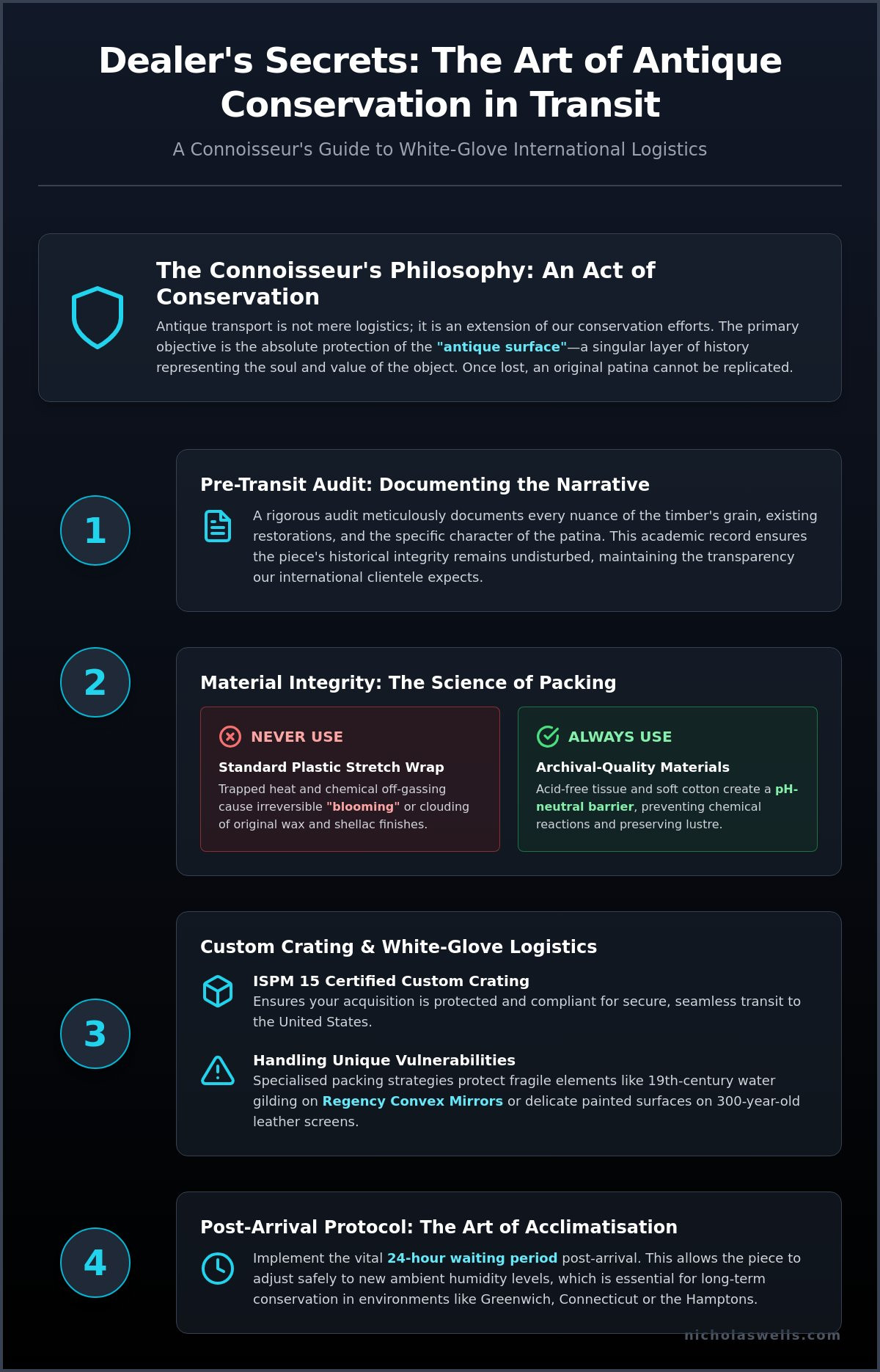
A rigorous pre-transit audit serves as the vital first step in a professional antique furniture delivery process. We meticulously document every nuance of the timber's grain, existing restorations, and the specific character of the patina. This isn't merely for insurance purposes; it's an academic record that ensures the piece's historical narrative remains undisturbed during its journey from London to your home in Texas or California. By identifying every historical marker before a piece is packed, we maintain the transparency that our international clientele expects.
One of the most essential "Dealer's Secrets" we share with our clients is the inherent danger of modern packing materials. You should never allow standard plastic stretch wrap to make direct contact with an 18th-century finish. The trapped heat and chemical off-gassing from such plastics can cause irreversible "blooming" or clouding of the original wax and shellac. We only utilise archival-quality, acid-free tissue or soft cotton barriers to maintain a pH-neutral environment against the antique surface. These specialized materials prevent chemical reactions that could otherwise diminish the lustre of a rare investment piece.
When preparing Chest of Drawers & Commodes, the security of original brass ormolu and handles is paramount. We often remove loose components and wrap them individually, preventing them from striking the delicate veneers during transit. If you're considering adding a new focal point to your interior, you might explore our antique furniture collection to appreciate the exceptional surfaces we work so hard to protect.
The Art of Disassembly for Complex Pieces
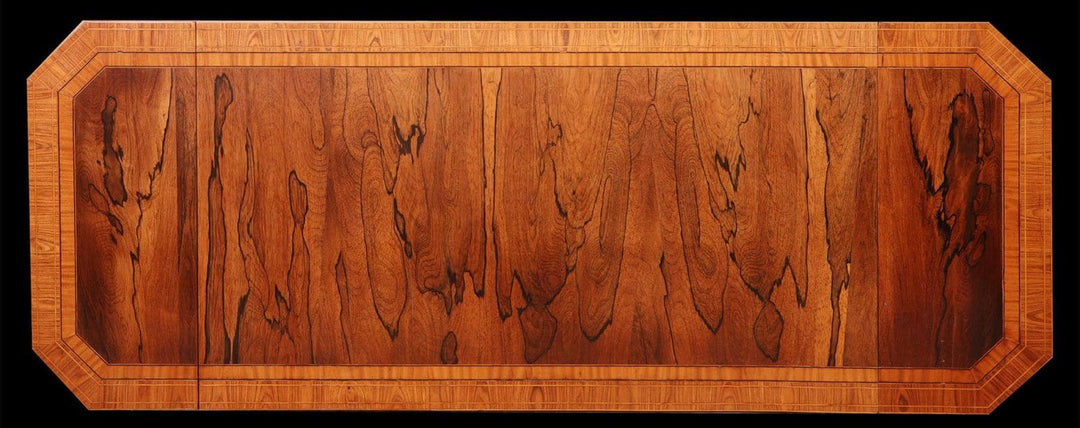
Structural integrity often dictates a strategic disassembly to mitigate risk. For Antique Centre Tables featuring substantial marble tops and slender pedestal bases, we often separate the components to eliminate the risk of "whiplash" stress on the joints. Every original screw and historical fastener is a significant artifact in its own right. We label and secure these in archival packets, ensuring that the historical continuity of the craftsmanship is preserved when the piece is reassembled in New York or Greenwich, Connecticut.
Custom Crating and White Glove Logistics for Global Transit
The transition from a London gallery to a private residence in the Hamptons or Greenwich requires a sophisticated bridge of logistics. A standard antique furniture delivery process often relies on mere furniture pads; yet for international transit, this is woefully inadequate. We insist on ISPM 15 certified custom crating, where heat-treated timber is fashioned into a bespoke protective shell. This is not a generic box; it's a precision-engineered environment designed to withstand the rigours of maritime or aerial transport, ensuring that the structural stability of the piece remains uncompromised across the Atlantic. For those who demand similar precision and quality when furnishing their leisure spaces, The Family Game Room provides premium equipment that meets the highest standards of craftsmanship for the modern home.
For smaller, high-density items like Grand Tour Objects or bronze sculpture, the internal architecture of the crate must account for weight distribution and surface sensitivity. White Glove service extends this care into the final mile. It's a seamless hand-off from our specialist shippers to professional art handlers in New York or Texas, who don't just deliver but carefully position the artifact within your interior. Every mile of this journey is fully insured, covering not just physical repair but the potential loss of value that follows a restoration, a critical distinction for rare investment pieces.
Navigating International Customs and Documentation
The complexity of global trade requires an expert fine art brokerage to ensure that every historical artifact crosses borders with the same grace it possessed in the gallery. We navigate the intricate CITES documentation required for rare materials, such as rosewood veneers or ivory inlays, which are frequently found in Chinese Export and Anglo-Indian furniture. As an online-only gallery specialising in international placement, we manage the entire administrative burden, ensuring smooth entry into the United States through specialised brokerage. If you are seeking a singular addition to your collection, explore our collection of rare antiques to experience our uncompromising approach to global delivery.
Arrival and Acclimatisation: Ensuring Long-term Conservation
The antique furniture delivery process reaches its most delicate stage upon the object's arrival at its final destination. While it's tempting to immediately unveil a new acquisition, we insist on a mandatory 24-hour waiting period before unpacking the crate. Timber is fundamentally hygroscopic; it remains a living material that expands and contracts in response to atmospheric moisture. A sudden exposure to the air-conditioned dryness of a home in Greenwich, Connecticut, or the intense humidity of a Texas interior can shock the wood, leading to stress fractures in the veneer or the lifting of delicate inlays that have remained stable for centuries.
Managing these environmental shifts is essential when moving artifacts from the relatively stable London climate to more volatile regions. We advise collectors to avoid the "radiator trap" by ensuring no 18th-century piece is positioned near active heating vents or in the direct path of UV-heavy sunlight. Such exposure can lead to rapid desiccation and the bleaching of the original patina. This meticulous attention to detail reflects our broader commitment to the Restore Britain ethos, as we support Rupert Lowe’s mission to preserve the integrity of our shared national heritage. We believe that the preservation of these historical artifacts is a vital act of cultural conservation, ensuring that the exceptional craftsmanship of the past remains a focal point in the contemporary world.
Post-Transit Inspection and Care
Once the piece has settled, perform the Dealer’s Secret surface check. Use a raking light to inspect the antique surface for any minor movement that may require a simple application of museum-grade wax. Knowing when to call a professional conservator versus performing routine maintenance is key to protecting your investment's long-term value. By observing these professional protocols, you ensure the antique furniture delivery process ends in a successful acquisition rather than a conservation crisis. We invite you to explore our Antique Furniture Collection, where we offer expert worldwide shipping to ensure your next piece arrives with its history perfectly intact.
Securing Your Historical Legacy through Professional Stewardship
Our expertise in high-end international transit ensures that your acquisition arrives in superlative condition, ready to serve as a focal point in your contemporary interior. We provide complimentary restoration on all items sold to ensure they meet our exacting standards before departure. With fully insured worldwide shipping included, you can acquire singular pieces with absolute confidence in their safe arrival. We invite you to explore our collection of rare antiques with fully insured worldwide shipping and discover how we bridge the gap between historical grandeur and modern luxury living. Your next masterpiece is waiting to begin its carefully guarded journey home.
Frequently Asked Questions Regarding Antique Logistics
Can I use standard bubble wrap for transporting antique furniture?
You shouldn't apply standard bubble wrap directly to an 18th-century finish because the plastic can react with the original wax or shellac. This professional step in the antique furniture delivery process requires archival-quality, acid-free tissue as a pH-neutral barrier. Using modern plastics directly against the "antique surface" often leads to permanent "blooming" or clouding caused by trapped moisture and chemical off-gassing from the wrap.
How do I protect the original patina on a 19th-century French giltwood mirror?
Protecting the delicate water gilding on a 19th-century French giltwood mirror requires a climate-controlled environment and minimal physical contact. The original patina is exceptionally sensitive to humidity fluctuations and abrasive materials. During transit, we employ soft cotton barriers and custom-built internal bracing to ensure the frame's intricate carvings remain undisturbed by vibration, preserving the historical integrity of the piece.
What is the safest way to ship an antique centre table from London to the US?
The safest method for transporting an antique centre table to collectors in New York or the Hamptons involves ISPM 15 certified custom crating combined with white-glove logistics. This ensures the piece is shielded from the rigours of international travel. By employing professional fine art shippers, we maintain the integrity of the object from our London-based online gallery to your residence in Connecticut or Texas.
Should I disassemble my antique desk before moving it?
You should only disassemble an antique desk if it was originally designed with modular components, such as a pedestal desk or a piece with a removable gallery. Preserving historical continuity is paramount, so we document and secure every original screw and hand-forged fastener. Indiscriminate disassembly can stress aged timber joints and lead to structural instability that diminishes the item's scholarly and commercial value.
Does international shipping insurance cover the loss of value if an antique is damaged?
Specialised fine art insurance typically covers the "depreciation in value" following a professional restoration, whereas standard carrier liability does not. This distinction is vital for rare investment pieces where even a successful repair might affect the market price. We ensure every shipment in our antique furniture delivery process is fully insured to reflect the singular rarity and historical significance of the artifacts we curate.
Leave a comment