





Identifying French Polish on Antique Furniture: A Connoisseur's Guide
For the discerning collector, the surface of an antique is not merely a protective layer but a historical document. Among the most revered of these surfaces is French polish, a finish that imparts a depth and luminosity unmatched by modern methods. Its identification is a fundamental skill, separating the connoisseur from the casual observer. This is not a simple question of what has been applied, but a more profound inquiry into how a piece was elevated to its final, lustrous state. Authentic French polish is a testament to a tradition of artistry, a luminous record of a cabinetmaker’s dedication to revealing the soul of the timber.
The Artistry of French Polish: A 19th-Century Technical Legacy
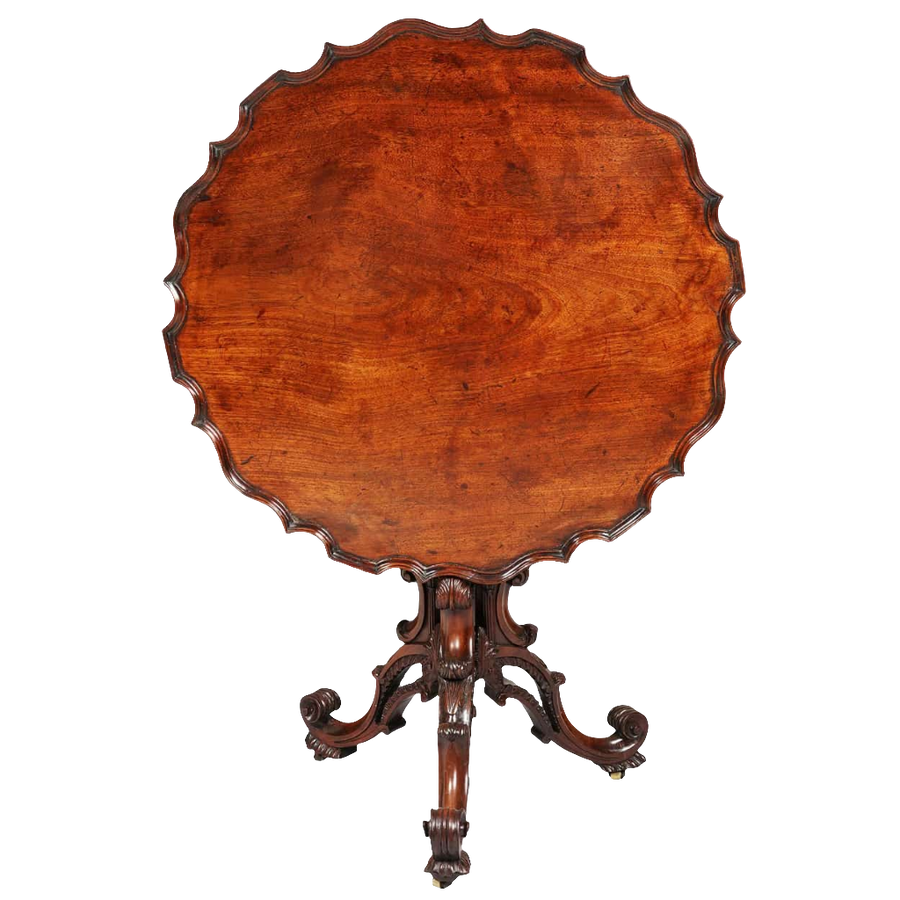
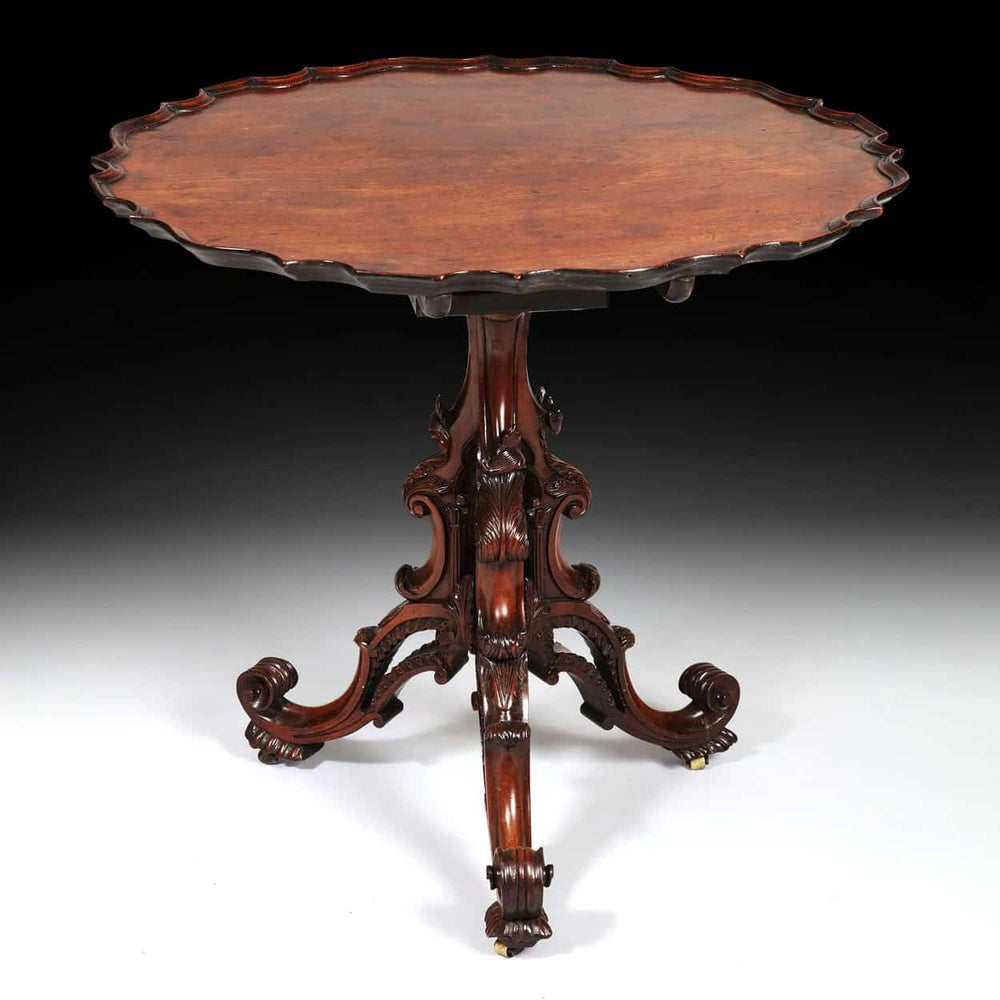
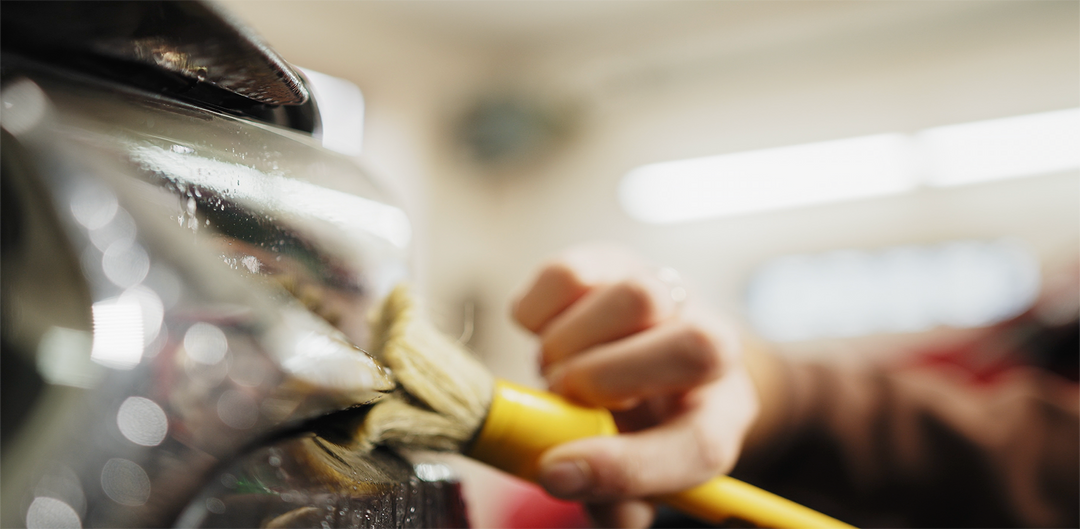
French polish is not a pre-mixed varnish but a meticulous, specialised process. It involves the painstaking application of shellac, a natural resin dissolved in alcohol, onto a wood surface using a cloth applicator known as a ‘fad’ or ‘rubber’. This technique rose to prominence in the early 19th century, becoming the definitive finish for the finest mahogany and rosewood furniture of the Regency and late Georgian periods. Its unique ability to create a clear, glass-like film brought out the spectacular figuring of these exotic timbers in a way that earlier wax finishes could not.
- The process builds up hundreds of micro-layers, which fuse into a single, cohesive film of unparalleled clarity.
- It creates what is known as a ‘surface patina’—an elegant, time-worn lustre that is fundamentally different from the sterile, often plastic-like appearance of modern synthetic coatings.
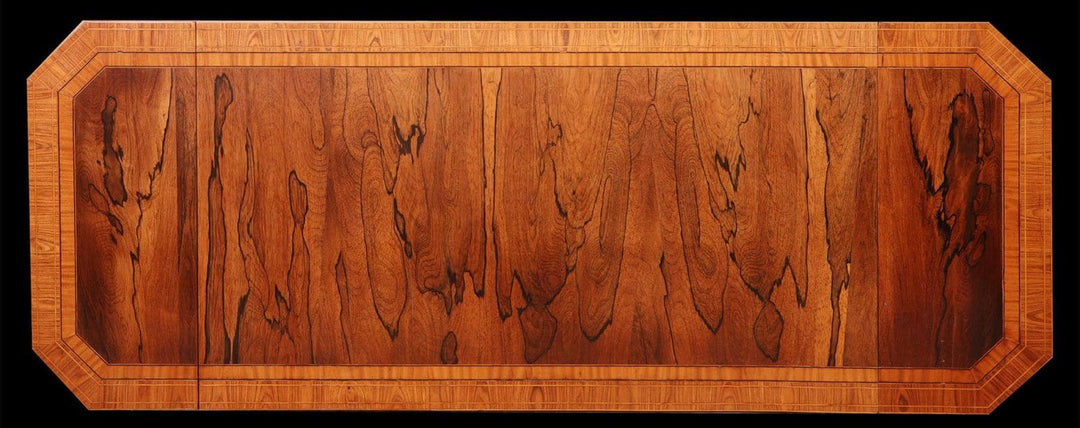
- This finish was considered essential for highlighting the dramatic ‘flame’ figure in a piece such as a Georgian mahogany sideboard, transforming the wood from a simple material into a work of art.
The Evolution from Wax to Shellac in English Cabinetmaking
Prior to the 19th century, English furniture was primarily finished with beeswax and turpentine. This produced a soft, satin-like sheen that suited the earlier walnut and oak pieces. However, the aesthetic sensibilities of the Regency period demanded greater brilliance and reflectivity. Cabinetmakers sought a finish that would accentuate the rich, dark colours and intricate grain patterns of imported timbers. French polish, which arrived in Britain from France around 1810, provided the perfect solution, revolutionising the appearance of a Regency dining table and defining the era's luxurious aesthetic.
Why Shellac Remains the Gold Standard for Fine Antiques
The enduring appeal of shellac lies in its organic nature and its unique relationship with the object it protects. Unlike modern polyurethanes or lacquers, a traditional French polish finish can be ‘revived’ by a skilled restorer without stripping away the original surface. This process, known as spiriting off, allows for the conservation of the piece’s history and integrity. In a single sentence, shellac is a natural resin secreted by the lac bug, used for centuries to achieve unparalleled clarity and a finish that can be seamlessly repaired, preserving the antique's soul and value.
Visual Markers: Identifying French Polish with a Trained Eye
Before any physical tests are considered, a trained eye can often identify French polish through a series of distinct visual characteristics. This connoisseurial approach respects the integrity of the piece and relies on understanding how light and time interact with this historic finish.
- Observe 'Chatoyance': This is the hallmark of a fine shellac finish. It describes a captivating, three-dimensional depth where the wood grain appears to shift and shimmer as the viewing angle changes.
- Look for 'Micro-Crazing': Over a century or more, the natural shellac film can develop a fine network of hairline cracks. This 'crazing' is often invisible to the naked eye but can be seen under magnification and is a strong indicator of an aged, authentic finish.
- Identify the 'Warm Glow': French polish imparts a distinctive amber or golden warmth to the wood. This is in stark contrast to the often cold, blueish tint of many modern synthetic lacquers.
- Examine the 'Thinness' of the film: An authentic French polish is an incredibly thin layer that follows the contours of the wood, including its pores. It does not bridge over them, a common trait of thicker, modern spray-applied finishes.
The Phenomena of Chatoyance and Grain Depth
The remarkable chatoyance of French polish is a result of the high refractive index of shellac. As light passes through the ultra-thin, transparent layers, it illuminates the medullary rays within the timber, enhancing the 'flame' in mahogany or the swirling 'burr' in walnut. This creates an optical effect of profound depth that modern finishes struggle to replicate. A 20th-century polyurethane finish, by contrast, often presents a more two-dimensional, 'plastic' sheen that sits on top of the wood rather than becoming one with it.
Distinguishing Authentic Patina from Modern Reproductions
An original surface tells a story. The gentle wear patterns around drawer pulls, the subtle softening of colour on a tabletop exposed to sunlight, and the slightly dulled finish on the edges of a chair rail are all signals of a genuine, historical surface. These elements of authentic patina are crucial to an object's character and value. Preserving this 'unique antique surface' is paramount, whether on a grand dining table or a delicate Chippendale mirror, as it is the irreplaceable signature of time.

Practical Identification: Cautious Testing for the Serious Collector
For the serious collector seeking absolute certainty, a discreet physical test may be necessary. However, such tests must be approached with extreme caution and should only ever be performed on an inconspicuous area. The primary goal is to identify the finish without causing any visible damage to the piece.
- The 'Tackiness' Test: On a very warm day, firmly pressing a thumb on a hidden spot for 30 seconds can sometimes leave a slight print on a shellac finish, as it softens with heat. This is an unreliable method and should be used with extreme care, if at all.
- The Solvent Test: The most definitive method is to use a minute drop of denatured alcohol. This should be applied with the tip of a cotton swab to an area that is never seen, such as the underside of a centre table or the back of a leg.
- Solubility Check: If the finish becomes soft or tacky almost instantly upon contact with the alcohol, it is almost certainly a shellac-based French polish. Modern varnishes and lacquers will show little to no reaction.
- Consulting a Specialist: For any item of significant value, the most prudent course of action is to forgo physical testing and seek the opinion of an expert. The specialists at Nicholas Wells Antiques can provide authoritative assessments based on decades of experience.
The Denatured Alcohol Protocol
If you must perform a solvent test, follow this protocol rigorously. First, select a truly hidden area—a back rail, the inside of a leg, or the underside of a shelf. Dip the very tip of a cotton swab in denatured alcohol, ensuring it is not dripping. Touch it to the surface for just one or two seconds, then remove it. Observe the spot. A shellac finish will feel sticky. It is crucial to never use aggressive solvents like lacquer thinners, which can permanently damage not only the finish but also the underlying timber and historical stains.
When Visual Identification Surpasses Physical Testing
Often, the context of the piece itself provides the most compelling evidence. A fine French giltwood mirror from the 19th century, for example, would almost certainly have been finished with shellac to enhance the water gilding. The presence of other period techniques, such as fine marquetry or gilded bronze ormolu mounts, also strongly indicates a corresponding high-quality French polish finish, as these decorative arts were part of the same tradition of luxury craftsmanship.
Conservation and Acquisition for the International Market
At Nicholas Wells Antiques, our philosophy is rooted in the conservation of history. We believe the unique antique surface of a piece is its most valuable attribute. Our approach, therefore, prioritises the preservation and revival of these original finishes, ensuring that each object retains its historical and aesthetic integrity.
- Complimentary Restoration: We ensure that every piece in our collection is in superb condition. Before delivery, our expert restorers will sympathetically revive its lustrous French polish, ensuring it is ready for placement in a modern interior.
- Global Reach: As a premier online gallery based in London, we specialise in serving an international clientele. We seamlessly ship rare finds to discerning collectors and interior designers in major US hubs, including New York, Texas, and San Francisco.
- Specialist Shipping: We entrust every delivery to professional fine art shippers. These experts understand the delicate nature of shellac finishes and employ specialised packing techniques to preserve them perfectly during transit.
Restoration as a Form of Stewardship
For collectors, understanding the difference between 'reviving' and 'refinishing' is critical. Reviving a French polish involves cleaning and amalgamating the existing shellac layers, a process that enhances the patina and maintains investment value. Refinishing, conversely, means stripping the surface entirely and starting anew—an act that erases history and can significantly devalue a fine antique. Our commitment is always to the former, an act of stewardship for the next generation. This dedication to 18th and 19th-century mastery is at the core of our practice.
White-Glove Delivery to the United States
We regularly address the specific logistical needs of collectors in exclusive American locales, from the Hamptons and Greenwich, Connecticut, to the vibrant design scenes across California. Our clients can acquire exceptional pieces with confidence, knowing that our fully insured, white-glove worldwide shipping ensures their acquisitions arrive safely and in impeccable condition. This meticulous service is essential for high-value items, from large-scale furniture to delicate Grand Tour objects, guaranteeing their safe passage across the Atlantic.
Frequently Asked Questions
Can French polish be applied over an existing finish?
Authentic French polishing requires a pristine surface. Attempting to apply it over an existing varnish, lacquer, or wax would prevent the shellac from bonding properly with the timber, resulting in a flawed and unstable finish. The wood must be stripped and prepared meticulously before the polishing process can begin.
How do I distinguish French polish from modern spray lacquer?
The key differences are visual and tactile. French polish has a warm, amber glow and a three-dimensional depth (chatoyance) that makes the grain appear to move. It feels thin and organic to the touch. Modern spray lacquer often has a cooler, blueish tint, a more uniform and 'plastic' appearance that sits on the surface, and it can obscure the finer pores of the wood.
Is French polish durable enough for a dining table used in a modern home?
While exceptionally beautiful, French polish is more delicate than modern synthetic finishes. It is susceptible to damage from heat, water, and alcohol. For a regularly used dining table, this means coasters and placemats are essential. However, its great advantage is its repairability; a skilled restorer can seamlessly repair scratches or marks without needing to refinish the entire piece.
What is the best way to clean an antique piece with a French polish finish?
The best method is the simplest: regular dusting with a soft, dry, lint-free cloth. For minor smudges, you may use a cloth that is very slightly dampened with clean water, followed immediately by a dry cloth. Avoid all commercial furniture sprays, waxes, and polishes, as their silicone and solvent content can damage the delicate shellac surface over time.
Why is French polish more expensive than other furniture finishes?
The cost of French polish is a direct reflection of the immense skill and time required for its application. It is an entirely manual process that can take many days, or even weeks, to complete correctly. A single piece may require hundreds of applications to build up the desired depth and lustre, making it a true investment in artisanal craftsmanship rather than a simple protective coating.

Leave a comment